In December 2025, the world received a stark reminder of the escalating humanitarian catastrophe in Sudan when Nadia Taha, a journalist born and raised in El-Fasher, joined a panel of experts at a congressional briefing in Washington, D.C. Her testimony, delivered with palpable emotion, painted a harrowing picture of her hometown in Darfur, which had fallen under the brutal control of the Rapid Support Forces (RSF) on October 26, after a nearly two-year siege. Taha recounted how the RSF, once inside El-Fasher, unleashed a wave of atrocities, reportedly targeting non-Arab residents with torture, rape, and mass killings. Tens of thousands, including many of Taha’s relatives and neighbors, perished in what human rights observers quickly identified as crimes against humanity, bearing the hallmarks of genocide. The perpetrators, disturbingly, broadcast their heinous acts on social media, further amplifying the horror. As she spoke, Taha’s voice caught, a testament to the profound personal and professional anguish she felt. "I used to work for the Voice of America," she stated, her frustration evident, "I feel like my hands are tied." Her layoff months earlier, following a US executive order aimed at significantly reducing the US Agency for Global Media (USAGM), which oversees VOA, symbolized a broader retraction of American global engagement that compounded the media’s struggle to cover Sudan’s unfolding crisis.
The Fall of El-Fasher and Unfolding Atrocities
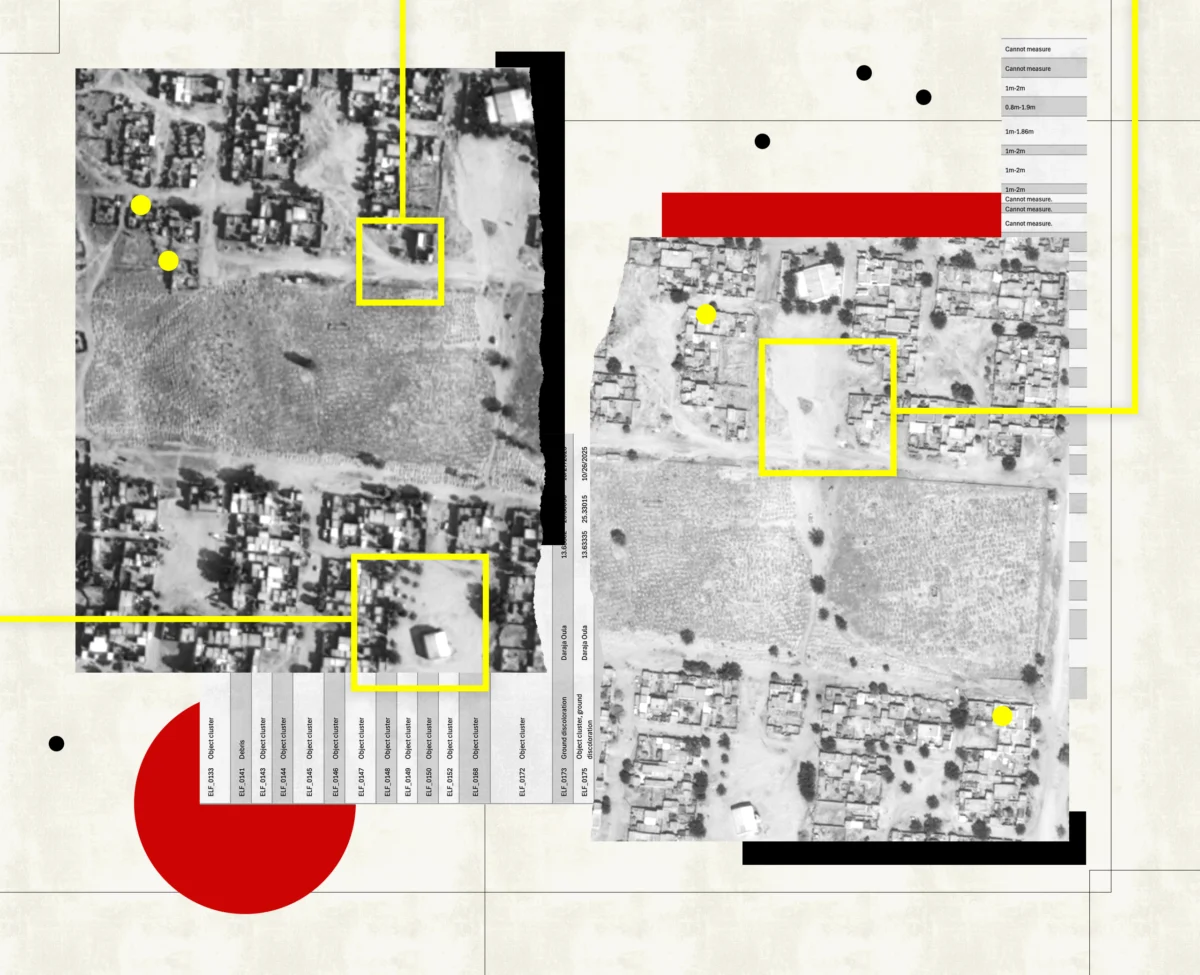
The capture of El-Fasher, the historical capital of Darfur, marked a devastating turning point in Sudan’s conflict. Reports from the ground, corroborated by international bodies, detailed a systematic campaign of violence. The Office of the United Nations High Commissioner for Human Rights (OHCHR) confirmed in February 2026 that RSF violations during the capture amounted to war crimes, encompassing widespread torture, sexual violence, and summary executions. Satellite imagery, later analyzed, would reveal mass graves and evidence of extensive destruction. The city, once a vibrant cultural and commercial hub, was transformed into a slaughterhouse, its non-Arab communities, particularly the Zaghawa, Masalit, and Fur, bearing the brunt of the RSF’s ethnic targeting. Survivors described scenes of unimaginable horror: families separated, homes razed, and entire neighborhoods emptied by force or fear. The RSF’s tactics mirrored those of their Janjaweed predecessors, indicating a deliberate strategy to cleanse the region of specific ethnic groups, echoing the genocidal violence that ravaged Darfur in the early 2000s.
A "Forgotten War": Sudan’s Deepening Humanitarian Crisis
The tragedy in El-Fasher is but one horrific chapter in what has been widely dubbed "the forgotten war" – a conflict that has plunged Sudan into the largest humanitarian crisis in the world today. Since fighting erupted in April 2023, the clashes between the Sudanese Armed Forces (SAF) and the Rapid Support Forces (RSF) have displaced an astonishing twelve million people both internally and across borders, creating an unprecedented refugee exodus. Estimates for the death toll vary widely, with some figures suggesting it has surpassed four hundred thousand, although accurate counts remain elusive amidst the chaos and lack of access. This immense human suffering has been exacerbated by widespread famine, the collapse of healthcare systems, and the deliberate targeting of civilian infrastructure. The International Rescue Committee (IRC) and other aid organizations have repeatedly sounded the alarm, highlighting the dire need for international intervention and increased humanitarian assistance, which remains critically underfunded and logistically challenging to deliver. The conflict has essentially bifurcated the nation, with the SAF maintaining control over the east, north, and center, while the RSF exerts dominance in the south and west, including large swathes of Darfur.
The Power of Open-Source Intelligence
Amidst the pervasive media blackouts and extreme dangers preventing traditional ground reporting, Open-Source Intelligence (OSINT) has emerged as a crucial tool for documenting atrocities and providing verifiable information. Publicly available material such as social media posts, geolocation data, and high-resolution satellite imagery has proven indispensable in conflicts from Afghanistan and Syria to Ukraine and Iran. In Sudan, the Yale Humanitarian Research Lab has been at the forefront of this effort. Their meticulous analysis of satellite imagery of El-Fasher yielded chilling evidence of mass killings by RSF fighters. The lab’s initial report in October 2025 garnered international headlines by revealing "objects consistent with the size of human bodies on the ground near RSF vehicles, including at least five instances of reddish earth discoloration." Shaina Lewis, a Sudan specialist and adviser for Preventing and Ending Mass Atrocities (PAEMA), an advocacy group, noted the profound impact of these findings: "The fact that blood was visible from space, that was a moment that captured international headlines. I think El-Fasher was a breakthrough moment for all of the wrong reasons. We saw this massive uptick in attention that we had been calling for for the entirety of the war." This innovative approach to evidence gathering underscores the evolving landscape of conflict reporting, where remote analysis can provide critical insights when traditional access is impossible.
Historical Roots of the Conflict: From Janjaweed to RSF
To comprehend the current crisis, one must delve into Darfur’s troubled past. The region was the epicentre of a brutal conflict in the early 2000s, where the Janjaweed militia, established by Sudan’s then-government, waged war against armed rebel groups and committed widespread atrocities against Black, non-Arab communities. This period, too, was decried by human rights activists as a genocide, claiming an estimated three hundred thousand lives through violence, hunger, and disease. As a reward for their brutal efficiency, then-dictator Omar al-Bashir granted the Janjaweed control of lucrative gold mines in Darfur and integrated them into the military establishment, partly as a bulwark against political rivals. The Janjaweed, under the command of Mohammed Hamdan Dagalo, infamously known as "Hemedti," were subsequently rebranded as the Rapid Support Forces (RSF). Their reach extended beyond Sudan’s borders; in 2015, Bashir deployed them as mercenaries to Yemen, where they fought alongside Saudi Arabian and United Arab Emirates (UAE) forces against Houthi rebels, gaining combat experience and further consolidating their power and wealth.
The 2023 Conflict and the Siege of El-Fasher
The current iteration of Sudan’s conflict began in earnest in April 2023. This followed the hopeful, albeit brief, period of the Sudanese Revolution in April 2019, which saw the overthrow of Bashir’s thirty-year dictatorship after four months of pro-democracy protests. A civilian-military transitional government was established, promising a democratic future. However, this fragile coalition dissolved in 2021 when the military orchestrated a coup, sidelining civilian leadership. The inherent rivalry between the RSF and elements of the Sudanese army linked to the old regime escalated, culminating in open warfare in the capital, Khartoum. The conflict rapidly spread across the country, including Darfur.
By May 2024, El-Fasher stood as the last major city in Darfur under the authority of the Sudanese Armed Forces. For the ensuing eighteen months, the RSF laid siege to the city, encircling it with defensive ditches and subjecting military and residential areas to relentless mortar fire. The siege brought immense suffering: locals faced starvation, and tens of thousands were forced to flee, seeking refuge in already strained displacement camps. The prolonged encirclement gradually choked off supplies, infrastructure, and hope, setting the stage for the eventual, bloody takeover.
Journalists Under Siege: Risks and Resilience
The conflict in Sudan, and particularly the siege of El-Fasher, has presented unprecedented challenges for journalists. Those who bravely remained on the ground to report faced extreme dangers, including direct targeting, abduction, and communication blackouts. In October 2025, the Committee to Protect Journalists (CPJ) reported that thirteen journalists and media workers in El-Fasher, described as "among the last sources of independent information," had "gone missing under a communication blackout." At least two were confirmed abducted by the RSF. Among them was Muammar Ibrahim, a stringer for Al Jazeera Mubasher, who was recognized and detained by RSF fighters on October 26 while attempting to leave the city. A video posted on social media showed an RSF officer accusing Ibrahim of bias for referring to the group as a "militia" and "Janjaweed" in his Facebook posts—terms the RSF vehemently rejects as they seek to legitimize their image. A visibly distraught Ibrahim, under duress, confirmed using these descriptions in personal social media, but not in his official reporting. This incident highlighted the severe risks faced by those attempting to provide an independent narrative.
The Broader Media Landscape: Challenges and Cuts
Beyond the immediate dangers on the ground, broader factors have contributed to Sudan’s status as a "forgotten war." Electricity and internet outages have crippled communication. Armed factions routinely deny media access to conflict survivors. Globally, media funding cuts have disproportionately affected foreign coverage. Nadia Taha’s case exemplifies this: her layoff from Voice of America was a direct consequence of the Trump administration’s executive order aimed at dismantling the US Agency for Global Media (USAGM), which led to more than a thousand USAGM employees being placed on administrative leave. Similarly, layoffs at the Washington Post in February 2026 significantly impacted its foreign bureaus, further diminishing the capacity of major Western outlets to cover complex international crises. These domestic policy shifts, coupled with a landscape of competing global crises—from Ukraine and Gaza to numerous other conflicts—have diverted attention and resources away from Sudan, leaving its plight largely unseen and unheard.
Voices from the Ground: Sudanese Journalists’ Unwavering Efforts
Despite the overwhelming obstacles, Sudanese journalists have been at the forefront of a relentless effort to ensure the world knows what is happening. Nadia Taha, whose career began in 2010 with the USAID-funded Sudan Radio Service (later Eye Radio), specialized in Darfur reporting in Arabic and Zaghawa. Her subsequent work with independent outlets like Ayin Network and Nuba Reports involved training journalists in underreported conflict zones. In 2016, an Atlas Corps fellowship brought her to Washington, D.C., leading to her recruitment by VOA as, to her knowledge, the first Sudanese woman and Darfurian journalist to work full-time for the organization. She actively worked to bring "new voices" from IDPs and Darfur experts to VOA, highlighting local perspectives.
Around the same time, Adam Mahdi co-founded Darfur 24, a bilingual Arabic and English online platform, with Mohamed Elfatih. Initially based in Nyala, their mission was to cover underreported events across Darfur’s remote areas, including population movements, tribal conflicts, and service shortages. Darfur 24 expanded to employ five reporters across Darfur’s five states, including video journalists in major cities like El-Fasher, Nyala, and El-Geneina, and later covered refugee situations in Chad and South Sudan, eventually extending its reach across all of Sudan. However, the 2023 war forced Mahdi and many of his reporters to relocate. "It became impossible for them to live or work in an area," Mahdi stated, noting the RSF’s intolerance for independent reporting. Darfur 24 adapted by training non-journalists, including activists and human rights observers, to provide updates.
Hafiz Haroun, another journalist originally from El-Fasher, had been closely monitoring the rising tensions between the SAF and RSF even before the war. After the 2019 revolution, he reported for the independent newspaper Al-Tayyar in Khartoum. Following an arrest by security forces in 2021, he relocated to Nairobi with support from Frontline Defenders and began freelancing for outlets like Ayin, Le Monde, and the Washington Post. The war exacted a personal toll: while working on a documentary near the Sudan-Chad border in 2024, Haroun learned of his younger brother’s death in El-Fasher via Facebook, followed weeks later by the killing of another brother, both reportedly defending their neighborhood against the RSF. From Nairobi, Haroun continued to contribute reports on the siege, starvation, rape, and kidnappings, relying on WhatsApp, and sometimes a satellite phone, to contact community and military leaders. International journalists often reached out to advocacy groups like PAEMA for contacts, who, through civil society networks, found interviewees willing to record voice notes at Starlink access points.
Propaganda and Disinformation
The vacuum of independent reporting has inevitably been filled by propaganda and disinformation. After the RSF takeover, Darfur 24 could no longer report from El-Fasher directly due to the lack of Starlink internet service and the suppression of local voices. Their coverage shifted to survivors who fled, relying on RSF-supportive social media posts or reports from international humanitarian delegations. "There is no independent reporting from the ground, and no verifying of sources," Mahdi lamented. This has led to missed stories, such as the horrifying TikTok video where an RSF commander, Abu Lulu, claimed to have killed two hundred people and vowed to "start from zero" next time. Taha was appalled by the lack of follow-up on victims’ families or claims of an RSF investigation into his statements.
Adding to the complexity, some coverage has drawn significant controversy. Tsabih Mubarak of Sky News Arabia, based in the UAE and reportedly married to a senior official in an RSF-backed parallel government, traveled to El-Fasher days after the takeover. She was widely criticized for whitewashing the extent of atrocities and for engaging in theatrical photo opportunities, including selfies with children and a photo embracing a female RSF commander, further blurring the lines between journalism and propaganda.
Implications for Global Accountability and Future Reporting
The profound challenges faced by journalists in Sudan have severe implications for global accountability. Without robust, independent reporting, the international community struggles to grasp the scale and nature of the atrocities, making coordinated intervention or humanitarian aid efforts difficult to mobilize effectively. The "too little, too late" sentiment expressed by Shaina Lewis regarding the media’s attention to El-Fasher underscores this failure. While OSINT provides a vital lifeline, it cannot fully replace the depth and nuance of on-the-ground witness testimony and investigative journalism.
The future of reporting from conflict zones like Sudan appears increasingly precarious. The confluence of media funding cuts in major Western outlets, a global shift towards domestic priorities, and the deliberate targeting of journalists by warring factions creates a hostile environment for truth-telling. Nadia Taha, despite a federal judge ordering the reinstatement of VOA workers on administrative leave (a ruling that, as a contractor, didn’t initially include her), remains hopeful, symbolizing the resilience of Sudanese journalists. Similarly, Hafiz Haroun faces uncertainty with the Washington Post‘s foreign coverage cuts. As the RSF now controls Starlink stations in El-Fasher, and remaining residents are terrorized into silence, reliable, independent news remains agonizingly difficult to obtain. The crisis in Sudan serves as a stark reminder of the critical role of independent journalism in shedding light on humanitarian catastrophes and holding perpetrators accountable, even as the forces aligned against it grow ever stronger.