With more than 40 million registered users, Bluesky has rapidly established itself as one of the fastest-growing social networks, signaling a significant shift in the digital communication paradigm. Its ascent, particularly within the nascent wave of fediverse platforms and decentralized networks, is notable for its user-friendly interface and a burgeoning community that spans diverse interests, from scientific discourse to K-pop fandom. This accessibility has positioned Bluesky as a compelling alternative for users seeking new online spaces.
Bluesky’s foundational premise is rooted in the vision of an open and user-controlled social internet. Conceived by former Twitter CEO Jack Dorsey, the platform operates on an open-source protocol known as the Authenticated Transfer Protocol, or AT Protocol. This architectural choice underpins Bluesky’s declared mission: to forge "an open foundation for the social internet so that we can all shape its future," driven by the conviction that "social media is too important to be controlled by a few corporations." This philosophy directly addresses widespread concerns regarding centralized control, data ownership, and algorithmic transparency that have plagued traditional social media giants. The company’s vision, often articulated through engaging graphics and public statements, emphasizes community empowerment and decentralization as core tenets.
The Genesis and Evolution of Bluesky
The idea for a decentralized social media protocol initially emerged within Twitter itself in 2019, under Jack Dorsey’s leadership. The project, then simply referred to as "Bluesky," was intended to be an independent team exploring open and decentralized standards for social media. By 2021, Bluesky officially spun out from Twitter, establishing itself as a separate entity with its own independent board, marking a critical step towards realizing Dorsey’s long-held ambition for a more open internet.
The platform first launched in an invite-only beta phase, a strategic move to manage growth, gather feedback, and refine its protocol and user experience. This controlled rollout allowed Bluesky to build a foundational community and stress-test its infrastructure. The invite-only period generated significant anticipation and demand, creating an exclusive aura around the platform. This phase concluded dramatically in February 2024, when Bluesky opened its doors to the public, welcoming over one million new users in a single day. This rapid influx underscored a palpable public appetite for new social media experiences, particularly those promising greater autonomy and transparency. The transition from an exclusive network to a publicly accessible one was a pivotal moment, transforming Bluesky from a promising concept into a mainstream contender in the social media arena.
Decentralization: AT Protocol vs. ActivityPub
A crucial distinction for understanding Bluesky’s place in the decentralized landscape lies in its chosen protocol. While many fediverse platforms, such as Mastodon and Threads, utilize the ActivityPub protocol, Bluesky operates on its proprietary AT Protocol. This difference, though technical, carries significant implications for interoperability and the broader architecture of decentralized social media.
ActivityPub, a W3C recommended standard, enables various independent servers (instances) to communicate with each other, forming a "fediverse" where users on one instance can interact with users on another. This creates a highly interconnected yet decentralized ecosystem. The AT Protocol, while also designed for decentralization, offers a different approach, focusing on account portability, algorithmic choice, and a more robust system for identity and data management. Bluesky’s decision to build on AT Protocol rather than adopt ActivityPub reflects a strategic choice to innovate on core decentralized functionalities, rather than simply replicating existing fediverse models. While this means Bluesky is not technically part of the ActivityPub-based fediverse, its underlying principles align with the broader movement towards a decentralized internet. The long-term vision for AT Protocol includes features that could eventually allow for bridging between different decentralized networks, potentially mitigating current interoperability gaps.
The Broader Implications for Social Media
Bluesky’s rapid growth and unique approach contribute to a dynamic shift in the social media ecosystem. Its emergence challenges the long-standing dominance of centralized platforms like X (formerly Twitter), Facebook, and Instagram, which have faced increasing scrutiny over issues ranging from data privacy and content moderation to algorithmic bias and corporate influence.
The rise of platforms like Bluesky signifies a growing demand for user empowerment. Users are increasingly seeking control over their data, their feeds, and their online identities. The AT Protocol’s emphasis on account portability means users theoretically can move their entire social graph and data to a different server or "PDS" (Personal Data Server) should they choose, offering a level of freedom unheard of in traditional social media. This model also allows for diverse algorithmic choices, enabling users to curate their experience rather than being dictated by a single, opaque algorithm.
However, the decentralized model also presents challenges. Moderation, for instance, becomes a more complex endeavor without a central authority. While Bluesky aims to provide tools for community-driven moderation, scaling these solutions effectively across millions of users remains a significant hurdle. User adoption also depends on ease of use; while Bluesky boasts a clean interface, the underlying concepts of protocols, PDS, and decentralized identity can be intimidating for average users accustomed to monolithic platforms. Despite these challenges, Bluesky represents a significant experiment in the future of social networking, potentially paving the way for a more resilient, open, and user-centric internet.
Enhancing Bluesky Engagement with Buffer: A Strategic Integration
For creators, businesses, and power users navigating the increasingly fragmented social media landscape, managing a presence across multiple platforms, including new entrants like Bluesky, can be a complex and time-consuming task. This is where third-party tools like Buffer become invaluable. Buffer’s integration with Bluesky addresses several key needs, simplifying content management, scheduling, and crossposting, thereby making it easier for users to embrace decentralized networks without sacrificing efficiency.
Adding another platform to a social media mix is a significant decision for any individual or organization. Buffer aims to streamline this process by offering a unified dashboard for planning, publishing, and analyzing content. The benefits of using a scheduling tool for Bluesky are manifold:
- Consistent Presence: Maintaining a regular posting schedule ensures an active and engaged community, even when administrators are offline or managing other tasks.
- Optimal Timing: Scheduling posts allows users to publish content at peak engagement times for their audience, regardless of their own availability.
- Batching Content: Content creators can plan and prepare multiple posts in advance, saving time and mental energy by focusing on content creation in dedicated sessions.
- Strategic Planning: A scheduling tool facilitates a more strategic approach to content, allowing for alignment with marketing campaigns, events, or seasonal trends.
- Error Reduction: Drafting and reviewing posts ahead of time can help catch errors and refine messaging before publication.
One of Buffer’s particularly helpful features is its ability to crosspost Bluesky content to other popular platforms. From a single composer, users can simultaneously publish to X, Threads, Mastodon, LinkedIn, Facebook, Instagram, and more. This capability is especially crucial given the technical distinction between Bluesky’s AT Protocol and the ActivityPub protocol used by platforms like Mastodon and Threads. While these networks are not natively interoperable, Buffer effectively bridges this gap, allowing users to maintain a cohesive presence across diverse decentralized and centralized ecosystems. This saves considerable time and effort, eliminating the need to manually copy and paste content across different platforms.
Connecting Bluesky to Buffer: A Seamless Process
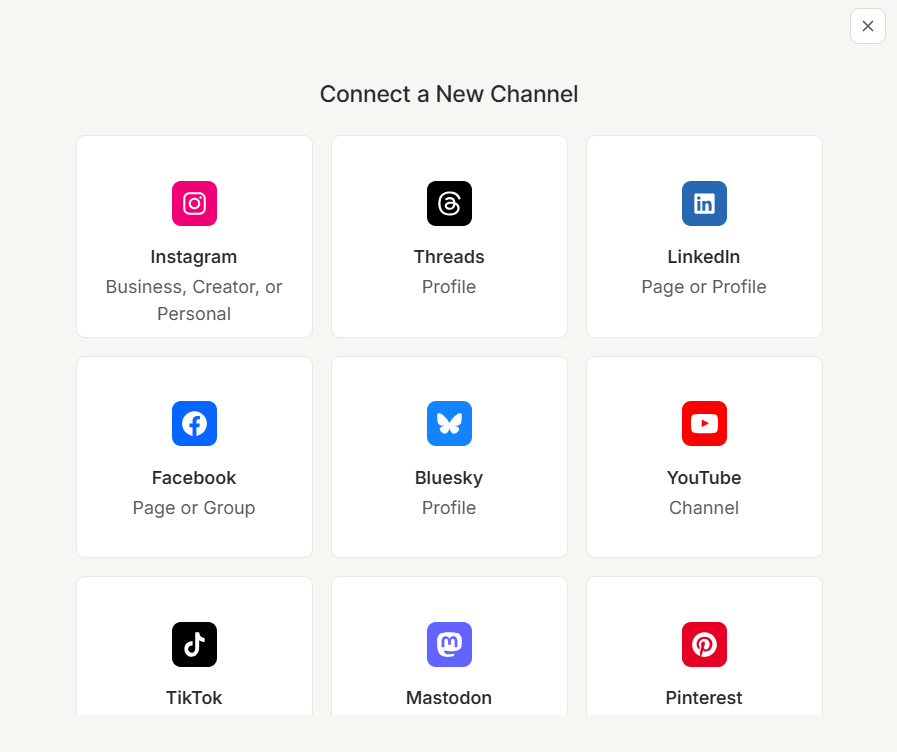
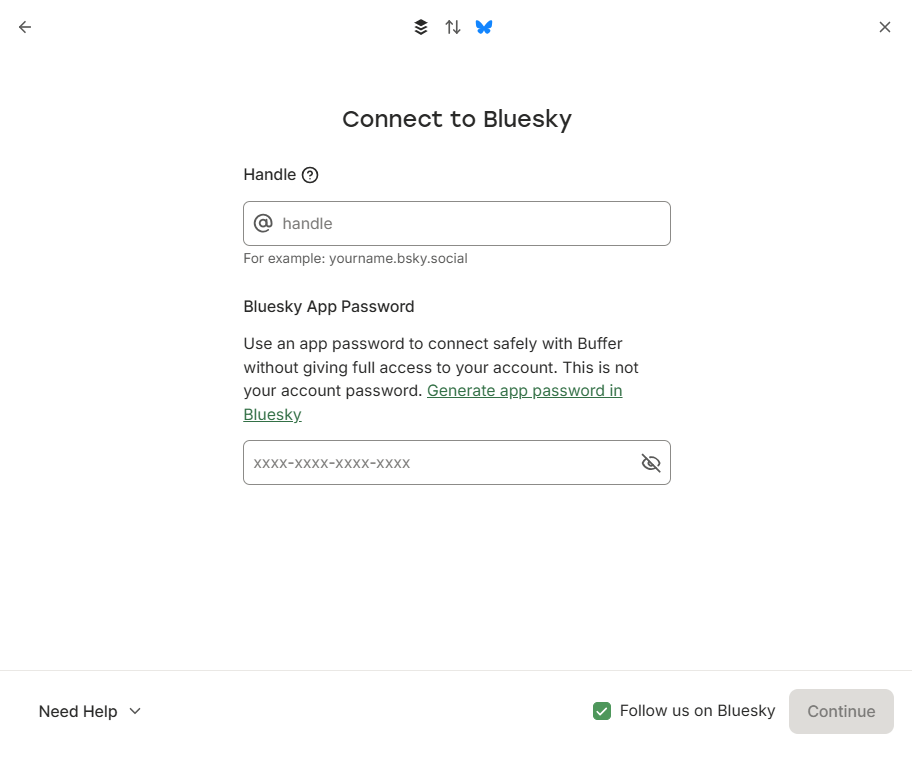
Integrating a Bluesky account with Buffer is designed to be straightforward, typically taking only a few minutes. The process involves adding Bluesky as a publishing channel within Buffer, which requires authenticating the Bluesky account securely.
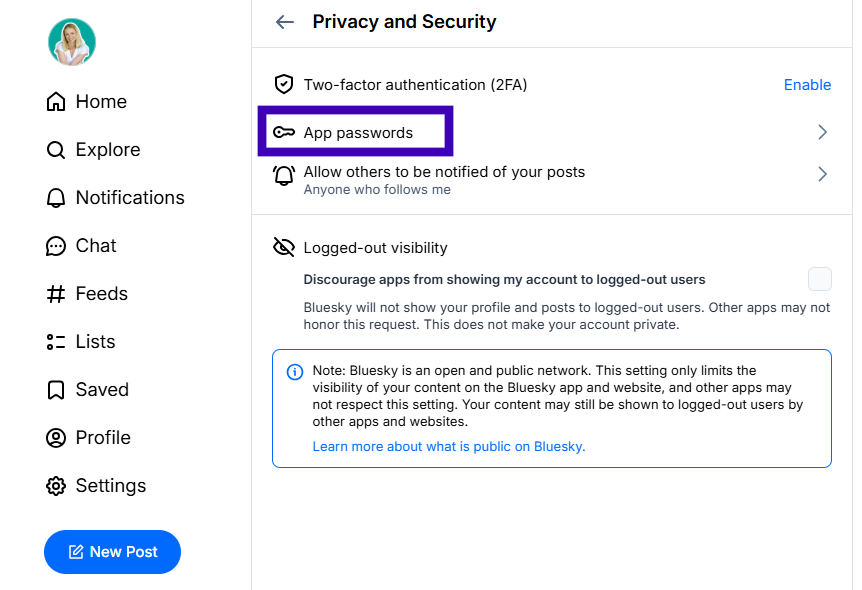
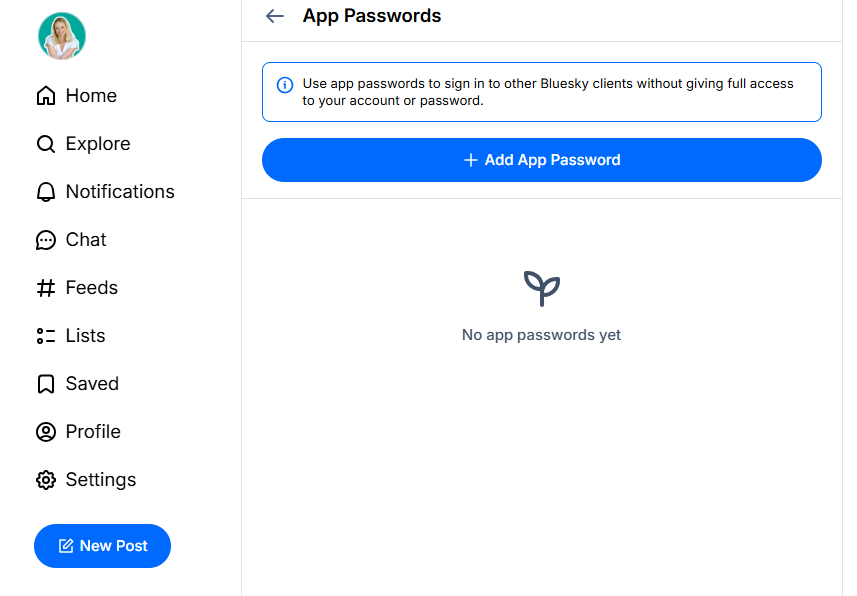
Users begin by navigating to the "Connect a New Channel" section within their Buffer dashboard. Selecting the Bluesky profile option prompts for Bluesky credentials. To ensure security, Bluesky utilizes app passwords for third-party integrations rather than direct login credentials. This means users will need to generate a unique app password from their Bluesky privacy and security settings. After generating an app password on the Bluesky platform, users input their Bluesky handle and the newly generated app password into Buffer’s connection interface. Once verified, the Bluesky account is successfully linked, ready for content scheduling and crossposting. This method enhances security by allowing users to revoke access for specific apps without compromising their main account password.
Scheduling and Crossposting Bluesky Content with Buffer
Once connected, Buffer’s intuitive composer becomes the central hub for managing Bluesky content. The process for creating and scheduling posts is streamlined:
- Initiate a New Post: Users can start by clicking the "+ New" button, typically located in the top right of the Buffer interface, or by selecting a specific time slot in the calendar view.
- Select Channels: Within the composer, users select their connected Bluesky account alongside any other desired social media channels (e.g., X, Threads, LinkedIn).
- Craft Content: The composer allows for drafting text, uploading images, and including videos. Importantly, Buffer supports adding alt text to images, a crucial feature for accessibility that ensures content is consumable by a wider audience, including those using screen readers.
- Schedule or Publish: After crafting the post, users can choose to publish it immediately, add it to their pre-defined content queue, or schedule it for a specific date and time. Buffer handles the rest, ensuring the content goes live precisely as planned across all selected platforms.
A standout feature for Bluesky users within Buffer is the ability to schedule entire threads. While Bluesky supports native threading, it currently lacks a built-in scheduling mechanism for multi-post sequences. Buffer fills this gap by allowing users to compose a complete Bluesky thread—adding each post in sequence using a dedicated "+ button"—and then schedule the entire thread to publish in order at a chosen time. This functionality is invaluable for delivering complex narratives, tutorials, or extended announcements seamlessly.
Beyond publishing, Buffer also extends its utility to community management and analytics for Bluesky. Through Buffer’s Community tool, users can view and reply to Bluesky comments directly from their Buffer dashboard, eliminating the need to constantly switch between applications. This centralized approach streamlines engagement and ensures timely responses. Furthermore, Buffer’s analytics suite provides insights into Bluesky post performance, tracking key metrics like engagement rates and follower growth, allowing users to understand what content resonates best with their audience and refine their strategy accordingly.
Advanced Capabilities and Accessibility
Buffer’s commitment to flexibility extends to supporting self-hosted Bluesky accounts. For users who prefer greater control over their data by running their Bluesky account on a personal server rather than Bluesky’s default, Buffer accommodates custom servers during the connection process. This empowers users who prioritize data sovereignty to still leverage Buffer’s scheduling and management tools.
The absence of built-in scheduling within Bluesky itself makes third-party tools like Buffer not just convenient but essential for professional content management. Whether users are looking to schedule a single post or a complex thread, Buffer provides the necessary infrastructure. Moreover, Buffer’s mobile applications for iOS and Android ensure that Bluesky content can be drafted, scheduled, and managed on the go, offering complete flexibility.
Buffer also offers a free plan that includes the ability to connect a Bluesky account and schedule posts, making it accessible for individuals and small operations to explore its benefits without an initial financial commitment. This "freemium" model allows users to scale their Buffer usage as their social media needs grow, with paid plans offering additional channels, higher scheduling limits, and advanced features.
In conclusion, Bluesky represents a compelling new frontier in decentralized social media, offering an open, user-centric alternative to traditional platforms. Its rapid growth and innovative AT Protocol position it as a significant player shaping the future of online interaction. For individuals and organizations looking to effectively leverage this promising platform, integration tools like Buffer provide the crucial infrastructure for efficient content management, scheduling, and cross-platform synergy, making the decentralized web more accessible and manageable for a broader audience. As the social media landscape continues to evolve, the symbiotic relationship between emerging platforms and robust management tools will undoubtedly play a pivotal role in defining success.