The landscape of digital discovery is undergoing a profound transformation, spearheaded by the rapid integration of artificial intelligence into search functionalities. As platforms like ChatGPT, Perplexity, and Gemini increasingly become the primary conduits through which consumers and businesses discover information and brands, the strategic imperative for businesses to optimize their content for these AI-driven answer engines has become undeniable. This shift has given rise to Answer Engine Optimization (AEO), a specialized discipline focused on structuring content to ensure AI systems can accurately extract, cite, and recommend it within generative responses.
Evidence from the 2026 HubSpot State of Marketing report underscores the tangible benefits of this new approach, revealing that a significant 58% of marketers observe higher conversion rates from visitors referred by AI tools compared to traditional organic traffic. This compelling statistic highlights that visibility within AI-generated answers is no longer a peripheral concern but a critical competitive advantage, directly influencing buying decisions and business outcomes. While many marketing teams are experimenting with basic AEO tactics such as lists, tables, and FAQs, a deeper understanding of the strategies that yield concrete business results is essential. This article delves into real-world AEO case studies across diverse sectors, including SaaS, agencies, and legal services, to illuminate the patterns driving AI citations, brand mentions, and ultimately, revenue. By examining these examples, we can discern the true return on investment (ROI) of AEO in 2026, showcasing how companies have successfully increased AI-referred trials, boosted citation rates, and even generated millions in revenue through AI-driven discovery.
The Paradigm Shift: From SEO to AEO
The evolution from traditional Search Engine Optimization (SEO) to Answer Engine Optimization (AEO) represents a fundamental shift in how businesses approach online visibility. Historically, SEO focused on ranking high on search engine results pages (SERPs) to drive clicks and traffic. Success was measured by keyword rankings, organic sessions, and bounce rates. However, the advent of sophisticated Large Language Models (LLMs) and generative AI has introduced a new paradigm. Users are increasingly seeking direct answers, summaries, and recommendations from AI tools, often bypassing traditional search results entirely.
This means that a brand might rank number one on Google for a specific keyword, yet remain invisible if an AI assistant doesn’t cite its content in a generative answer. AEO, therefore, prioritizes "answerability" and "citability" over mere rankings. It’s about crafting content that is not only accurate and authoritative but also structured in a way that AI systems can easily parse, understand, and trust. The goal is to be the authoritative source that AI confidently recommends, even if the user never clicks through to the original website. This subtle but significant difference necessitates a re-evaluation of content strategy, technical infrastructure, and performance measurement.
Early Indicators and Evolving Metrics in AI Discovery
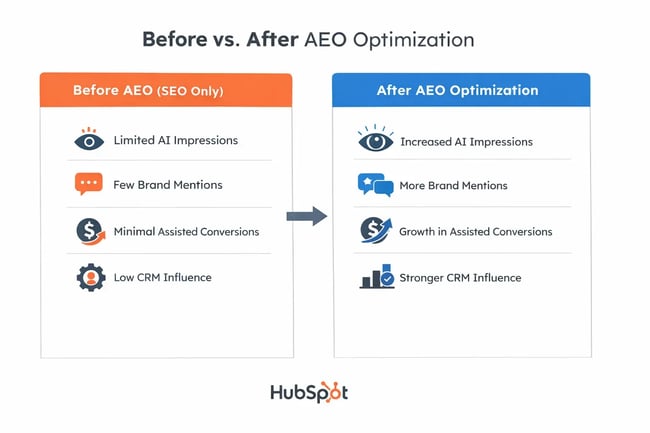
A consistent pattern observed across various AEO case studies is that visibility gains precede traffic increases. Brands typically experience earlier uplifts in AI citations, brand mentions, and assisted conversions before any significant surge in direct website traffic. This suggests that AI visibility acts as a crucial leading indicator for the overall effectiveness of AEO efforts. Marketers must recalibrate their measurement frameworks to capture these nuances.
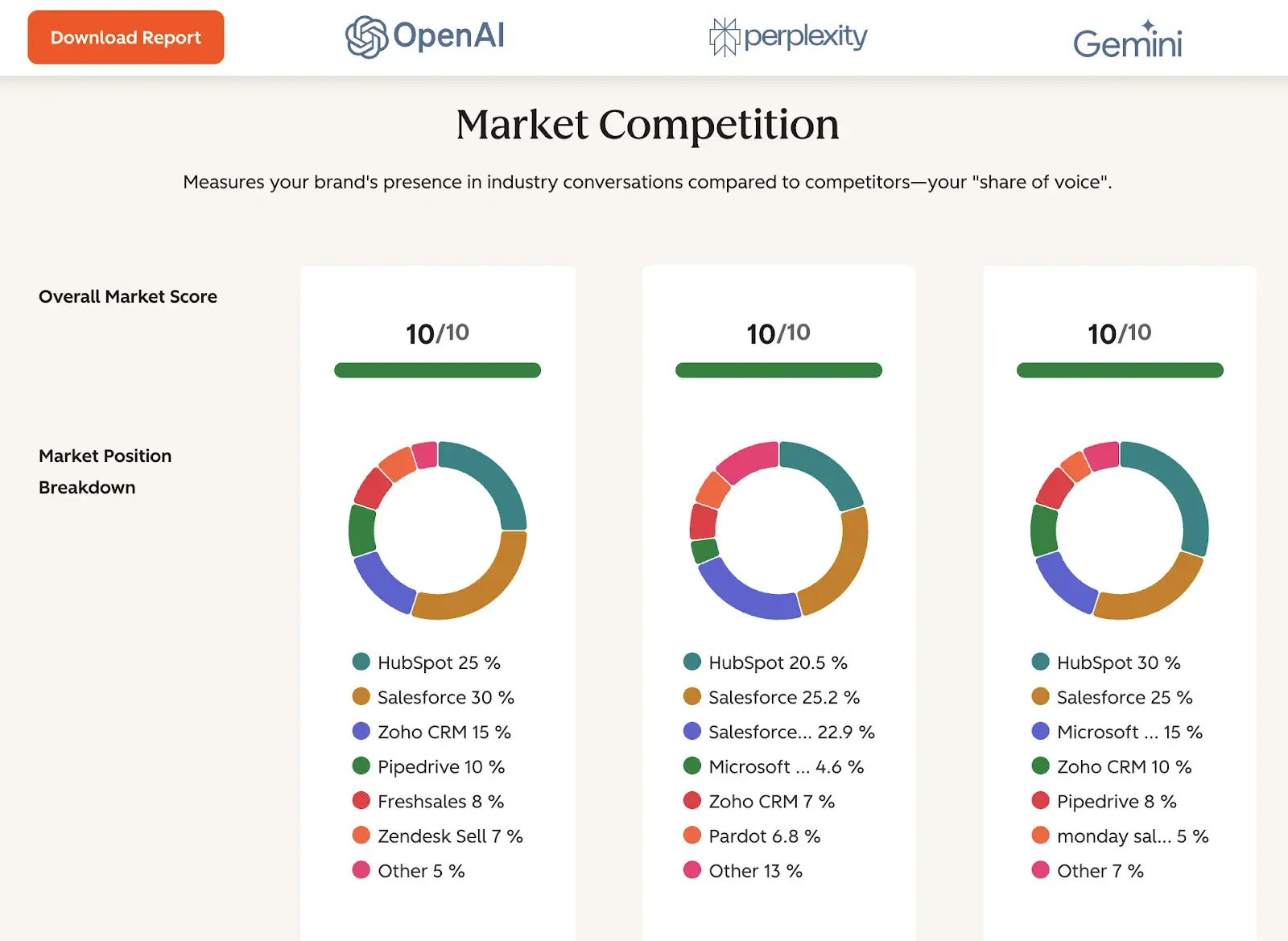
Before the widespread adoption of AI search, success metrics revolved around keyword rankings, organic clicks, and direct conversions. With AEO, the focus has broadened to include AI Overview visibility, the frequency of content citation by LLMs, and the influence on customer relationship management (CRM) pipelines. This involves attributing value to deals that are "assisted" by AI discovery, revenue influenced by AI-driven brand recall, and the impact of generative answers on the early stages of the customer journey, rather than solely relying on last-click attribution models. The subtle yet powerful impact of AI in shaping initial perceptions and guiding buyer decisions demands a more sophisticated approach to ROI measurement.
Case Studies: Demonstrating AEO’s Tangible ROI
Answer Engine Optimization has proven its capacity to deliver measurable ROI by enhancing brand visibility within AI-generated responses, leading to higher-quality traffic and improved brand recall. The following case studies illustrate how companies across diverse industries have implemented strategic AEO campaigns to optimize how AI systems interpret and cite their content, translating into significant business outcomes.
Discovered: A B2B SaaS Client’s 6x Surge in AI-Referred Trials
Discovered, an organic search agency, orchestrated a remarkable turnaround for a B2B SaaS client, propelling their AI-referred trials from 575 to over 3,500 per month in just seven weeks – a staggering 600% increase.
The Before: The client’s existing SEO program, despite being mature, had plateaued and was no longer delivering substantial business impact. A critical oversight was the absence of a deliberate AEO strategy, rendering the company effectively invisible within AI answers. This invisibility meant potential buyers struggled to discover the brand through emerging AI channels. Compounding the issue, the content strategy disproportionately focused on top-of-funnel informational content, which, while informative, lacked direct conversion pathways. The urgent need was for an immediate intervention tied directly to measurable business outcomes.
Execution Teardown: The transformation began with a comprehensive technical SEO and AI visibility audit. The Discovered team quickly identified critical issues, including broken schema markup—a major impediment to AI citations—duplicative content, and suboptimal internal linking. Crucially, there was no existing optimization specifically for LLMs.
Upon resolving these foundational technical issues, Discovered embarked on an aggressive content publishing schedule. Instead of the typical 8-10 monthly articles, they published 66 AEO-optimized pieces in the first month alone. These articles specifically targeted buyer-intent queries that LLMs were already addressing. The content framework employed was meticulously designed for AEO:

- Direct Answers: Each article began with a concise, direct answer to the primary query.
- Structured Data: Heavy use of lists, tables, and FAQs, embedded with relevant schema markup (e.g., FAQPage, HowTo), making information easily extractable by AI.
- Clear Headings: Question-based H2/H3 headings mirrored common AI prompts, guiding LLMs to relevant sections.
- Concise Language: Content was written to be factual, authoritative, and easy for AI to summarize.
- Internal Linking: Strategic internal links connected informational content to high-intent conversion pages.
While the rapid publication of 66 decision-level intent articles quickly generated an influx of AI citations within 72 hours, Discovered recognized the need to bolster trust signals for LLMs. They extended their strategy beyond owned content, leveraging Reddit. Using aged, credible accounts, they strategically seeded helpful comments and discussions in relevant subreddits that often ranked highly for the target discussions. This tactic helped shape the narrative around the client’s tool in trusted third-party environments, further influencing AI’s perception and citation likelihood.
The Results: The downstream impact was almost immediate and highly impressive. Within just seven weeks, Discovered achieved:
- 6x Increase in AI-Referred Trials: A direct leap from 575 to 3,500+ monthly trials.
- Significant Uplift in AI Citations: The brand became a prominent source in AI-generated answers for key buyer-intent queries.
- Enhanced Brand Familiarity: Sales teams reported that prospects arriving from AI referrals exhibited a higher baseline understanding of the product.
This case study powerfully demonstrates that a comprehensive AEO strategy, combining technical optimization, high-volume intent-driven content, and external narrative management, can yield rapid and substantial business growth.
Apollo.io: Lifting Brand Citation by 63% through Narrative Control
Brianna Chapman, a leader in Reddit and community strategy at Apollo.io, dramatically influenced how LLMs cite Apollo, achieving a 63% lift in brand citation rates for AI awareness prompts without extensive website revamping. Her strategy focused on leveraging community platforms like Reddit to control the brand narrative.
The Before: Chapman’s initial investigation into Apollo’s visibility in AI tools like ChatGPT, Perplexity, and Gemini revealed a critical problem. Despite being a comprehensive sales engagement platform, LLMs consistently misrepresented Apollo as "just a B2B data provider." Competitors, even for capabilities where Apollo excelled, were frequently cited. The root cause was identified: LLMs were predominantly pulling information from outdated or incomplete Reddit threads, which, due to their crawlable nature, were treated as authoritative sources. This misrepresentation was actively hindering Apollo’s market positioning.
Execution Teardown: Chapman ingeniously reframed the challenge not as an SEO problem, but as one of narrative control. Her objective was to proactively shape conversations in environments that LLMs inherently trust, primarily Reddit, while maintaining authenticity.
Her process involved several key steps:
- Prompt Identification and AI Visibility Audit: Chapman first identified the most critical prompts (how users queried LLMs) by analyzing first-party data from customer feedback (Enterpret), social listening, and queries within Apollo’s own AI Assistant. This yielded approximately 200 high-value prompts per topic.
- Citation Tracking: She meticulously tracked Apollo’s citation performance for all identified prompts using AirOps, gaining a clear picture of where the brand was (or wasn’t) being cited.
- Community Building and Strategic Content: Chapman established r/UseApolloIO as a credible, dedicated resource. Over five months, she grew this subreddit to over 1,100 members with more than 33,400 content views. The pivotal moment occurred when she posted a detailed, objective comparison in r/UseApolloIO, outlining when teams should choose Apollo versus a specific competitor. This post was crafted to be highly informative and directly address common comparative queries.
Within days, AirOps confirmed that the new Reddit thread was being picked up by LLMs. Within a week, it had successfully displaced the outdated information, generating an additional 3,000+ citations across key prompts in various LLMs. This demonstrates the power of a targeted, community-driven approach to correct and enhance AI perception.
The Results: Apollo’s strategic community engagement yielded impressive results:
- 63% Brand Citation Rate: Achieved for AI awareness prompts.
- 36% Citation Rate: For category-specific prompts.
- Improved Reddit Sentiment: Leading to a noticeable increase in beta sign-ups and demo requests, indicating a direct impact on lead generation and sales pipeline.
Apollo’s success story underscores that AEO is not solely about website optimization; it extends to managing and influencing trusted third-party sources where AI systems gather information, highlighting the importance of a holistic approach to brand narrative.
Broworks: Generating Sales-Qualified Leads Directly from LLMs
Broworks, an enterprise Webflow development agency, questioned whether a direct pipeline could be built from AI tools, moving beyond traditional search engines. Their deep dive into AEO optimization for their entire website provided a resounding affirmative.
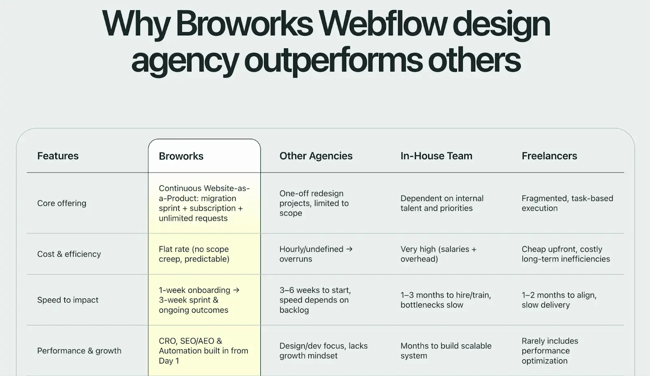
The Before: While Broworks already enjoyed some scattered brand mentions in LLMs, these mentions lacked structure and failed to translate into measurable business outcomes. Crucially, there was no systematic method to influence AI-generated answers, and no attribution system to link AI-driven sessions back to pipeline results. The challenge was to transform passive mentions into active, attributable lead generation.
Execution Teardown: Broworks identified a fundamental issue: a schema markup problem. Their first step was to implement custom schema markup across all critical pages, including landing pages, case studies, and blog posts. They specifically deployed:
- FAQ Schema: For frequently asked questions, allowing AI to extract direct answers.
- Article Schema: For blog posts, providing structured data about the content.
- Local Business and Organization Schema: To clearly define their entity and services, crucial for LLM indexing and local-intent queries.
They also strategically placed comparison tables directly on their landing pages, a format highly conducive for AI to extract and present comparative information.

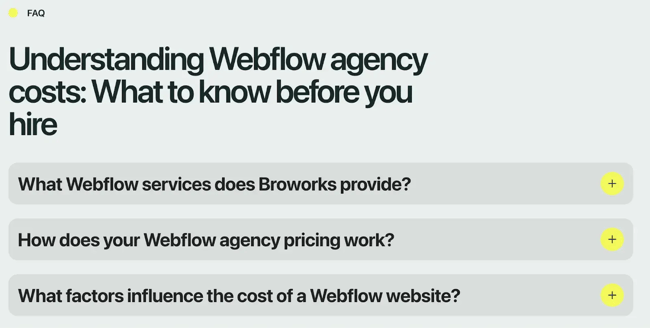
The second core step was to align their content with prompt-driven search. This meant shifting away from optimizing for traditional keywords and instead focusing on questions users would ask ChatGPT, such as: "Who is the best Webflow SEO agency for B2B SaaS?" Content was reorganized to directly answer these complex, conversational queries. They further enhanced this by adding dedicated FAQ sections to most pages and summarizing key takeaways at the top of articles, ensuring immediate clarity for both AI and human readers. Even their pricing page was equipped with an FAQ section to preemptively address common client questions.
The Results: Within just three months, the combined AEO and Generative Engine Optimization (GEO) efforts yielded tangible results visible in both analytics and sales data:
- 20% Increase in AI-Referred Leads: Directly attributable leads from AI discovery.
- 3x Higher Lead-to-Opportunity Conversion Rate: Indicating the high quality and intent of AI-referred prospects.
- Reduced Sales Cycle by 15%: Sales teams reported a stronger baseline awareness among prospects, with fewer introductory questions. Prospects arrived already aligned on problems and solutions, streamlining the qualification process.
Broworks’ experience demonstrates that by meticulously structuring content with schema, anticipating AI prompts, and providing clear, actionable information, businesses can establish a direct, measurable pipeline from AI discovery tools.
Intercore Technologies: $2.34M in Revenue from AI Discovery for a Law Firm
Intercore Technologies, a digital agency specializing in law firms, successfully rescued an established Chicago personal injury firm from an "invisibility crisis," generating $2.34 million in revenue attributed to AI discovery over six months. Despite stellar traditional SEO performance—ranking #1 for "Chicago personal injury lawyer" and boasting over 15,000 monthly organic visitors—the firm experienced a significant drop in lead volume. This indicated that clients were being siphoned off by competitors who maintained stronger visibility in AI search engines, revealing a critical shift in search behavior within the legal niche.
The Before: The core problem was a complete lack of recognition by AI search engines. The firm, despite its strong domain authority and traditional search presence, was entirely absent from LLM results for crucial queries like "personal injury lawyer Chicago." In stark contrast, competitors were mentioned in 73% of AI responses for similar queries, effectively capturing the emerging AI-driven lead flow.
Execution Teardown: Intercore Technologies approached AEO for the law firm as a precision problem, focusing on making the firm’s specialized expertise "legible and quotable" for AI search engines evaluating legal intent. Their execution revolved around four strategic pillars:
-
Advanced Schema Markup: They implemented highly granular schema, including:
- LegalService Schema: To explicitly define the firm’s services.
- Attorney Schema: For individual lawyers, enhancing entity recognition.
- FAQPage and HowTo Schema: To structure common legal questions and procedural guidance.
- Review and AggregateRating Schema: To build trust signals through client testimonials.
- LocalBusiness Schema: To reinforce geographical relevance for "near me" or location-specific queries.
-
Content Precision and Authority: The team meticulously audited and optimized existing content, ensuring it directly answered complex legal questions in a clear, concise, and authoritative manner. New content was developed with a "Q&A" structure, featuring bullet points and definitive statements that LLMs could easily extract and cite. This included detailed explanations of legal processes, common client concerns, and specific case types.
-
Entity Optimization and Trust Signals: Intercore focused on establishing the firm’s lawyers as authoritative entities. This involved:
- Author Biographies with Schema: Clearly linking content to specific, credentialed attorneys.
- Consistent NAP (Name, Address, Phone) Information: Across all online properties, reinforcing local presence.
- Citations and Mentions: Actively seeking high-quality mentions and backlinks from reputable legal directories and news sources to build domain trust.
-
Local AEO Signals: Given the location-specific nature of legal services, they enhanced local AEO by:
- Google Business Profile Optimization: Ensuring all information was complete, accurate, and regularly updated.
- Geographically-Targeted Content: Creating content specifically addressing legal issues relevant to Chicago residents.
- Local Reviews and Testimonials: Actively encouraging clients to leave reviews on Google and other platforms, as these are strong trust signals for AI.
The Results: Following this intensive and multi-faceted AEO undertaking, the firm witnessed a dramatic turnaround. AI visibility soared to 68% across ChatGPT, Perplexity, and Claude, making the firm a consistently recommended source for relevant legal queries.
The revenue impact was equally compelling:
- $2.34 Million in Total Revenue: Attributed directly to AI discovery over a six-month period.
- Significant Increase in Qualified Leads: The quality of leads from AI referrals was notably higher, with prospects exhibiting strong intent.
- Enhanced Brand Authority: The firm’s position as a leading authority in Chicago personal injury law was reinforced across AI platforms, translating into greater trust and client acquisition.
Intercore Technologies’ case illustrates that even in highly competitive and specialized sectors like legal services, a targeted AEO strategy can effectively combat "invisibility" and unlock substantial revenue streams by aligning with the evolving preferences of AI-driven search.
Key Strategies for AEO Success: A Playbook for Marketers
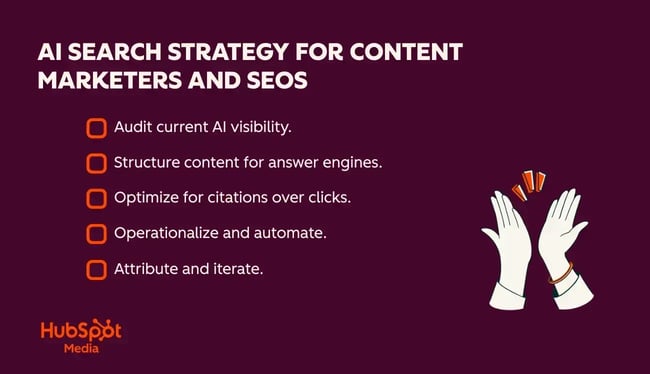
The compelling results from these case studies offer a clear playbook for growth specialists aiming to leverage AEO. By integrating these strategies, marketers can optimize their efforts and achieve similar impactful results.
1. AI Visibility Compounds Before Traffic Does
Across all examined case studies, a consistent trend emerged: AI citations, brand mentions, and overall awareness saw significant lifts weeks or even months before any noticeable changes in direct website traffic. This underscores that AI visibility is a leading indicator of successful AEO efforts. Marketers must shift their focus from solely tracking direct traffic to monitoring these early signals.
- Actionable Advice: Utilize specialized tools, such as HubSpot’s AEO Grader, to continuously monitor how leading answer engines like ChatGPT, Perplexity, and Gemini interpret and cite your brand. Regular audits can reveal critical opportunities, content gaps, and sentiment scoring that directly impact AI visibility, allowing for proactive adjustments and strategic recommendations.
2. Adopting an Answer-First Content Model
Content structured with an "answer-first" approach consistently outperforms traditional keyword-first content in terms of AI citability. Pages that commence with direct answers, concise summaries, or structured FAQs are more reliably cited by LLMs than those with conventional narrative introductions. This pattern is evident across SaaS, agency, and legal services examples, signifying a paradigm shift in content creation.
- Actionable Advice: Begin every high-value page with a clear, self-contained answer to the primary user intent or question. Follow this with contextual information, examples, and supporting details for human readers. Employ question-based headings (e.g., "How can I optimize my SaaS website for AI search?") and provide an immediate, succinct answer below. This approach maximizes the likelihood of AI systems confidently extracting and citing your content as a trustworthy source, driving higher-quality AI-referred traffic over time.
3. The Imperative of Schema Markup
Schema markup is no longer optional; it is the fundamental backbone for machine-readable content, enabling AI systems to accurately understand, categorize, and cite web pages. Case studies consistently demonstrate that implementing structured data—including FAQ, HowTo, Product, Offer, Breadcrumb, and Dataset schema—directly enhances AI extraction and citation rates. Without proper schema, even high-quality content risks being overlooked by LLMs due to parsing difficulties.
- Actionable Advice: Conduct a thorough audit of all high-value pages for relevant schema types. Prioritize FAQ and HowTo schema for decision-stage content, Product and Offer schema for transactional pages, and Breadcrumb or Organization schema for site hierarchy and entity clarity. Regularly test schema implementation using tools like Google’s Rich Results Test and iterate based on AI citation performance. Platforms like HubSpot Content Hub can facilitate the creation of schema-ready content.
4. Mastering Narrative Control Beyond Owned Media
On-site AEO optimization, while crucial, is often insufficient on its own. LLMs frequently draw information from trusted external sources, meaning a brand’s AI visibility is significantly influenced by third-party content. Apollo’s case study powerfully illustrates that actively managing a brand’s narrative on platforms like Reddit or Quora can fundamentally alter how AI systems describe and recommend it. Outdated or inaccurate information on these external platforms can lead LLMs to propagate misaligned messages, even if the brand’s official website is perfectly optimized.
- Actionable Advice: Identify key prompts and topics your target audience queries in AI tools. Then, actively engage and shape conversations in trusted online communities by providing accurate, detailed, and helpful content. This might involve creating dedicated subreddits, participating in niche forums, or publishing authoritative comparisons. By integrating external narrative control with on-site optimization, marketers can enhance both the quantity and quality of AI citations, leading to increased conversions and stronger brand recognition. HubSpot’s AI Content Writer can assist in creating high-quality content at scale across various channels.
5. Strategic Internal Linking for Conversion Paths
Internal linking serves as a vital signal for both human users and AI systems, conveying context and relevance across a website. Case studies highlight that AI crawlers benefit significantly from intentionally connected content, particularly when answer-first pages are strategically linked to high-intent landing pages or product offers. Without a clear internal linking structure, LLMs may surface informative content but fail to guide users toward critical conversion opportunities.
- Actionable Advice: Develop a comprehensive internal linking strategy. Map out high-value pages and identify key answer-first articles that can serve as effective entry points. Strategically link these to product pages, service pages, or other high-intent conversion targets. Use descriptive and contextually relevant anchor text that aligns with user queries, ensuring AI systems understand the relationship and hierarchy between pages. This approach ensures that AI-referred traffic efficiently navigates the conversion funnel, improving assisted conversions and pipeline influence.
6. Page Speed Counts for AEO
AI systems, like human users, rely on fast and reliable access to content. Pages that suffer from slow loading times may be less likely to be fully fetched or accurately parsed by AI crawlers, consequently limiting citations and overall AI visibility. Case studies reveal that even websites with exemplary content and schema can underperform if load times exceed two seconds. Slow page speeds increase fetch latency, elevate the risk of incomplete parsing, and diminish the probability of content being surfaced in AI answers.
- Actionable Advice: Regularly audit page speed using tools such as Google PageSpeed Insights or HubSpot’s Website Grader. Prioritize optimizing images and scripts, enabling browser caching, and minimizing render-blocking resources. Crucially, focus on mobile performance, as many AI systems predominantly evaluate content using mobile-first indexing. Improving load times not only enhances user experience but also guarantees that AI systems can reliably extract and cite your content, translating directly into higher AI visibility and measurable ROI.
7. Question-Based Subheadings are AEO Gold
Employing question-based H2 and H3 subheadings is an exceptionally effective AEO tactic because it directly mirrors how users query answer engines. For instance, using an H2 like "How can marketers structure pages for answer engine optimization?" followed by informative H3s, creates a highly scannable and AI-friendly structure. The critical element is to provide a direct, concise answer immediately below the heading, leaving no room for misinterpretation by AI.
- Actionable Advice: Integrate question-based subheadings throughout your content. For each question, provide a short, self-contained answer at the beginning of the section. This clarity helps AI quickly identify and extract relevant information. Tools like HubSpot Content Hub can simplify this process by offering built-in AEO and SEO recommendations for headings and structure, alongside drag-and-drop modules for creating clear FAQ sections and lists.
Frequently Asked Questions About Answer Engine Optimization Case Studies
What is answer engine optimization, and how is it different from traditional SEO?
Answer Engine Optimization (AEO) is the practice of structuring content specifically to enable AI systems and Large Language Models (LLMs) to easily extract, comprehend, and reuse it as direct answers. Its primary goal is to achieve visibility within AI Overviews, chat responses, and generative search results, where users often receive direct answers without needing to click through to a website. In contrast, traditional SEO focuses on improving website rankings, driving clicks, and increasing direct traffic to a site. While AEO builds upon core SEO foundations, its success metrics diverge, prioritizing AI mentions, assisted conversions, and CRM influence over mere session counts.
Which schema types should I start with for AEO?
For effective AEO, marketers should prioritize schema types that clarify content intent and relationships. FAQ, HowTo, Product, Organization, Breadcrumb, and Article schema have consistently demonstrated improved AI extraction and citation accuracy across various AEO case studies. The key is to select schema that is highly relevant to the page’s content, reinforcing its primary purpose and how different concepts are interconnected, rather than simply adding a large volume of schema.
How do I adapt my content for AI Overviews and chat answers without hurting my UX?
The most effective approach is to adopt an "answer-first" content structure. This means that each section should begin with a direct, self-contained answer to a common question, followed by more context, examples, or in-depth information tailored for human readers. This dual-purpose structure serves both AI systems and user experience seamlessly, avoiding content duplication. AEO case studies indicate that short, clear paragraphs, prominent headings, concise summaries, and well-organized FAQ sections enhance AI reusability while simultaneously making pages scannable and readable for human visitors. A successful AEO strategy integrates with good UX principles rather than conflicting with them.
How do I prove ROI for AEO when traffic does not always increase?
Proving AEO ROI requires expanding beyond traditional traffic metrics. Instead, teams should track AI citations, brand mentions, assisted conversions, influenced deals within CRM systems, and qualitative sales feedback. These indicators often surface earlier than direct traffic increases and compound over time. Many AEO case studies validate ROI by demonstrating a correlation between gains in AI visibility and improvements in lead quality, shorter sales cycles, and reduced customer acquisition costs. The key is to move beyond last-click attribution and embrace a more holistic measurement framework that accounts for AI’s influence across the entire customer journey.
When should I consider bringing in AEO services versus keeping it in-house?
In-house teams are well-suited for AEO implementation when they possess strong existing content, schema, and analytics workflows, and can iterate rapidly. This model is particularly effective for companies with mature SEO foundations and direct access to CRM-level attribution data. Conversely, external AEO services become valuable when internal teams lack specialized expertise in entity modeling, advanced schema implementation, or comprehensive visibility into how AI systems reference their brand. External agencies can provide the necessary specialized knowledge and tools to overcome these complex challenges efficiently.
Answer Engine Optimization is Your Growth Lever
Answer Engine Optimization has unequivocally demonstrated its capacity to deliver real, measurable business impact. This is achieved when marketing teams consciously shift their perspective, recognizing AI visibility not as a mere byproduct of SEO, but as a dedicated strategic imperative. The evidence suggests that results can materialize rapidly; digital marketers can begin to see a forming pipeline directly attributable to AI recommendations within the first week of optimizing their website for AEO.
To accelerate AEO implementation and maximize its potential, leveraging the right tools is paramount. Platforms like HubSpot Content Hub empower teams to publish schema-ready, answer-first content at scale, streamlining the creation process. Concurrently, utilizing visibility checks through specialized tools such as HubSpot’s AEO Grader or Xfunnel can significantly reduce guesswork and expedite the iteration cycle, ensuring continuous improvement in AI visibility. In an increasingly AI-driven digital landscape, gearing up and making AEO a central component of your marketing strategy is not just an option, but a critical growth lever for sustained competitive advantage.