Newsletter and website hosting platform Beehiiv is significantly enhancing its ecosystem by introducing a suite of community-building features and launching programmatic advertising, responding to escalating demand from its diverse user base, which ranges from independent creators to major media organizations. These strategic additions aim to deepen audience engagement, streamline monetization, and consolidate essential publishing tools within a single, integrated platform.
A New Era of Community Engagement for Publishers and Creators
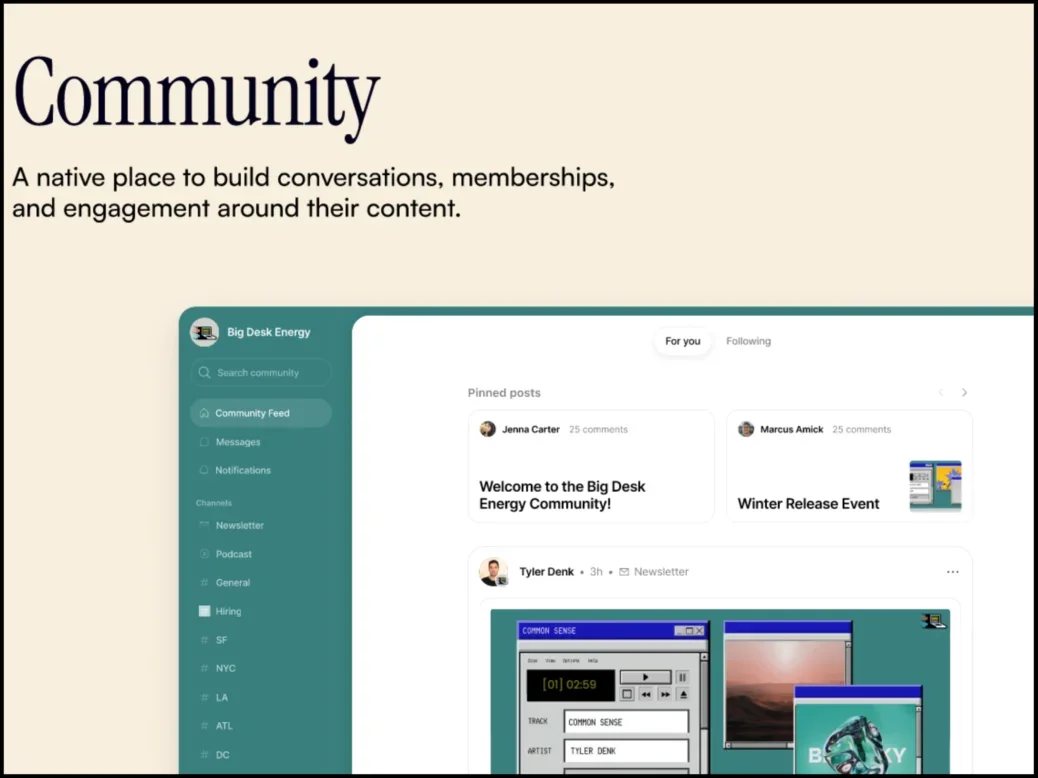
At the core of Beehiiv’s latest update is the rollout of comprehensive community features designed to foster more dynamic and interactive environments around publications. Moving beyond the limitations of traditional comment sections, the new functionality enables publishers to establish dedicated discussion hubs where users can post, reply, and direct message one another. These hubs will feature a main feed alongside specific channels, allowing for organized conversations around various topics or content types. This move directly addresses a persistent need identified by Beehiiv’s chief executive and co-founder, Tyler Denk, who noted that "overwhelmingly, community has come up for the past 12 months as something that people wanted more of, everyone from content creators to even large publishers that we work with."
The drive for integrated community tools reflects a broader trend in the creator economy, where direct engagement with audiences is paramount for retention and long-term sustainability. For many creators and publishers currently leveraging Beehiiv, the absence of native community features necessitated the use of third-party platforms such as Facebook groups, Discord, or Slack. While these external tools offered a solution, they often introduced a host of inefficiencies, including "technical complications" in syncing with paid newsletters, incurring separate costs, and presenting an inconsistent user interface that fragmented the audience experience. Denk specifically critiqued Slack as primarily a workspace tool with high costs, and Discord as a platform built for gaming, highlighting the functional and experiential mismatch for content-driven communities.
Beehiiv’s approach contrasts with competitors like Substack, which, while offering comments and some interactive features, is also known for its integrated app that fosters a wider network effect among readers and publications. Beehiiv, however, is positioning itself as a comprehensive platform where all aspects of a creator’s or publisher’s digital presence—newsletters, websites, podcasts, and now community—can reside harmoniously. This consolidation strategy is underpinned by a strong commitment to data portability, ensuring that users retain control over their subscriber lists and content should they ever choose to migrate. "We have to earn the right to have that customer," Denk affirmed, emphasizing that facilitating data migration is crucial if a user believes they could be better served elsewhere.
The platform’s "aggressive six to eight month roadmap" for community features promises further advancements, including the ability for users to segment their audience based on community engagement. This will enable sophisticated, automated campaigns, such as sending targeted emails to upsell active community members to higher subscription tiers, thereby transforming engagement into direct revenue opportunities.
Programmatic Advertising: A New Revenue Stream Driven by Large Publishers
Simultaneously with its community push, Beehiiv is rolling out programmatic advertising, a significant development particularly championed by its larger publishing partners. Previously, publishers on Beehiiv could manually browse and select available inventory from Beehiiv’s ad network to place in their newsletters, a system that currently generates a collective $1 million per month for creators. The introduction of programmatic capabilities automates this process. Publishers can now integrate a programmatic ad block, allowing Beehiiv to automatically fill it with the "best option for your audience at the highest payout." This "autopilot" functionality is designed to be more akin to established programmatic ad solutions in email, such as Liveintent, offering a streamlined and potentially more lucrative advertising model.
Denk explicitly stated that the demand for programmatic ads was "very much driven by large publishers" seeking "higher rates" from a "higher quality ad unit" compared to some legacy platforms. This enhancement positions Beehiiv not just as a tool for independent creators but as a robust platform capable of meeting the sophisticated monetization needs of established media entities like Time, TechCrunch, Newsweek, Sinclair, and the Boston Globe, all of whom host newsletters on Beehiiv. For these organizations, maximizing advertising revenue through efficient, automated systems is critical to their digital strategy.
Broader Platform Enhancements and the Role of AI
Beyond community and programmatic advertising, Beehiiv is continually evolving its platform with a suite of other improvements. A newly announced visual editor allows users to see their content’s appearance in real-time as they write and edit, eliminating the need for constant preview mode toggling. This, alongside collaborative editing features and expanded customization options, aims to enhance the content creation workflow and user experience.
The platform’s recent expansion into podcast hosting and monetization, launched in April, has already shown significant uptake. Denk reported that half of new Beehiiv podcasters were existing users consolidating their podcasts from other platforms, while a quarter were existing users launching their first podcast. The remaining quarter represented new users migrating their entire digital presence—email, website, and podcast—to Beehiiv. This demonstrates a clear user preference for an all-in-one solution. Looking ahead, Beehiiv plans to introduce video capabilities and programmatic podcast advertising later this year, further solidifying its position as a multi-modal content platform.
Artificial intelligence (AI) is also being deeply integrated into Beehiiv’s offerings. The platform already features an MCP (Model Context Protocol), allowing users to connect their accounts to external AI tools like Claude and ChatGPT’s Codex. This enables users to generate insights and automate tasks by asking questions such as "What are the trends in my newsletters?", "Who are the most engaged readers?", or "What subject lines work best?". Building on this, Beehiiv is upgrading its AI capabilities with Copilot, an in-platform AI assistant. The strategic goal behind Copilot is to empower publishers and users to "spend more time creating content and all of the other tasks around that," effectively offloading non-content tasks to AI and boosting productivity. This reflects a growing trend across the tech industry to embed AI directly into workflows to enhance efficiency and creative output.
Context: The Evolving Creator Economy and Direct-to-Audience Models
The moves by Beehiiv come at a pivotal time for the creator economy and digital publishing. The last decade has seen a significant shift towards direct-to-audience monetization models, largely driven by the success of platforms like Substack, Patreon, and now Beehiiv. As traditional media grapples with declining ad revenues and the challenges of platform dependence, many journalists and niche publishers have turned to newsletters and paid subscriptions as viable alternatives.
The global newsletter market alone has experienced robust growth, with analysts projecting continued expansion as creators seek more control over their content and direct relationships with their readership. The average default price point for premium newsletters, often cited around $10 per month, signifies a willingness among audiences to pay for high-quality, specialized content. However, retention and churn remain significant challenges, making robust community features and diversified monetization streams crucial for sustained success.
Beehiiv, founded by former Substack employees, has consistently aimed to differentiate itself by offering a more comprehensive, feature-rich platform that appeals to both individual creators and large media organizations. While Substack emphasizes its network effect and a simpler, writer-focused interface, Beehiiv’s strategy revolves around providing a powerful, customizable toolkit that allows publishers to own their audience and scale their operations without relying on a fragmented ecosystem of third-party tools. This includes advanced analytics, A/B testing, and now, sophisticated community and advertising solutions.
The integration of community features is particularly pertinent in an increasingly digitized and AI-driven world. As Tyler Denk highlighted, "I think with AI, it actually becomes even more important. I think more people crave this human-to-human interaction… to have this community that you can go to with a shared experience and shared interest in something." This perspective suggests that as AI automates more content creation, the human element of shared experience and direct interaction will become an even more valuable commodity, further solidifying the importance of native community spaces within publishing platforms.
Implications for the Digital Publishing Landscape
Beehiiv’s latest announcements carry significant implications for the broader digital publishing landscape. By consolidating community, content creation, and monetization within a single platform, Beehiiv is positioning itself as a formidable competitor in the creator economy. For publishers, this means reduced operational complexity, potentially higher revenue through integrated programmatic advertising, and a stronger ability to cultivate and retain loyal audiences through direct interaction. The ability to manage everything from email marketing to podcasts and now community discussions from one dashboard offers unparalleled efficiency.
For the industry as a whole, Beehiiv’s trajectory underscores a trend towards feature consolidation among publishing platforms. As competition intensifies, platforms that can offer a complete suite of tools—from content creation and distribution to engagement and monetization—will likely gain market share. Furthermore, the emphasis on AI integration signals a future where content creation and audience management are increasingly augmented by intelligent automation, freeing up creators to focus on their core journalistic and creative endeavors.
The launch of programmatic advertising, specifically catering to the demands of large publishers, also suggests a growing maturity in the newsletter advertising market. As email becomes a more valuable channel for direct marketing, the ability to automate ad placements and maximize yield will be crucial for professional publishers seeking to scale their operations and compete with traditional digital ad networks.
In conclusion, Beehiiv’s strategic expansion into integrated community features and programmatic advertising marks a pivotal moment for the platform and its users. By addressing critical needs for deeper audience engagement, diversified monetization, and streamlined workflows, Beehiiv is not only enhancing its competitive standing but also contributing to the ongoing evolution of how digital content is created, distributed, and sustained in the dynamic landscape of the creator economy. With an aggressive roadmap and a clear vision for an all-in-one publishing solution, Beehiiv is poised to reshape expectations for what a newsletter and website hosting platform can offer.