The rescheduled White House Correspondents’ Association (WHCA) dinner, set to take place on Friday, is poised to be a contentious event, casting a shadow over what is traditionally a celebratory evening for journalism. The gathering, initially marred by a security incident in April, now confronts heightened scrutiny over the expected presence and rhetoric of President Donald Trump, juxtaposed against a backdrop of escalating tensions between his administration and the press.
The Rescheduled WHCA Dinner: A Crucible of Press Freedom
The initial attempt at the annual WHCA dinner in April was abruptly halted after a gunman, attempting to breach the event, shot a Secret Service agent. Fortunately, the agent sustained only minor injuries, and security protocols ultimately prevented a greater tragedy. While the WHCA was not deemed responsible for the security breach, the incident forced a postponement and highlighted the unpredictable nature of high-profile events in the nation’s capital.
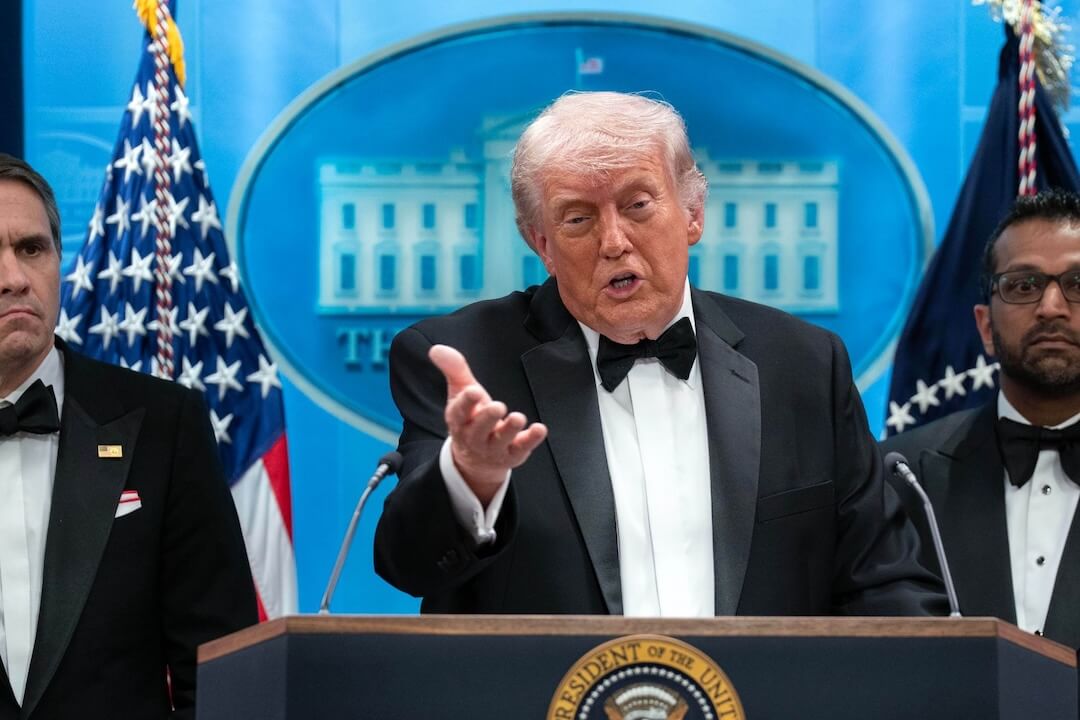
Now, as the dinner reconvenes, the focus has shifted from security concerns to the anticipated remarks of President Trump. Historically, the WHCA dinner has been an occasion for lighthearted banter, where the president and journalists exchange amiable jokes, celebrating the First Amendment and the crucial role of a free press in a democratic society. However, given President Trump’s consistent antagonism toward media organizations, often labeling unfavorable coverage as "fake news" or the "lame-stream media," there is widespread apprehension that his speech will deviate sharply from this tradition. Critics suggest that rather than offering collegial humor, the President is likely to use the platform to mock and criticize the press, reiterating his grievances about perceived mistreatment. His public persona rarely exhibits self-deprecation or a traditional sense of humor, often favoring confrontational rhetoric over playful jabs.
The concerns surrounding President Trump’s potential speech are not isolated. They reflect a broader, persistent conflict between the administration and the media. Even prior to the first dinner in April, a collective of 500 retired and former journalists issued a letter to the WHCA, imploring the association to actively resist the Trump administration’s perceived attacks on reporters and press freedoms. This call was renewed in an updated letter, which underscored the intensification of these attacks since the initial dinner attempt. The letter cited specific instances, stating, "Since that evening, the administration’s attacks on journalists and press freedom have become even more egregious. The President’s Department of Justice has subpoenaed journalists and their phone records. President Trump has threatened to revoke licenses of broadcasters who refuse to acquiesce to his demands."
These examples are not exhaustive. The administration has pursued New York Times reporters and their relatives in an effort to uncover sources for reporting on security concerns related to a Qatar-gifted plane intended for Air Force One use. Similar battles are ongoing with The Washington Post and The Wall Street Journal over confidential sources. Furthermore, the Federal Communications Commission (FCC) has reportedly ordered ABC stations to seek early renewals of broadcast licenses, and is investigating ABC’s "The View," with suggestions that political motivations may be at play. The Pentagon also remains embroiled in court disputes with news outlets. Veteran media reporter Paul Farhi highlighted this tension, tweeting, "Reminder that the @whca will be hosting the president at its annual dinner on Friday (re-staged from April) at the same time that the president’s DoJ is demanding to know who the @nytimes’ sources were for a story that embarrassed the president."
In response to the growing criticism, the WHCA issued a statement defending its decision to proceed with the dinner. It asserted, "The White House Correspondents’ Dinner exists because the First Amendment matters most when it’s under pressure. As we continue to celebrate America’s 250th birthday, our choice to gather as journalists, newsmakers and the president in the same room is a reminder of what a free press means to this country — and why it must endure. Not for the media or the president, but for the people who depend on it."
While the dinner serves a vital function in raising funds for the WHCA, which are then channeled into important journalistic endeavors, the event has historically drawn criticism for fostering an "icky, conflicted feel" due to the perceived coziness between journalists and politicians. Critics like Media Matters’ Matt Gertz question the wisdom of inviting President Trump to an event theoretically meant to celebrate a free press, arguing it is "comical to propose the president values" such principles. This sentiment underscores the dilemma facing the WHCA: whether to uphold a tradition that, under current circumstances, risks providing a platform for a perceived adversary of press freedom, potentially undermining the very values it aims to celebrate. Should the event devolve into an antagonistic spectacle, many believe the responsibility for the outcome will squarely rest with the WHCA.
Trump’s Legal Battles: A Strategy Backfires?
In a separate but related development highlighting the President’s confrontational approach to media, President Trump recently experienced a significant setback in a courtroom battle against the BBC. The lawsuit, filed by Trump, seeks $10 billion in defamation damages from the British broadcaster over a documentary aired before the 2024 presidential election. Trump alleges that the documentary deliberately spliced together different parts of his January 6, 2021, speech to misrepresent his remarks as a single, continuous sentence, causing "direct harm" to his businesses. This claim persists despite the documentary not airing in the United States and Trump ultimately winning the election.
This week, a federal magistrate judge in Miami ruled against Trump, ordering him to turn over his financial records to the BBC. The BBC had requested these documents to substantiate Trump’s claim of business damages. This ruling represents a potential backfire for a legal strategy often characterized by high-profile lawsuits filed in response to perceived slights. The demand for financial transparency, which Trump has historically resisted, could expose details he prefers to keep private. Brian Stelter, a prominent media analyst, aptly summarized the situation with the headline, "Trump’s BBC lawsuit coming back to bite him?" While Trump is expected to appeal this ruling, and the case will subsequently be heard by U.S. District Court Judge Roy Altman, a Trump appointee, the immediate implication is that his aggressive legal tactics may, in this instance, demand a level of personal disclosure he had not anticipated.
Media Consolidation: Paramount-Warner Bros. Discovery Deal Under Scrutiny
The landscape of major media companies is also undergoing significant shifts, as evidenced by the proposed megadeal between Paramount and Warner Bros. Discovery. This acquisition, which would combine two prominent media and entertainment studios, has been temporarily halted after a dozen Democratic-led states filed a lawsuit alleging violations of antitrust rules. These states argue that the consolidation would harm consumers by weakening competition and inevitably leading to increased costs for content and services.
The Wall Street Journal’s editorial board, known for its generally conservative leanings, weighed in on the issue, expressing strong support for the merger. The board contended that the states’ attorneys general were driven by political motivations rather than genuine antitrust concerns. Specifically, the editorial suggested that the "larger goal is to deny Paramount CEO David Ellison control of Warner’s CNN news channel," implying that Democrats fear the potential impact of a combined CBS and CNN, particularly given Ellison’s perceived alignment with President Trump and his choice of Bari Weiss to run CBS.
The Journal’s editorial dismissed these concerns as "overwrought," citing the multitude of news sources available today, the declining audiences for both CBS and CNN, and the "lackluster performance" of CBS. However, this perspective overlooks critical aspects of media consolidation. While the digital age has indeed proliferated news sources, the consolidation of major, established news organizations under potentially politically motivated ownership raises legitimate concerns about journalistic independence, editorial slant, and the overall diversity of voices in the media ecosystem. To suggest that the diminishing audience share of traditional networks negates their importance or the potential for political influence is a contentious argument, particularly given the enduring reach and credibility of these outlets. The board concluded by stating that while the combined company might face a "monumental debt load" and could be a "bad business deal," "bad antitrust policy is no reason to stop it," further emphasizing their view that the objections are politically motivated rather than economically sound.
World Cup Ratings Phenomenon: A Resounding Success for Soccer in the U.S.
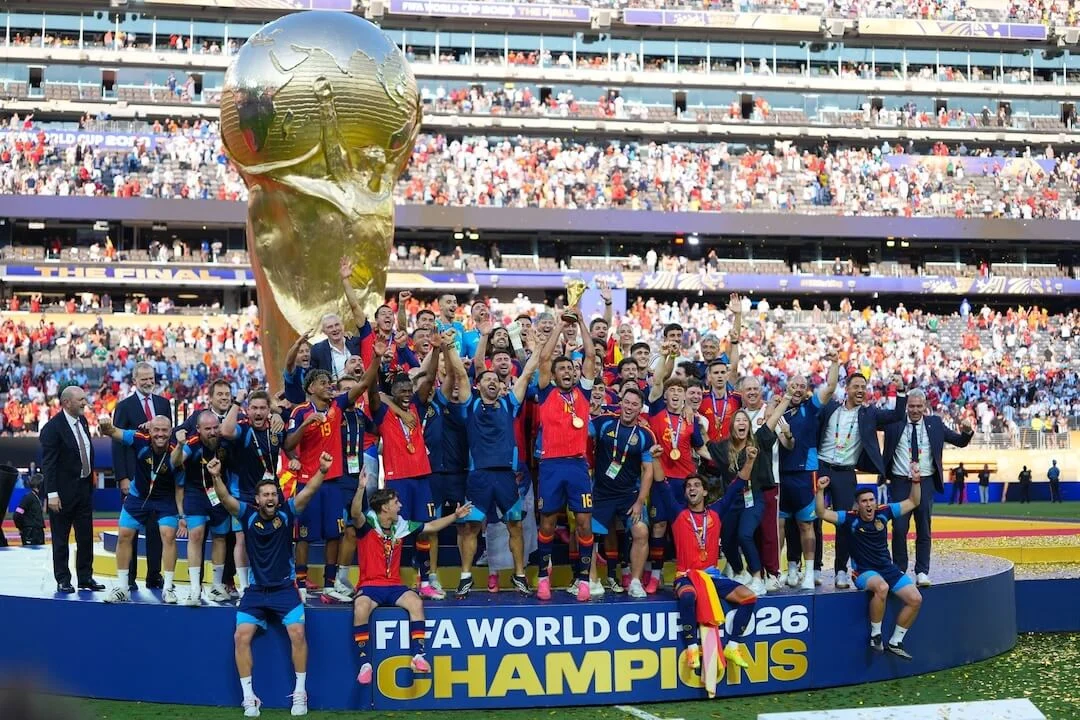
In a stark contrast to the controversies gripping media politics, the recent World Cup final between Spain and Argentina delivered an unprecedented triumph in U.S. television viewership, shattering previous records and underscoring the burgeoning popularity of soccer in America. Forecasts had predicted U.S. viewership to surpass the 40 million mark, and these expectations were not only met but significantly exceeded.
Fox’s broadcast of Spain’s 1-0 victory averaged a remarkable 42.5 million viewers. When combined with Telemundo’s Spanish-language audience of 23.9 million, the total U.S. viewership for the final reached an astonishing 66.4 million, establishing a new all-time record for soccer viewership in the United States. According to Jon Lewis of Sports Media Watch, this event was the most-watched non-NFL sporting event since the 1994 Lillehammer Olympics on CBS. Furthermore, excluding NFL games and major news events, the World Cup final became the most-watched television event of any kind since the iconic series finale of "Seinfeld" in 1998, which drew 76.3 million viewers.
The 2026 World Cup proved to be a monumental success for Fox, with nine of the 11 largest English-language soccer audiences in history originating from this tournament. These figures were only surpassed by the 1999 and 2015 Women’s World Cup finals, both won by the United States. On the Spanish-language side, the tournament delivered the 15 largest soccer audiences ever. The final match window on Fox alone surpassed Game 7 of the 2016 World Series (40.9 million across all Fox platforms), and eclipsed every NBA, college football, and college basketball game in Nielsen people meter history, as well as all hockey, auto racing, horse racing, and golf events.
The Athletic’s Dan Shanoff raised pertinent questions regarding the long-term implications of this viewership surge: "Will MLS and NWSL capture any of that increased attention? Should our expectation for the women’s World Cup next year in Brazil be for more record-setting audiences? Now that more names are recognizable, will more U.S. viewers tune in to the Premier League, La Liga, the Bundesliga and other top European leagues available on U.S. TV? Are mid-half advertising stoppages (in the form of ‘hydration breaks’) the new normal?" These questions highlight the potential for this World Cup success to be a catalyst for sustained growth across various facets of American soccer, especially with North America set to host the next men’s World Cup. The increased acceptance of "hydration breaks" also points to evolving strategies for integrating advertising into live sports broadcasts.
ESPN Layoffs: A Case Study in Corporate Communication Challenges
The recent wave of layoffs sweeping through the media industry also affected ESPN, with NFL analyst Ryan Clark being among the high-profile individuals let go. However, the manner in which Clark learned of his termination became a notable story, illustrating the challenges of managing sensitive corporate communications in the age of rapid digital information dissemination.
ESPN had initially scheduled its layoff announcements for Tuesday morning. However, news of impending cuts, including Clark’s name, prematurely leaked to the internet on Monday. The Athletic’s Andrew Marchand reported Clark’s layoff on Monday, creating an immediate and unforeseen challenge for ESPN’s human resources and internal communications teams.
Crucially, when the reports of his termination began circulating, Clark was live on ESPN’s "NFL Live" show, appearing via Zoom. To prevent him from discovering the news through his phone or social media while on air, ESPN made the decision to inform him during a commercial break. Clark later tweeted about the incident, stating he asked whoever delivered the news, "Should I be done now?" to which he was reportedly told, "Yes." Consequently, Clark did not return to the broadcast after the commercial break.
This incident, while regrettable for Clark, underscores a pervasive issue in large organizations: the difficulty of containing sensitive information. While the leak itself represents a significant internal failure, ESPN’s immediate decision to inform Clark once the news became public can be seen as a damage-control measure, preventing further embarrassment for the analyst and the network. Nevertheless, the situation highlights the ethical and practical complexities of corporate layoffs, particularly in a high-profile industry where information travels at lightning speed, and the impact on employee morale and public perception can be substantial.