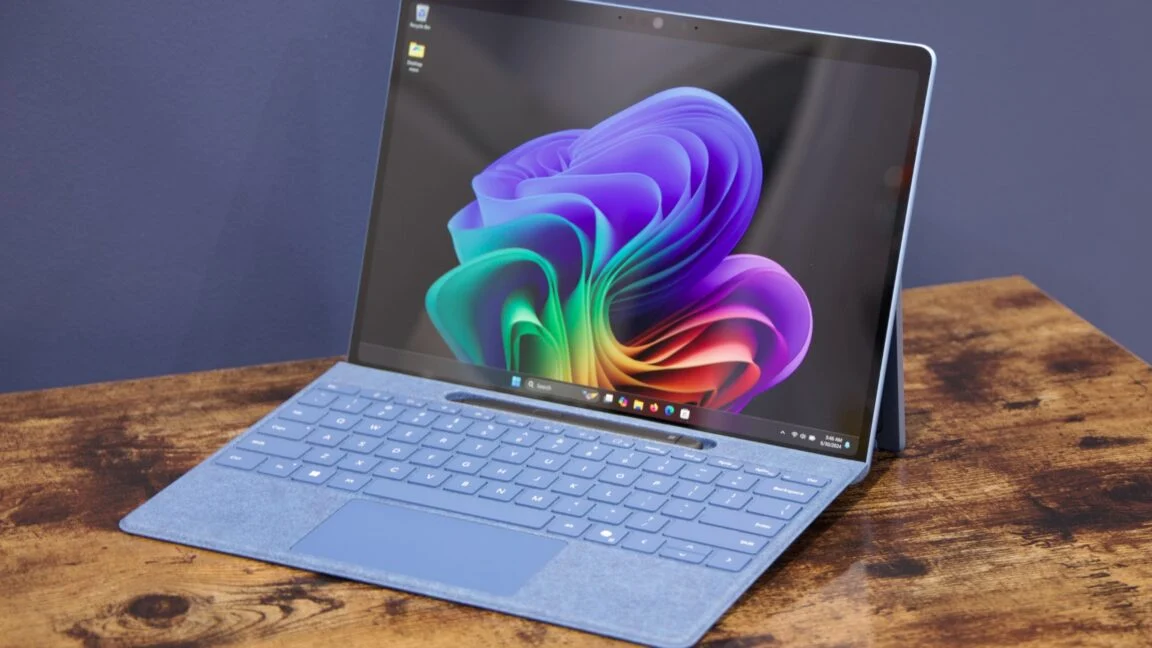
Microsoft has significantly increased the prices of its Surface PC lineup, with many devices now commanding prices at least $500 higher than their counterparts from just two years ago. This move effectively eliminates new Surface devices under the $1,000 price point, impacting both entry-level and higher-end models. The company attributes these hikes to ongoing increases in memory and component costs, a trend that has affected the broader consumer electronics industry throughout the past year.
Escalating Prices Across the Surface Portfolio
The impact of these price adjustments is evident across Microsoft’s popular Surface devices. The 12-inch Surface Pro tablet, which initially launched at a competitive $799, now starts at $1,049, representing a substantial $250 increase. Similarly, the 13-inch Surface Laptop, originally available for $899, has seen its entry price climb to $1,149, also a $250 jump.
More pronounced price hikes are observable for the higher-end configurations and more recent iterations of the Surface Laptop and 13-inch Surface Pro. Models that debuted in 2024 with a starting price of $999 experienced an initial increase to $1,199 in early 2025, particularly after the discontinuation of their entry-level versions equipped with 256GB of storage. These same devices now command a starting price of $1,499, marking a significant $300 increase from their original launch price. This strategic repositioning suggests a deliberate shift by Microsoft to focus its Surface offerings on premium market segments, potentially alienating budget-conscious consumers.
The Ram Crisis: A Lingering Shadow Over Tech Manufacturing
Microsoft’s stated justification for these price increases centers on "recent increases in memory and component costs." This explanation aligns with a pervasive industry-wide challenge: a persistent global shortage of critical components, most notably RAM and storage chips. This supply chain constraint has been a dominant factor shaping the consumer technology landscape throughout the past year and beyond.
The ramifications of this component scarcity have been far-reaching. It has led to the postponement of several product launches across various technology sectors as manufacturers struggle to secure sufficient quantities of essential parts. Furthermore, existing product lines have faced intermittent stockouts and depleted inventory levels, frustrating consumers eager to make purchases. The scarcity has also inevitably driven up the cost of these components, forcing manufacturers, both large and small, to absorb these higher expenses or pass them on to consumers through increased retail prices.
The impact of the RAM crisis is not a new phenomenon. Throughout 2025 and into early 2026, reports detailed the ongoing struggles. For instance, Valve, a prominent player in the gaming hardware market, experienced delays in its Steam Machine launch and faced intermittent stockouts of its popular Steam Deck due to these very issues. Similarly, companies producing single-board computers, such as Raspberry Pi, were forced to implement multiple price hikes for their devices within short periods, directly attributable to the escalating costs of memory modules. Microsoft’s Surface line, with its reliance on advanced components, is therefore not immune to these broader market pressures.
A Timeline of Price Adjustments and Market Pressures
To understand the full scope of Microsoft’s pricing strategy, it is essential to consider the timeline of these changes in conjunction with the prevailing market conditions.
- Early 2024: The 2024 iterations of the Surface Laptop and 13-inch Surface Pro were introduced with starting prices of $999. The 12-inch Surface Pro and 13-inch Surface Laptop were also available at their respective launch prices of $799 and $899. At this point, the effects of component shortages were beginning to be felt, but the full impact on pricing was not yet universally reflected.
- Late 2024 – Early 2025: As the global demand for semiconductors continued to outstrip supply, and production capacities struggled to keep pace, component costs began to escalate more dramatically. This period likely saw Microsoft reassessing its pricing models for the Surface line.
- Early 2025: The entry-level configurations of the 2024 Surface Laptop and 13-inch Surface Pro, specifically those with 256GB of storage, were discontinued. This move simultaneously increased the minimum storage capacity available for new purchases and signaled a shift towards higher-margin configurations. The starting price for these models was adjusted upwards to $1,199.
- Mid-2025: The price adjustments became more widespread and pronounced. The 12-inch Surface Pro and 13-inch Surface Laptop, which had been available for $799 and $899 respectively, saw their starting prices rise to $1,049 and $1,149.
- Late 2025 – Present: The most significant price increases were implemented. The higher-end Surface Laptop and 13-inch Surface Pro, which had been priced at $1,199 since early 2025, now start at $1,499. This represents a cumulative increase of $500 from their original $999 launch price two years prior. Crucially, Microsoft no longer offers any new Surface devices priced below $1,000.
This timeline illustrates a phased but consistent escalation of prices, mirroring the prolonged nature of the component supply chain crisis. The discontinuation of lower-storage configurations appears to be a strategic move to streamline inventory and focus on higher-profitability models, further exacerbating the price barrier for entry-level consumers.
Industry Reactions and Broader Implications
The significant price increases for Microsoft’s Surface line have drawn attention from industry analysts, tech publications, and consumers alike. While Microsoft’s explanation of rising component costs is widely understood within the industry, the magnitude of the price hikes has raised questions about the company’s strategic direction for its hardware division.
Industry Analyst Perspectives (Inferred): Analysts are likely observing this move as a potential indicator of Microsoft’s ambition to position the Surface brand more firmly within the premium segment of the PC market. This strategy could aim to compete more directly with other high-end manufacturers and appeal to a user base prioritizing performance and build quality over affordability. However, it also risks alienating a segment of the market that has historically relied on Surface devices for their versatility and value proposition, especially for students and professionals on tighter budgets. The "echoing Xbox prices" remark in one of the original reports suggests a parallel strategy of focusing on higher-margin products, a trend seen in other Microsoft hardware divisions.
Consumer Impact: For consumers, the price hikes mean that acquiring a new Surface device now requires a considerably larger financial commitment. This could lead some to explore alternative brands or to delay their purchasing decisions altogether. The decision to discontinue sub-$1,000 models directly impacts individuals who found the previous pricing accessible for everyday productivity and creative tasks. The increased cost of essential components like RAM and storage not only affects the final price of the device but also potentially limits the storage capacity or performance options available at a given price point.
Analysis of Implications:
- Market Segmentation: Microsoft appears to be deliberately segmenting its Surface market. By removing the lower-priced options, the company is signaling a focus on users who are willing and able to pay a premium for its hardware. This could lead to increased profitability per unit but potentially a reduction in overall unit sales.
- Competitive Landscape: This pricing strategy could create an opening for competitors to capture market share within the more affordable segments of the PC market. Brands that can maintain more competitive pricing, even with rising component costs, may see increased demand.
- The Future of Value: The ongoing component crisis, coupled with strategic pricing adjustments by major players like Microsoft, raises questions about the future of value in the consumer electronics market. Consumers may need to adjust their expectations regarding price-to-performance ratios, or manufacturers will need to find innovative ways to mitigate cost increases without compromising affordability.
- Impact on Innovation: While higher prices can theoretically fund more research and development, a shrinking accessible market could also stifle widespread adoption of new technologies. If only a select few can afford the latest innovations, their broader impact could be diminished.
Microsoft’s Stated Rationale and the Broader Component Shortage
In its official statements, as reported by outlets like Windows Central, Microsoft has explicitly cited "recent increases in memory and component costs" as the primary driver behind these price adjustments. This is a direct acknowledgment of the industry-wide challenges stemming from the global semiconductor shortage.
The shortage is a complex issue with multiple contributing factors:
- Surge in Demand: The COVID-19 pandemic led to an unprecedented surge in demand for electronics as people transitioned to remote work, online education, and at-home entertainment. This dramatically increased the need for devices containing semiconductors.
- Production Capacity Limitations: Semiconductor manufacturing is an incredibly complex and capital-intensive process. Building new fabrication plants (fabs) takes years and billions of dollars. Existing fabs were operating at or near full capacity, making it difficult to quickly ramp up production to meet the elevated demand.
- Supply Chain Disruptions: Geopolitical tensions, natural disasters (such as droughts impacting water-intensive chip manufacturing), and logistical challenges in transporting raw materials and finished goods have further exacerbated the supply chain vulnerabilities.
- Increased Costs of Raw Materials: The cost of raw materials used in semiconductor production, such as silicon wafers, specialty chemicals, and noble gases, has also seen an upward trend.
Microsoft, as a major consumer of these components for its Surface devices, is directly exposed to these market fluctuations. The company’s decision to absorb some of these costs initially, as evidenced by the lower launch prices of older models, has likely reached a point where passing on a portion of the increased expenses to consumers is deemed necessary for maintaining profitability and product development.
The situation highlights the interconnectedness of the global technology ecosystem. A disruption in the supply of a single critical component, like RAM or NAND flash memory, can have ripple effects that impact the availability and pricing of a vast array of consumer electronics, from laptops and smartphones to gaming consoles and even automobiles. Microsoft’s Surface line, with its emphasis on premium design and integrated technology, is particularly sensitive to these cost pressures. The company’s response, while potentially unpopular with some consumers, reflects a pragmatic approach to navigating a challenging economic environment for hardware manufacturing. The coming months will reveal whether these price increases lead to a sustained shift in market dynamics or if other manufacturers can find ways to offer compelling alternatives at more accessible price points.