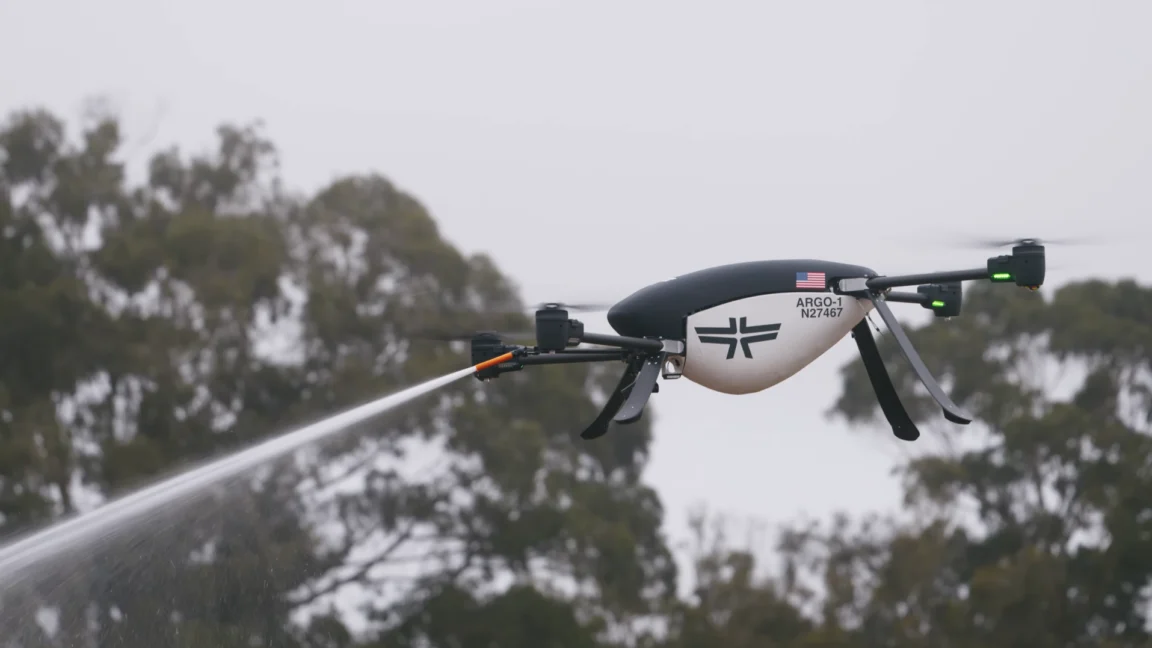
Drones equipped to spray water and fire retardants have been actively engaged in simulated early wildfire suppression exercises across California and Alaska throughout the summer. These demonstrations highlight a potential new rapid-response tool for firefighting efforts, particularly as climate change increasingly transforms the traditional wildfire season into a near year-round threat for substantial portions of the United States. While most drones currently possess limitations in payload capacity and flight range compared to crewed aircraft, rendering them unsuitable for tackling large, remote infernos, a concerted effort is underway by private companies, fire agencies, and organizers of significant innovation competitions to assess their efficacy in swiftly addressing nascent fires. The overarching goal is to deploy these unmanned aerial systems (UAS) to extinguish blazes before they escalate into more destructive and resource-intensive events.
The Growing Challenge of Wildfire Season
The intensification of wildfire seasons across the globe, and particularly in the Western United States, is a pressing concern linked directly to anthropogenic climate change. Rising global temperatures contribute to hotter, drier conditions, fostering an environment ripe for the ignition and rapid spread of wildfires. Extended drought periods, coupled with increased frequency and intensity of heatwaves, dry out vegetation, transforming it into highly combustible fuel. Furthermore, changes in precipitation patterns can lead to more vigorous plant growth during wetter periods, only for this excess biomass to become a significant fire hazard when dry conditions return. This complex interplay of factors has led to a demonstrable increase in both the number of wildfires and the acreage burned annually in recent decades.
For instance, data from the National Interagency Fire Center (NIFC) in the United States consistently shows an upward trend in the acreage burned by wildfires. In the period between 1990 and 2020, the average number of wildfires per year in the U.S. was around 60,000, but the average acreage burned annually in the latter half of that period (2000-2020) was significantly higher than in the earlier half. This trend is not confined to the U.S.; similar patterns are observed in regions like Australia, Canada, and parts of Europe, underscoring the global nature of this escalating crisis. The economic and environmental costs associated with these fires are staggering, encompassing property destruction, loss of life, severe air pollution impacting public health, and long-term ecological damage to forests and wildlife habitats.
Innovation in Firefighting: The Role of Drones
In this evolving landscape, the exploration of advanced technologies like drones for firefighting is gaining momentum. The limitations of traditional aerial firefighting, such as the high operational costs of large airtankers, the risks to pilots in challenging conditions, and the logistical complexities of reaching remote fire locations, create an opening for innovative solutions. Drones, with their potential for lower operational costs, increased maneuverability, and ability to operate in conditions that might be too hazardous for manned aircraft, offer a compelling alternative for specific firefighting applications.
The $11 million XPRIZE competition, an initiative designed to incentivize groundbreaking solutions to global challenges, has played a crucial role in fostering innovation in this domain. By setting ambitious goals and offering significant financial rewards, these competitions encourage teams of engineers, scientists, and entrepreneurs to develop and demonstrate cutting-edge technologies. The focus on early detection and suppression aligns with a strategic shift in firefighting philosophy – moving from reactive large-scale containment to proactive, rapid intervention. The principle is simple: it is far more efficient and less destructive to extinguish a small fire before it has a chance to grow.
CAL FIRE’s Field Test: A Practical Demonstration
A significant step in this direction was taken on July 15th when the California Department of Forestry and Fire Protection, widely known as CAL FIRE, conducted a comprehensive field test. This demonstration, held in California, involved a coordinated effort of five autonomous drones. The objective was to simulate the deployment of fire-suppressing agents onto a controlled fire scenario. According to reporting from the TV station KPMH, the drones collectively deployed between 500 and 1,000 gallons of foam, a chemical agent designed to suppress fires by cooling the fuel and preventing oxygen from reaching the flames.
This initiative was not a solitary effort but a collaborative endeavor. The field test was organized with the crucial assistance of FireWERX, a nonprofit organization dedicated to advancing innovation in wildland firefighting, and Seneca, a California-based company that is at the forefront of developing and commercializing these advanced drone systems. The partnership between a leading state fire agency, an innovation facilitator, and a commercial technology provider underscores the growing recognition of drones as a viable component of future firefighting strategies. Seneca has indicated that its drone technology will be commercially available starting in 2026, signaling a clear trajectory towards wider adoption.
Seneca’s Argo-1 Drones: Swarming Capabilities and Autonomous Operation
The drones utilized in the CAL FIRE demonstration were Seneca’s Argo-1 models. These are not individual units operating in isolation but are designed to function collaboratively in "swarms." Each Argo-1 drone possesses the capacity to carry approximately 100 pounds of either water or fire retardant. The strength of this system lies in its ability to operate in coordinated groups, typically comprising four to six drones working in tandem. This swarming capability allows for a more significant collective payload and a more comprehensive application of suppressants than a single drone could achieve.
The operational framework of these drones is built on autonomy, significantly reducing the need for constant human piloting. Once a human operator defines a target location, often by uploading a GPS waypoint, the autonomous drones navigate to their designated area. A key feature of their advanced capabilities is the use of onboard sensors. These sensors are equipped to detect heat signatures, enabling the drones to identify the precise location and extent of a fire. This capability is crucial for accurate targeting and efficient suppression. As reported by HeliOps Magazine, after identifying the fire, the drones then assess the optimal altitude for hovering, ensuring the most effective dispersal of their payload. The system is designed for sequential spraying, with each drone lining up to deliver its suppressant one after another, creating a continuous and sustained application.
Operational Considerations and Future Deployment
Despite their advanced capabilities, the current iteration of these drones comes with specific operational parameters that influence their deployment strategy. The fully loaded Argo-1 drones have a limited round trip range of approximately 10 miles, operating at an average speed of about 30 miles per hour. This constraint means that to be most effective, these drones would ideally need to be prepositioned in areas with a high risk of wildfires. Alternatively, they could be transported to the vicinity of a fire by ground vehicles, allowing for a quicker launch once a fire is detected.
However, the logistical considerations are also a point of strength. Each drone is designed to be compact enough to fit in the bed of a pickup truck with the tailgate down. Furthermore, the drones are relatively lightweight, with two individuals capable of manually carrying an empty drone. This portability is a significant advantage, allowing for rapid deployment from various locations and facilitating their integration into existing ground-based firefighting resources. The ability to quickly move and deploy these drones to strategic locations is paramount for achieving the goal of early intervention.
Broader Impact and Future Implications
The successful demonstration of these autonomous firefighting drones by CAL FIRE, in collaboration with FireWERX and Seneca, marks a significant milestone in the evolution of wildfire management. The implications of this technology are far-reaching:
- Enhanced Rapid Response: The ability to quickly deploy a swarm of drones to a nascent fire can drastically reduce the time it takes to apply suppressants. This speed is critical in the initial stages of a wildfire, where a few minutes can mean the difference between a contained incident and a rapidly escalating disaster.
- Increased Safety for Firefighters: By taking on the initial attack on small fires, drones can reduce the exposure of human firefighters to immediate dangers, such as unpredictable fire behavior and hazardous terrain.
- Cost-Effectiveness: While the initial investment in drone technology may be substantial, the operational costs per deployment are likely to be lower than those associated with large manned aircraft. This could lead to more efficient allocation of firefighting resources.
- Complementary Technology: It is important to emphasize that drones are not envisioned as a replacement for traditional firefighting methods or large airtankers. Instead, they are seen as a complementary technology that can enhance the overall effectiveness of wildfire response systems. Their strength lies in their ability to address smaller, more accessible fires, thereby freeing up larger assets for more extensive incidents.
- Data Collection and Analysis: Drones equipped with advanced sensors can also serve as valuable platforms for real-time data collection. This data, including thermal imagery and environmental readings, can provide crucial insights for incident commanders, aiding in strategic decision-making and post-fire analysis.
- Adaptation to Climate Change: As climate change continues to exacerbate wildfire risks, the development and deployment of innovative tools like these drones become increasingly vital. They represent a proactive approach to managing a growing threat, allowing communities to better adapt to the new reality of extended and intensified wildfire seasons.
The ongoing development and testing of these autonomous firefighting drones represent a hopeful advancement in the critical fight against increasingly destructive wildfires. As the technology matures and becomes more widely available, it has the potential to significantly bolster the capabilities of fire agencies and contribute to more resilient communities in the face of a changing climate. The success of initiatives like the one led by CAL FIRE, FireWERX, and Seneca suggests a future where a sophisticated, technologically advanced approach will be indispensable in protecting lives, property, and the environment from the ravages of wildfires.