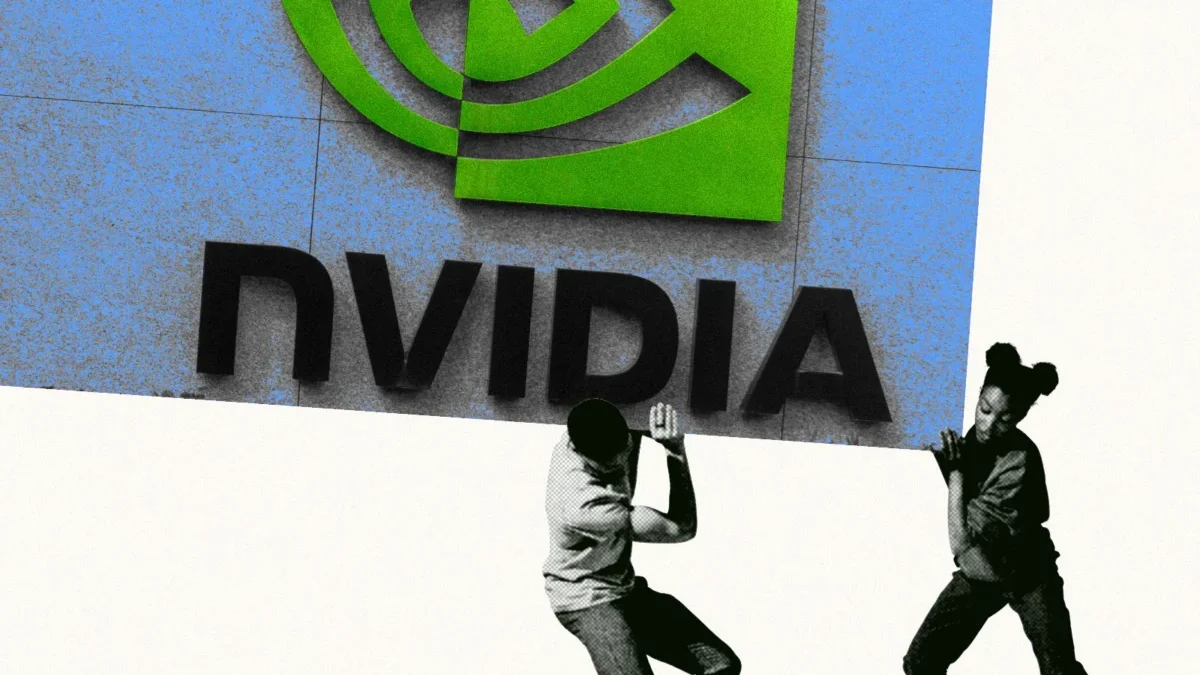
The technology sector has rarely witnessed a corporate transition as abrupt and high-stakes as the one currently unfolding at Nvidia. Following the sudden resignation of its iconic co-founder and long-serving chief executive officer, Jensen Huang, amid a sweeping international scandal involving illicit chip distribution channels, the world’s premier artificial intelligence hardware manufacturer has been thrust into an unfamiliar state of operational vulnerability. With billions of dollars in market valuation vaporizing in a matter of weeks, the formidable task of steadying a reeling corporate titan has fallen upon Colette Kress, who is currently pulling double duty as the company’s chief financial officer and interim CEO.
As Kress embarks on an aggressive internal and external campaign to restore confidence among jittery investors, skittish partners, and an anxious workforce numbering roughly 90,000 employees, she has leaned heavily into an unexpected rhetorical device. Across multiple high-profile communications over a frantic 48-hour window, Kress has repeatedly deployed a singular, colloquial mantra: "We’ve got this." While the phrase has drawn mixed reactions from market observers and corporate governance experts—ranging from dismissive critiques regarding its populist simplicity to genuine endorsements from internal staff—it serves as the psychological anchor for a company desperately searching for continuity in a post-Huang landscape.
The Unraveling: Jensen Huang’s Sudden Departure and the China Crisis
The current turbulence at Nvidia represents a dramatic reversal of fortune for a firm that spent the better part of three years reigning supreme as the undisputed hardware engine of the generative AI boom. Jensen Huang, whose charismatic leadership and signature leather jacket became synonymous with the explosive rise of accelerated computing, stepped down from his post following explosive revelations regarding regulatory violations.
According to investigations and subsequent reports, high-performance Nvidia graphics processing units—crucial for training advanced large language models—were allegedly funneled through complex, unauthorized intermediary networks into restricted international markets, most notably China. The trade compliance breaches triggered immediate investigations by federal regulators, plunging Nvidia into a geopolitical crossfire.
The market response was immediate and punishing. Nvidia experienced a historic wipeout of shareholder value, shedding nearly a trillion dollars in market capitalization in less than a month. The company’s stock price plummeted, dragging down major tech indexes and exposing the fragile dependencies of a global semiconductor supply chain deeply tethered to geopolitical tensions. Compounding the crisis, the Nvidia board of directors, led by board chair Harvey Jones, definitively squashed rumors and online campaigns demanding Huang’s reinstatement, confirming that the board has no plans to bring back the ousted leader.
Enter Colette Kress: The Interim Steward of an AI Empire
With Huang permanently sidelined and the board closing ranks, the immense burden of crisis management landed on Colette Kress. Having served as Nvidia’s chief financial officer since 2013, Kress is widely respected on Wall Street for her financial acumen and deep understanding of the semiconductor ecosystem. However, steering the ship as interim CEO during an international scandal requires a delicate alchemy of fiscal discipline and morale building.
Kress’s introduction to the CEO role has been baptism by fire. Her public-facing responsibilities immediately included managing the company’s crucial third-quarter earnings call and hosting Nvidia’s first-ever all-hands meeting without Huang at the helm. It was during these high-stakes addresses that Kress introduced her signature rallying cry, attempting to unify a workforce accustomed to the charismatic omnipotence of its visionary founder.
By internal and external accounts, Kress used the phrase "We’ve got this" at least three times within a 24-hour period. During Tuesday’s earnings call, she sought to project unyielding operational strength to institutional investors: "Our momentum is real. Our demand is accelerating. Our supply is growing. Our customers and our partners are with us, and employees are committed. We’ve got this."
She doubled down the following day during the global employee all-hands meeting. Seeking to reassure a workforce anxious about the company’s strategic direction and compensation structures, Kress stated: "Our ambition will not change. Our passion to innovate will not change. Our commitment to customers, partners, and shareholders will not change. We thank you all for the great quarter that we had. Just remember, we’ve got this."
Later in the same meeting, Kress employed a colorful, visceral analogy to convey collective solidarity, comparing the vast Nvidia workforce to "90,000 people packed into the sweatiest, hottest" University of Florida football game, all singing in unison. "It is impressive to see them all together, all in harmony singing that song," Kress told employees. "Do you know what? We’re gonna hear that song, guys. And I believe in all of you that you will help sing it. But Nvidia, we’ve got this."
Market Skepticism Versus Internal Resurgence
Kress’s messaging has elicited starkly divergent interpretations. Financial analysts and corporate communications experts have pointed out that repetition of phrases emphasizing control often signals underlying insecurity; companies secure in their positioning rarely feel the need to explicitly remind stakeholders of their stability twice in a single meeting. To cynical observers on Wall Street—many of whom have watched their portfolios contract precipitously over the past ten days—the refrain feels disconnected from the grim reality of an ongoing federal inquiry and lost market capitalization.
Furthermore, the phrase itself has invited linguistic critiques. Functioning as a collectivist adaptation of the individual-focused "You got this," or a slightly revised echo of historic political slogans like "Yes we can," the mantra leaves a fundamental question hanging in the balance: Exactly what does "this" entail? For investors grappling with supply chain audits, export restriction compliance, and a leadership vacuum, general optimism is a poor substitute for concrete regulatory resolution.
Yet, within the corporate trenches of Nvidia, the messaging appears to have struck a more positive chord. Several high-ranking employees and managers took to public platforms to endorse Kress’s sentiment. Aaron Erickson, Nvidia’s head of NemoClaw engineering, posted a defiant "Damn right we got this" on social media platform X. The sentiment was swiftly amplified by Vega Shah, a portfolio manager for Nvidia’s venture capital arm, who echoed the phrase alongside a supportive rocket ship emoji, signaling that mid-level leadership is eager to rally around internal figures rather than panic over executive turnover.
Fact-Based Analysis of Broader Implications
The unfolding saga at Nvidia carries profound implications for the broader technology and semiconductor landscapes. For years, the company operated under a founder-centric governance model where Jensen Huang’s word was absolute and his strategic vision drove the entire enterprise forward. The sudden removal of Huang forces Nvidia into a rapid maturation process, transitioning from a founder-led startup mentality to a traditional corporate governance structure overseen by institutional leaders like Kress and board chair Harvey Jones.
Strategically, Nvidia faces unprecedented pressure on multiple fronts. Competitors such as Advanced Micro Devices (AMD), Intel, and custom silicon initiatives by hyperscale cloud providers (including Microsoft, Google, and Amazon) are aggressively attempting to capture market share while Nvidia navigates its internal turmoil. Additionally, stricter export controls and heightened scrutiny regarding secondary distribution channels to restricted regions mean that Nvidia’s historically high profit margins and explosive revenue growth may face sustained headwinds.
As the company prepares for its next chapter, the immediate future hinges on Colette Kress’s ability to maintain supply chain integrity, satisfy regulatory demands, and retain top-tier engineering talent who might otherwise be tempted by well-funded AI competitors. Whether "We’ve got this" proves to be prophetic leadership or merely whistling past the graveyard will be decided in the coming quarters as financial metrics and legal realities catch up to corporate rhetoric. For now, in the absence of Jensen Huang, Nvidia’s sprawling empire rests firmly in Kress’s hands.