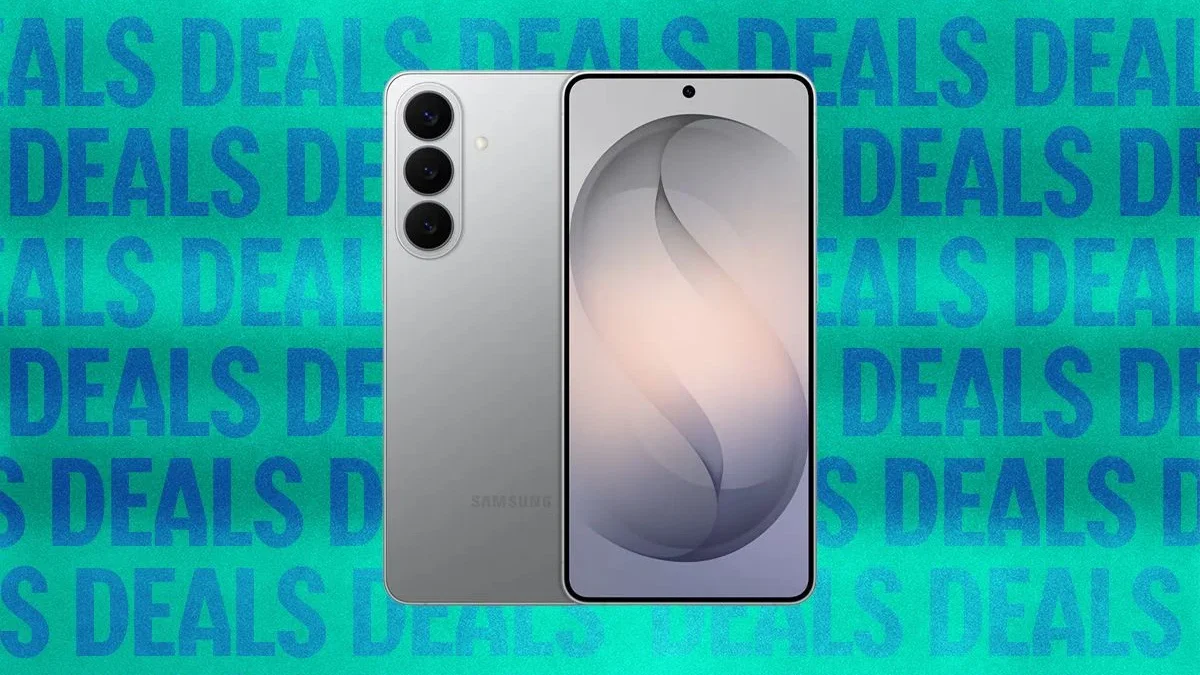
The landscape of consumer mobile technology has long been characterized by a persistent financial dilemma: as smartphone hardware becomes increasingly sophisticated, integrating advanced artificial intelligence frameworks, robust camera sensors, and durable builds, the retail prices for these pocket-sized computers continue to scale upward. For consumers looking to upgrade their daily drivers without incurring substantial monthly carrier debt, budget virtual network operators have historically offered an alternative. In a significant market move ahead of the peak holiday shopping season, prepaid carrier Mint Mobile has launched a aggressive promotional campaign offering up to $500 in direct discounts on several high-profile Android smartphones, including the latest Google Pixel and Samsung Galaxy lineups, provided customers make the switch and commit to an annual service plan.
This limited-time initiative is specifically targeted at new customers willing to migrate their phone numbers from legacy carriers. While the headline figure boasts substantial immediate savings on premium hardware, the promotion requires careful financial navigation due to upfront payment structures and specific plan requirements. As major telecommunication providers lean heavily toward multi-year device financing agreements that lock consumers into protracted contracts, Mint Mobile’s upfront model presents a contrasting philosophy rooted in prepaid commitments and carrier independence.
Structural Requirements and the True Cost of the Promotion
To qualify for the maximum $500 discount on eligible devices, prospective buyers must satisfy a set of predefined conditions established by Mint Mobile. First and foremost, the offer is restricted exclusively to new subscribers. Existing customers seeking hardware upgrades are excluded from this specific promotional tier, a common industry practice designed to capture market share from competing networks.
Beyond the baseline customer status, participants must simultaneously purchase a 12-month unlimited data plan priced at $180. Breaking down this figure reveals an effective cost of $15 per month for cellular service, which undercuts standard post-paid carrier pricing models significantly. However, Mint Mobile operates on a wholesale, prepaid business model. This means that unlike traditional major carriers that bill customers monthly for both service and device amortization, Mint requires the entire annual service fee to be paid upfront in a single lump sum, alongside applicable state and local taxes and regulatory fees.
Furthermore, consumers must factor in the structural limitations of the service plan itself. While marketed as "unlimited," the plan introduces data throttling measures that reduce browsing and streaming speeds once a usage threshold of 50 gigabytes is crossed within a single monthly billing cycle. Additionally, the plan includes a capped allowance of 20 gigabytes dedicated specifically to mobile hotspot tethering. For heavy data consumers who frequently rely on cellular connections for remote work or media streaming, these operational limits require consideration before committing to the full annual term.
Device Lineup and Hardware Availability
The scope of hardware included in the Mint Mobile promotion spans several key manufacturer ecosystems, focusing primarily on Android flagships and mid-tier offerings while omitting Apple’s iPhone lineup entirely. The absence of iOS devices may narrow the appeal for Apple’s entrenched consumer base, but the included Android devices represent top-tier hardware, many of which frequently secure high marks in independent industry reviews.

Google Pixel 11 Series
Google’s hardware portfolio receives prominent placement in the promotional rollout. The base model Google Pixel 11, which carries a standard retail price of $899, is discounted to $399 when bundled with the required 12-month unlimited service plan. Factoring in the $180 service cost, the total out-of-pocket expenditure for the phone and one year of cellular service lands at $579, excluding taxes and fees. This pricing structure effectively positions the flagship Pixel 11 below the retail cost of Google’s traditionally budget-oriented ‘a-series’ alternatives, offering high-end processing and camera capabilities at a mid-range price point.
In addition to the base model, Mint Mobile has applied price cuts to the higher-end variants within the ecosystem. The Google Pixel 11 Pro, normally retailing at $1,099, is reduced to $594, while the larger Pixel 11 Pro XL sees its price drop from $1,299 down to $794. These devices integrate Google’s latest generation of custom Tensor processing architecture alongside deep integrations with Gemini AI, solidifying their reputation as some of the most intelligent computing devices currently available on the mobile market.
Samsung Galaxy S26 Series and Foldables
Samsung enthusiasts are similarly accommodated within the promotion, with discounts covering the newly released Galaxy S26 flagship family and foldable form factors. The standard Samsung Galaxy S26, normally priced at $1,000, is available for $500. The mid-tier Galaxy S26+ drops from $1,200 to $700, and the top-tier Galaxy S26 Ultra is discounted from $1,400 to $900.
Bringing a premier ultra-tier flagship below the $1,000 threshold represents a notable pricing shift in a market where ultra-premium devices routinely breach the $1,300 mark. The Galaxy S26 Ultra features high-end processing power driven by Qualcomm’s Snapdragon 8 Elite Gen 5 processor, advanced multi-lens camera arrays, and an integrated privacy screen feature.
For consumers interested in foldable technology, Mint Mobile has included the Samsung Galaxy Z Fold8 at a promotional price of $1,700, down from its standard $1,900 retail price. While the $200 hardware discount on the foldable is less aggressive than the flat $500 cuts applied to standard flagships, it reflects the historically high production costs associated with flexible OLED display mechanisms. The Z Fold8 remains a top-tier choice in the foldable category, praised for its lighter physical profile and minimized display crease compared to earlier iterations.
Motorola Offerings and Budget Alternatives
Rounding out the promotional catalog are selections from Motorola, catering to both budget-conscious buyers and fans of alternative form factors. The Motorola Razr, recognized widely as an accessible entry point into flip-style foldable smartphones, is priced at $520, representing a $180 reduction from its standard retail baseline.
For consumers prioritizing utility and minimal expenditure over flagship performance, Mint Mobile has slashed the price of the Moto G Play 5G to $80, down from its typical $250 retail cost. While lacking the computational power and advanced camera systems of the Pixel or Galaxy families, the device offers functional 5G connectivity and adequate performance for casual daily tasks at a fraction of the cost of a standard smartphone upgrade.

Trade-In Enhancements and Additional Savings
To maximize the promotional value, Mint Mobile has incorporated an eligible trade-in credit structure. Customers who possess qualifying unlocked legacy devices—specifically designated as an iPhone 16 or newer, a Samsung Galaxy S25 or higher, a Z Flip7 or Fold7 or higher, or a Google Pixel 10 or higher—can secure an additional credit of $400 or more applied toward their new purchase. When combined with the upfront device discount, these trade-in valuations can theoretically reduce the remaining out-of-pocket cost for the new hardware to nominal levels, though the requirement to finance or purchase the remaining device balance still applies.
Industry Implications and Market Analysis
The timing of Mint Mobile’s promotional push coincides with the broader retail industry’s transition into the early Black Friday and year-end holiday shopping windows. Historically, Mobile Virtual Network Operators (MVNOs) like Mint operate on razor-thin margins by bypassing the overhead costs associated with maintaining physical retail storefronts and managing extensive post-paid billing infrastructures. Consequently, deep promotional discounts on brand-new hardware are rare compared to traditional Tier-1 carriers such as Verizon, AT&T, and T-Mobile, which frequently subsidize devices through multi-year service contracts.
Industry analysts note that while prepaid carrier promotions require a higher initial capital outlay from the consumer—due to the mandatory upfront payment for both the discounted phone and the annual service plan—they ultimately free the user from long-term carrier bondage. Traditional carrier contracts often bind consumers for 36 months, embedding device installment payments directly into monthly bills and imposing steep termination penalties or forfeiture of remaining bill credits if the customer attempts to switch providers prematurely.
By contrast, Mint Mobile’s model trades immediate cash flow commitment for long-term financial predictability. Once the 12-month prepaid period concludes, the consumer owns the hardware outright and retains the flexibility to port their phone number to any competing carrier without outstanding device debt. However, consumers must weigh this against the potential friction of paying for a full year of cellular service upfront, a barrier that may deter budget-constrained shoppers who prefer fractional monthly budgeting.
As competition within the United States telecommunication sector intensifies—driven by aggressive pricing from discount carriers and shifting consumer habits regarding upgrade cycles—promotions of this scale highlight the evolving strategies used to capture market share. Whether these aggressive hardware discounts will successfully draw significant user migration away from legacy post-paid networks will depend heavily on consumer willingness to adapt to upfront payment models in exchange for lower cumulative annual communications expenditures.