One year has passed since the United States Agency for International Development (USAID) officially ceased operations on July 1, 2025, a landmark move orchestrated by the Trump administration as part of a broader strategy to significantly reduce U.S. foreign aid spending. The dissolution of USAID, with its remaining functions absorbed into the State Department, marked a profound shift in American foreign policy. Now, a new survey by the Pew Research Center, conducted across 16 non-U.S. middle-income countries, reveals widespread uncertainty and, among those with an opinion, a prevailing sense of negativity regarding the impact of these drastic cuts on their nations.
The Unprecedented Downsizing of USAID
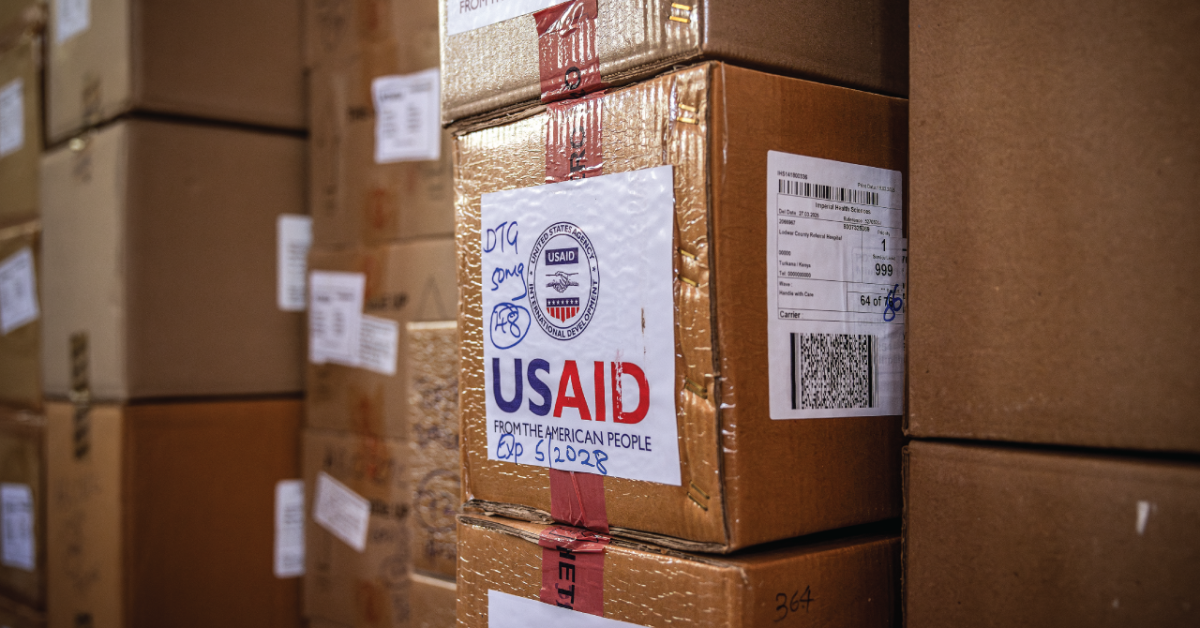
The decision to dismantle USAID, an agency that had been a cornerstone of American soft power and humanitarian efforts for over six decades, was not made in a vacuum. It culminated years of rhetoric from the Trump administration advocating for an "America First" foreign policy, which often viewed foreign aid as a drain on domestic resources rather than a strategic investment. USAID, established in 1961 by President John F. Kennedy, was designed to lead the U.S. government’s international development and disaster assistance. Its mission encompassed a vast array of programs, from global health initiatives and food security to democracy promotion, economic growth, and humanitarian relief in crisis zones. The image of drug boxes, formerly supplied by USAID, sitting idle in a pharmacy storeroom in Lodwar, Kenya, on April 1, 2025, serves as a poignant visual testament to the immediate, tangible effects of this policy shift.
The merger of USAID’s operations with the State Department was framed by the administration as an efficiency measure, aimed at streamlining foreign policy and aid delivery under a single diplomatic umbrella. Proponents argued that consolidating these functions would eliminate redundancies, improve coordination, and ensure that aid spending more directly served U.S. national interests. However, critics, including former diplomats, development experts, and humanitarian organizations, voiced grave concerns. They argued that the specialized expertise, independent operational capacity, and direct lines of communication that USAID had cultivated over decades would be severely diminished. The fear was that humanitarian and development objectives might become secondary to immediate diplomatic or political considerations, potentially compromising the neutrality and effectiveness of aid. Furthermore, the loss of USAID’s distinct brand, recognized globally for its commitment to development, was seen as a significant blow to America’s international standing and influence.
A Shift in Policy: The "America First" Doctrine
The Trump administration’s foreign policy doctrine, encapsulated by the phrase "America First," prioritized domestic interests and bilateral relationships over multilateral engagement and extensive foreign commitments. This philosophy translated into a skeptical view of traditional foreign aid, which was often characterized as wasteful or ineffective. Throughout his presidency, Donald Trump consistently proposed significant cuts to the State Department and USAID budgets, though many of these were met with resistance in Congress. The eventual shutdown of USAID in July 2025, following his return to office for a second term, represented the most dramatic manifestation of this policy.
The fiscal trajectory leading to this point is stark. In fiscal year 2024 (which ran from October 1, 2023, to September 30, 2024), the 16 middle-income countries surveyed by Pew collectively received over $5 billion in U.S. foreign aid. By fiscal year 2026, this figure had plummeted to just over $500 million for the same group of nations. This represents a staggering reduction, with each of the surveyed countries experiencing cuts exceeding 75% of their previous aid levels. For context, the broader trend in U.S. foreign assistance has been comprehensively detailed in Pew’s related analysis, "U.S. foreign aid is plunging in second Trump administration," highlighting the systemic nature of these reductions.
The Global Repercussions: A Year On
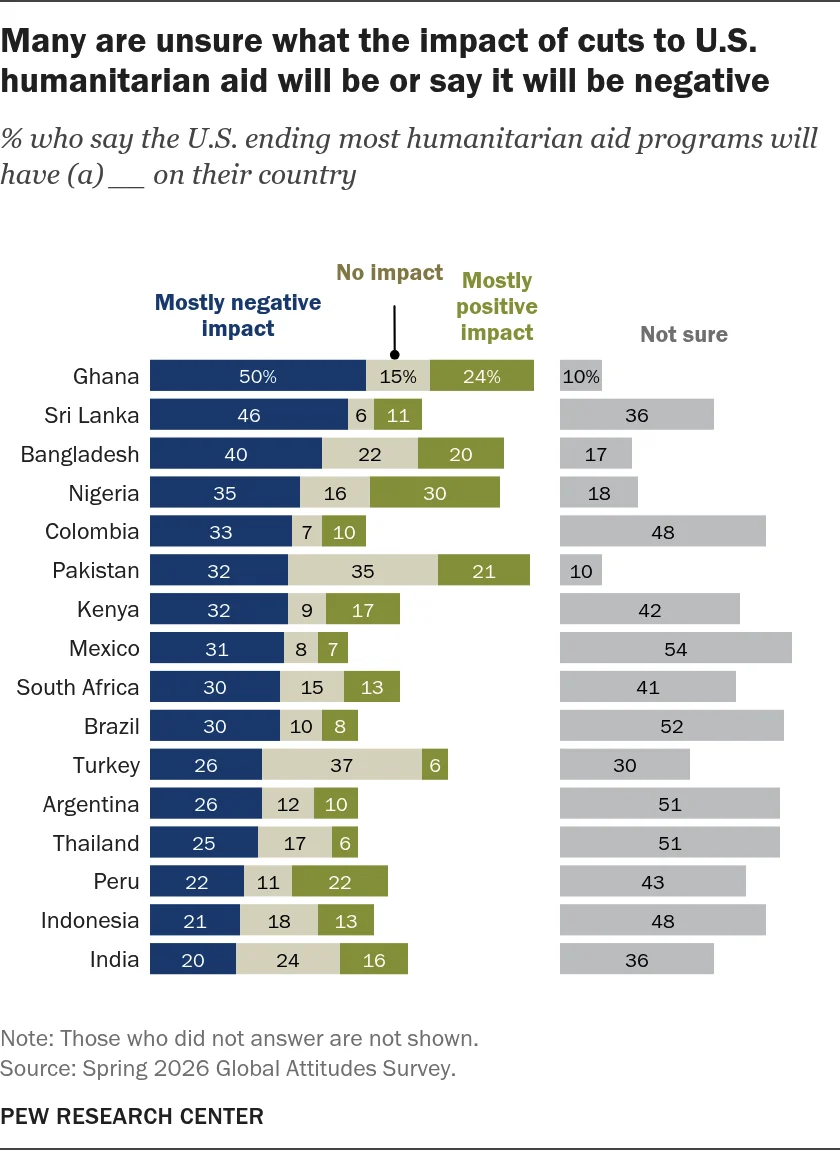
The Pew Research Center’s "Spring 2026 Global Attitudes Survey" offers a crucial snapshot of how these policy changes are perceived on the ground. Conducted between February 8 and May 12, 2026, the survey encompassed 20,888 adults across 16 diverse middle-income nations: Argentina, Bangladesh, Brazil, Colombia, Ghana, India, Indonesia, Kenya, Mexico, Nigeria, Pakistan, Peru, South Africa, Sri Lanka, Thailand, and Turkey. These countries were specifically chosen due to their significant historical reliance on U.S. aid and the profound impact of the recent cuts. The survey sought to gauge public opinion on whether the U.S. ending most humanitarian aid programs would have a mostly negative, no, or mostly positive impact on their respective countries, or if they were simply unsure.
The overarching finding is a landscape dominated by uncertainty, yet with a distinct leaning towards negative perceptions among those who expressed an opinion. A substantial portion of the population in many countries remains unsure about the long-term ramifications of the aid cessation. However, where opinions crystallize, the sentiment largely points to apprehension and concern.
Uncertainty Prevails Across Continents
The survey data highlights a significant degree of uncertainty, particularly in Latin American nations. In Mexico, a striking 54% of respondents were unsure about the impact of the aid cuts, followed closely by Brazil (52%), Argentina (51%), and Colombia (48%). This high level of indecision suggests either a lack of clear information regarding the extent of U.S. aid’s role or a wait-and-see attitude regarding the consequences. It is worth noting that while U.S. aid to the region varied significantly – Argentina and Brazil received relatively smaller amounts prior to USAID’s shutdown, while Colombia was a major recipient – the uncertainty persists across these different aid profiles.
Beyond Latin America, considerable uncertainty also emerged in key Asian and African nations. In Kenya, 42% of the population was unsure, mirroring the 41% in South Africa. India and Sri Lanka also reported high levels of uncertainty at 36% each. Thailand and Indonesia showed similar trends, with 51% and 48% respectively indicating they were unsure. This widespread uncertainty underscores the complexity of evaluating the impact of such a broad policy change and perhaps reflects the difficulty for ordinary citizens to directly connect the abstract concept of "foreign aid cuts" to their daily lives, despite the tangible implications.
Negative Outlook Dominates Where Opinions Are Formed
Despite the prevalence of uncertainty, when people do express an opinion, the prevailing sentiment is one of concern. A significant majority of those with a definite viewpoint believe the U.S. ending most humanitarian aid programs will have a mostly negative impact on their countries.
Ghana leads this concern, with a full 50% of respondents anticipating a mostly negative impact. This figure is more than double the 24% who foresee a positive outcome. Sri Lanka follows closely, with 46% expecting negative repercussions, compared to only 11% positive. Bangladesh also shows strong negative sentiment, with 40% predicting a negative impact against 20% positive. These figures are particularly salient in countries where U.S. aid historically played a crucial role in development and humanitarian relief, suggesting that the withdrawal is keenly felt and understood as a loss.
Similar trends are evident in several other countries. In Argentina, 26% anticipate a negative impact versus 10% positive. Brazil mirrors this with 30% negative and 8% positive. Colombia registers 33% negative against 10% positive. Kenya, despite high uncertainty, still shows 32% expecting negative impacts compared to 17% positive. Mexico, South Africa, and Thailand also exhibit this pattern, with negative outlooks significantly outweighing positive ones. This consistent trend across diverse geographies underscores a shared apprehension about the future without the sustained support of U.S. humanitarian aid.

Varying Perceptions: Regional Nuances and Specific Cases
While the general trend leans towards uncertainty and negative sentiment, there are notable regional and country-specific variations. In Pakistan and Turkey, for instance, a relatively high proportion of the population believes the cuts will have "no impact" on their country. In Pakistan, 35% expressed this view, while in Turkey, 37% did. This might be attributed to these nations having more diverse international partnerships or domestic capacities to absorb the shock, or perhaps a historical perception that U.S. aid was less critical to their overall national development compared to some other surveyed nations. It is crucial to remember, however, that even these countries experienced substantial cuts: Pakistan lost 96% and Turkey 92% of their U.S. humanitarian aid between fiscal 2024 and 2026. This suggests that "no impact" might also reflect a sense of resignation or a belief that alternative solutions will be found.
In a few countries, the balance of opinion is more mixed. Peruvians, for example, are equally split, with 22% anticipating a negative impact and 22% expecting a positive one. This equipoise suggests a divided public, possibly reflecting differing experiences with or reliance on U.S. aid, or perhaps varying political perspectives on foreign intervention. Nigeria presents another interesting case: 35% believe the impact will be negative, while 30% believe it will be positive. This relatively close margin indicates a lack of consensus. Furthermore, the survey found a notable religious divide within Nigeria, with Christians more likely than Muslims to predict a negative impact (39% vs. 30%). Conversely, Muslims were more inclined to believe the cuts would have no impact, hinting at complex socio-political and religious dynamics influencing perceptions of foreign assistance.
The Stark Reality of Funding Cuts
The financial figures underpinning these public perceptions are stark. The collective drop from over $5 billion in U.S. aid to the surveyed middle-income countries in FY2024 to just over $500 million in FY2026 represents a precipitous decline. This is not merely an abstract budgetary adjustment; it translates directly into the cessation or severe curtailment of programs that address critical needs. Aid programs often support public health campaigns, agricultural development, education initiatives, infrastructure projects, and emergency relief efforts. The reduction of funding by more than 75% in each of these countries means that hospitals may lack essential medicines, schools may lose vital resources, and communities reliant on food assistance may face increased hardship.
The Erosion of Soft Power and Geopolitical Void
The implications of these aid cuts extend far beyond immediate humanitarian concerns. For decades, foreign aid has been a key instrument of U.S. soft power, fostering goodwill, strengthening diplomatic ties, and promoting American values and interests abroad. The withdrawal of this aid risks eroding the United States’ standing as a benevolent global actor and a reliable partner. The related Pew Research Center report, "Trump Gets Negative Reviews Internationally as Fewer Say U.S. Is a Reliable Partner," underscores this concern, indicating a broader decline in international confidence in U.S. leadership.
The vacuum created by the reduction in U.S. aid may also have significant geopolitical consequences. Other global powers, particularly China and Russia, have been expanding their own foreign aid and investment programs, often with different priorities and conditionalities. This could lead to a shift in influence, as recipient countries seek alternative sources of funding and partnership. The U.S. risks losing leverage and strategic alliances in critical regions if its traditional role as a major donor is abandoned. This could reshape global alliances and international cooperation on a range of issues, from climate change to security.
Humanitarian Concerns and Development Setbacks

At the most fundamental level, the reduction in humanitarian aid carries significant human costs. Programs addressing global health, such as those combating HIV/AIDS, malaria, and tuberculosis, or providing maternal and child health services, will face severe funding shortfalls. Food security initiatives, vital in regions prone to drought or conflict, will struggle to maintain operations. Educational programs designed to empower youth and foster long-term development may be discontinued. The impact is particularly acute in countries with fragile health systems, high poverty rates, and limited government capacity to fill the void. The photograph of USAID-provided medicines in a Kenyan storeroom, now potentially unusable or without ongoing supply, symbolizes the direct and often dire consequences for individuals who depend on these resources for survival and well-being. This could lead to increased morbidity and mortality, exacerbated poverty, and potentially, social unrest as basic needs go unmet.
The View from Home: American Sentiments on Foreign Aid
Interestingly, American public opinion on foreign aid presents a nuanced picture, as revealed by earlier Pew Research Center surveys. A 2025 survey indicated that Americans support certain types of foreign aid much more than others. For example, a vast majority (83%) believed the U.S. should provide foreign aid for medicine and medical supplies to developing countries. This strong support for humanitarian assistance aimed at saving lives stands in contrast to the drastic cuts implemented by the administration. Conversely, only 34% thought aid should support art and cultural activities in other countries, suggesting a prioritization of direct, life-sustaining aid.
A 2023 survey further explored American views on the effectiveness of U.S. foreign aid. A third of Americans believed U.S. foreign aid primarily benefits developing countries. Another 37% held a more complex view, suggesting it both benefits and harms these countries. This indicates a public that is not entirely monolithic in its skepticism, with a substantial portion acknowledging the positive impact of aid. The disconnect between public support for specific types of aid and the administration’s sweeping cuts highlights a potential divergence in priorities.
Methodology and Scope of the Pew Research
This analysis by the Pew Research Center provides valuable insights into global perceptions. The 16 surveyed countries are classified as middle-income nations based on World Bank categories, which rely on per capita gross national income. This classification has been consistently used by the Center in other analyses, including studies on global views of China, satisfaction with democracy, globalization, and national identity, ensuring consistency and comparability. The survey’s robust methodology, involving interviews with over 20,000 adults, ensures that the findings accurately represent the views of the adult population in each country. The transparency in providing survey questions and methodology further strengthens the credibility of the research.
Looking Ahead: A New Era for International Assistance
The one-year anniversary of USAID’s shutdown and the subsequent drastic cuts to U.S. foreign aid mark a pivotal moment in international relations and development. The Pew Research Center’s findings underscore a global landscape characterized by uncertainty and significant apprehension among recipient nations. While the Trump administration’s "America First" policy aimed to redefine America’s role in the world, the repercussions are being felt acutely in countries that have historically relied on U.S. assistance for critical development and humanitarian needs. The long-term implications for global stability, U.S. soft power, and the welfare of millions remain to be fully understood, but the initial public reactions suggest a period of significant challenge and adaptation for both the United States and its international partners. As nations grapple with these changes, the call for diversified partnerships and strengthened multilateral cooperation may grow louder, signaling a new, more complex era for international assistance.