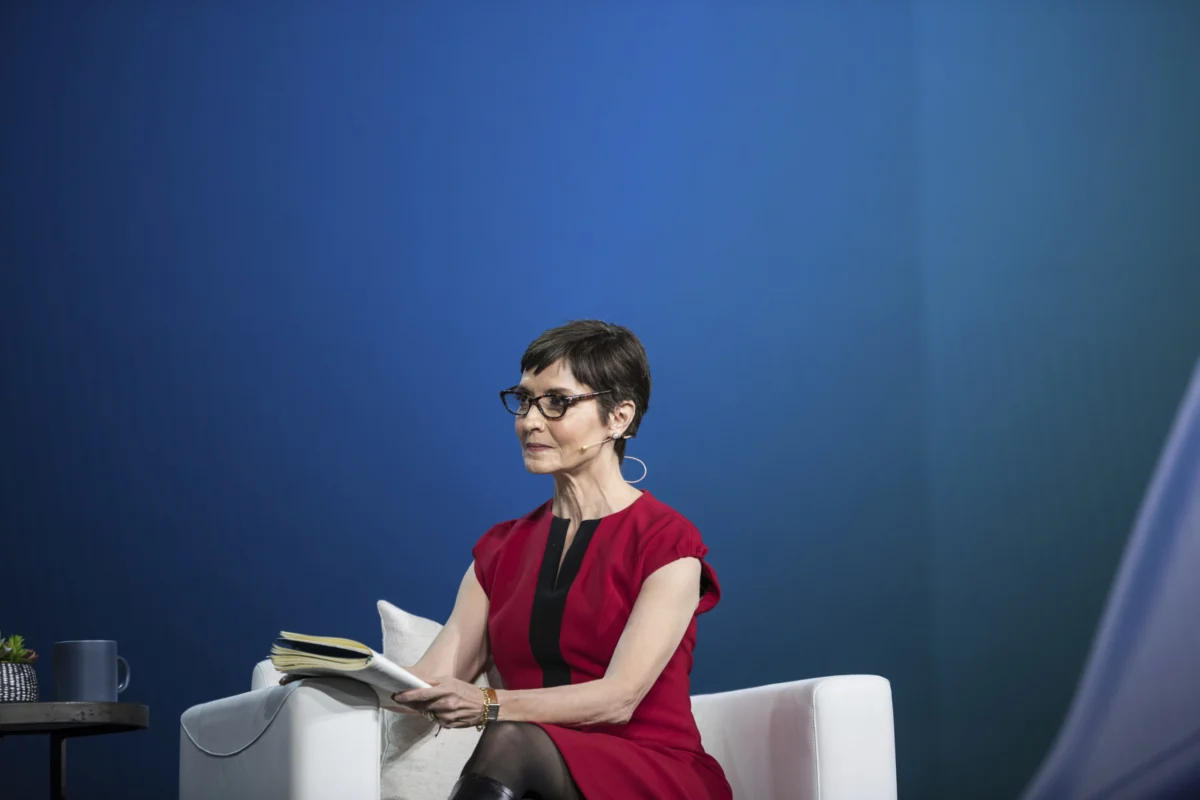
The fundamental principle of journalist source protection faces a critical test as Catherine Herridge, an acclaimed independent journalist, confronts mounting daily fines after the Supreme Court denied her emergency request to stay financial penalties for refusing to reveal confidential sources. This legal quagmire, stemming from a Privacy Act lawsuit against the government, mirrors a troubling precedent set years earlier by former USA Today reporter Toni Locy, underscoring a persistent and escalating challenge to press freedom in the United States. While seemingly distinct, these cases highlight a concerning trend where individuals suing the government for alleged leaks are increasingly turning their legal sights on journalists, demanding they disclose the very sources vital to exposing government misconduct and informing the public.
The Perilous Path of Protecting Sources: The Herridge Precedent
Catherine Herridge’s current predicament began in 2017 when, as a reporter for Fox News, she published a story concerning Yanping Chen, a Chinese American scientist who was the subject of an FBI counterintelligence investigation. Chen, who was never formally charged with any crime, subsequently filed a civil lawsuit against the federal government in 2018 under the Privacy Act of 1974. This federal statute prohibits government agencies from disclosing private information about individuals without their consent. Chen alleged that her reputation had been irrevocably damaged by unauthorized leaks from law enforcement officials to the media. As part of her legal efforts to identify the alleged leakers, Chen subpoenaed Herridge, demanding she reveal her confidential sources.
Herridge, by then an independent journalist, staunchly refused to comply, citing reporter’s privilege—the legal protection for journalists against being compelled to disclose confidential information or sources. Her refusal led to a Washington, D.C., district court ordering her in 2024 to pay a fine of $800 for each day she withheld the information. This decision initiated a protracted legal battle that ascended through the appellate courts. In September of 2025, the U.S. Court of Appeals for the D.C. Circuit ruled against Herridge, affirming the lower court’s decision. The appeals court further intensified the pressure in June of 2026 by declining to rehear the case and, critically, refusing to stay the daily fines while Herridge prepared her appeal to the Supreme Court. The highest court’s denial of her emergency request on July 2, 2026, removed the final shield against the accumulating financial penalties, though Justice Brett Kavanaugh notably supported granting the application for a stay, signaling a division within the Court regarding the weight of reporter’s privilege.
Andrew C. Phillips, an attorney for Dr. Chen, expressed satisfaction with the Supreme Court’s decision, stating, "We’re pleased with the Supreme Court’s decision and hope that it will help bring a close to this matter. It follows complete vindication for Dr. Chen in the district and circuit courts." This sentiment underscores the plaintiffs’ perspective that identifying the source of leaks is crucial to their Privacy Act claims, particularly the requirement to prove that government officials acted "willfully" in disclosing information.
Complicating Herridge’s case and raising further transparency concerns, many documents related to the FBI’s investigation of Chen were filed under seal, and all appellate arguments concerning these documents were conducted in closed court. This lack of public access to proceedings and evidence has prompted organizations like the Freedom of the Press Foundation to file motions to unseal these documents and hearing transcripts, arguing that such secrecy further obscures the public’s understanding of cases with profound implications for press freedom.
A Troubling Echo: The Toni Locy Case
The legal quagmire facing Catherine Herridge bears a striking resemblance to the ordeal of Toni Locy, a former reporter for USA Today, nearly two decades prior. In 2003, Locy published a series of articles detailing the FBI’s investigation into the 2001 anthrax attacks, which tragically claimed five lives and infected seventeen others. Her reporting notably focused on Steven Hatfill, a former Army scientist who was initially the primary suspect in the FBI’s probe. Hatfill, who was never charged, subsequently filed a civil lawsuit under the Privacy Act in 2003, alleging that his reputation had been ruined by law enforcement officials leaking information to the media and linking him to the attacks.
In 2004, Hatfill’s legal team pressed Locy and other journalists to testify and disclose their sources. Locy, then a journalism professor at West Virginia University, steadfastly refused to reveal her confidential sources, leading a federal judge to hold her in contempt of court in February 2008. The penalties were severe and designed to compel compliance: a fine of $500 per day for the first week, escalating to $1,000 daily for the second week, and $5,000 daily thereafter. In an extraordinary measure, the judge also prohibited anyone from assisting Locy in paying these fines, even barring her students from organizing a bake sale to fundraise on her behalf.
The financial and professional pressure on Locy was immense. However, her case took a different turn than Herridge’s. A three-judge panel of the U.S. Court of Appeals for the D.C. Circuit, which notably included Justice Brett Kavanaugh (then a circuit judge), stayed the fines pending a decision by the court. Crucially, the appeals court never rendered a final ruling on the merits of Locy’s contempt citation because Hatfill’s lawsuit against the government was eventually settled out of court. This settlement rendered Locy’s contempt issue moot, effectively canceling her accumulating fines and ending her immediate legal jeopardy.
Reflecting on her experience, Locy, now a professor of journalism and mass communications at Washington and Lee University, expressed a nuanced regret. "They didn’t think there was a need to decide anything," Locy told a reporter. "I wish they had. Because I think I wasn’t going to win on everything, but I think I was going to win on some stuff. And it might have helped Catherine." Her perspective underscores the missed opportunity for a clearer legal precedent that might have offered Herridge a stronger defense against similar demands for source disclosure. Locy views these Privacy Act cases, when targeting journalists, as a "cheap, dangerous way for civil litigators who are looking for a payday," arguing that plaintiffs’ lawyers often "want the journalists to do their work for them."
The Legal Framework: Reporter’s Privilege and the Privacy Act
At the core of both the Locy and Herridge cases is the intricate interplay between the Privacy Act of 1974 and the constitutionally derived concept of reporter’s privilege. The Privacy Act was enacted to protect individuals from unauthorized disclosure of their personal information by federal agencies. For a plaintiff to succeed in a Privacy Act lawsuit, they must not only prove that unauthorized disclosure occurred but also that the government agency or official acted "willfully or intentionally" in making that disclosure. This stringent requirement is often cited as the primary reason plaintiffs’ attorneys seek to compel journalists to reveal their sources—to identify the specific government leaker and establish their intent.
Reporter’s privilege, while widely recognized, lacks a uniform federal standard. The First Amendment to the U.S. Constitution guarantees freedom of the press, and courts have generally interpreted this to include a qualified privilege for journalists to protect their confidential sources. This privilege is considered essential for investigative journalism, as it encourages whistleblowers and insiders to come forward with information about government wrongdoing without fear of retribution, thereby fostering transparency and accountability.
However, the scope and strength of this privilege vary significantly. While most states—currently 49, including the District of Columbia—have enacted "shield laws" that explicitly protect a reporter’s right not to reveal their confidential sources, there is no corresponding federal shield law. This absence creates a legal vacuum in federal courts, where judges must balance the competing interests of protecting confidential sources and the administration of justice. Landmark Supreme Court cases, notably Branzburg v. Hayes (1972), affirmed that journalists do not have an absolute First Amendment right to refuse to testify before grand juries, but also left the door open for states to enact their own protections. Subsequent attempts to create a federal shield law, such as Senate Bill 2074 in the 118th Congress, have repeatedly failed, often due to disagreements over the definition of "journalist," the scope of protection, and national security concerns.
In the absence of a federal shield law, federal courts often rely on a balancing test established in Zerilli v. Smith, a 1981 D.C. Circuit Court of Appeals case. This ruling held that a plaintiff seeking to compel a reporter to reveal a source must prove two critical elements: first, that the information sought "goes to the heart of the matter" of the litigation, meaning it is highly relevant and central to the plaintiff’s claim; and second, that the plaintiff has "exhausted all other reasonable means" to obtain the information before a court can compel a reporter to reveal a source.
However, as Gabe Rottman, vice president of policy at the Reporters Committee for Freedom of the Press, observes, this two-pronged Zerilli test can be insufficient in Privacy Act cases. "In these Privacy Act cases, the plaintiff needs to establish that the government leaker or alleged leaker acted willfully, and so that’s why you can see plaintiffs in these cases, which are ordinary civil cases, going after journalists," Rottman explained. He points out that if a court considers only these two factors, a judge can almost always find reason to rule against a reporter’s right to protect their sources in privacy cases. Rottman suggests additional judicial considerations could strengthen the privilege: "They can test whether the person’s claim would even survive without the information. So, in other words, if there was an independent source for the potential harm to the plaintiff, the court could rightly look at that and say, ‘Well, you’re going to likely lose anyways, and so we’re not going to pierce the privilege.’" In Herridge’s case, the D.C. district court judge determined that Chen had met the Zerilli test, thus ordering Herridge to disclose her sources.
The Broader Implications for Press Freedom
The cases of Toni Locy and Catherine Herridge, while relatively rare, carry immense consequences for press freedom, government transparency, and the public’s right to know. The constant threat of subpoenas and crippling fines creates a profound "chilling effect" on investigative journalism. Sources, particularly those within government agencies who witness potential wrongdoing, are less likely to come forward if they cannot be assured anonymity. This directly undermines the media’s role as a watchdog, making it harder to hold powerful institutions accountable.
The financial burden imposed on journalists is also a critical concern. Daily fines of hundreds or thousands of dollars can quickly accumulate into life-altering sums, especially for independent journalists like Herridge, who do not have the backing of large media corporations. This financial vulnerability can force journalists to choose between their ethical obligation to protect sources and their personal financial ruin. Seth Stern, the chief of advocacy at the Freedom of the Press Foundation, highlights this disparity, questioning the commitment of corporate media. "When you look at corporate media, you’ve got to wonder if they value the First Amendment at all, given how they’ve capitulated to attacks on the First Amendment lately," Stern said. While corporate outlets could "afford to pay eight hundred dollars a day," he argues they sometimes opt against costly litigation, even against figures like Donald Trump, implying a broader retreat from robust First Amendment defenses.
The "shortcut" accusation made by Toni Locy—that plaintiffs’ attorneys use these cases to compel journalists to do their investigative work for them—points to a systemic issue. Rather than independently pursuing all avenues to identify leakers within the government, some legal teams appear to prioritize the more direct route of subpoenaing journalists. This shifts the investigative burden and financial cost onto the press, rather than the party alleging government wrongdoing.
Furthermore, a troubling precedent was set in a previous Privacy Act case involving former nuclear weapons scientist Wen Ho Lee. Lee sued the government after he was wrongly accused of espionage and his private information was allegedly leaked to the press. When five journalists from major news organizations, including The New York Times, Los Angeles Times, The Washington Post, and ABC, were subpoenaed and refused to reveal their sources, their respective organizations ultimately agreed to pay Lee $750,000 as part of a settlement. The government also contributed to this settlement, effectively ending the contempt-of-court proceedings against the reporters. While this resolved the immediate legal threat to the journalists, it established a concerning precedent where news organizations financially contribute to settle claims, potentially signaling that protecting sources comes with a monetary cost beyond legal fees.
The repeated failure to enact a federal shield law remains a significant vulnerability for journalists working on stories with national implications, especially when cases land in federal court. A robust federal shield law would provide consistent protection, reduce judicial discretion in compelling source disclosure, and offer clearer guidelines for both journalists and the courts. Without it, the current patchwork of state laws and the ambiguous application of Zerilli v. Smith will continue to leave journalists exposed and investigative reporting at risk.
Conclusion: A Critical Juncture for Accountability
The ongoing legal battles faced by journalists like Catherine Herridge and the past ordeal of Toni Locy represent a critical juncture for press freedom in the United States. These cases, though distinct in their outcomes, collectively underscore the persistent tension between individual privacy rights, the government’s need to protect sensitive information, and the public’s fundamental right to be informed through a free and unencumbered press.
The stakes are immense. If journalists cannot reliably protect their confidential sources, the flow of vital information about government actions, potential misconduct, and critical national security issues will inevitably diminish. This erosion of transparency directly impacts the public’s ability to hold its government accountable and make informed decisions in a democratic society. As Gabe Rottman succinctly puts it, these cases, while "relatively rare… when they do occur, they’re really consequential for press freedom." The Supreme Court’s decision not to intervene in Herridge’s case leaves a significant unresolved question about the scope of reporter’s privilege in federal courts, placing the burden squarely on journalists to defend a cornerstone of democratic discourse against escalating legal challenges. The future of investigative journalism, and indeed, government accountability, may well hinge on how these battles are fought and ultimately resolved.