
Defense lawyers, operating in the high-stakes crucible of the justice system, are inherently circumspect. Their professional mandate is to safeguard their clients’ rights and tirelessly pursue the most favorable outcomes, often under immense pressure. When a client’s life hangs in the balance, as it does in capital cases, the stakes are immeasurably high, making their work intensely private and strategic. It is for these reasons that defense attorneys rarely, if ever, extend an open invitation to journalists to observe their sensitive strategy meetings or day-to-day operations. Yet, a groundbreaking podcast series titled "The Last 12 Weeks" has shattered this convention, offering an unparalleled, intimate look into the frantic final months leading up to a Texas execution.
The five-part series, a collaborative effort between The Marshall Project, Serial Productions, and The New York Times, plunges listeners directly into the nerve-wracking world of a capital defense team. Marshall Project reporter Maurice Chammah and Serial Productions senior producer Alvin Melathe were granted extraordinary access, embedding themselves with lawyers battling to save the life of David Wood, a man convicted of multiple murders in El Paso, often referred to as the "Desert Killer." The depth of this access was so profound that, by the series’ conclusion, the defense lawyers were routinely recording their own phone calls and forwarding them directly to the journalists, a level of transparency virtually unheard of in legal reporting.
The Genesis of Unprecedented Access
The genesis of "The Last 12 Weeks" began with a fundamental question posed by Alvin Melathe: "What happens in the stretch of time right before an execution?" He noted that public awareness of a death penalty case often peaks only in the final 48 to 72 hours, spurred by a flurry of media reports and celebrity interventions, notably from anti-death penalty advocate Kim Kardashian. Melathe and his team at Serial Productions sought to peel back this superficial layer and expose the intricate, often agonizing, work unfolding behind the scenes.
They approached Maurice Chammah, whose extensive reporting on mitigation experts for The Marshall Project and authorship of a book on the death penalty, "Let the Lord Sort Them," had established his expertise in the field. Melathe presented what he described as a "pie-in-the-sky idea": to follow a death penalty legal team as they raced against a ticking clock. Chammah’s initial reaction, as he recalled, was one of profound skepticism. Having spent years interviewing defense lawyers, he understood their "appropriately cagey" nature, making such an embedded reporting project seem "almost impossible."
However, a twist of fate in November proved serendipitous. Defense lawyer Greg Wiercioch, with whom Chammah had maintained a polite rapport despite previous refusals for interviews, reached out. Wiercioch invited Chammah to cover the case of his client, David Wood. Wood had spent more than three decades on Texas’s death row after being convicted of a string of murders in the El Paso area. The timing was remarkably opportune, aligning perfectly with the podcast’s ambitious concept. Chammah believed his prior ethical and careful reporting had cultivated a level of trust that ultimately paved the way for Wiercioch’s unprecedented offer.

David Wood: The Desert Killer Case Background
David Wood’s case, which forms the narrative backbone of "The Last 12 Weeks," is a stark illustration of the protracted and complex nature of capital punishment. Convicted in the late 1980s for a series of brutal murders in the desert landscapes surrounding El Paso, Wood’s journey through the appeals process had spanned over thirty years. His case represents a significant portion of death row inmates in the United States, many of whom have spent decades awaiting execution, raising questions about justice delayed and the evolving understanding of criminal culpability over time. Texas, historically the state with the highest number of executions, provides a particularly potent backdrop for such an exploration, reflecting the often-unrelenting machinery of capital punishment. As of recent data, Texas continues to lead the nation in executions since the reinstatement of the death penalty in 1976, underscoring the gravity of Wood’s situation and the immense pressure on his legal team.
The Immersion: Inside the Defense Team’s Desperate Race
While Wiercioch and his team, which included attorney Naomi Fenwick and younger colleague Jeremy Schepers, were not immediately sold on the idea of constant journalistic scrutiny, negotiations eventually succeeded. With only a few months remaining before Wood’s scheduled execution in March 2025, a full-scale independent investigation into the claims of Wood’s innocence was beyond the journalists’ scope. However, Melathe recognized that simply observing the defense team’s work was "something that we were actually capable of doing," and this observation became the core of the podcast.
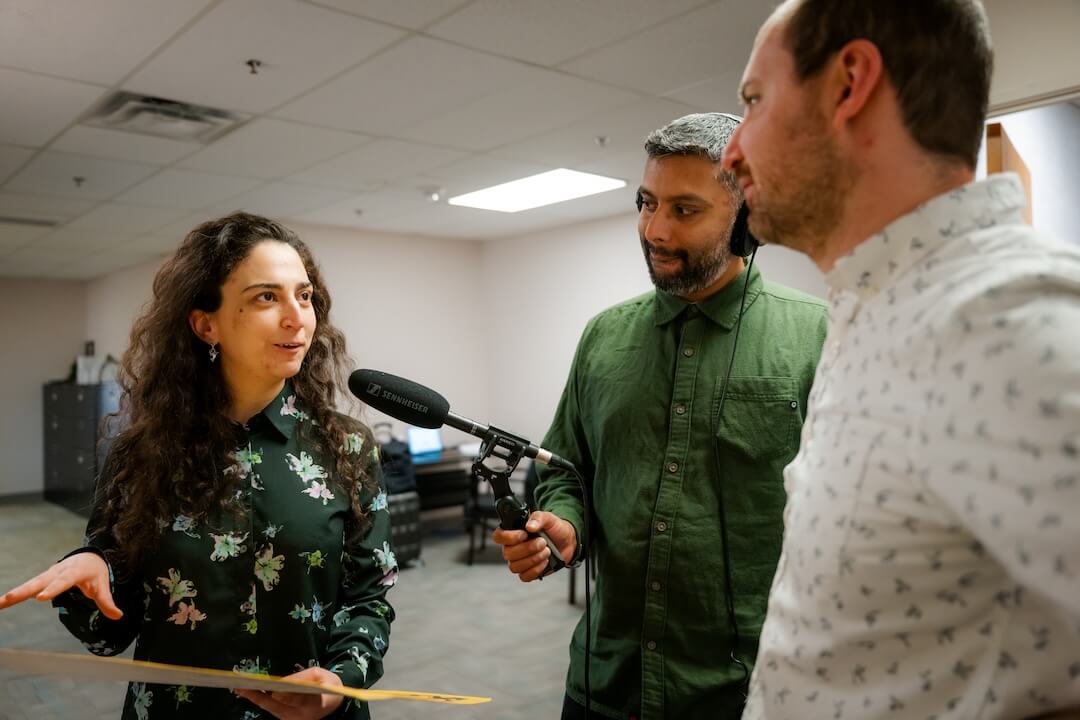
Chammah and Melathe became virtual shadows, accompanying team members as they "knocked on doors looking for any morsel of information." They sat in on crucial Zoom meetings, privy to real-time strategy discussions and updates. The level of access was so remarkable that Jen Guerra, supervising editor at Serial and lead editor for "The Last 12 Weeks," described it as a "front row seat" she had never before witnessed. Melathe meticulously documented every detail, maintaining extensive spreadsheets that cross-referenced numerous phone calls, many of which were recorded by the lawyers themselves on their iPhones and sent directly to the journalists, "without us really asking." This spontaneous sharing of material reflected an extraordinary level of trust and collaboration, transforming the reporting record into an unusually rich tapestry of unfolding events.
Navigating the Ethical Minefield
Such extraordinary access naturally brought forth a complex web of ethical considerations. Before a single microphone was turned on, the first hurdle was ensuring David Wood himself was comfortable with the journalists’ presence, to which he agreed. Beyond this initial consent, Melathe spoke of navigating "micro moments" — ensuring that their presence did not inadvertently influence events or impede the defense team’s critical work. "We tried to be as careful as possible," Melathe stated, emphasizing their primary goal was to observe the lawyers performing their duties authentically.

One particularly delicate scenario involved approaching potential witnesses. The act of "door knocking somebody and trying to get them to give you information that will help save your client’s life" is a fundamental, yet incredibly sensitive, aspect of capital defense. The journalists were acutely aware of the potential to "taint the situation" with their involvement. After extensive discussions with the legal team, they devised a flexible protocol: the lawyer would make initial contact, and only after this initial interaction would Melathe or Chammah introduce themselves as journalists, explain their purpose, and seek permission to record. This approach acknowledged the highly personal and often unexpected nature of these encounters. While some individuals declined to be recorded, many agreed, perhaps viewing the journalists’ presence as merely "the second weirdest thing that’s happening to them that day" after being approached by a death penalty lawyer.
Chammah further underscored the critical distinction between journalistic and legal ethical obligations. While defense attorneys are bound by their duty to their client and do not typically seek comment from individuals accused in court filings, the journalists operated under a broader mandate. "Our first obligation is to the public, and then it’s also to all of our sources," Chammah explained. This led to instances where the journalists independently approached individuals named as alternate suspects in the El Paso murders. They provided these individuals with a comprehensive overview of how they were being framed within the defense filings and offered them an opportunity to comment, ensuring a more balanced and complete narrative for the public. The team made a conscious decision early on not to merely reflect the defense lawyers’ perspective but to use their journey as a "narrative spine" to explore the wider ecosystem of the case, seeking interviews with all relevant participants.
The Broader Context of Capital Defense and the System’s Arbitrary Nature
"The Last 12 Weeks" doesn’t just chronicle a single case; it offers a microcosm of the profound challenges inherent in capital defense work. Lawyers in these cases grapple with immense emotional and professional strain, often operating with limited resources against a powerful state apparatus. Their work frequently involves uncovering decades-old evidence, interviewing reluctant witnesses, and presenting complex legal arguments under tight deadlines.
The podcast implicitly highlights the "arbitrary" nature of the death penalty system, a recurring critique from legal scholars and human rights organizations. Whether an execution proceeds can often hinge on "so many little moments that could have gone one way or another," as Chammah noted. These include the availability of new evidence, the effectiveness of legal counsel, judicial interpretations, and even the personalities involved. Statistics reveal that a significant number of individuals on death row have spent over two decades awaiting execution, and there have been numerous exonerations, underscoring the fallibility of the system. According to the Death Penalty Information Center, over 190 people have been exonerated from death row in the U.S. since 1973, raising serious questions about the finality of capital punishment. The podcast’s close observation of Wood’s case, where small actions or omissions could have altered a man’s fate, powerfully illustrates this systemic vulnerability.
Chronology of the Final Weeks and a Moment of Respite
The reporting continued relentlessly through the final week leading up to David Wood’s scheduled execution in March 2025. This period is typically characterized by frantic legal filings, last-minute appeals, and intense public scrutiny. The podcast captures the raw tension and desperate hope that pervades these final hours. Less than 48 hours before Wood was set to be executed, a pivotal moment arrived: the Texas Court of Criminal Appeals granted a stay of execution.
Melathe was present with members of the defense team when the ruling came down, capturing the raw, stunned reactions. "This was the moment all the lawyers had been working toward for the entire time Maurice and I had been following them," Melathe narrates in the fifth and final episode, describing the team’s disbelief and profound relief. This last-minute reprieve, while not an exoneration, granted Wood a temporary victory, buying him and his lawyers more time to fight for his life. It underscored the incredibly close margins and the profound uncertainty that defines capital punishment.
Impact and Implications of "The Last 12 Weeks"
Listeners of "The Last 12 Weeks" are expected to gain an unparalleled, intimate understanding of the immense complexities and emotional toll associated with one of the legal system’s most challenging jobs. Chammah expressed his hope that the podcast would foster "a deeper sense of the death penalty’s cost in the world by getting this up close to all of the emotions that surround an upcoming execution date." Beyond the personal stories, the series aims to illuminate the systemic flaws and inherent arbitrariness that can dictate life or death. The "butterfly effect" — how seemingly minor moments can cascade into life-altering outcomes — is a central theme, urging viewers to approach discussions about capital punishment with "humility and carefulness."
The podcast’s unique access and narrative structure offer significant implications for both journalism and public discourse. By humanizing the legal process and revealing the exhaustive efforts of defense teams, it challenges simplistic views of crime and punishment. It sets a new benchmark for embedded journalism, demonstrating how trust-building over extended periods can yield deeply informative and ethically managed reporting on sensitive subjects. For the public, it provides a rare window into a usually opaque process, fostering a more nuanced understanding of the death penalty, its profound human impact, and the relentless work undertaken by those who stand between the state and an individual’s life.
Journalism’s Evolving Role and the Power of Trust
Maurice Chammah’s reflections on access highlight a critical aspect of modern investigative journalism. He argues that access is not a binary state — either granted or denied — but a fluid continuum built on trust and comfort developed over "months or years." His pre-existing professional relationship with Greg Wiercioch, even without prior direct interviews on this scale, was instrumental. "I was not an unknown quantity to him," Chammah affirmed, suggesting that a journalist’s reputation for ethical, thorough work can pave the way for extraordinary opportunities.
This project exemplifies the evolving role of journalism in shedding light on complex societal issues. In an era often characterized by rapid news cycles and superficial engagement, "The Last 12 Weeks" commits to deep, immersive storytelling. It underscores that for issues as profound as the death penalty, understanding requires moving beyond headlines and into the granular, emotionally charged realities experienced by those directly involved. The podcast’s success in securing such intimate access, while meticulously navigating ethical boundaries, serves as a powerful testament to the enduring value of trust, persistence, and a commitment to comprehensive public understanding. The narrative not only illuminates the legal battle for one man’s life but also prompts broader reflection on the very nature of justice, mercy, and the human cost of the state’s ultimate power.