The Disappearing Non-Smart TV: A Guide to Finding Analog Entertainment in a Connected World

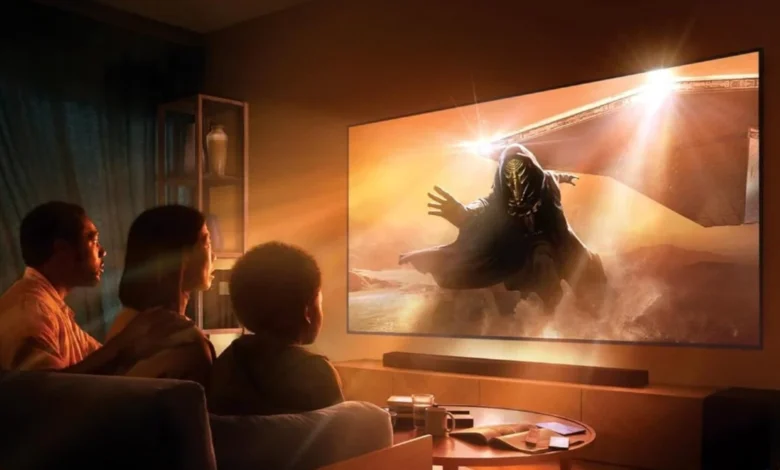
The relentless march of technological integration has transformed everyday appliances into internet-connected devices, a trend largely driven by the promise of enhanced functionality and seamless connectivity. For years, manufacturers have enthusiastically embraced the "smart" paradigm, embedding computing power into everything from refrigerators to televisions. While smart TVs offer a wealth of features, including integrated streaming applications and voice control, a growing segment of consumers is opting for a more minimalist approach to home entertainment. This preference stems from a desire to reduce software bloat, enhance privacy by disconnecting from the internet, or simply to enjoy a more traditional media consumption experience with devices like DVD players.
However, this consumer preference for non-smart televisions has created a significant market gap. The production of traditional, non-smart TVs has dwindled considerably, with once-popular models like the Insignia N10 Series and Scepter U515CV-U being phased out entirely. This shift reflects the industry’s focus on the lucrative smart TV market, leaving those seeking simpler alternatives with a limited selection. Despite the shrinking landscape, the market for non-smart televisions has not vanished. A discerning consumer, armed with the right knowledge, can still find capable and modern options that cater to their specific needs, ranging from dedicated business displays to consumer-grade units that offer the option to disable smart features.
The Evolving Landscape of Television Technology
The current television market is dominated by smart functionalities, driven by several key factors:
- Consumer Demand for Convenience: Integrated streaming services, app stores, and voice assistants offer unparalleled convenience, allowing users to access a vast library of content without the need for external devices.
- Manufacturer Profitability: Smart TV platforms often come with opportunities for revenue generation through app partnerships, advertising, and data collection, incentivizing manufacturers to prioritize these models.
- Technological Advancement: The processing power and connectivity options inherent in smart TVs allow for more sophisticated features like advanced picture processing, gaming enhancements, and integration with other smart home devices.
This industry-wide pivot has made finding a purely non-smart TV an increasingly challenging endeavor. The historical context of television development shows a clear progression from analog broadcasts to digital, and subsequently, to internet-connected smart platforms. Each iteration has aimed to enhance the viewing experience, with "smart" features becoming the latest frontier.
Navigating the Limited Market for Non-Smart TVs
While the options are fewer, several manufacturers continue to offer televisions that either eschew smart capabilities entirely or provide the flexibility to operate without them. These models often serve specific niches, such as business displays, or are designed with a focus on simplicity and user control.
Westinghouse: A Resurgence in Analog Appeal
Westinghouse, a brand with over a century of history, has emerged as a notable player in the non-smart TV market, offering modern, consumer-focused televisions that deliberately omit smart functionalities. This strategic move appeals to consumers seeking a straightforward entertainment experience.
Westinghouse HD Series and DVD Combo:
The Westinghouse brand offers two distinct lines that cater to the non-smart TV demand. The standard Westinghouse HD Series is available in two sizes, both positioned as more compact options.
- 24-inch Model: This smaller variant features a 16:9 LED screen with a 720p resolution, retailing at approximately $115.99.
- 32-inch Model: The larger option also boasts a 16:9 720p resolution and is priced around $149.99.
Both models are equipped with a comprehensive array of connectivity ports, including HDMI, USB, VGA, composite, optical, and coaxial, ensuring broad compatibility with various external devices. They also include 2.0 channel stereo audio.
For consumers who prefer physical media, Westinghouse also offers a DVD Combo model. This television essentially mirrors the specifications of the standard HD Series but integrates a DVD player directly into the unit. Available in the same 24-inch and 32-inch sizes with 720p resolution, this all-in-one solution is ideal for users looking to consolidate their entertainment setup and continue enjoying their DVD collections.
Customer feedback for these Westinghouse models on platforms like Amazon is generally positive, with an average rating of 4.0 out of 5 stars. Users frequently praise the picture quality, ease of use, reliability, and overall value. However, a recurring point of critique centers on the built-in audio. Many users report that the sound quality from the integrated speakers is weak and lacks volume, often recommending the addition of a soundbar for an enhanced audio experience. This observation is common across many modern, slim-profile televisions, where speaker design is often secondary to display technology.
Impecca LED TV: Budget-Friendly Simplicity
Impecca, a brand known for its range of budget-oriented electronics, also produces non-smart televisions designed for the consumer market. The company offers several models across different sizes, providing accessible options for those prioritizing cost-effectiveness.
- TL2400H (24-inch): This 24-inch 16:9 LED display features a 720p resolution and a 60Hz refresh rate. It boasts an 8.5ms response time, Dolby Vision support, and two 6W speakers. The retail price is approximately $169.97. An earlier iteration, the TL2404, included a built-in DVD player but appears to be largely out of stock.
- TL3202H (32-inch): Stepping up in size, this 32-inch 16:9 LED television offers 720p resolution with support for 4:3 aspect ratios. It features a 60Hz refresh rate, 8.5ms response time, an ATSC tuner, Dolby Audio, and two 8W speakers, priced at around $199.97.
- TL4302F (43-inch): This 43-inch model is the most popular among Impecca’s non-smart offerings. It delivers 1080p Full HD resolution with 16:9 and 4:3 support. It includes an ATSC tuner and Dolby Audio, a 60Hz refresh rate, and a faster 5.0ms response time. This model is available across various retailers, including Amazon ($344.97), Target ($349.97), and Lowe’s ($372.31).
While Impecca televisions are generally well-received for their screen and picture quality, customer reviews, particularly for the 43-inch model which has garnered more feedback (3.8 out of 5 stars on Amazon from 59 reviews), echo the sentiment regarding sound quality. The integrated speakers are frequently cited as a weakness, suggesting that an external audio solution would be beneficial for most users. The pricing structure, especially for the larger models, positions Impecca as a competitive option for consumers seeking specific display characteristics without the added complexity of smart features.
Samsung BEC-H Series: Business-Grade Performance for Home Use
While consumer-grade non-smart TVs are often relegated to budget brands, premium manufacturers are increasingly offering models designed for business applications that can also serve as excellent non-smart displays for home users. Samsung, a brand consistently ranked high for customer satisfaction, offers its BEC-H Series as a prime example. These televisions are primarily intended for digital signage but possess the performance and connectivity to function effectively as traditional displays.
The Samsung BEC-H Series are 16:9 4K televisions available in a wide range of sizes, catering to diverse viewing needs and room sizes:
- 43-inch: Approximately $372.90
- 50-inch: Approximately $536.90
- 55-inch: Approximately $699.99
- 65-inch: Approximately $777.41
- 70-inch: Approximately $875.00
- 75-inch: Approximately $999.99
- 85-inch: Approximately $1,679.00
All models in this series feature a 60Hz refresh rate, HDR10 support, 250 nits of brightness, and PurColor picture enhancement technology. While not a traditional "smart TV" in the sense of a full app ecosystem, these displays incorporate a Samsung Crystal UHD 4K Processor, enabling AI upscaling and a streamlined version of Samsung’s Tizen operating system. Crucially, they offer the option to bypass internet connectivity during setup, allowing users to maintain an unplugged entertainment experience.
User feedback for the BEC-H Series indicates that they perform well as non-smart televisions. Some users appreciate the privacy aspect, noting the absence of intrusive "spying" capabilities. Despite a modest Amazon rating of 3.6 stars from 46 reviews, the majority of positive comments highlight the TV’s brightness, image quality, low-reflective screen, and robust construction. Negative reviews often pertain to issues with defective units or problems with specific signage management applications, rather than the core display functionality. The business-oriented design suggests a focus on reliability and performance, making it a compelling option for those willing to invest in a premium, yet non-smart, display.
Panasonic CQE2U Series: Professional Displays for Enhanced Viewing
Similar to Samsung’s business-oriented offerings, Panasonic’s CQE2U Series provides high-performance displays designed for commercial and educational environments that can also be utilized as non-smart televisions in a home setting. While these units feature Wi-Fi connectivity and a stripped-down version of the Android OS, they lack the extensive app functionality typically found in consumer smart TVs, allowing for a more controlled viewing experience.
The Panasonic CQE2U Series is available in a premium price bracket, reflecting its professional-grade specifications:
- TH-43CQE2U (43-inch): $883.00
- TH-50CQE2U (50-inch): $945.99
- TH-65CQE2U (65-inch): $1,416.00
- TH-75CQE2U (75-inch): $2,304.00
- TH-86CQE2U (86-inch): $4,386.99
- TH-98CQE2U (98-inch): $10,098.00
All models in this series are UHD 4K IPS panels, offering impressive brightness levels ranging from 400 to 500 nits. Additional features include a built-in TV tuner and a dedicated Sports Mode. Connectivity is robust, with USB-C ports and four HDMI 2.2 video inputs, justifying the higher price point. These televisions are typically found through specialized retailers such as CDW and B&H Photo, rather than mainstream consumer electronics stores, which contributes to the limited availability of user reviews. The professional design and advanced features make these models a strong contender for users seeking top-tier picture quality and reliability without the complexities of a full smart TV interface.
Sony Bravia: Smart Functionality with an Analog Option
For consumers who desire the cutting-edge technology and brand reputation of a major manufacturer but still wish to maintain the option of a non-smart experience, Sony’s Bravia line offers a unique solution. Sony is consistently recognized by consumer research organizations as one of the most reliable TV brands, alongside LG and Samsung.
The high-end Bravia televisions are equipped with smart TV capabilities, typically running on Google TV. However, during the initial setup process, users are presented with a critical choice: "Set Up Google TV" or "Set Up Basic TV." Selecting "Set Up Basic TV" effectively disables all smart functionalities, allowing the television to operate as a traditional display. This flexibility makes Bravia models a versatile option, as it enables consumers to choose from a wide array of screen technologies, sizes, and price points.
Sony Bravia models encompass various display technologies:
- LED: Standard LED options, such as the Sony Bravia 3, offer accessible entry points into the Bravia ecosystem.
- Mini-LED: Models like the Bravia 9 leverage Mini-LED technology for enhanced contrast and brightness.
- OLED: For ultimate picture quality, the Bravia XR8B series offers stunning OLED panels.
These televisions are available in sizes ranging from 43 inches up to an expansive 100 inches. They are packed with advanced features, including Dolby Vision, Dolby Atmos, AI upscaling, and Motionflow motion enhancement technology, ensuring a premium viewing experience regardless of whether the smart features are utilized.
Reviews for Sony Bravia TVs generally range between 4 and 5 stars on platforms like Amazon. While users commend the image quality, brightness, and overall aesthetics, some consistent reports of occasional freezing issues have surfaced. It remains unclear whether these reliability concerns persist when the televisions are operated in "Basic TV" mode. Nonetheless, the ability to opt out of smart features while still benefiting from Sony’s renowned picture quality and processing power makes the Bravia line a compelling choice for discerning consumers.
The Broader Implications of the Non-Smart TV Revival
The continued, albeit niche, demand for non-smart televisions highlights several key trends and implications in the consumer electronics market:
- Privacy Concerns: A significant portion of the drive towards non-smart devices stems from growing consumer awareness and concern about data privacy. Smart TVs, by their nature, collect user data, which can be used for targeted advertising or other purposes. Opting for a non-smart TV provides a direct way to mitigate these concerns.
- Desire for Simplicity and Control: The complexity of smart TV interfaces and the constant updates can be overwhelming for some users. Non-smart TVs offer a more straightforward and predictable user experience, focusing solely on displaying content from external sources.
- Focus on Dedicated Devices: Some consumers prefer to use dedicated streaming devices (e.g., Apple TV, Roku, Amazon Fire TV Stick) connected to a basic display. This approach allows for more granular control over the streaming experience, easier hardware upgrades, and the ability to isolate internet-connected functionalities to a single device.
- Sustainability and Longevity: The rapid obsolescence of smart TV software, due to manufacturers ceasing support for older models, can lead to perfectly functional hardware becoming outdated. Non-smart TVs, with their simpler architecture, may have a longer practical lifespan, contributing to a more sustainable consumption model.
- Niche Market Opportunities: The existence of this demand suggests potential for further innovation in the non-smart TV space. Manufacturers could explore developing more advanced non-smart models with superior picture quality, enhanced audio, and robust connectivity options, catering specifically to this growing segment.
In conclusion, while the television industry has largely embraced the smart revolution, the persistent demand for non-smart alternatives underscores a segment of the market that values privacy, simplicity, and control. The available options, though limited, demonstrate that manufacturers can cater to these needs, offering a range of choices from budget-friendly integrated solutions to premium displays with the flexibility to remain analog. As consumer priorities continue to evolve, the market for non-smart televisions may see further development, offering a refreshing counterpoint to the ever-connected digital landscape.