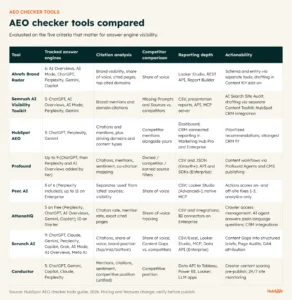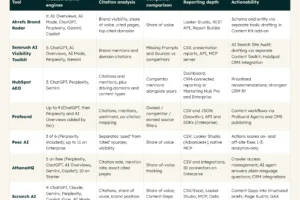
The digital marketing landscape is undergoing a profound transformation with the rise of generative AI, shifting the paradigm from traditional Search Engine Optimization (SEO) to the burgeoning field of Answer Engine Optimization (AEO). As AI models like ChatGPT, Perplexity, and Gemini become primary conduits for information discovery, brands are increasingly challenged to ensure their visibility and authoritative representation within AI-generated responses. This evolution has spurred the development of specialized tools designed to track, audit, and optimize a brand’s presence in these new answer engines. Among the prominent players emerging in this critical space are Scrunch, Ahrefs Brand Radar, and HubSpot AEO, each offering distinct approaches and functionalities tailored to different strategic needs.
The Dawn of Answer Engine Optimization: A New Paradigm for Digital Presence
The advent of large language models (LLMs) and conversational AI has fundamentally reshaped how users seek and consume information. Rather than sifting through search results, users now frequently receive concise, synthesized answers directly from AI systems. This shift has given birth to AEO, an optimization discipline focused on ensuring a brand’s content is not only crawlable and understandable by AI bots but also cited accurately, positively, and prominently in AI-generated responses. The imperative for businesses is clear: if your brand isn’t visible in these AI answers, you risk becoming invisible to a significant portion of your target audience.
In this rapidly evolving environment, traditional SEO tools, while foundational, often fall short of addressing the unique nuances of AI visibility. This gap has led to a dual market response: established SEO platforms are integrating AI-centric features, while new, purpose-built AEO solutions are emerging to meet specialized demands. This dynamic has accelerated over the past 24 months, with significant advancements in AI capabilities and a corresponding increase in the sophistication of AEO tools. Industry analysts estimate that AI-driven search queries could account for over 50% of all online information seeking by 2028, underscoring the urgency for brands to adapt their digital strategies.
Scrunch: The Dedicated Architect of AI Visibility
Scrunch positions itself as a purpose-built AI visibility platform, a dedicated architect for AEO initiatives. Its core mission revolves around providing granular insights and actionable recommendations specifically for optimizing brand presence within AI answers. Unlike broader marketing suites, Scrunch’s design is laser-focused on the intricacies of how AI models consume, interpret, and cite digital content.
Key capabilities of Scrunch extend beyond mere brand monitoring. It meticulously tracks a brand’s share of voice across various AI answers, analyzes the sentiment embedded in AI-generated responses, and identifies the specific domains and pages most frequently cited by LLMs. Beyond these foundational metrics, Scrunch delves into AI search trends, monitoring prompt volumes for emerging topics and assessing product-level shopping visibility to determine how brands rank in AI-driven purchase recommendations. For instance, a brand might discover that its latest product is consistently overlooked in AI shopping guides despite high search volume, prompting a targeted AEO campaign.
A standout feature of Scrunch is its emphasis on AI crawlability and active optimization. Its Agent Traffic tool allows brands to track visits from specific AI bots (e.g., ChatGPT, Claude, Gemini, Perplexity), distinguishing valuable AI engagement from general bot noise. Complementing this, Scrunch’s Site Maps feature provides a unique AI-centric view of a website’s structure, identifying content blockers that prevent AI systems from effectively parsing information. This "ground-level picture" of AI crawlability is crucial for foundational AEO work. Furthermore, for enterprise clients, Scrunch offers AXP (Answer Experience Platform), an innovative edge-layer solution that serves AI-optimized versions of a site to bots, reducing token loads by up to 26% and enhancing AI agent comprehension without altering the human-facing website. This dual-delivery architecture represents a bold step in proactive AI optimization.
Ahrefs Brand Radar: Integrating AI into the SEO Ecosystem
In contrast to Scrunch’s specialized focus, Ahrefs Brand Radar emerges as an integrated solution within the established Ahrefs SEO platform. For marketing teams already leveraging Ahrefs for traditional SEO, backlink analysis, and web monitoring, Brand Radar offers a natural extension, layering AI visibility data alongside existing metrics. This strategic positioning caters to teams seeking a unified dashboard for their comprehensive digital presence.
Ahrefs Brand Radar tracks brand presence across AI answers but crucially contextualizes this data within a broader ecosystem that includes traditional search demand, web mentions, video, and Reddit. The platform’s strength lies in its ability to draw from a massive pool of over 406 million monthly prompts, derived from real user keywords rather than synthetic ones. This extensive dataset allows for benchmarking against a broader signal of actual user intent. Users can build custom queries to filter data by prompt type, brand, and AI platform, providing flexibility for targeted analysis.
The appeal of Brand Radar is particularly strong for SEO-led teams. It allows them to monitor AI visibility without migrating to a new platform or managing disparate vendor relationships. This seamless integration can streamline workflows and provide a holistic view of brand performance across diverse discovery channels. A recent survey of digital marketing professionals indicated that over 60% of enterprise SEO teams prioritize integrated solutions for managing their multifaceted digital marketing efforts, highlighting Brand Radar’s strategic advantage for this segment.
HubSpot AEO: Accessible Benchmarking for Every Business
HubSpot, a veteran in marketing and sales software, offers a more accessible entry point into AEO with its free and low-cost tools. HubSpot AEO is designed to democratize access to critical AI visibility insights, enabling businesses of all sizes to understand and adapt to the evolving search landscape without immediate platform investment.
Its free AEO Grader provides a one-time scored snapshot of a brand’s representation across key AI models like ChatGPT, Perplexity, and Gemini, requiring no account. This tool serves as an invaluable initial benchmark, offering a quick diagnostic for brands curious about their current AI standing. Complementing this, the free AEO Sensor delivers ongoing industry-level AI visibility and citation trends, allowing businesses to monitor the broader market without tracking their specific brand, but providing context for their own potential performance. For teams seeking more actionable recommendations and competitive visibility scores at a low cost, HubSpot AEO starts at $50/month.
According to a HubSpot spokesperson, "Our goal with AEO Grader and Sensor is to empower businesses with the foundational insights needed to navigate the AI-driven search revolution. We believe that understanding AI visibility shouldn’t be a barrier, but an opportunity for all." This philosophy positions HubSpot AEO as an ideal solution for small to medium businesses, initial explorers, and budget-conscious teams who need a low-risk way to benchmark and understand AEO before committing to more specialized or integrated platforms.
Methodological Foundations: Trusting the Data in a Dynamic AI Landscape
The reliability of AI visibility data hinges critically on the methodology employed for its collection and analysis. This is a crucial area where Scrunch and Ahrefs Brand Radar diverge, presenting distinct trade-offs for users.
Scrunch utilizes a combination of browser automation and official platform APIs, augmented by machine learning (ML) and natural language processing (NLP) to extract brand mentions, sentiment, and citation patterns. A notable nuance in Scrunch’s data collection is its prompt architecture, which converts keyword data into prompts rather than sampling actual user queries from live AI traffic. This approach offers precise control for teams tracking a specific set of brand-relevant questions, allowing for highly targeted optimization efforts. Prompts are run daily for the first 14 days post-setup, then shift to a 72-hour refresh cadence, with manual refresh options available.
Ahrefs Brand Radar, conversely, prides itself on drawing from a vast pool of over 406 million monthly prompts derived from real user keywords. This scale and origin provide a broader signal, enabling benchmarking against actual user intent rather than synthetically generated prompts. Users can build custom queries to filter this massive dataset. However, documented limitations have been reported, including accuracy gaps in ChatGPT and Perplexity tracking. Furthermore, Claude, a significant LLM for professional research, was not initially covered by Brand Radar, though Grok has been included. This highlights the challenge of maintaining comprehensive coverage in a rapidly evolving LLM ecosystem.
For any team evaluating these platforms, validating the underlying data methodology is paramount. This includes understanding the refresh cadences, the source of prompts, and any acknowledged limitations. Robust validation might involve using Scrunch’s Agent Traffic tool to ascertain which AI models are actually visiting your site and what content they consume, or leveraging its Site Maps feature to identify potential AI crawlability blockers. Ultimately, AI visibility reporting should emphasize directional trends over single-point metrics, given the inherent variability of AI responses. A single citation count at a specific moment offers less actionable insight than a consistent trend line over time.
Strategic Alignment: Matching Tools to Business Objectives
The choice between Scrunch, Ahrefs Brand Radar, and HubSpot AEO largely depends on a team’s primary objectives, existing tech stack, and strategic focus.
Who Should Use Scrunch:
- AEO-focused Marketing Teams: Those with a dedicated strategy for optimizing brand presence in AI answers.
- Enterprise Brands with Dedicated AI Visibility Programs: Organizations that require deep, granular insights into AI crawlability, sentiment, and active optimization.
- Content Teams Focused on AI-Driven Conversion: Teams aiming to understand and influence how AI models recommend their products or services in buying-stage prompts.
- Brands Needing Proactive AI Optimization: Companies interested in leveraging advanced features like AXP to serve AI-optimized content versions to bots.
Who Should Use Ahrefs Brand Radar:
- SEO-Led Teams: Organizations that prioritize a unified view of their digital performance, integrating AI visibility with traditional SEO metrics, backlink analysis, and broader web mentions.
- Existing Ahrefs Users: Teams already invested in the Ahrefs ecosystem seeking to add AI monitoring without onboarding a new vendor.
- Agencies Managing Diverse Client Portfolios: Agencies that need a comprehensive platform to track various aspects of clients’ online presence, including AI.
- Teams Prioritizing Real User Query Data: Those who value benchmarking against a vast pool of actual user-generated prompts.
Who Should Use HubSpot AEO:

- Small to Medium Businesses (SMBs): Companies with limited budgets or resources for specialized AEO tools.
- Teams New to AEO: Those seeking a low-risk entry point to benchmark their AI visibility and understand the landscape.
- Brands Requiring Initial Diagnostics: Businesses that need a quick snapshot or ongoing industry trends before committing to a full platform.
The more useful question for searchers comparing these tools is not just "what does it track?" but "what problem are we trying to solve on day one?" If the primary challenge is "why isn’t my brand appearing in AI answers for key buying-stage prompts, and how do I fix it?", Scrunch’s workflow is explicitly designed for that. If the question is "how is our brand performing across all discovery channels, including AI, traditional search, Reddit, and YouTube?", Ahrefs Brand Radar offers a unified dashboard.
Investment and Scope: Pricing, Coverage, and Future-Proofing
Pricing and coverage are critical considerations, especially as the AEO market matures.
Scrunch Pricing:
- Brand Core ($250/month): Includes 125 unique tracked prompts, 5 site audits/month, 1 brand workspace, 5 user licenses, and coverage across 4 LLMs (ChatGPT, Perplexity, Google AIO, Copilot). A 7-day free trial is available.
- Agency Core ($500/month): Offers 250 prompts, 5 audits per brand, 3 brand workspaces, 3 pitch workspaces, and unlimited user licenses.
- Brand Enterprise (Custom Pricing): Unlocks AXP, custom prompts and audits, API/SSO, and expands to 9 LLMs (adding Claude, Gemini, Meta AI, Grok, and Google AI Mode). AXP is an Enterprise-only feature.
Ahrefs Brand Radar Pricing:
- Standalone Product: Starts at $199/month (Entry), $398/month (Select Platforms), or $699/month (All Platforms, includes full 406M+ prompt database and 2,500 custom checks, including Grok).
- Bundled with Ahrefs SEO Plans: Available starting at $129/month (Lite plan).
- Custom Prompts Add-on: Basic ($50/month for 2,500 checks) to Scale ($250/month for 25,000 checks).
On day one, Scrunch’s Brand Core offers a viable starting set for many B2B brands with its 4 LLMs and 125 custom prompts. However, teams prioritizing Claude coverage will need the Brand Enterprise upgrade. Ahrefs Brand Radar’s $199/month standalone entry point is competitive for AEO-only teams, and its integration with existing SEO plans offers cost efficiencies for current Ahrefs users. The decision criteria for coverage should include which LLMs your target audience predominantly uses, the volume of prompts required for comprehensive tracking, and the necessity of advanced features like active optimization (AXP).
Implementation and Integration: Seamless Workflow or Specialized Architecture?
Getting to first value and integrating new tools into existing workflows is a key differentiator.
Scrunch Implementation: Onboarding involves defining your prompt library (which prompts, personas, competitors) and running Scrunch’s Site Maps to understand AI agent site interpretation. Core plans include Google Single Sign-On, while Enterprise plans add SAML/OIDC SSO, Looker Studio integration, and Query API access for pulling data into existing dashboards. The Enterprise-only AXP is implemented at the edge, integrating into the site’s content delivery layer to serve AI-optimized pages to bots in parallel with the human-facing site. This requires careful technical evaluation for compatibility and risk tolerance.
Ahrefs Brand Radar Implementation: Brand Radar activates as a module within an existing Ahrefs account or as a standalone product. This offers a significant implementation advantage for current Ahrefs users, requiring no separate installation or new vendor relationship. Users define monitoring parameters by specifying prompts and brands, and Brand Radar pulls data from its vast prompt pool. Features like the MCP Server allow for live Ahrefs data integration into LLMs like Claude or ChatGPT for in-workflow analysis. Bot Analytics tracks AI bot behavior on your site, and IndexNow integration is included. The main limitation is that Brand Radar’s roadmap is tied to the broader Ahrefs platform, which might mean slower prioritization for highly specialized AI visibility features compared to a dedicated AEO tool.
Overcoming Challenges: Acknowledging Limitations and Emerging Solutions
Every AI visibility tool in 2026 faces inherent limitations due to the nascent and rapidly evolving nature of generative AI.
Scrunch Limitations: While purpose-built, Scrunch’s prompt architecture, which converts keywords to prompts, might not perfectly model what real buyers are asking, potentially creating a gap in understanding genuine user queries. Claude coverage is limited to the Brand Enterprise plan, which could be a barrier for some B2B teams. The AXP dual-delivery architecture, while powerful, requires careful evaluation of technical strategy and risk tolerance by the brand.
Ahrefs Brand Radar Limitations: Third-party reviews have reported accuracy gaps in ChatGPT and Perplexity tracking. The initial lack of Claude coverage (now a point of ongoing development) could be a drawback for certain professional research-focused markets. As an add-on, its feature set and roadmap are inherently tied to the broader Ahrefs platform, potentially limiting its agility in addressing cutting-edge AEO demands compared to a specialized tool.
A significant discussion point revolves around the concept of "AI-only pages" or dual-delivery architectures like Scrunch’s AXP. While these systems can dramatically improve AI bot comprehension and token efficiency, brands must assess the implications for content consistency, information integrity, and potential SEO impacts. The prevailing view among experts is that AEO complements SEO rather than replacing it. Brands that neglect their SEO foundation while chasing AI visibility risk undermining both channels. Dr. Evelyn Reed, a leading AI ethics researcher, commented, "While innovative for optimization, it’s crucial for brands to ensure consistency in core messaging and information integrity across both human and AI-optimized versions of their site."
From Insights to Impact: Driving Actionable Content and Measurable ROI
Visibility data, regardless of its sophistication, is only as valuable as the actions it inspires. This is where many teams falter, accumulating data without a systematic process to translate it into impactful content or measurable business outcomes.
Scrunch directly addresses this challenge with its Insights feature, which acts as a bridge between data diagnosis and content execution. Rather than merely flagging low visibility, Insights pairs each diagnosis with a specific recommended action. For example, if a competitor consistently appears in AI answers for a category your brand should dominate, Scrunch might recommend creating content that highlights a specific, differentiating product feature to secure future AI citations. This diagnosis-plus-recommendation structure provides prioritized content briefs, moving beyond simple dashboard numbers to actionable strategies.
For pipeline attribution, Scrunch’s Agent Traffic and Shopping features link visibility to commercial outcomes. Agent Traffic demonstrates which AI bots are consuming your site content, proving engagement, while the Shopping feature tracks which specific products gain "shelf space" in AI-driven commerce recommendations. This creates a clearer line of sight from content investment to measurable business results.
While Semrush is also building towards combining AI visibility scores with traditional SEO metrics, traffic data, and Google Analytics conversions for a holistic ROI view, this is still largely positioned as a future capability. A crucial pro tip for all teams: avoid using raw citation count as a primary Key Performance Indicator (KPI). This metric often rewards volume over quality; a citation in a vague AI answer to a low-intent prompt holds significantly less value than a targeted, high-intent recommendation.
The Broader Landscape: Ahrefs, Semrush, and the Future of Digital Discovery
The comparison between Scrunch and Ahrefs Brand Radar exists within the broader context of the evolving SEO platform market. Semrush, another SEO giant, frames modern discovery as a "combined SEO + AI discovery problem," advocating for simultaneous dominance across both Google and AI search. Its SEO Toolkit, with its vast database of 26.8 billion keywords and daily tracking capabilities, represents its traditional strength, now being adapted for the AI era.
The concept of "keyword difficulty" in traditional SEO doesn’t directly translate to AI visibility. Instead, the equivalent is prompt competitiveness: assessing how many credible, well-cited sources appear for a specific AI prompt and the effort required to become one of them. Scrunch’s AI Search Trends feature approaches this by tracking topics gaining or losing momentum in AI prompts, offering a directional read on competitive intensity.
It is entirely feasible, and often strategic for larger teams, to use both Scrunch and Ahrefs Brand Radar. A common synergistic pairing involves SEO teams leveraging Ahrefs Brand Radar for monitoring AI share of voice alongside traditional search performance, while content teams utilize Scrunch or HubSpot AEO for running targeted AEO sprints against specific prompt sets. While there’s coverage overlap for LLMs like ChatGPT, Perplexity, and Gemini, the differing data methodologies can actually enhance confidence in the overall visibility reporting by providing cross-validation.
Conclusion: Strategic Choices in an Evolving AI Era
The choice between Scrunch, Ahrefs Brand Radar, and HubSpot AEO hinges on a brand’s specific objectives, resources, and strategic alignment with the future of digital discovery. Scrunch offers a specialized, purpose-built solution for deep AEO optimization and active content serving, ideal for enterprises and dedicated AEO teams. Ahrefs Brand Radar provides a robust, integrated approach for SEO-led teams seeking a unified view of their digital presence across traditional and AI channels. HubSpot AEO, with its accessible free tools and low-cost entry, democratizes initial benchmarking and trend monitoring for businesses of all sizes.
The landscape of AI visibility is dynamic, characterized by rapid technological advancements and evolving user behaviors. Continuous monitoring, data-driven content refresh cycles, and a clear understanding of ROI signals will be paramount for success. As AI continues to reshape how information is discovered, the strategic investment in the right AEO tools will not only ensure brand visibility but also solidify a brand’s position as an authoritative and trusted source in the age of answer engines.