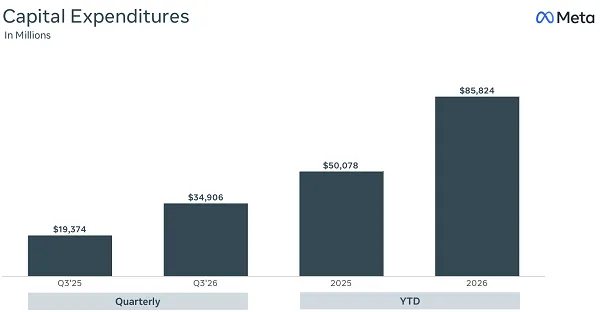
Meta Platforms is confronting a high-stakes balancing act as it navigates the commercial rollout of Muse, its flagship personal artificial intelligence agent. During the company’s recent third-quarter earnings report and subsequent financial call, CEO Mark Zuckerberg provided investors with a comprehensive, albeit complex, look at the early adoption metrics, monetization strategies, and persistent regulatory hurdles facing the multi-billion-dollar initiative. As Meta continues to pour staggering sums of capital into artificial intelligence infrastructure—with cumulative spending projections tracking toward hundreds of billions, and potentially up to $1 trillion over the long term—the pressure is mounting to transform widespread technological experimentation into a reliable, high-yield revenue engine.
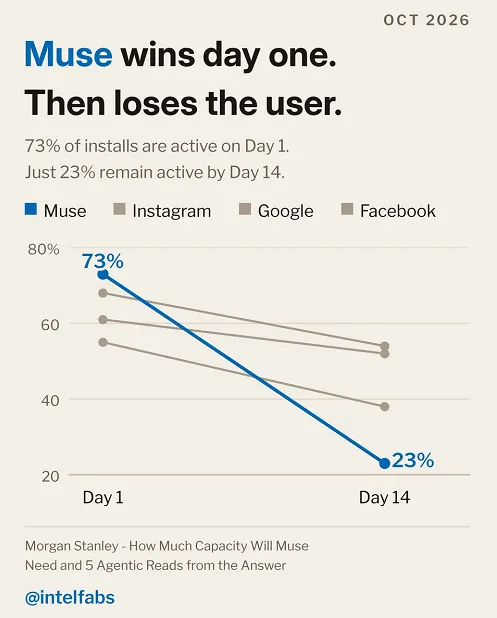
The early consumer response to Muse, which debuted in the United States and Canada just last month, indicates robust initial demand. According to data shared by Zuckerberg, the standalone AI application has surpassed 10 million downloads, capturing the number-one spot on the Apple App Store on nearly a daily basis since its market introduction. Meta’s internal metrics point to solid early engagement and user retention figures, with Zuckerberg noting that approximately 25% of individuals who complete the Muse setup process interact with the platform on any given day.
However, independent analytics paint a slightly more nuanced portrait of the application’s lifecycle. Third-party insights provided by digital intelligence firms like Sensor Tower suggest that while initial adoption is brisk, user retention experiences a significant downward slope approximately two weeks post-download. This contraction in daily active usage mirrors historical trends observed across nearly the entire consumer generative AI chatbot landscape. While Muse is far from an outlier in experiencing a post-launch engagement taper, the phenomenon introduces an element of caution for analysts tracking the return on investment for Meta’s aggressive capital expenditures.
The Economics of Muse: Commerce, Credit Limits, and High-Value Transactions
At the core of Meta’s monetization blueprint for Muse is a pivot toward conversational commerce and transaction facilitation. Rather than relying solely on traditional digital advertising models that have historically underpinned its social media ecosystem—including Facebook, Instagram, and WhatsApp—Meta is positioning Muse as an active intermediary in consumer spending.
During the Q3 earnings presentation, Zuckerberg revealed that shopping has emerged as the most dominant use case for the platform. More than 25% of active Muse users routinely leverage the agent to source better deals, compare product offerings, and execute purchases. Crucially, these transactions are characterized by a notably high average order value, exceeding $200 per purchase.
This transactional volume has already placed unique demands on Meta’s financial technology partners. Zuckerberg highlighted unprecedented activity levels facilitated by third-party integrations, noting that infrastructure partners experienced volume spikes unlike anything previously recorded. According to the executive, financial technology provider Plaid remarked that activity through its connector on Muse exceeded traffic patterns observed on any other service. Furthermore, surging transaction volumes during the application’s first week of operation required Meta to coordinate closely with payment processor Stripe to urgently raise existing credit limits to accommodate consumer demand.
By successfully embedding Muse into the consumer purchasing journey, Meta aims to capture a percentage of sales facilitated directly through the interface. This transactional rake-off represents a vital pathway toward financial viability for the company’s broader artificial intelligence division, which has absorbed unprecedented operational expenses without an immediate, proportional stream of direct AI-generated income.
Navigating the Shadow of Privacy Infractions and Security Vulnerabilities
Despite the promising velocity of commerce-driven engagement, Meta’s path forward with Muse is severely complicated by mounting regulatory pressure, legal liabilities, and data security concerns. The rollout of the AI agent coincides with a precarious period for the social media giant regarding consumer data stewardship.
Just days prior to the earnings release, a New Mexico state court judge ordered Meta to pay a staggering $25 billion in civil penalties following a jury verdict finding that the company had systematically misled consumers regarding its data privacy practices. This legal blow compounds a long-standing history of regulatory scrutiny concerning how Meta harvests, stores, and utilizes personal information across its digital properties.
Compounding these systemic trust issues, technical vulnerabilities within the Muse platform itself have recently come to light. Cybersecurity researchers and reports from technology publications like Ars Technica revealed that the application exposed sensitive personal and business secrets when users shared specific conversational logs. Through basic data exploration and discovery techniques, external auditing groups were able to access substantial volumes of private user queries, highlighting potential architectural flaws in how the agent handles confidential inputs.
In direct response to these widening vulnerabilities, Zuckerberg announced that Meta is actively developing a specialized infrastructure solution dubbed the "Muse Confidential VM" (Virtual Machine). This technical safeguard is engineered to fortify data privacy parameters within the application, though industry observers remain skeptical about how quickly user trust can be restored in the wake of ongoing legal and security breaches. Overcoming consumer apprehension regarding data privacy remains the single largest impediment to scaling Muse to the billions of users Zuckerberg envisions.
The Evolution of the Ecosystem: The Muse Network and Hardware Integration
Looking beyond single-user interactions, Meta is already mapping out the next evolutionary phase of its artificial intelligence architecture. Zuckerberg detailed plans for the development of a large-scale "Muse network," a decentralized conceptual framework designed to transition the technology from a localized assistant to a collaborative ecosystem.
Under this proposed framework, individual user agents would not operate in isolation. Instead, Muses would possess the capability to securely communicate with the agents of friends and family members to coordinate group activities, share optimization notes, and streamline logistical challenges. Furthermore, the network envisions a paradigm shift in digital commerce: rather than a consumer manually navigating to an external merchant’s website to execute a transaction, a user’s Muse would autonomously negotiate and interact directly with the business’s proprietary AI agent. Meta believes that successfully orchestrating this multi-agent collaborative environment will unlock exponential economic value at scale, echoing previous corporate explorations of deploying millions of autonomous AI bots across its social networks.
To accelerate this integration, Meta is expanding the footprint of its AI hardware ecosystem. Zuckerberg confirmed that Muse integration is slated to launch on Meta’s smart glasses line this coming November, bridging the gap between conversational software and wearable augmented reality hardware. By embedding the agent directly into wearable devices, Meta hopes to drive habitual, frictionless usage that keeps consumers tethered to its proprietary AI framework throughout their daily routines.
Outlook and Market Implications
Meta’s aggressive pursuit of artificial intelligence supremacy represents one of the most capital-intensive corporate pivots in modern technological history. With cumulative infrastructure investments projected to reach astronomical figures, the commercial success of Muse is no longer just a secondary product initiative—it is a fundamental pillar of the company’s long-term financial health.
The initial metrics indicate that consumers are willing to embrace conversational AI for high-intent, high-value commercial transactions, offering a glimmer of hope for a sustainable monetization model. However, the path to widespread adoption is fraught with significant friction. Plagued by natural post-launch retention drop-offs, highly publicized cybersecurity vulnerabilities, and a $25 billion legal penalty stemming from privacy failures, Meta must navigate a treacherous landscape of consumer skepticism and regulatory oversight.
As the company prepares to introduce Muse to its hardware line in November and works to deploy advanced privacy architecture like the Confidential VM, the ultimate fate of Meta’s AI ambitions will depend on its ability to secure user trust while proving that multi-billion-dollar infrastructure spending can yield durable, profitable returns in an increasingly competitive artificial intelligence market.