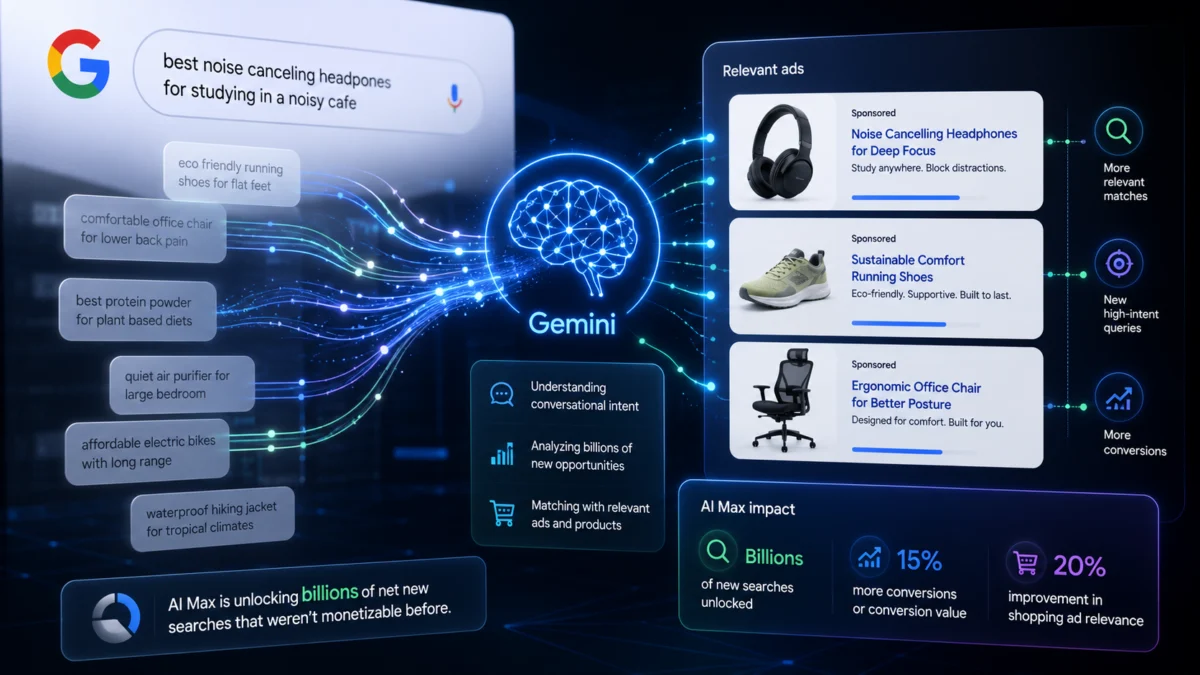
Google announced a significant advancement in its advertising capabilities, stating that AI Max is poised to unlock "billions" of previously unmonetized searches for advertising, providing Alphabet with a clear and robust pathway to substantially expand its Search revenue. This strategic shift comes as user queries increasingly evolve, becoming longer, more complex, and conversational, presenting both a challenge and an opportunity for traditional keyword-based advertising models. The revelation was made during Alphabet’s Q2 2026 earnings call, held last night, where Philipp Schindler, Google’s Senior Vice President and Chief Business Officer, highlighted AI Max’s pivotal role in matching advertisements to searches that were previously deemed too intricate or ambiguous for conventional keyword targeting mechanisms.
The Evolution of Search: Adapting to Conversational Queries
For decades, Google Search has been the cornerstone of digital advertising, primarily operating on a model where advertisers bid on specific keywords to display their ads. This system, while incredibly effective, faced growing limitations as user search behavior transformed. The rise of natural language processing (NLP) and large language models (LLMs) has empowered users to interact with search engines in a more human-like, conversational manner, posing complex queries that often lack a single, easily identifiable keyword. These queries might involve multiple intents, nuanced context, or a series of follow-up questions, making it challenging for traditional algorithms to pinpoint relevant commercial intent and serve appropriate ads.
Google has long acknowledged this evolving landscape. Over the past several years, the company has invested heavily in artificial intelligence and machine learning to better understand user intent, context, and semantic meaning, moving beyond mere keyword matching. This foundational work laid the groundwork for innovations like AI Max and the integration of advanced AI models such as Gemini. The challenge was not just about understanding the queries but also about translating that understanding into effective monetization opportunities without compromising user experience or ad relevance. The announcement signals Google’s successful navigation of this challenge, turning a potential hurdle into a significant growth engine.
AI Max: From Beta to Broad Market Adoption
The formal announcement that AI Max has moved out of its beta phase marks a critical milestone for Google’s advertising ecosystem. This transition signifies the technology’s maturity and readiness for widespread implementation. According to Google, AI Max has already seen rapid adoption, with over 500,000 advertisers integrating the tool into their campaigns. This widespread uptake in a relatively short period underscores the perceived value and potential effectiveness of the new AI-driven solution among marketing professionals.
The performance metrics shared by Google further validate the efficacy of AI Max. The company reported that advertisers utilizing either AI Max or its predecessor, Performance Max, are experiencing an average 15% uplift in conversions or conversion value, all while maintaining a similar return on ad spend (ROAS). This figure is compelling, suggesting that AI Max is not merely expanding reach but doing so efficiently and profitably for advertisers. The ability to drive higher conversions without a proportional increase in ad spend is a powerful incentive for businesses to embrace these new AI-powered tools, especially in a competitive digital advertising market where every percentage point of efficiency can significantly impact profitability. This data point offers a tangible benefit that resonates strongly with advertisers seeking to maximize their marketing investments.
Gemini’s Catalytic Role in Ad Relevance
Complementing the capabilities of AI Max, Google also highlighted the transformative impact of its advanced AI model, Gemini, on ad matching, particularly for Shopping ads. Google stated that Gemini has improved the relevance of Shopping ads for complex queries by approximately 20%. This enhancement is crucial in an e-commerce landscape where users often express highly specific, nuanced purchasing intents through detailed, conversational searches. For instance, a user might search for "eco-friendly running shoes for marathon training on rocky trails with good ankle support in a men’s size 10." Such a query is far too complex for simple keyword matching but perfectly suited for Gemini’s advanced semantic understanding.
Gemini’s strength lies in its ability to better interpret these longer, conversational searches, discerning intricate commercial intent that might be embedded within natural language. By accurately deciphering these complex user needs, Gemini can then match those searches with highly relevant product listings and advertisements. This capability allows Google to convert a greater volume of previously untapped searches into valuable ad opportunities, moving beyond the confines of exact keyword matches. This integration underscores a broader strategic imperative: to make Google Search not just an information retrieval tool but an intelligent commerce engine, seamlessly connecting users with products and services that align precisely with their expressed desires, regardless of how complexly those desires are articulated.
Strategic Paradigm Shift: Beyond Keywords to Intent
The announcements from Google unequivocally signal a fundamental paradigm shift in its approach to search advertising. The focus is no longer solely on keywords but rather on understanding and leveraging user intent. As AI models like Gemini become more sophisticated in handling complex, conversational searches, the traditional methods of campaign management are set to evolve dramatically. Advertisers’ success will increasingly hinge on the quality and richness of their product feeds, the creativity and relevance of their ad assets, and the optimization of their landing pages. These elements provide Google’s AI with the necessary signals to accurately match ads to intricate user needs and commercial intents.

This shift implies a reduced reliance on manual keyword research and bidding strategies for certain campaign types, potentially freeing up advertisers to focus on broader strategic elements such as audience understanding, creative development, and comprehensive customer journey mapping. However, it also introduces a new dynamic: while AI can create new traffic opportunities, it may also lead to less granular visibility for advertisers into precisely how specific queries are matched to their ads. This "black box" aspect of AI-driven targeting is a common concern among advertisers, balancing the benefits of automation and expanded reach with the desire for transparency and control. Google’s ongoing challenge will be to provide sufficient insights and tools to help advertisers understand and optimize their AI-powered campaigns effectively, even as the underlying matching logic becomes more opaque.
The Financial Imperative and Investor Confidence
Alphabet’s Q2 2026 earnings call served as the backdrop for these significant announcements, underscoring the financial imperative behind Google’s relentless innovation in advertising technology. Search advertising remains the primary revenue driver for Alphabet, and sustaining its growth rate is paramount for investor confidence and overall market valuation. As the digital landscape becomes more fragmented and competitive, with new platforms and search behaviors emerging, Google faces continuous pressure to demonstrate its ability to evolve and maintain its dominant position.
The projection that AI Max will unlock "billions" in previously unmonetized searches is a powerful message to investors, signaling a clear and substantial pathway for continued revenue expansion. This kind of growth potential is highly attractive to financial markets, especially as queries become more complex and traditional methods reach saturation points. Philipp Schindler’s statements during the call would likely have been met with optimism, as they outlined a proactive strategy to leverage cutting-edge AI to future-proof Google’s core business model. Analysts and investors would be looking for assurances that Google can not only innovate but also effectively monetize those innovations at scale, and AI Max appears to be a robust answer to that demand. This reinforces Google’s position as a leader in AI integration for commercial applications.
Advertiser Perspectives: Opportunity and Adaptation
The introduction of AI Max and its profound implications present both immense opportunities and considerable adaptation challenges for advertisers. On one hand, the prospect of reaching previously inaccessible search queries offers a significant expansion of potential customer touchpoints. The reported 15% lift in conversions or conversion value is a compelling argument for embracing AI Max, suggesting enhanced campaign performance and potentially higher ROI for businesses. For smaller businesses or those with limited resources for extensive keyword research, AI Max could democratize access to sophisticated targeting, allowing them to compete more effectively.
However, the shift away from granular keyword control demands a significant strategic recalibration from advertisers. The emphasis will shift from meticulously managing keyword lists and bid adjustments to perfecting broader creative assets, optimizing product data feeds, and ensuring landing page experiences are highly relevant and conversion-focused. This requires a different skill set and a more holistic approach to digital marketing. Concerns about transparency – understanding why certain ads are shown for particular queries – will likely persist. Advertisers will need robust reporting and diagnostic tools from Google to effectively optimize their AI-driven campaigns, even if the underlying AI logic remains proprietary. The ability to provide actionable insights will be crucial for Google to foster trust and continued adoption among its advertiser base.
Broader Implications for the Digital Advertising Ecosystem
The advancements heralded by AI Max and Gemini’s integration extend beyond Google’s immediate revenue goals, sending ripple effects across the entire digital advertising ecosystem. This move accelerates the broader industry trend towards AI-driven automation and intent-based advertising, pushing other ad platforms and technologies to innovate rapidly. Competitors will likely intensify their efforts to develop similar AI capabilities, leading to an arms race in machine learning for ad targeting and optimization.
Furthermore, this shift could foster new ad formats and creative strategies. As AI becomes more adept at understanding context and intent, advertisers may explore more dynamic, personalized, and even conversational ad experiences. The importance of rich media, video, and interactive ad elements will likely grow, as these provide more signals for AI to interpret and match with user preferences. Ad tech companies specializing in data feeds, creative optimization, and AI-powered analytics will find themselves in a burgeoning market, supporting advertisers in adapting to this new landscape. Ultimately, the move signifies a maturation of digital advertising, where sophisticated AI acts as the primary intermediary between user intent and commercial offerings, pushing the boundaries of what’s possible in connecting businesses with their target audiences.
The Future of Search Advertising: AI Mode and Beyond
Google’s discussions during the earnings call also offered tantalizing glimpses into its future vision for monetizing AI-powered search experiences, hinting at the emergence of "AI Mode ads." While specific details remain under wraps, this concept suggests a deeper, more integrated advertising experience within future iterations of search. It implies ads that are not merely appended to search results but are inherently part of the AI’s generated responses, tailored recommendations, or interactive dialogues. This could manifest as contextual product suggestions within an AI-summarized answer, or perhaps interactive ad units that allow users to explore products directly within an AI conversation.
This future direction underscores Google’s commitment to embedding AI at every layer of its search and advertising stack. It points towards a future where the distinction between organic search results and advertisements might become more nuanced, requiring careful design to maintain transparency and user trust. The "bottom line" message from the call was clear: AI Max is not just an incremental campaign feature; it represents a foundational shift in how Google creates and expands its ad inventory within Search. It is a strategic move that redefines the very architecture of search monetization, positioning Google at the forefront of the AI-driven advertising revolution for years to come.