The strategic deployment of social platforms by large organizations, commonly referred to as enterprise social media, has transitioned from a supplementary marketing channel to a pivotal business intelligence and communication hub. This shift necessitates a meticulously crafted enterprise social media strategy—a comprehensive blueprint that orchestrates brand communications, customer engagement, and market intelligence across a vast, complex organizational structure. Unlike its smaller counterparts, enterprise social media operates at an immense scale, demanding sophisticated tools, rigorous governance, and a unified vision to manage brand presence effectively, engage diverse audiences, and deliver measurable returns on investment.
The Evolving Landscape of Enterprise Social Media

The journey of social media from niche online communities to a global communication behemoth has fundamentally reshaped corporate engagement. Initially perceived as informal channels for personal connection, platforms like Facebook, Twitter, and LinkedIn rapidly demonstrated their potential for brand building and customer interaction. For large organizations, this evolution presented both immense opportunities and significant challenges. Early corporate forays into social media were often fragmented, with individual departments or regional offices managing their own presences, leading to inconsistent messaging and a lack of centralized oversight. The need for a cohesive, strategic approach quickly became apparent, giving rise to the concept of enterprise social media management.
It is crucial to differentiate enterprise social media from an enterprise social network. While both leverage social principles, their purposes and audiences diverge significantly. Enterprise social media is externally focused, targeting customers, prospects, and the general public, primarily for marketing, public relations, and customer service. Platforms like LinkedIn, Instagram, and TikTok are prime examples. Conversely, an enterprise social network serves an internal audience—employees—as a collaboration tool for internal communications, knowledge sharing, and fostering a connected corporate culture, with platforms like Yammer or Slack fitting this description. The table below highlights these distinctions:
| Dimension | Enterprise Social Media | Enterprise Social Network |
|---|---|---|
| Primary Audience | External (customers, prospects, public) | Internal (employees) |
| Purpose | Brand marketing, communications, customer engagement | Employee collaboration, internal comms, knowledge sharing |
| Example Platforms | LinkedIn, Instagram, TikTok | Yammer, Viva Engage, Slack |
| Key Metrics | Engagement, reach, sentiment, conversions | Adoption, participation, knowledge sharing |
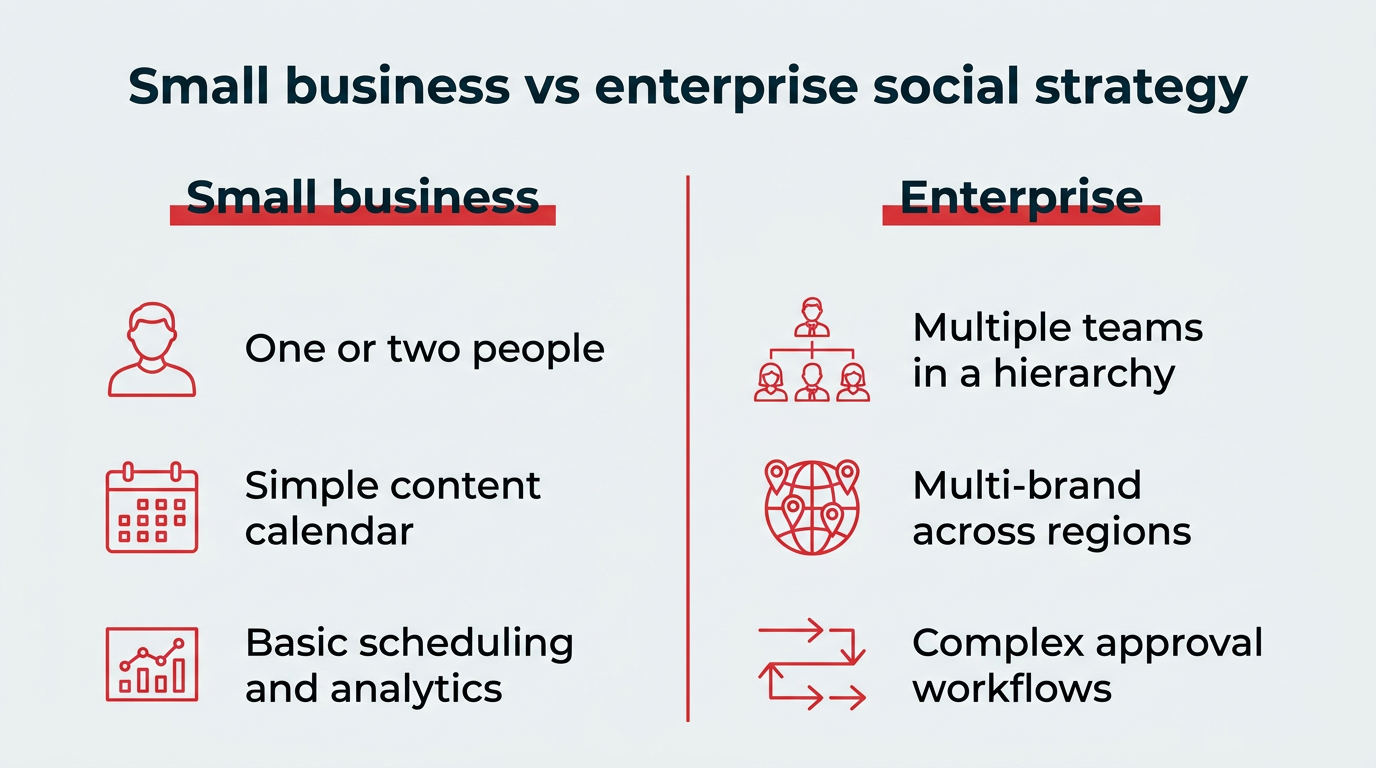
The complexity inherent in enterprise social media management significantly differentiates it from small business social strategies. A small business might rely on a single content creator or social media manager to handle its online presence, often with a simple content calendar and basic scheduling/analytics tools. For an enterprise, the stakes are higher, and the operational scope is vastly broader. An enterprise strategy must account for multiple brands, numerous regional accounts, diverse target audiences across geographies and languages, and a multitude of stakeholders ranging from marketing and sales to legal and customer service. The objectives extend beyond mere visibility and engagement to encompass rigorous governance, scalability across global operations, and comprehensive risk management. As Savannah Wiles, Staff Marketing Manager, Social & Influencer at Intuit Mailchimp, aptly notes, a strong enterprise social strategy hinges on understanding your audience as real people, cultivating a unique and human brand persona, and ensuring every post delivers tangible value.

Challenges and Imperatives: Why a Unified Strategy is Non-Negotiable
In the current digital economy, social media is no longer an optional add-on but a core business channel. Forecasts for 2026 indicate a global social advertising market exceeding $276 billion, with U.S. social commerce alone projected to surpass $100 billion. For enterprises, a defined and unified strategy is essential to navigate the inherent complexities of scale, maintain consistency, ensure compliance, and stay competitive. Without such a strategy, large organizations risk fragmentation, inefficiency, and significant reputational damage.
Navigating the Labyrinth of Scale and Complexity
Enterprises frequently manage hundreds of social media accounts spanning multiple brands, product lines, geographic regions, and languages. This creates a labyrinth of coordination challenges:
- Approval Bottlenecks: Coordinating content approvals across teams in different time zones, often involving legal, PR, and regional marketing, can be a slow and arduous process.
- Regulatory Heterogeneity: Navigating a patchwork of regulatory rules and data privacy laws that vary significantly by market (e.g., GDPR in Europe, CCPA in California) requires robust compliance frameworks.
- Tool Fragmentation: Without a centralized strategy, individual teams often adopt disparate social media tools, leading to siloed data, redundant efforts, and a lack of a holistic view of social performance. A unified strategy mitigates these issues by centralizing control, standardizing processes, and consolidating technology.
Safeguarding Brand Reputation and Trust
The larger an organization, the higher the stakes. Every social media post, comment, or interaction directly reflects on the brand. A single misstep—a poorly worded reply, an off-brand post from a regional account, or an insensitive response—can rapidly escalate into a global reputation crisis within hours. In an age of instant information dissemination, brand consistency and the ability for early detection of potential issues are paramount. A robust enterprise strategy includes:
- Consistent Messaging: Ensuring all communications align with core brand values and messaging, regardless of the originating team or region.
- Proactive Crisis Management: Establishing clear protocols for identifying, responding to, and mitigating potential reputational threats.
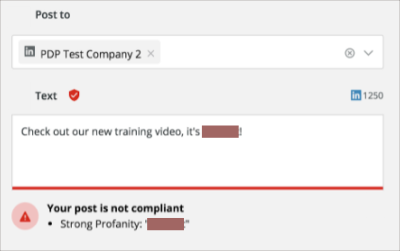
- Compliance Adherence: Integrating legal and regulatory guidelines directly into content creation and approval workflows, particularly vital for industries like healthcare, finance, and pharmaceuticals.
Transforming Social from Visibility Tool to Growth Engine
Beyond brand visibility, social media is a powerful engine for business growth. It’s often the first touchpoint for consumers exploring a brand, making a compelling social presence critical for customer acquisition and retention. Enterprises leverage social media to:
- Drive Revenue and Leads: Directly attribute social campaigns to sales, lead generation, and website traffic through sophisticated tracking and analytics.
- Enhance Customer Service: Provide real-time support and engagement, transforming customer interactions into loyalty-building opportunities. Research consistently shows that brands with strong social customer service enjoy higher customer satisfaction rates.
- Gather Market Intelligence: Utilize social listening to monitor industry trends, competitive activity, and consumer sentiment, informing product development and marketing strategies.
- Foster Brand Advocacy: Empower employees and loyal customers to become brand advocates, significantly extending organic reach and credibility.
The AI Revolution: Reshaping Enterprise Social Management
The advent of artificial intelligence (AI) has profoundly impacted enterprise social media, moving beyond simple content generation to become an operational intelligence layer that permeates various aspects of social management. In 2026, AI’s role is far more sophisticated, offering capabilities that enhance efficiency, insight, and responsiveness across global operations.
AI as an Operational Intelligence Layer
AI now performs critical functions such as:

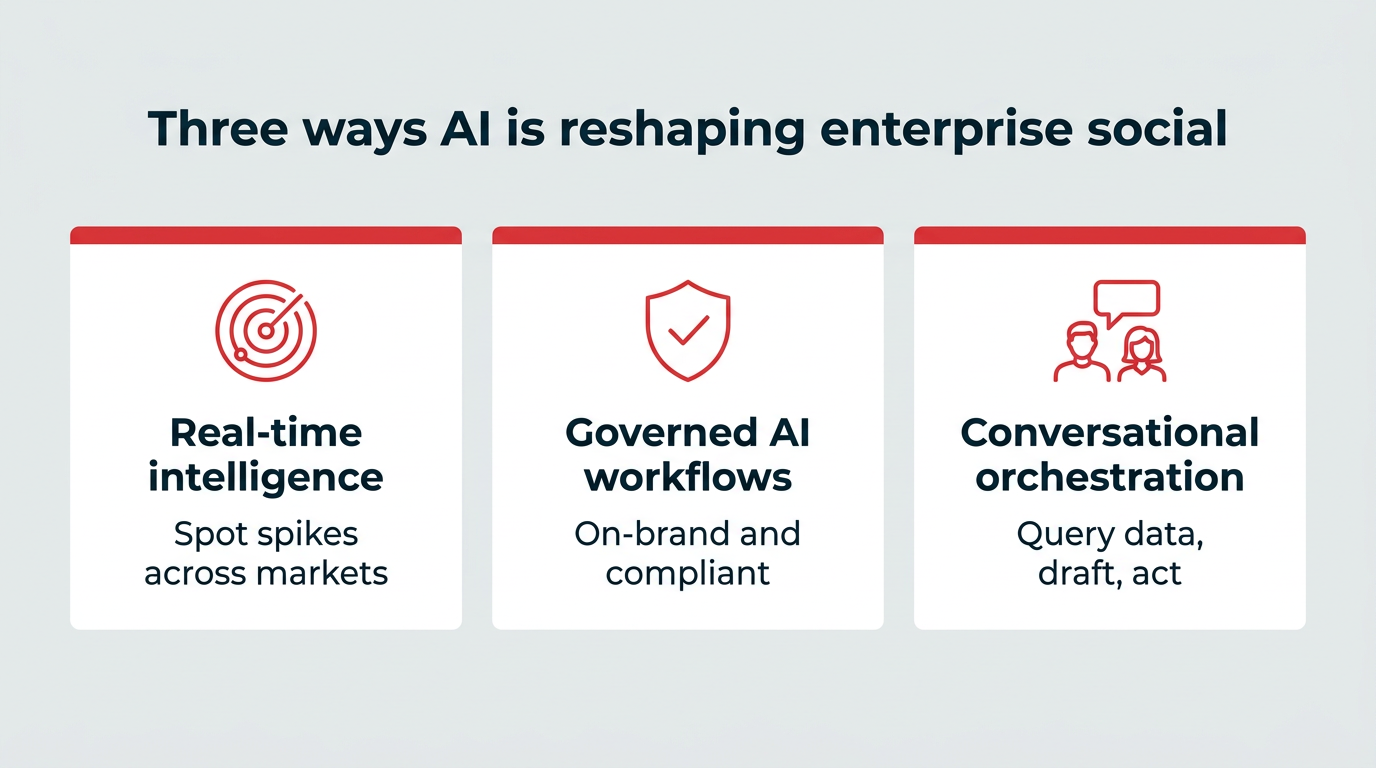
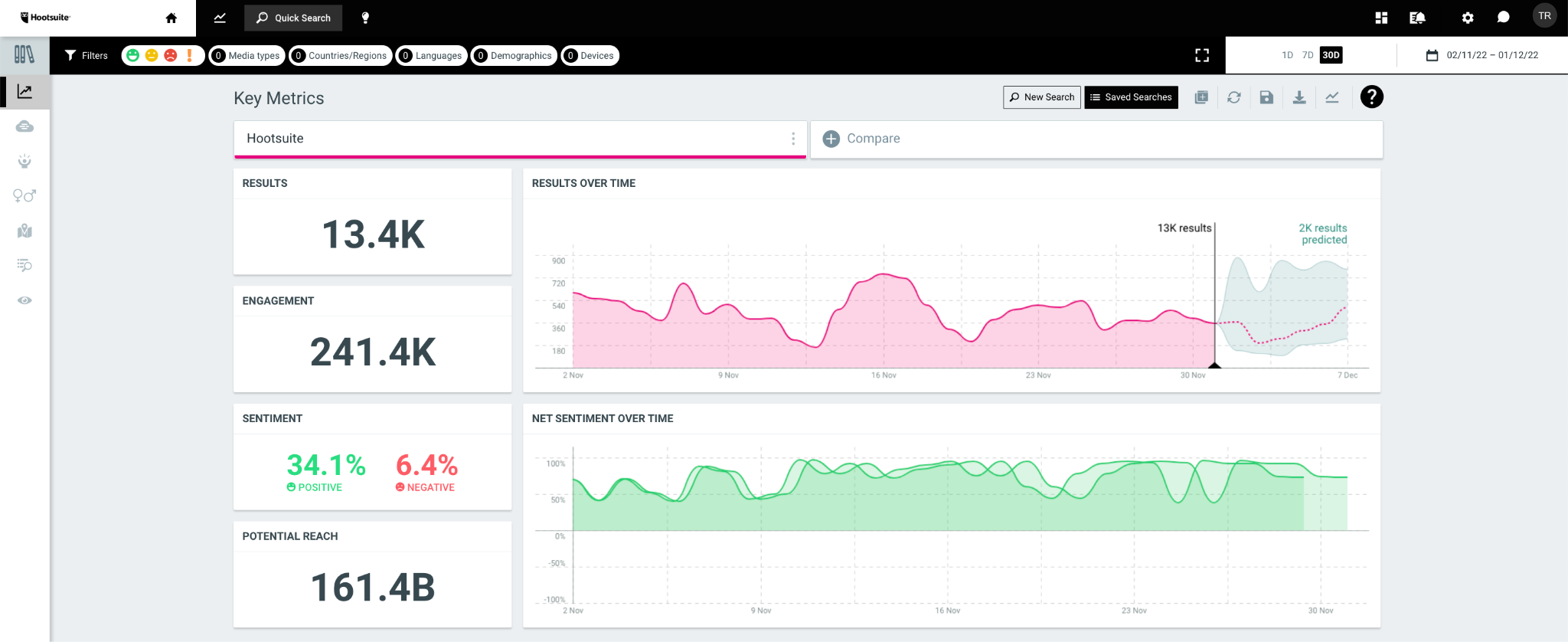
- Real-time Social Listening and Sentiment Analysis: AI algorithms can process vast amounts of social data to identify emerging trends, gauge public sentiment towards a brand, and flag potential crises in real-time, far surpassing human capabilities in speed and scale.
- Automated Content Optimization and Workflow Routing: AI assists in drafting captions, suggesting optimal posting times, and even tailoring content variations for different platforms and audiences. Crucially, it can intelligently route customer queries or content for approval to the most appropriate team or individual based on sentiment, topic, or urgency.
- Personalized Customer Care at Scale: AI-powered chatbots and sentiment analysis tools can prioritize customer service inquiries, provide instant responses to frequently asked questions, and personalize interactions, thereby improving customer satisfaction and reducing response times.
- Contextual Intelligence and Integration: Through advanced connectors, AI can seamlessly integrate social data with other enterprise systems like CRM, business intelligence (BI) platforms, and e-commerce platforms. This ensures that AI outputs are grounded in real, actionable business data rather than isolated guesswork, providing a holistic view of customer interactions and market dynamics.
The Critical Role of AI Governance
While AI offers immense benefits, its deployment at enterprise scale introduces new risks that necessitate robust governance. Without proper controls, AI can inadvertently generate off-brand content, propagate unverified claims, or even publish information that violates industry regulations. In highly regulated sectors such as healthcare or financial services, such missteps can lead to substantial fines, legal action, and irreparable reputational damage.
- Compliance and Traceability: AI governance frameworks are designed to keep AI-assisted work within defined corporate policies. This includes ensuring every AI-generated output is traceable, and every approval documented, providing an auditable trail essential for regulatory compliance.
- Brand Safety and Ethical AI: Governance protocols ensure AI adheres to brand voice guidelines, avoids biases, and operates ethically, safeguarding brand integrity and public trust.
- Risk Mitigation: By embedding governance into AI workflows, enterprises can proactively identify and mitigate risks associated with automated content generation and response mechanisms. Compliance departments within large organizations increasingly stress the importance of robust AI governance, viewing it as a non-negotiable component for responsible innovation.
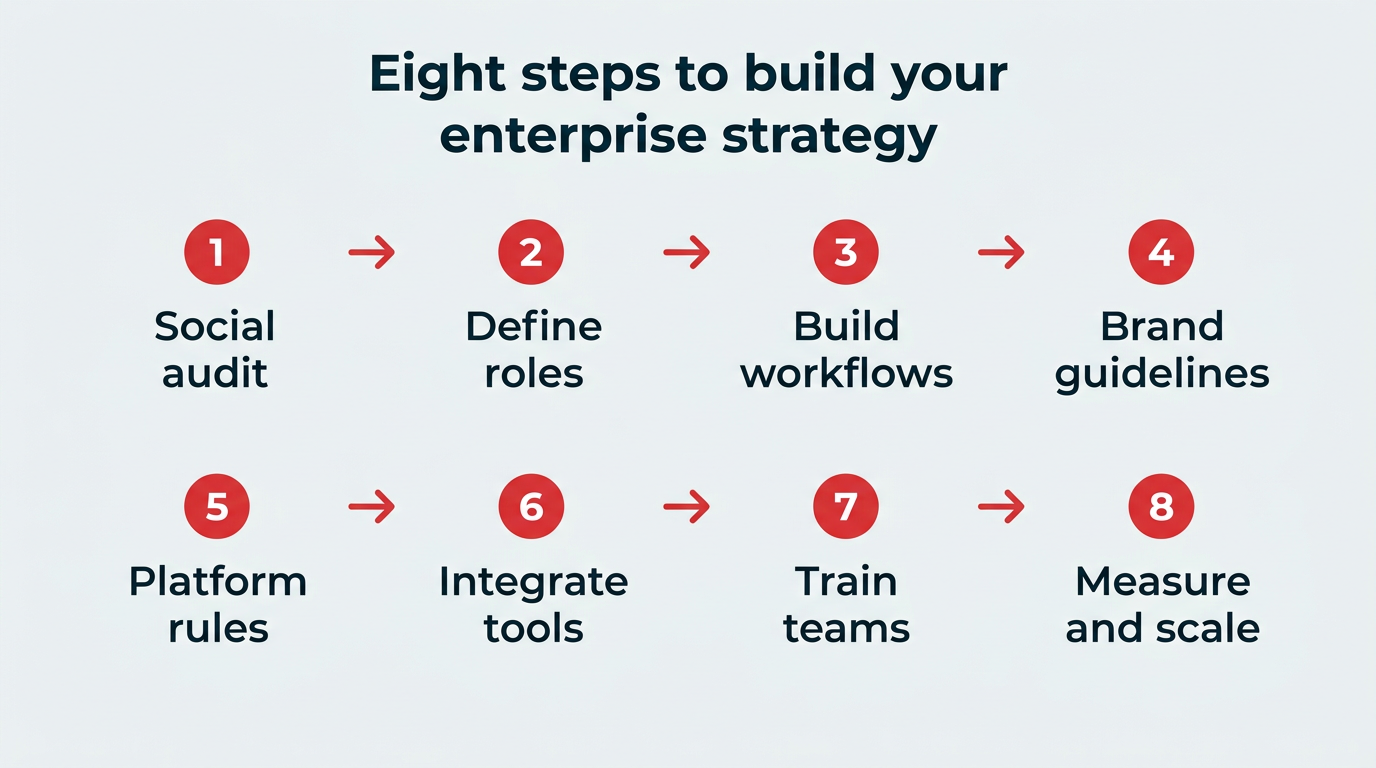
Crafting a Robust Enterprise Social Media Strategy: An Eight-Step Blueprint
Building an effective enterprise social media strategy is a methodical process that requires careful planning, cross-functional collaboration, and continuous optimization. The following eight steps provide a comprehensive framework:
-
Conduct a Comprehensive Social Audit Across Teams: The foundational step involves taking inventory of every existing social account, campaign, and responsible owner within the organization. This audit helps identify redundant pages, off-brand activity, and areas where audience engagement is highest or budget is underperforming. It provides a clear baseline for strategic planning.
-
Define Clear Roles and Responsibilities: Establish a clear organizational chart for social media management. This typically involves:
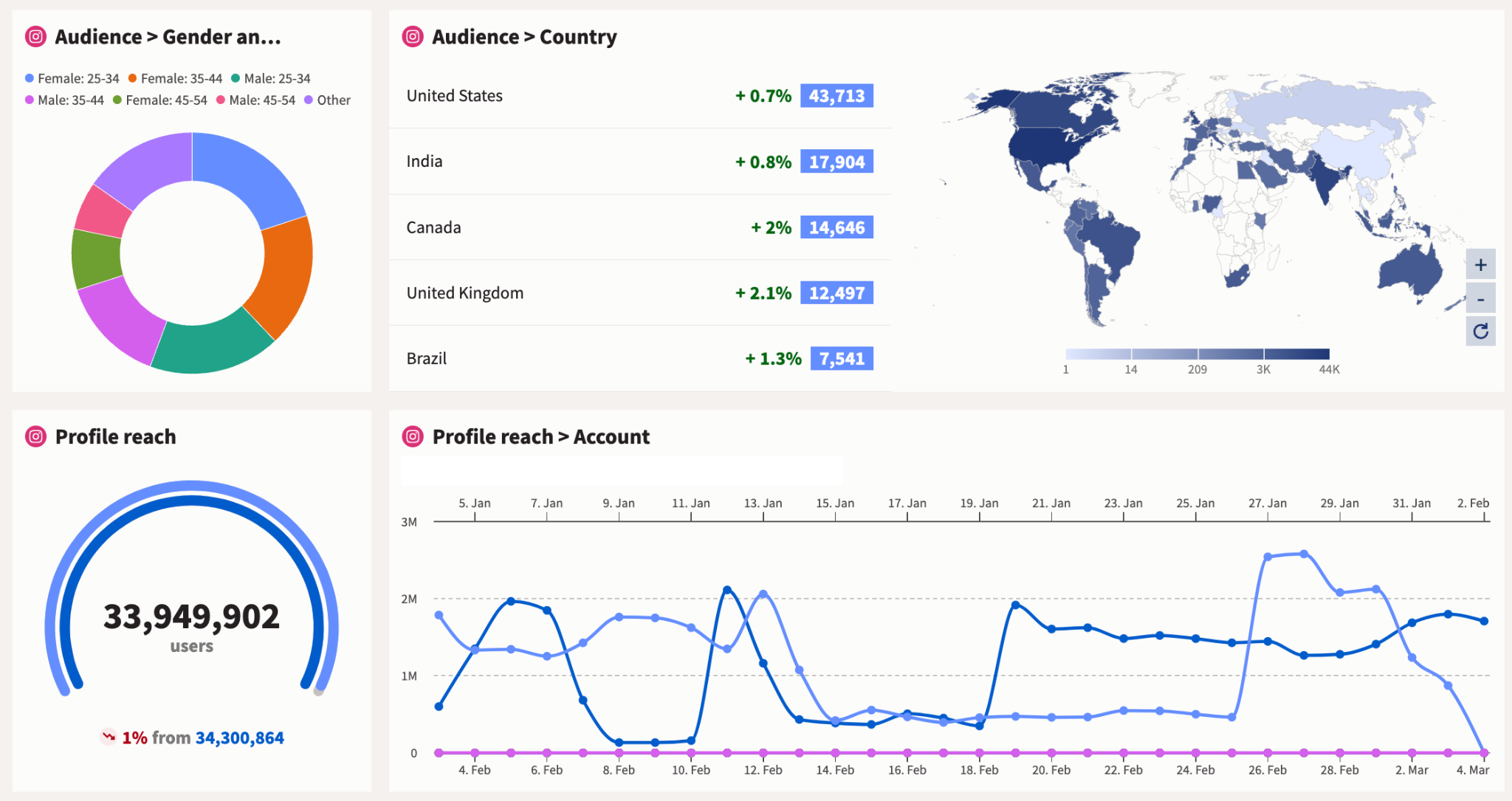
- Center of Excellence (CoE): A central team that sets the global vision, brand voice, governance policies, and manages core tools and reporting.
- Regional/Business Unit Teams: Local teams responsible for adapting global content to their specific markets, managing day-to-day operations, and reporting localized results back to the CoE. This ensures cultural relevance while maintaining brand consistency.
- Cross-functional Partners: Collaboration with departments like PR, customer service, HR, IT, and legal is critical for aligning campaigns, customer care, and approvals. As Savannah Wiles suggests, treating marketing as an interconnected ecosystem, where social media supports email, content, and broader brand goals, amplifies impact.
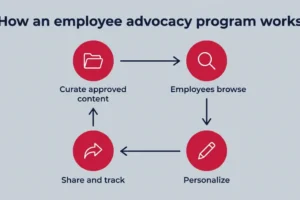
- Employee Advocates: Leveraging trained employees to amplify brand content through platforms like Hootsuite Amplify or Parliament extends organic reach and boosts credibility.
-
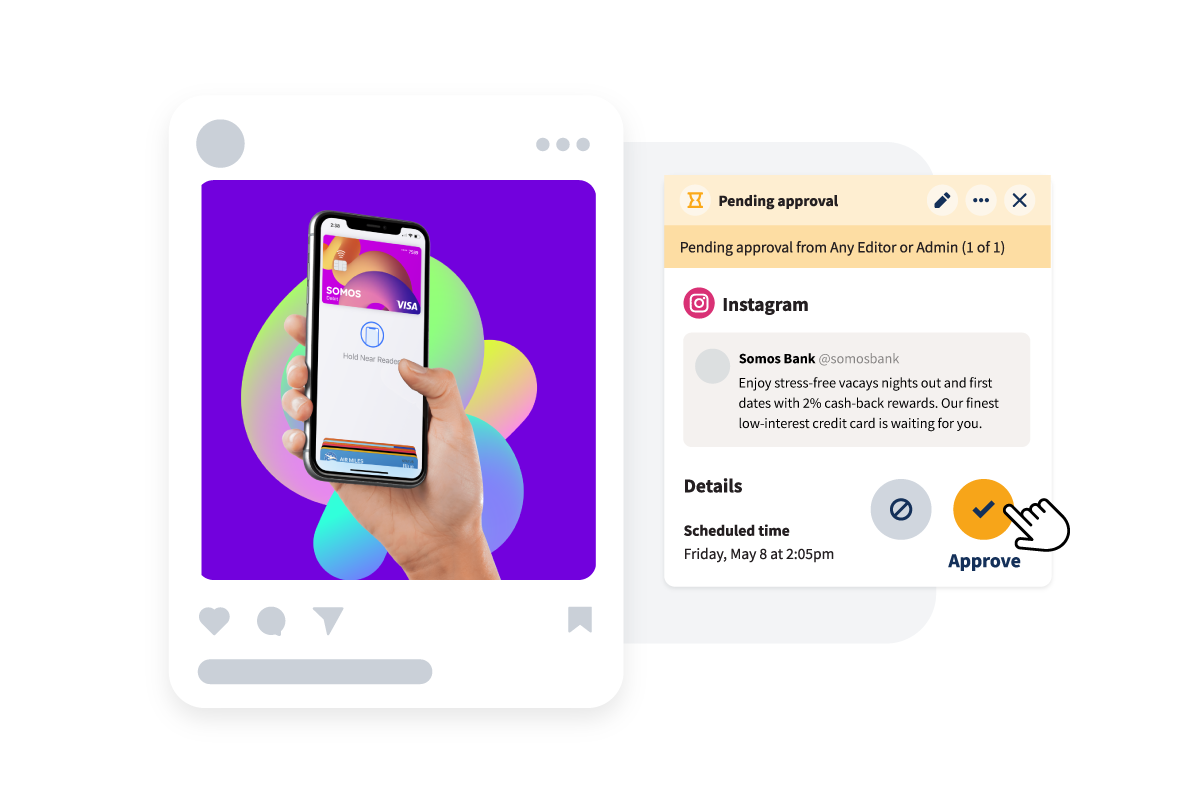
Streamline Workflows for Approvals and Publishing: Establish standardized processes for content creation, review, and sign-off. Implementing social media management platforms with automated workflow capabilities and multi-level approval systems ensures efficiency, maintains visibility across teams, and prevents bottlenecks. This is particularly vital for organizations with stringent compliance requirements.
-
Integrate Brand and Content Guidelines: Translate the organization’s overarching brand voice and visual identity into specific social media guidelines. This includes tone of voice, visual aesthetics, and values. For global brands, it’s essential to collaborate with regional representatives to localize these guidelines with culturally relevant examples, ensuring global consistency with regional adaptability.
-
Establish Platform-Specific Publishing Rules: Document content types, posting cadences, and engagement rules unique to each social platform. This should also include compliance rules that may vary by geographic region or industry, requiring input from the legal team to navigate data privacy laws (e.g., GDPR, CCPA).
-
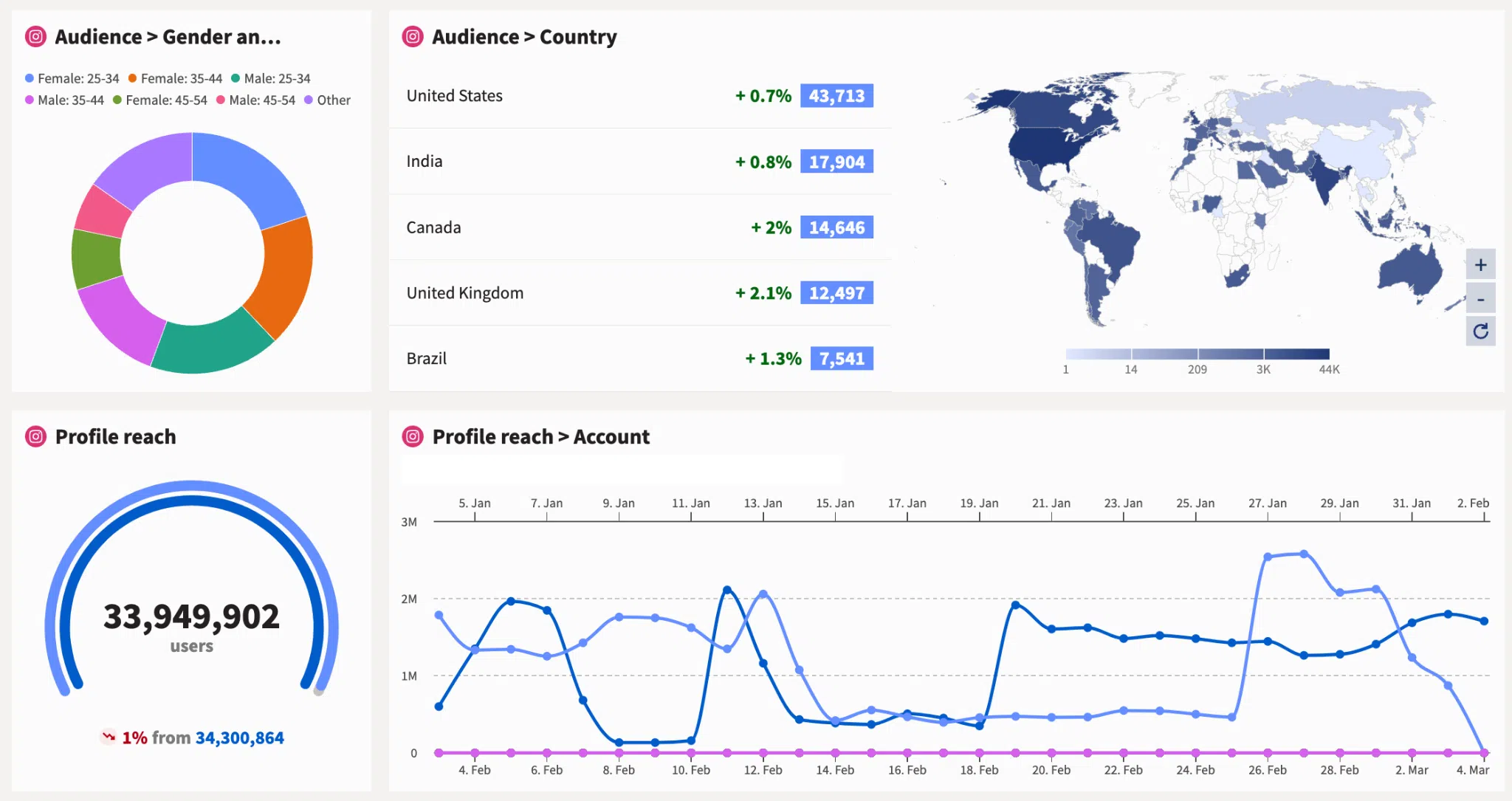
Strategically Integrate the Right Tools and Data Systems: Enterprises require centralized platforms that can manage publishing, approvals, listening, and analytics at scale. Unified dashboards are crucial for leaders to track performance across channels and regions in real-time. Integration with CRM, BI, and AI tools via connectors ensures seamless data flow, avoiding silos and providing a holistic view of customer and market intelligence.
-
Empower Teams Through Comprehensive Training: Once the strategy is developed, provide thorough training to all relevant teams, especially global ones, to ensure everyone is aligned on processes, tools, and guidelines. Ongoing training on compliance, accessibility, and platform best practices empowers employees to operate effectively and independently, fostering trust and efficiency.
-
Continuous Measurement, Iteration, and Scaling: Establish regular review cycles to analyze performance data, share insights, and refine the strategy. A data-driven approach, rather than guesswork, ensures that the enterprise social program evolves with business needs, adapts to shifting trends, and continuously optimizes for desired outcomes. This involves tracking key performance indicators (KPIs) and being prepared to reallocate budget or adjust tactics based on insights.
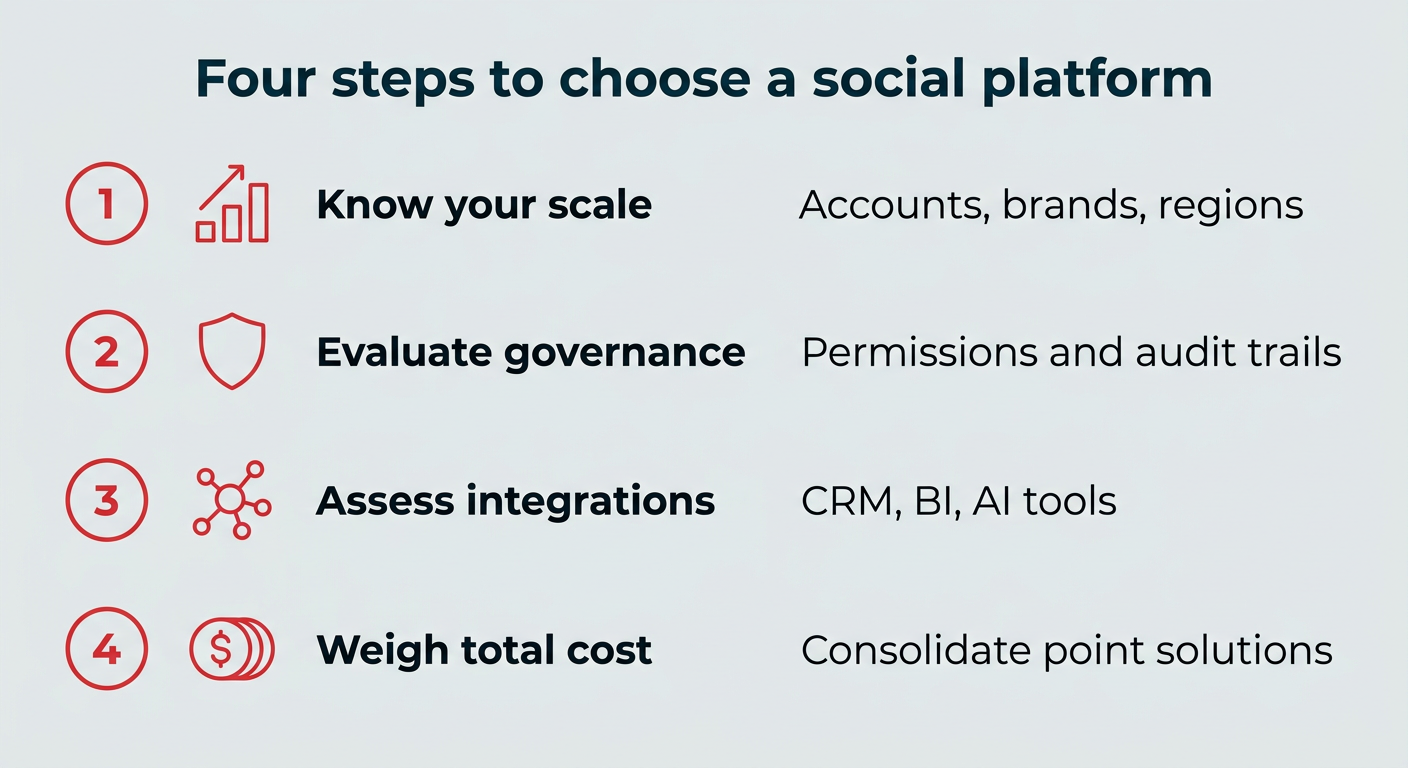
Selecting the Right Technology Partner: A Four-Step Framework
Choosing the appropriate enterprise social media platform is a critical decision that hinges on matching the tool’s capabilities to the organization’s scale, governance needs, and existing technology stack. Gartner’s recognition of management and listening as a unified market underscores the need for integrated solutions.
- Assess Organizational Needs: Define current pain points (e.g., scattered approvals, inconsistent branding, lack of ROI proof), current capabilities, and future growth objectives.
- Evaluate Platform Capabilities: Look for a platform that offers unified publishing, comprehensive social listening, advanced analytics, robust compliance features, and seamless integrations with other enterprise systems.
- Prioritize Governance and Security: Ensure the platform provides multi-level approval workflows, audit trails, user permissions, and integrations with compliance tools, especially for regulated industries.
- Consider Ecosystem Integration: The platform should connect with CRM, BI, e-commerce, and customer service tools to avoid data silos and provide a holistic view of customer interactions and business performance.
Hootsuite Social OS, for instance, is designed to support complex organizations with global reach, offering structured workflows, visibility, and features like multi-channel publishing, unified inboxes, comprehensive analytics, and AI governance through Vigil, its policy-driven AI layer.
Measuring Success and Proving ROI: Key Performance Indicators for the Enterprise
Measuring success at the enterprise level demands standardization, alignment, and sophisticated tools to connect social media activities to tangible business outcomes. Key Performance Indicators (KPIs) commonly tracked include:
| KPI | Definition | Business Impact |
|---|---|---|
| Share of Voice | Brand’s conversation share vs. competitors | Signals market position and awareness |
| Sentiment Score | Overall positive/negative tone of mentions | Flags brand health and emerging risks |
| Response Time | Speed of team’s replies to messages | Drives customer satisfaction and retention |
| Social-Attributed Leads | Qualified leads sourced from social channels | Connects social to pipeline and revenue |
| Employee Advocacy Reach | Reach generated by employee-shared content | Extends organic reach, lowers acquisition cost |
| Content Engagement Rate | Interactions relative to reach or impressions | Shows what content resonates by market |
Standardizing KPIs Across Global Markets

Enterprises must establish a core set of shared performance metrics (e.g., engagement rates, impressions, follower growth, response time) that apply uniformly across all regions and business units. This allows for an "apples-to-apples" comparison of performance. Simultaneously, it’s crucial to layer on localized KPIs, such as regional campaign conversions or specific market sentiment, to ensure relevance and provide actionable insights for local teams.
Connecting Social Data to Tangible Business Outcomes
Moving beyond vanity metrics, enterprises must demonstrate how social media directly contributes to overarching business objectives. This involves:

- Attributing Sales and Leads: Using UTM parameters, conversion tracking, and integrated CRM systems to directly link social media interactions to lead generation and sales.
- Quantifying Customer Retention: Measuring how social customer service impacts customer satisfaction scores (CSAT) and ultimately, retention rates. Studies show that excellent social customer service can significantly boost customer loyalty.
- Assessing Brand Reputation and Equity: Tracking sentiment, share of voice, and brand mentions to demonstrate the impact of social media on brand health and market perception.
- Informing Product Development: Using social listening insights to identify customer needs, pain points, and emerging trends that can guide product innovation.
Effective Communication to Stakeholders
Communicating social media’s impact to senior leadership requires clarity, realism, and a focus on how social efforts support broader organizational KPIs. As Savannah Wiles advises, honesty about capabilities and flexibility with goals are key. Demonstrating ROI, even if initially through "test and learn" approaches for organic content, is vital. When direct ROI is challenging to prove, focusing on how social media supports immediate KPIs (e.g., website traffic, lead nurturing) and provides valuable market learnings can effectively convey its strategic importance.
In conclusion, a well-defined and adaptable enterprise social media strategy is indispensable for large organizations navigating the complexities of the modern digital landscape. By addressing challenges related to scale, governance, and brand trust, leveraging the transformative power of AI, and meticulously measuring impact against strategic KPIs, enterprises can transform social media from a mere communication tool into a powerful engine for sustained business growth and competitive advantage. The future of enterprise social media lies in integrated, intelligent, and strategically governed approaches that ensure consistency, compliance, and demonstrable value across every facet of global operations.