Week 37 of this calendar year will be remembered as a watershed moment in the consumer electronics industry, marked by a pivotal Apple special event held on September 9. This gathering served as the inaugural product launch under the leadership of newly appointed CEO John Ternus, signaling a strategic shift in the company’s trajectory. The event was defined by the unveiling of the iPhone 18 Pro series and, most notably, the long-awaited introduction of the company’s first foldable device, the iPhone Duo. These announcements have dominated global market discourse, reflecting a significant leap in hardware innovation and a calculated response to the maturing foldable segment.
The New Pro Standard: iPhone 18 Pro and Pro Max
While the foldable device captured the imagination of the public, the iPhone 18 Pro and iPhone 18 Pro Max remained the primary volume drivers for Apple’s quarterly projections. The devices launched with a robust set of upgrades designed to maintain Apple’s competitive edge in the premium tier. Among the most significant changes is the inclusion of a variable aperture main lens. This technology, which allows the camera to physically adjust its opening, grants photographers greater control over depth of field and low-light performance—a feature long sought after by enthusiasts.
Under the hood, both models are powered by the A20 Pro SoC. Building on the architecture of its predecessors, the A20 Pro leverages an enhanced manufacturing process that yields significant gains in both computational power and energy efficiency. Furthermore, Apple has refined the visual experience by reducing the footprint of the Dynamic Island, providing a more immersive display experience without sacrificing the integrated sensor array.
The iPhone 18 Pro is priced starting at $1,200/€1,450, while the Pro Max model carries a starting price of $1,300/€1,600. Orders for these devices opened immediately following the event, with the first shipments scheduled for September 18. Market analysts have noted that these price points reflect the rising cost of advanced semiconductor production and the integration of sophisticated optical components.
The iPhone Duo: A New Form Factor
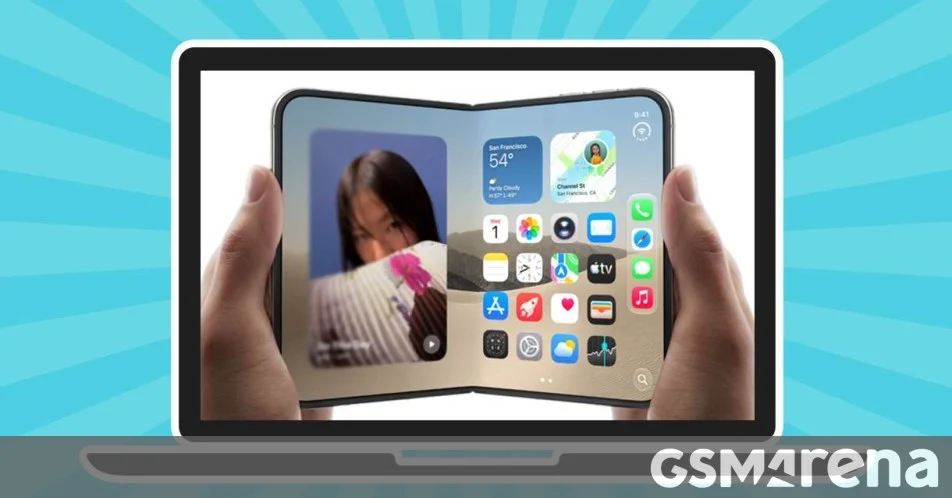
The standout announcement of the event was the iPhone Duo, Apple’s first foray into the foldable smartphone category. The device addresses years of speculation regarding Apple’s stance on flexible display technology. The Duo features a wide-style foldable design, roughly equivalent to the dimensions of a standard passport when closed.
Technological refinements in the Duo are extensive. The inner display utilizes an anti-reflective coating that significantly mitigates the glare issues common in earlier foldable iterations. Perhaps most impressive is the screen’s crease management; through advanced hinge engineering and material science, the display appears effectively seamless. Adding to the aesthetic and functional cleanliness of the device, Apple has opted for an under-display camera (UDC) module.
Perhaps the most surprising development is the return of Touch ID, integrated directly into the display interface. This addition provides a biometric alternative to Face ID, which users have requested for years in scenarios where facial recognition may be inconvenient. The iPhone Duo is set to ship in October, with a retail price of $2,000/€2,300, positioning it firmly in the ultra-premium luxury segment.
Battery Capacity Disclosures and Energy Standards
Public transparency regarding hardware specifications has been bolstered by the European Union’s recent Energy Labeling directives. These regulations require manufacturers to provide granular data on battery performance and longevity. Consequently, it has been confirmed that the iPhone 18 Pro houses a 4,056mAh battery, while the larger iPhone 18 Pro Max is equipped with a 5,391mAh cell.
These figures represent a notable increase over previous generations. The inclusion of these high-capacity cells is essential to support the increased power demands of the A20 Pro chip and the high-refresh-rate displays. By providing this data, Apple is aligning with broader industry trends toward sustainability and consumer transparency, allowing users to make more informed decisions based on real-world usage potential rather than marketing benchmarks alone.
Competitive Landscape: The Foldable Arms Race
The introduction of the iPhone Duo invites direct comparison with established market leaders, most notably the Samsung Galaxy Z Fold8. While initial specs suggest a high degree of parity in terms of raw performance and utility, the market impact will be determined by software optimization and ecosystem integration.
Analysts at major financial institutions have begun modeling the potential market share shift. Historically, Apple has waited for a technology to mature before entering a market, allowing competitors to refine the form factor before introducing a more polished, user-friendly version. The "Duo" versus "Fold8" rivalry is expected to accelerate innovation across the sector, particularly in hinge durability and screen protection. Independent laboratories are expected to conduct comprehensive side-by-side durability tests once both devices become widely available, which will likely serve as the definitive baseline for future consumer sentiment.
Beyond Cupertino: Honor and vivo Updates
While Apple occupied the majority of the news cycle, two major competitors moved to ensure their upcoming product roadmaps remained visible. Honor provided a teaser for the Magic9 series, which is scheduled for a formal unveiling in China on September 28. The Honor Magic series has gained significant traction in recent years by focusing on high-density battery technology and unconventional industrial design.
Concurrently, details regarding the vivo X500 series have begun to surface. The vivo X500 Pro Max is set to feature a prominent circular rear camera island, a design language that has become synonymous with the brand’s focus on professional-grade mobile photography. The device will incorporate a specialized teleconverter zoom lens, an area where vivo has consistently pushed the boundaries of digital and optical image stabilization. These announcements indicate that, despite Apple’s massive event, the broader Android ecosystem remains highly active, with manufacturers continuing to iterate on camera systems and localized market features.
Broader Implications and Market Outlook
The transition of leadership at Apple and the introduction of the foldable form factor represent a pivotal juncture for the tech giant. By entering the foldable space, Apple is signaling that it views this design as a long-term evolution of the smartphone rather than a niche experiment.
The economic implications are significant. The high price point of the iPhone Duo suggests that Apple is banking on its existing customer base to upgrade to premium devices, effectively increasing the Average Selling Price (ASP) of its smartphone division. Furthermore, the reliance on the A20 Pro chip demonstrates Apple’s continued dominance in silicon design, a vertical integration strategy that continues to provide the company with a distinct performance moat against competitors who rely on third-party chipset providers.
Looking toward the remainder of the year, the industry is entering a high-velocity period of adoption. The successful launch of the iPhone 18 series and the Duo will likely influence how carriers structure their device financing plans and how app developers prioritize tablet-versus-phone interface design. As the foldable market moves from early adopters to the mainstream, the focus will shift toward software optimization—ensuring that the "Duo" experience is as fluid as the traditional iPhone experience.
In summary, Week 37 was not merely a launch event; it was a demonstration of technical maturity. Whether the market fully embraces the $2,000 price tag of the iPhone Duo remains to be seen, but the intent is clear: Apple is moving to consolidate its hold on both the standard high-end and the emerging luxury-foldable segments. With the Honor Magic9 and vivo X500 series waiting in the wings, the final quarter of the year is set to be one of the most competitive periods in mobile technology history. The industry now pivots toward the release phase, where real-world performance will determine if these bold hardware claims translate into long-term consumer satisfaction and sustained market growth.