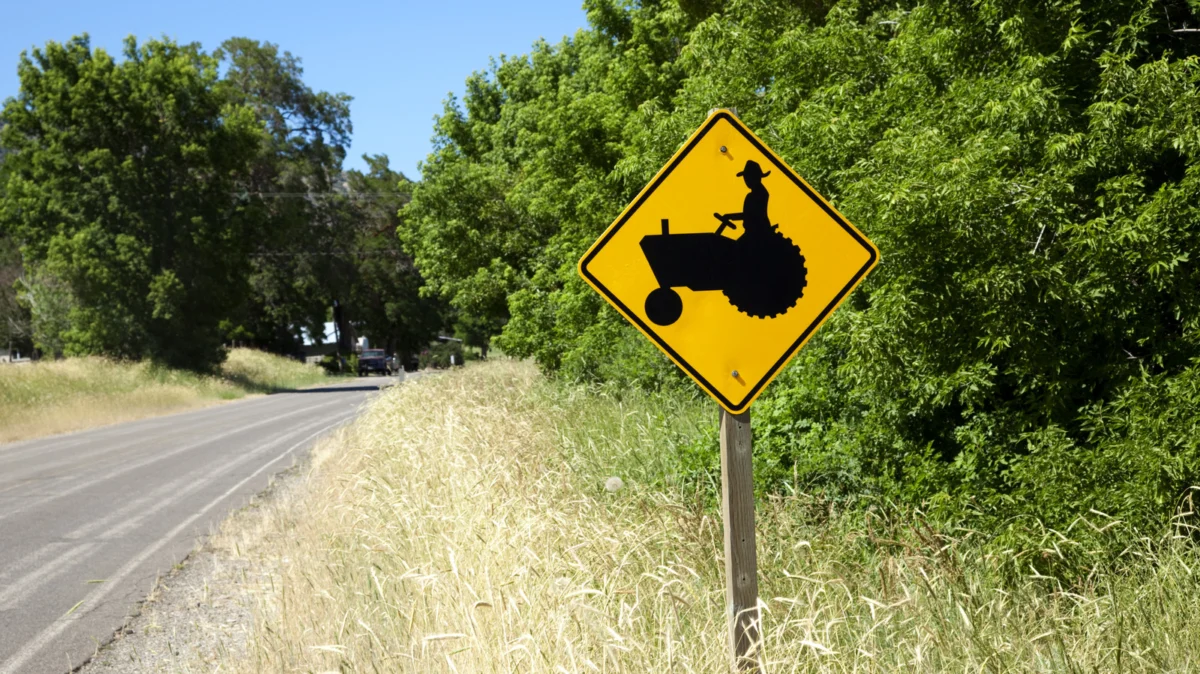
Navigating the American roadway system requires more than just mastering the fundamentals taught in standard driver’s education programs. While the Manual on Uniform Traffic Control Devices (MUTCD) provides a standardized framework for road signage across the United States, rural infrastructure often presents unique hazards that require heightened driver awareness. Among the most critical of these warnings is the yellow diamond-shaped sign featuring the silhouette of a tractor. Far from being a mere aesthetic marker of agrarian landscapes, this sign serves as a mandatory safety notification indicating that agricultural machinery is likely to be entering, exiting, or sharing the roadway.
Understanding the Regulatory Function of Warning Signs
In the hierarchy of traffic control devices, yellow signs are categorized as "Warning Signs." According to the Federal Highway Administration (FHWA), the primary purpose of a yellow sign with black lettering or symbols is to alert road users to conditions that are not readily apparent. Unlike regulatory signs—which are typically white or red and dictate legal requirements like speed limits or stop commands—warning signs function as preemptive notices intended to reduce reaction time and prevent collisions.
The tractor crossing sign specifically falls under the W11-5 series in the MUTCD. The sign is designed to alert motorists that they are entering a zone where slow-moving vehicles are common. This is particularly significant in rural areas where the disparity in speed between a standard passenger vehicle, often traveling at 55 to 65 mph, and a tractor, which rarely exceeds 20 to 25 mph, creates a dangerous "closing speed" scenario. If a driver is traveling at 60 mph and suddenly encounters a tractor moving at 15 mph, they cover the gap between the two vehicles in a matter of seconds, necessitating rapid deceleration.
The Evolution and Standardization of Rural Road Safety
The history of rural road signage tracks closely with the mechanization of American agriculture. As tractors and heavy equipment transitioned from horse-drawn implements to internal combustion power in the early 20th century, the risk of road accidents increased exponentially. By the mid-1900s, state departments of transportation began formalizing the use of pictorial signs to transcend language barriers and provide instant recognition.
The standardization of the "Tractor" symbol was a deliberate effort to simplify complex warnings. Studies conducted by the National Institute for Occupational Safety and Health (NIOSH) have historically highlighted that collisions between motor vehicles and agricultural equipment are among the most lethal types of rural road accidents. Because tractors are often wider than the standard traffic lane, have limited lighting, and lack the sophisticated braking systems of modern cars, the implementation of warning signage was a necessary policy response to the increasing volume of non-farm traffic on rural roads.
Analyzing the Mechanics of Agricultural Machinery on Public Roads
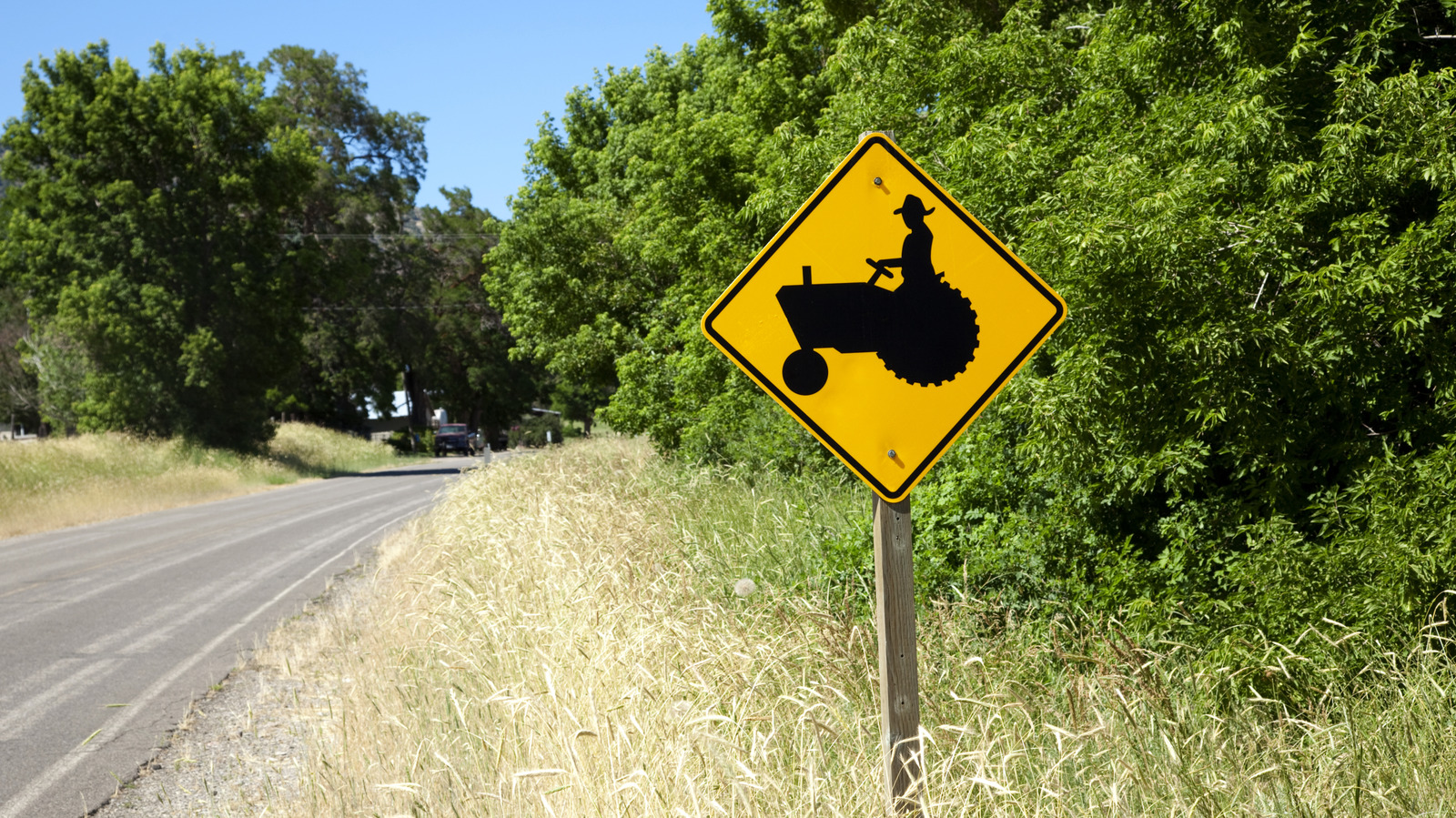
It is a common misconception that the "Tractor Crossing" sign only applies to the specific machine depicted. In practice, the sign functions as a broader notice regarding agricultural equipment. This includes, but is not limited to, self-propelled combine harvesters, sprayers, hay balers, and wagons.
From an engineering perspective, these machines present several logistical challenges:
- Weight and Center of Gravity: Agricultural equipment is often top-heavy, making it susceptible to rolling over if forced to take evasive maneuvers on soft or uneven road shoulders.
- Width Clearance: Many modern harvesters exceed 12 feet in width, frequently forcing the operator to straddle the center line of a two-lane road.
- Visibility and Lighting: While modern tractors are equipped with flashing amber beacons, older equipment may lack adequate reflective material, making them nearly invisible at dawn or dusk.
Transportation safety experts emphasize that the presence of these signs indicates that local authorities have identified high-frequency agricultural routes. This assessment is usually based on "traffic counts" and "agricultural activity density" reports conducted by local agricultural extension offices and municipal public works departments.
Recommended Protocols for Motorists
When a driver encounters a yellow tractor warning sign, the recommended procedure is rooted in defensive driving principles. First, the driver should scan the horizon for slow-moving objects. If a piece of equipment is identified, the driver should immediately reduce speed and maintain a significant following distance.
Passing is the most dangerous maneuver in these scenarios. According to state-specific motor vehicle codes, drivers should only attempt to pass an agricultural vehicle if there is a clear, unobstructed line of sight and if the roadway is marked with a broken center line. Many rural roads are designated as "no-passing zones" precisely because of the unpredictable nature of field entrances; a tractor may signal a turn into a driveway that is obscured by foliage or hills, and a driver attempting to pass at that exact moment could trigger a high-speed collision.
The Socio-Economic Impact of Rural Roadways
The tension between the agricultural industry and suburban commuters is a growing area of concern for civil engineers. As urban sprawl continues to push into previously rural areas, the interaction between commuters—often distracted or operating on high-speed schedules—and farmers moving equipment between fields has intensified.
Data from the National Safety Council (NSC) suggests that these interactions are most frequent during peak planting (spring) and harvest (autumn) seasons. During these months, farmers operate under strict time constraints dictated by weather patterns, leading to longer hours on the road and increased machine movement. Municipalities are increasingly responding to these conflicts by installing "Slow Moving Vehicle" (SMV) emblem requirements and reinforcing the placement of permanent and temporary warning signs.
Legal Implications and Liability
It is vital for motorists to recognize that failing to heed a warning sign can have legal ramifications. In many jurisdictions, if a collision occurs between a passenger vehicle and a farm tractor, the investigating officers will reference the presence of signage to determine if the driver was operating at a "reasonable and prudent" speed given the conditions.
If a driver ignores a warning sign and strikes a tractor, they may be found liable for damages, even if the tractor was slow-moving. Furthermore, illegal passing—such as crossing a double yellow line to bypass a tractor—carries significant fines and potential points on a driver’s license. The presence of the sign serves as official notice that the roadway conditions require specialized attention, removing the defense of "unexpected conditions."
Broader Implications for Infrastructure Planning
The future of rural road safety is likely to involve "Smart Infrastructure." Innovations such as radar-based warning systems, which trigger flashing lights on a tractor sign only when a slow-moving vehicle is detected, are currently being piloted in several states. This technology aims to reduce "sign fatigue," where drivers stop noticing static signs because they become part of the background landscape.
Furthermore, as autonomous driving technology continues to evolve, the ability for vehicle sensors to recognize and interpret these specific rural warning signs is a significant focus for software developers. Ensuring that AI systems correctly identify the "Tractor" icon as a high-hazard, low-speed warning is essential for the safety of both the passengers and the agricultural workers who provide the nation’s food supply.
In summary, the yellow tractor sign is a vital component of the transportation ecosystem. It represents the intersection of industrial, commercial, and personal transit. For the average motorist, the sign is an invitation to exercise patience, heighten awareness, and respect the operational realities of the agricultural sector. By adhering to the implied warnings of these signs, drivers can contribute to a safer environment for all road users, ensuring that the essential movement of agricultural goods occurs without incident. Whether you are driving through the heart of the Corn Belt or a small valley in the Pacific Northwest, the presence of that yellow diamond should always serve as a reminder that the road is a shared resource, and safety is a collective responsibility.