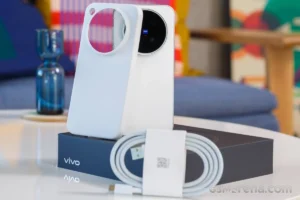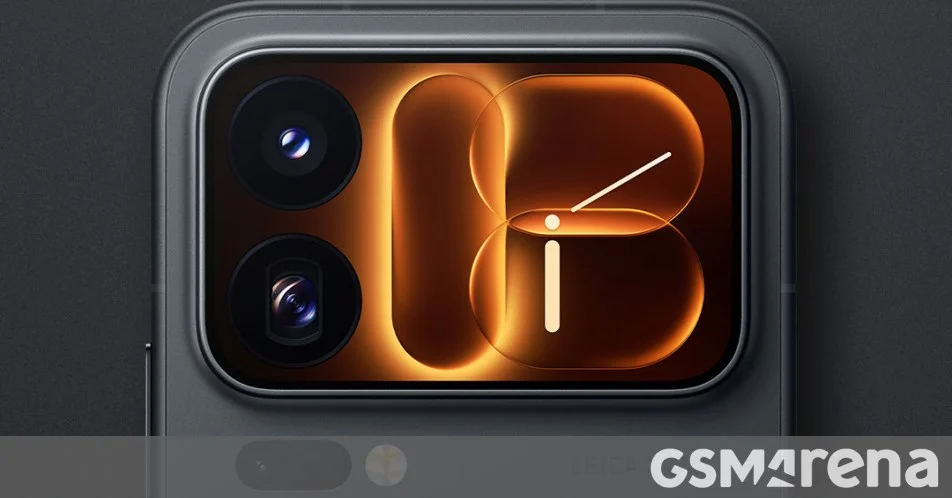
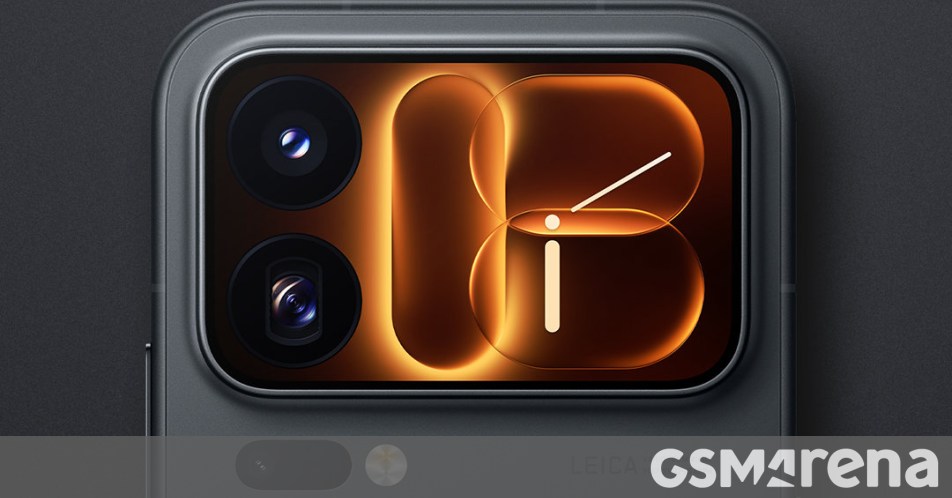
The upcoming global debut of the Xiaomi 18 Pro and 18 Pro Max, scheduled for November 17, 2026, marks a significant strategic shift for the Chinese technology giant. While the concept of a secondary rear-facing display is not entirely new to the company’s portfolio—having been introduced previously on the Xiaomi 17 Pro and 17 Pro Max—the upcoming release signifies the first time this hardware configuration will be accessible to international consumers. For Xiaomi, this launch represents a high-stakes effort to transition a niche hardware feature from a perceived aesthetic gimmick into a functional, daily-driver utility.
Historical Context and Evolution of the Secondary Display
The journey of the secondary screen within Xiaomi’s ecosystem has been defined by domestic exclusivity. In 2025, the release of the 17 Pro and 17 Pro Max served as a hardware proof-of-concept. These devices utilized the rear panel primarily for notification mirroring and basic biometric assistance for high-resolution rear-facing selfies. However, the lack of a global launch prevented the feature from gaining traction among international developers and power users.
Industry analysts have noted that the 2026 global rollout is an attempt to address the "gimmick" stigma that often plagues experimental mobile hardware. By integrating the feature into the flagship 18-series, Xiaomi is signaling that it intends to support this technology through software optimization and long-term ecosystem integration. The decision to bring this hardware to the global stage suggests that the company has collected sufficient telemetry data from the Chinese market to justify the additional manufacturing costs and software development overhead associated with dual-screen hardware.
Functional Integration and Software Ecosystem
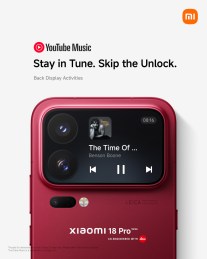
To bridge the gap between novelty and necessity, Xiaomi has focused on integrating third-party utility applications directly onto the secondary display. Ahead of the November 17 launch, the company confirmed that the rear interface will offer native support for Google Maps, YouTube Music, and Spotify.
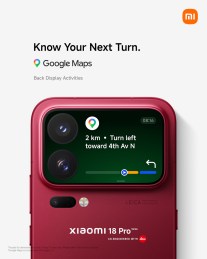
The implementation varies based on the application’s core function. For media-centric platforms like Spotify and YouTube Music, the rear display serves as a dedicated control hub, allowing users to manage playback, toggle tracks, and view album artwork without activating the power-intensive primary OLED panel. This could potentially extend battery life for users who rely on their phones for audio output throughout the day.
The integration of Google Maps represents a more ambitious utility. By projecting turn-by-turn directions onto the rear panel, Xiaomi is targeting a specific subset of users—cyclists, commuters, and travelers—who may prefer a low-power, simplified navigation interface while on the move. Beyond these partnerships, the device will continue to support core system features, including:
- Notification Management: Filtering alerts to the rear panel to reduce screen-on time for the main display.
- Advanced Imaging: Leveraging the primary high-resolution sensor for selfies, with the rear screen acting as a live viewfinder.
- Weather and Status Indicators: Providing at-a-glance information on climate, battery status, and incoming communications.
The Role of Generative AI in Interface Design
Perhaps the most notable advancement for the 18-series is the introduction of "Back Display GenAI apps." Xiaomi Group’s Chief Marketing Officer, Xu Fei, recently demonstrated this functionality, showcasing how users can generate custom widgets or application interfaces for the rear screen using natural language prompts.
This development reflects a broader industry trend toward generative AI-driven UI customization. By allowing users to define the parameters of the rear screen’s output—such as requesting a specific minimalist clock face, a data-dense health tracking dashboard, or a localized information hub—Xiaomi is offloading the burden of app design to the user. This move effectively expands the utility of the hardware beyond what the engineering team initially envisioned, potentially solving the problem of "limited developer support" that has hindered dual-screen devices in the past.
Market Implications and Strategic Positioning
The global launch of the Xiaomi 18 Pro and 18 Pro Max places the company in direct competition with premium flagships from Samsung, Apple, and Google. However, the secondary screen remains a unique differentiator. While competitors have focused on foldable form factors to increase screen real estate, Xiaomi is betting that a static, low-power secondary display is a more durable and cost-effective alternative for users who prioritize efficiency over folding mechanics.
The primary challenge remains software consistency. For the rear display to be viewed as a professional tool rather than a novelty, the experience must be seamless. If users find that switching between the front and rear displays causes lag or application crashes, the market reception may be tepid. Furthermore, the durability of a rear-mounted glass display, even with Gorilla Glass Victus or equivalent protection, remains a concern for many consumers. Xiaomi’s warranty support and replacement policies for this specific component will likely be a point of scrutiny for reviewers and potential buyers.
Chronology of the November 17 Launch
The lead-up to the November 17 event has been carefully orchestrated to build momentum.
- Early November 2026: Leaks regarding the global firmware confirmed that the 18-series would include regional support for Western apps.
- November 12, 2026: CMO Xu Fei released a video demo showcasing the GenAI interface creation, marking the transition from hardware-focused marketing to software-focused engagement.
- November 17, 2026: The global unveiling event. This will provide the first opportunity for international journalists to test the real-world latency and battery efficiency of the rear display.
Expert Analysis: Is the Rear Screen Sustainable?
From a technical standpoint, the integration of a secondary display involves significant thermal and power management hurdles. Adding an extra screen requires additional display drivers and consumes internal space that could otherwise be utilized for larger batteries or improved cooling chambers.
"The success of the 18 Pro will be determined by whether the software ecosystem makes the rear screen a habit, not just a toy," says industry consultant Marcus Thorne. "If users find themselves reflexively flipping their phones to check a map or skip a song without needing to unlock the main display, Xiaomi has succeeded. If it remains a feature that users toggle off after the first week to save battery, it will be viewed as a failed experiment."
Furthermore, the environmental impact of such a device is a point of consideration. As global markets move toward stricter Right-to-Repair legislation, devices with multiple complex glass panels and ribbon cables connecting two displays present challenges for modularity and repairability. Xiaomi’s ability to provide long-term software support—specifically keeping the rear-screen API updated alongside Android OS releases—will be the true test of the company’s commitment to this form factor.
Looking Ahead
As the industry awaits the formal announcement, the Xiaomi 18 Pro and 18 Pro Max are already being positioned as "pro-sumer" devices. The focus on productivity-oriented apps like Maps and the empowerment of users through GenAI tools suggests that Xiaomi is courting a demographic that values technological experimentation.
Whether this strategy will disrupt the current smartphone market status quo or remain a curiosity of the 2026 cycle is a question that will be answered in the coming months. The global launch next Tuesday will not only reveal the pricing and availability of these devices but will also provide the first real-world evidence of whether the secondary screen has finally come of age. For a company that has long sought to position itself at the bleeding edge of hardware innovation, the 18-series represents a definitive attempt to claim the title of the most versatile flagship in the current mobile landscape.