Trump admin deferring $1 billion-plus Medicaid payments to California and Minnesota amid ‘suspected fraud’ | Fortune

In a move that signals a significant shift in federal oversight of healthcare spending, Health and Human Services (HHS) Secretary Robert F. Kennedy Jr. announced on Tuesday that the federal government is deferring nearly $1.1 billion in Medicaid payments to California and Minnesota. The decision is the latest escalation in the Trump administration’s aggressive campaign to overhaul how the federal government identifies and prevents the misuse of taxpayer dollars. According to Secretary Kennedy, the strategy represents a pivot from the "pay and chase" model of previous administrations—where the government attempted to recover funds after fraud had already occurred—to a proactive stance designed to "stop the fraud before it happens."
Speaking at a press conference, Kennedy emphasized that the administration has a moral and fiscal obligation to protect the integrity of the Medicaid program. "We have a duty to stop the payments, demand answers, and then follow the evidence wherever it leads," Kennedy stated. He framed the deferrals not as a permanent cut, but as a necessary pause to ensure that federal funds are being used appropriately and legally. This "prevention-first" philosophy is a cornerstone of the administration’s broader economic and healthcare platform as the nation approaches the high-stakes midterm elections in November.
A New Era of Federal Oversight and the Anti-Fraud Task Force
The deferral of $867.5 million to California and $199 million to Minnesota comes on the heels of several other financial interventions earlier this year. These actions are being coordinated through a specialized anti-fraud task force launched in March by Vice President JD Vance. At the direct request of President Donald Trump, the task force was designed to break down silos between federal departments, allowing for a more integrated use of data analytics and advanced technology to flag suspicious spending patterns in real-time.
The task force utilizes sophisticated algorithms to scan billions of lines of billing data, looking for anomalies that might suggest systemic abuse or individual instances of fraud. By bringing together officials from the Department of Justice, the Treasury, and HHS, the administration aims to create a "digital shield" around federal programs. This technological approach is being marketed to voters as a primary tool for curbing rising healthcare costs, which have become a central issue for an electorate grappling with inflation and economic uncertainty.
The administration’s rhetoric suggests that the billions lost to healthcare fraud each year are a direct contributor to the financial strain on the middle class. By reclaiming or preventing the payout of these funds, the administration argues it can demonstrate fiscal responsibility without necessarily cutting the services themselves—though state leaders and healthcare advocates remain skeptical of this narrative.
The Case Against California and Minnesota: Allegations of Irregularities
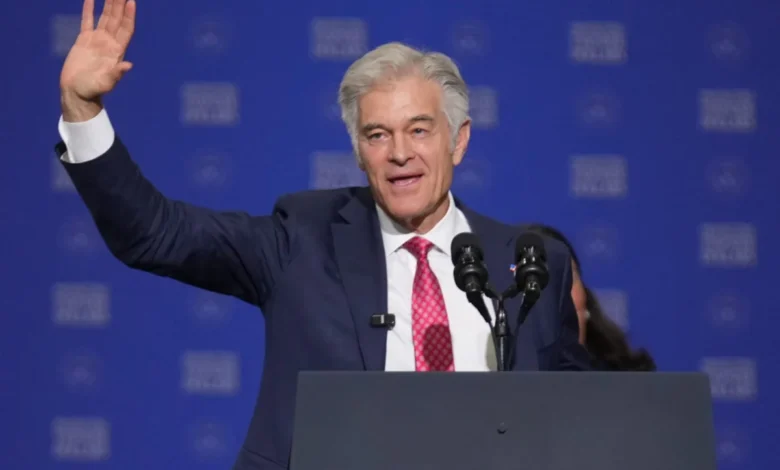
Centers for Medicare & Medicaid Services (CMS) Administrator Dr. Mehmet Oz provided the technical justification for the recent deferrals, though he stopped short of labeling the findings as definitive fraud. Instead, Oz pointed to "questionable patterns" discovered through recent audits. Among the red flags cited were instances where providers appeared to be billing for four or more patients simultaneously, a physical impossibility in most care settings. Furthermore, CMS data allegedly revealed instances of billing occurring after the recorded date of a beneficiary’s death.
A significant point of contention involves California’s rapidly expanding home care program. Dr. Oz highlighted the program’s accelerated growth as a primary reason for federal concern, suggesting that such rapid expansion often hides inefficiencies or fraudulent claims. However, California health officials have been quick to defend the program. Anthony Cava, a spokesperson for the California Department of Health Care Services, stated that the growth is a deliberate policy choice aimed at long-term cost savings. By investing in in-home care, the state intends to keep elderly and disabled residents out of more expensive nursing home facilities—a strategy that has historically been encouraged by federal guidelines.
"In-home care growth reflects intentional, federally encouraged expansion, not improper spending," Cava said. He added a plea for the federal government to reconsider its tactics: "California is calling on CMS to stop threatening care for California’s most vulnerable residents."
In Minnesota, the deferral of $199 million adds to an existing $260 million that was previously withheld. State officials there have expressed frustration over what they describe as a lack of transparency from the federal government. John Connolly, the temporary commissioner and state Medicaid director for Minnesota’s Department of Human Services, noted that the federal government has failed to provide a clear explanation or data regarding how the deferral amounts were calculated.
"Today’s actions show that the federal government is acting again in unprecedented and punitive ways as part of their war on Medicaid and its recipients," Connolly said in a statement. He argued that the administration is prioritizing "politics over partnership," claiming that Minnesota has already been proactive in raising alarms about potential fraud and implementing corrective action plans.
Historical Context and Previous Administrative Errors
The current aggressive posture of the HHS and CMS follows a series of high-profile incidents that have fueled tensions between the federal government and Democratic-led states. In April, CMS was forced to admit to a "significant error" in the figures it used to justify a massive fraud probe in New York. The admission, first reported by The Associated Press, dealt a blow to the administration’s credibility and provided ammunition for state governors who claim the fraud investigations are politically motivated.
Furthermore, California’s Medicaid director recently testified before a congressional committee that despite the $1.3 billion in deferrals announced in May, CMS had yet to provide the state with specific, documented instances of fraud, waste, or abuse. This lack of "smoking gun" evidence has led critics to suggest that the deferrals are being used as a budgetary tool or a political weapon rather than a legitimate law enforcement mechanism.
The political backdrop is further complicated by the administration’s previous actions in these states. Earlier this year, the Trump administration intensified Immigration and Customs Enforcement (ICE) operations in Minnesota, leading to civil unrest and the tragic shooting deaths of two civilians. In California, President Trump has frequently used the state as a rhetorical foil, often describing it as a "failed state" to highlight the differences between his administration’s policies and those of Democratic Governor Gavin Newsom.
Political Reactions and Economic Implications
The reaction from state leaders has been swift and sharp. Minnesota Governor Tim Walz, a Democrat, suggested that the Medicaid deferrals might be a covert attempt by the Republican administration to recoup funds to offset the costs of tax cuts for the wealthy. "This isn’t about fraud; it’s about the bottom line," Walz suggested, implying that the administration is looking for ways to balance the federal budget on the backs of state-level social services.
Governor Gavin Newsom of California echoed these sentiments, accusing the Trump administration of targeting his state for political reasons. The friction between Sacramento and Washington has reached a fever pitch, with Newsom positioning California as the "resistance" to federal policies that he views as harmful to the state’s diverse population.
From an economic perspective, these deferrals create immediate budgetary hurdles for states. Medicaid is a joint federal-state program, and states rely on the timely reimbursement of the federal share to pay providers and maintain services. When hundreds of millions of dollars are withheld, states may be forced to dip into emergency reserves, delay payments to hospitals and doctors, or, in extreme cases, trim eligibility for the program. This creates a ripple effect throughout the healthcare economy, potentially impacting the stability of rural hospitals and community clinics that operate on thin margins.
Expanding Federal Authority: The Power to Exclude
Beyond the immediate financial deferrals, Secretary Kennedy hinted at a broader structural change in how healthcare fraud is policed. He suggested that he would extend the power to exclude providers from Medicaid, Medicare, and other federal health programs directly to CMS. Historically, this authority—often referred to as the "death penalty" for healthcare providers because it effectively bars them from the industry—has rested solely with the HHS Office of the Inspector General (OIG).
HHS Inspector General Thomas March Bell joined Kennedy at the news conference to support the move. "This is going to be a full force multiplier," Bell said. "It’s going to create additional momentum, and it’s going to exclude additional bad actors."
By decentralizing this power, the administration hopes to move faster against suspected fraudsters. However, legal experts warn that such a move could lead to due process concerns, as providers might be barred from federal programs based on preliminary findings or data anomalies before a full investigation is completed.
Chronology of the Anti-Fraud Initiative
- January: President Trump takes office and signals a crackdown on federal "waste, fraud, and abuse."
- March: Vice President JD Vance launches the Anti-Fraud Task Force, integrating data from across the executive branch.
- April: CMS admits to a multibillion-dollar calculation error in a New York Medicaid probe.
- May: Federal government announces a $1.3 billion deferral for California and $260 million for Minnesota.
- June: California officials testify before Congress, claiming no specific evidence of fraud has been provided by CMS.
- July (Present): Secretary Kennedy and Dr. Oz announce additional deferrals of $867.5 million for California and $199 million for Minnesota, while proposing expanded exclusion powers for CMS.
The Path Forward: Documentation and Reevaluation
Despite the heated rhetoric, there remains a path for the states to recover the withheld funds. Secretary Kennedy and Dr. Oz both noted that the flow of federal money could be restored if the states provide sufficient documentation proving that the payments in question were legitimate and complied with federal regulations.
"The burden of proof is on the states," Dr. Oz remarked. He noted that Minnesota has already begun submitting documents for reevaluation. "We are looking at their submissions very carefully. If the data supports the spending, the funds will be released. But we will no longer take ‘trust us’ as an answer."
As the November midterms approach, the outcome of these disputes will likely serve as a litmus test for the administration’s "prevention-first" strategy. If the task force successfully identifies and stops actual fraud, it could be a major political win for the White House. However, if the deferrals are seen as administrative overreach or if they lead to a collapse in healthcare services for the poor, the political and social consequences could be severe. For now, California and Minnesota remain in a high-stakes standoff with Washington, with billions of dollars and the healthcare of millions hanging in the balance.
Related posts: