
The mastery of writing transcends mere vocabulary and grammar; it lies in the strategic deployment of techniques that shape meaning, evoke emotion, and ensure comprehension. While many resources merely define rhetorical devices, a practical understanding of when and how to apply them is crucial for transforming abstract ideas into compelling narratives. This article explores seventeen fundamental writing techniques, providing actionable insights into their utility and impact, ultimately offering a framework for their purposeful application across various communication contexts.
The Foundational Pillars of Engaging Prose
Effective writing is a craft honed through deliberate practice and a deep understanding of how language influences perception. The techniques outlined below serve as powerful tools in a writer’s arsenal, each designed to address specific communication challenges, from clarifying complex concepts to imbuing text with vibrancy and rhythm.

1. Metaphors: Giving Shape to the Abstract
A metaphor is a figure of speech that directly compares two unlike things without using "like" or "as," stating that one thing is another. Its power lies in its ability to quickly bridge conceptual gaps, making abstract ideas tangible and relatable. For instance, describing "time as a thief" instantly conveys its elusive and diminishing nature. Expert communicators leverage metaphors not as decorative elements, but as cognitive shortcuts that enhance understanding and memorability. Studies in cognitive linguistics indicate that metaphorical language can significantly improve information recall by creating vivid mental images. They are particularly effective when a complex or intangible subject needs a clearer, more immediate impression, offering a profound way to simplify and resonate.
2. Similes: Direct and Accessible Comparisons
Similes, much like metaphors, draw comparisons between two distinct things, but explicitly use "like" or "as." This directness makes them inherently clearer and often safer to employ, particularly when a metaphor might feel too forced or opaque. A simile like "her smile was as bright as the morning sun" provides an immediate, unambiguous image. This technique is invaluable for generating quick, impactful visuals without demanding extensive reader interpretation, ensuring that the intended comparison is readily grasped. Leading literary critics often highlight similes for their universal appeal and their capacity to add clarity and color to descriptive passages without slowing the narrative pace.
3. Analogies: Explaining the Complex Through the Familiar
Analogies are more extended comparisons, designed to explain a complex or unfamiliar concept by likening it to something simpler and well-known. Unlike metaphors or similes, which often focus on a single point of comparison, analogies map a system of relationships from one domain to another. For example, explaining the human heart as a pump is a classic analogy. This technique is a pedagogical cornerstone, enabling writers to educate without adopting an overly academic tone. When clarity and pedagogical effectiveness take precedence over concise imagery, analogies prove indispensable, allowing readers to grasp intricate ideas by relating them to established knowledge frameworks. Communication specialists in fields like science and technology frequently employ analogies to demystify jargon and make advanced concepts accessible to a broader audience.
4. Imagery: Immersing the Reader in Sensory Detail
Imagery involves using descriptive language to appeal to the five senses: sight, sound, smell, taste, and touch. Its purpose is to create a vivid mental picture or sensory experience for the reader, effectively transporting them into the scene. Instead of merely stating "the market was busy," a writer might describe "the cacophony of vendors hawking their wares, the pungent aroma of exotic spices, and the kaleidoscope of vibrant textiles." Without compelling imagery, writing can feel detached and lifeless, failing to leave a lasting impression. This technique is crucial when the objective is to make writing palpable, engaging readers on a deeper, experiential level, thereby enhancing retention and emotional connection.

5. Personification: Injecting Life into the Inanimate
Personification attributes human qualities, emotions, or actions to inanimate objects, animals, or abstract ideas. This technique breathes life into otherwise static elements, making the writing more dynamic and engaging. Phrases like "the wind whispered secrets through the trees" or "opportunity knocked" are examples of personification. Used judiciously, it can add character and emotional resonance; however, overuse can lead to forced or clichéd expressions. Personification is most effective in moments requiring a touch of vitality, a distinct voice, or a subtle emotional undertone, making the narrative feel more animated and relatable.
6. Alliteration: The Art of Auditory Resonance
Alliteration is the repetition of initial consonant sounds in words that are close together, such as "Peter Piper picked a peck of pickled peppers" or "bold and beautiful." This subtle phonetic device enhances the musicality and rhythm of prose, making phrases more memorable and pleasant to read aloud. Its prevalence in advertising slogans, poetry, and journalistic headlines underscores its effectiveness in creating emphasis and improving recall. Alliteration is a powerful tool when the goal is to imbue writing with a sense of rhythm, to underscore specific words, or to craft phrases that resonate and linger in the reader’s mind.

7. Sensory Words: The Palette of Perception
While closely related to imagery, sensory words specifically refer to individual words that directly evoke a sensory experience. These are the building blocks of vivid description—words like "sizzling," "velvety," "fragrant," "murmuring," or "bitter." The strategic selection of such words elevates writing from merely informative to truly immersive. This precise word choice is often the critical differentiator between prose that is merely readable and prose that is profoundly vivid and captivating. Employing sensory words is a smart move when the writer aims for readers to actively experience the narrative moment, rather than just passively comprehend it.
8. Strong Verbs: The Engine of Dynamic Sentences
Strong verbs are precise, evocative action words that convey meaning efficiently and powerfully, replacing weaker, more generic verbs often accompanied by adverbs. For example, instead of "he walked quickly," a writer might use "he sprinted" or "he strode." Replacing verbs like "make," "do," or "go" with more vigorous alternatives immediately tightens sentences, making them more dynamic and impactful. If writing feels sluggish or lacks punch, a common culprit is the reliance on weak verbs. Opting for strong verbs is a fundamental revision strategy that injects energy and conciseness into sentences, enhancing overall prose vitality.
9. Repetition: Strategic Emphasis and Resonance
Contrary to common advice to avoid redundancy, strategic repetition can be a highly effective rhetorical device. It involves intentionally reiterating words, phrases, or ideas to reinforce a point, build rhythm, or create a sense of urgency. For instance, Martin Luther King Jr.’s "I Have a Dream" speech masterfully uses repetition to amplify his message. When deployed thoughtfully, repetition ensures that a key idea sticks with the reader, driving it home without the need for extensive elaboration. It is particularly potent when the writer seeks to emphasize a core message, establish a powerful rhythm, or cultivate a memorable cadence within the text.
10. Rule of Three: The Power of Pattern and Completeness
The rule of three (also known as the "tricolon") is a rhetorical principle suggesting that ideas presented in groups of three are inherently more satisfying, memorable, and effective. This pattern creates a sense of completeness and rhythm, whether in lists, phrases, or sentence structures (e.g., "life, liberty, and the pursuit of happiness"). The psychological appeal of three is deeply ingrained, making it a ubiquitous element in effective communication, from storytelling to advertising. This technique is optimally employed when the objective is to create a sense of balance, completeness, and mnemonic appeal in a sentence, list, or argument. However, its widespread use, particularly in AI-generated content, necessitates careful and original application to avoid sounding formulaic.

11. Parallelism (Isocolon): Harmonizing Structure and Flow
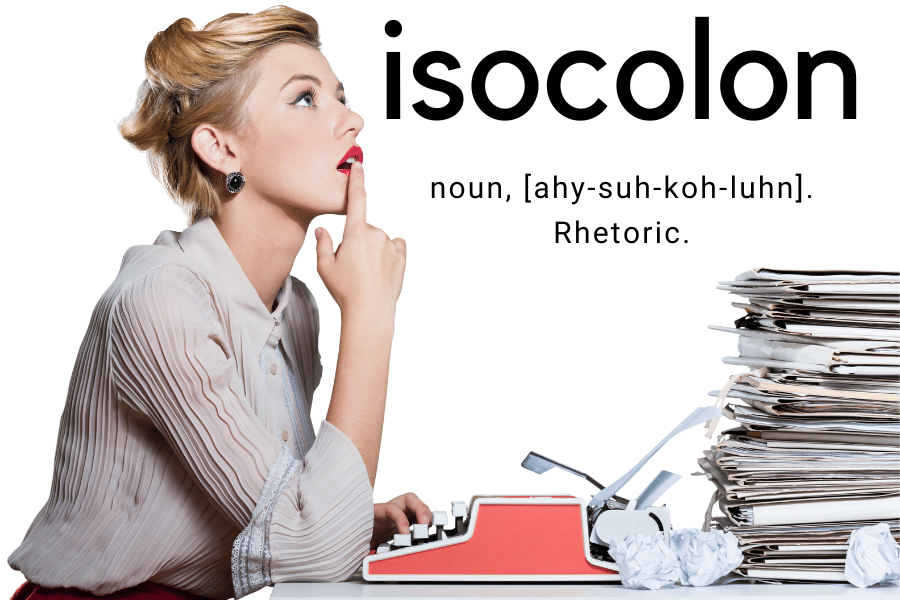
Parallelism, or isocolon when structures are of equal length, involves using similar grammatical structures to express related ideas. This creates balance, rhythm, and clarity, making the writing smoother and easier to process. For example, "She enjoys hiking, biking, and swimming" demonstrates parallelism. The absence of parallel structure can make writing feel disjointed and clunky. This technique is a robust choice when ideas feel unevenly presented or when sentence phrasing lacks a consistent, elegant flow, significantly improving the aesthetic and cognitive ease of reading.
12. Contrast (Juxtaposition): Sharpening Ideas Through Opposition
Contrast, often achieved through juxtaposition, places two opposing ideas, images, or concepts side-by-side to highlight their differences and amplify their individual qualities. This tension can illuminate a point more vividly than direct description. For instance, portraying the stark difference between poverty and opulence in consecutive sentences sharpens the impact of both. If a piece of writing feels bland or lacks dynamic energy, introducing contrast can inject immediate sharpness and definition. It is particularly effective when a point requires greater emphasis, a clearer boundary, or a more dramatic effect.

13. Clear Writing (Clarity): The Cornerstone of Effective Communication
Clarity in writing prioritizes reader comprehension above all else, removing any linguistic obstacles that might impede understanding. It means choosing precise words, constructing straightforward sentences, and organizing ideas logically. Clarity trumps cleverness; a complex idea conveyed simply is far more impactful than a simple idea obscured by elaborate prose. Academic research consistently shows that clear, unambiguous writing leads to higher reader engagement and lower bounce rates on digital platforms. This principle is paramount when the core message risks being lost in convoluted phrasing, ensuring that the reader receives the intended information without cognitive strain.
14. Eliminating Filler Words: Precision and Professionalism
Filler words are unnecessary words or phrases that add length to sentences without contributing additional meaning (e.g., "actually," "really," "in order to," "very"). Their removal instantly tightens prose, making it more concise, professional, and impactful. This is one of the most efficient ways to refine a rough draft, transforming hesitant or verbose sentences into crisp, direct statements. Cutting filler words is advisable when writing feels bloated, overly polite, or lacks a sense of confident directness, significantly enhancing the perceived authority and efficiency of the text.

15. Sentence Structure: Orchestrating Flow and Rhythm
Varying sentence structure—using a mix of short, simple sentences with longer, more complex ones—is essential for maintaining reader engagement and creating an engaging rhythm. Monotonous sentence patterns can quickly lead to reader fatigue and disengagement. A diverse sentence structure guides the reader through information, creating natural pauses and emphasis. This technique becomes critical when writing feels choppy, rigidly uniform, or strangely stiff, ensuring a dynamic and flowing reading experience that captivates rather than bores.
16. Point of View: Shaping Perspective and Connection
Point of view (POV) dictates who is telling the story or presenting the information, fundamentally shaping the reader’s connection to the text. Options include first-person (I/we), second-person (you), and third-person (he/she/it/they), which can be limited or omniscient. A shift in POV can profoundly alter the tone, intimacy, and scope of a narrative. For example, a first-person account fosters immediate empathy, while a third-person omniscient POV offers broader context. This technique is paramount when the writer seeks to control the degree of closeness, distance, or the specific lens through which the audience perceives the information, directly impacting emotional investment and informational delivery.

17. Foreshadowing: Building Anticipation and Intrigue
Foreshadowing involves subtle hints or indications of future events within a narrative. It builds suspense, creates anticipation, and adds layers of meaning that become apparent as the story unfolds, without explicitly revealing plot points. Effective foreshadowing keeps readers invested, subtly prompting them to wonder what might happen next. This technique is especially powerful for generating tension, sparking curiosity, or instilling a sense that larger, more significant events are impending, thereby enhancing the narrative’s grip on the reader.
Strategic Application: Choosing the Right Technique for the Challenge

Understanding these techniques is the first step; the true artistry lies in knowing which technique to deploy at any given moment. This strategic selection often depends on diagnosing what "feels off" in a piece of writing.
-
When Writing Lacks Vividness or is Abstract: If the text feels flat or a concept is too intangible, the solution often lies in making it more concrete and sensory. Techniques like Metaphors, Similes, Analogies, Imagery, and Sensory Words are ideal for painting mental pictures and making ideas resonate. These techniques transform mere information into an experience a reader can visualize and feel.
-
When Sentences Lack Impact: A common issue is sentences that are grammatically correct but feel weak or flaccid. This often points to insufficient verb power. Employing Strong Verbs is a direct and efficient way to infuse sentences with immediate dynamism and conciseness, enhancing the overall vigor of the prose.
-
When Reader Engagement Wanes: If readers are prone to drifting or losing interest, the issue might be a monotonous rhythm. Varying Sentence Structure, employing Alliteration for phonetic appeal, or using strategic Repetition can re-engage the reader by creating a more dynamic and pleasing flow.

-
When Ideas Fail to Connect: If a point is logically sound but doesn’t quite "land" with the audience, it often signals a clarity problem. Prioritizing Clear Writing and Eliminating Filler Words are crucial. These actions strip away unnecessary clutter, making the message more direct and digestible, thereby improving comprehension and impact.
-
When Content Feels Dull or Generic: To add personality, edge, or emotional depth, writers should consider techniques that introduce tension or animation. Contrast (Juxtaposition) can sharpen distinctions, while Personification can inject life and character into inanimate elements, making the writing more memorable and emotionally resonant.

-
When a Message Needs to Be Memorable: For key lines or arguments that must stick, techniques that exploit cognitive patterns are highly effective. The Rule of Three offers inherent memorability and a sense of completeness, while Repetition can hammer home a critical point. Parallelism also aids memorability by creating rhetorical balance. While powerful, the "Rule of Three" should be used with discernment given its frequent algorithmic application in modern content.
-
When Overall Narrative Control is Desired: For deeper structural and tonal adjustments, focusing on Point of View and Foreshadowing is essential. Adjusting the narrative perspective can profoundly alter reader connection and information delivery, while foreshadowing can build anticipation and thematic depth, guiding the reader through a carefully constructed experience.

Conclusion: The Enduring Value of Deliberate Craftsmanship
In an era saturated with information, the ability to communicate effectively is more valuable than ever. Mastering these writing techniques is not merely about adhering to grammatical rules; it is about wielding language with intention to captivate, clarify, and persuade. By understanding the specific function of each tool, writers can move beyond instinctual choices to make deliberate, impactful decisions that elevate their prose. The implication for content creators, educators, and communicators across all sectors is clear: a deeper engagement with these techniques yields not just "better writing," but more successful, memorable, and influential communication. Rather than haphazardly layering techniques, the most effective approach is to identify the core problem in the writing and apply the most suitable technique as a targeted solution, leading to polished, professional, and powerful prose.