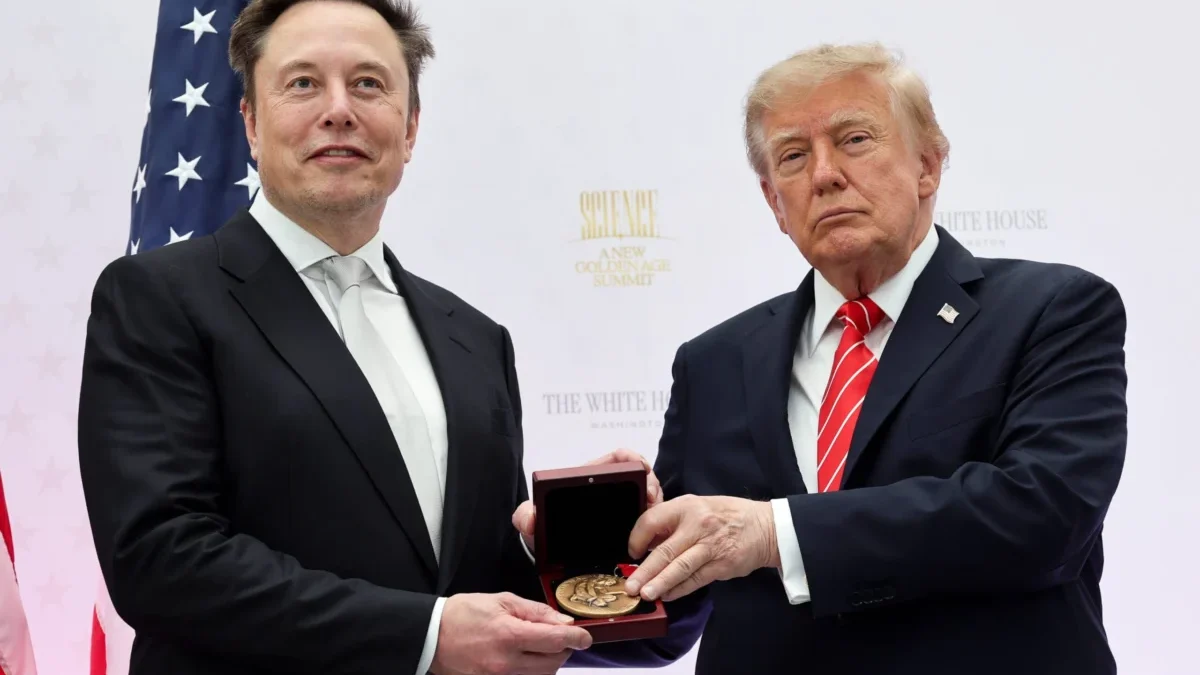
The 2026 midterm elections have concluded with a result that sends a seismic shockwave through the landscape of American campaign finance: the world’s wealthiest individual, Elon Musk, saw his unprecedented financial intervention fail to deliver the electoral mandate he sought. Despite deploying a staggering $474 million—a figure that effectively doubled his personal spending from the 2024 presidential cycle—the vast majority of candidates supported by Musk were defeated by Democratic challengers. This outcome has ignited a fierce debate among political scientists, campaign finance experts, and market analysts regarding the efficacy of "big money" in modern politics and whether Musk’s hyper-visible involvement has transitioned from an asset into a significant political liability.
The scale of the investment was as unprecedented as its result. Musk’s financial footprint included $200 million earmarked specifically for influence efforts in Texas, a state that serves as the corporate headquarters for both Tesla and SpaceX. However, the returns on this capital were remarkably thin. High-profile Republican candidates, including Senate nominee Ken Paxton and incumbent Governor Greg Abbott, suffered resounding losses. The market reaction was swift, with shares of both Tesla and SpaceX trending downward in the immediate aftermath, signaling investor anxiety regarding the alignment of these companies with losing political causes.
A Chronology of Financial Engagement
To understand the magnitude of this failure, one must look at the timeline of Musk’s political trajectory over the last two years. Following the 2024 presidential election, where Musk’s support for Donald Trump was highly visible, the billionaire signaled an intent to pivot. In May 2025, during an interview at the Qatar Economic Forum, Musk explicitly stated to Bloomberg that he planned to curtail his political activity, noting, “I think I’ve done enough.”
This resolve, however, proved temporary. By early 2026, as the midterm cycle began to intensify, Musk surged back into the donor class. He funneled $30 million into the Congressional Leadership Fund, the primary super PAC for House Republicans, and an additional $44 million across various federal-level PACs and advocacy groups. This put him in league with other tech-sector heavyweights, including venture capitalists Marc Andreessen and Ben Horowitz, who contributed $116.4 million, and OpenAI cofounder Greg Brockman, who donated $50 million. Collectively, these figures reshaped the donor profile of the Republican Party, creating an environment where a handful of individuals exerted influence disproportionate to traditional institutional party fundraising.
The Myth of Money as a Determinant of Victory
The primary takeaway from the 2026 results is that financial dominance does not equate to voter mandate. Logan Phillips, founder of the election forecasting site Race to the White House, characterized the result as perhaps the most significant defeat for "big money" in American political history. This sentiment is echoed by academics who argue that voters have become increasingly resistant to top-down messaging campaigns financed by private wealth.
Alex Keena, a professor of political science at Virginia Commonwealth University, suggests that while the candidates failed, the money may have served a different, more structural purpose: agenda-setting. According to Keena, billionaire spending in the modern era is less about the binary outcome of "win or lose" and more about dictating the terms of public discourse. By injecting hundreds of millions into the system, Musk successfully placed issues such as data center regulation, economic policy, and infrastructure reform at the forefront of the Republican platform. "It’s not about helping someone win," Keena noted. "It’s about setting the agenda and what types of issues we talk about."
The Liability of the "DOGE" Legacy
While Musk’s influence on the party agenda remains a plausible defense for his spending, his recent involvement in federal government initiatives has created a unique set of vulnerabilities. His role in the Department of Government Efficiency (DOGE)—an initiative that was intended to slash the federal deficit—has become a flashpoint for scrutiny.
Evidence indicates that DOGE was less an instrument of austerity and more a mechanism for influence. A report published by the Washington Post revealed that two dozen former DOGE staffers leveraged their government connections to transition into the private sector, successfully backing or founding startups that secured over $500 million in venture capital. Furthermore, following his departure from the official advisory role in May 2025, Musk’s companies, particularly SpaceX, secured an estimated $10 billion in new government contracts.
This creates a narrative of self-dealing that Democrats have signaled they intend to aggressively pursue. With the Democratic Party securing legislative majorities that grant them subpoena power, Musk faces the prospect of high-level investigations into his corporate activities and his historical role within the government. Representative Robert Garcia, a ranking member of the Oversight Committee, has explicitly stated that the committee plans to investigate Musk’s role in DOGE, focusing on allegations of illegal access to sensitive data and the initiative’s failure to achieve its stated fiscal goals.
The Perspective of Oligarchy and Institutional Risk
Casey Michel, author of United States of Oligarchy, offers a more critical analysis, arguing that Musk’s political overexposure has effectively turned him into a pariah in the eyes of moderate voters. "I’m struggling to think of a clearer example of what happens to an oligarch when they place themselves front and center in a political system," Michel remarked.
Michel posits that by operating as a "fourth branch of government," Musk has made his wealth a liability for the candidates he supports. The public perception of his role as an unelected policy-maker, combined with the perception that his businesses benefit directly from his political connections, has created a "blowback effect." Candidates supported by Musk are now forced to answer for his perceived overreach, a dynamic that likely contributed to the poor performance of Republican candidates in swing districts.
Looking Toward 2028: The Future of Billionaire Donations
Despite the fiscal carnage of the 2026 midterms, experts caution against assuming Musk will retreat from the political stage. Jennifer Heerwig, a professor of political sociology at SUNY Stony Brook, argues that the single most reliable predictor of high-level political giving is individual wealth. As long as Musk retains his status as the world’s richest person, the structural incentive to influence policy remains.
However, the scale of that influence may shift. The "Starbucks effect"—the idea that for a billionaire, a $474 million donation is a routine, low-stakes transaction—suggests that Musk may view this cycle’s failure as a sunk cost rather than a reason to exit the arena. Yet, the political reality is that the Republican Party may be forced to recalibrate its relationship with such donors. If Musk’s money is now viewed by the electorate as a "kiss of death" for candidates, the party leadership may begin to distance itself from the very donors who were once treated as saviors.
The Broader Implications for Democracy
The 2026 election cycle serves as a case study for the limits of the Citizens United era. For years, the prevailing wisdom in Washington was that a sufficient infusion of capital could overcome almost any political headwind. The results in Texas and across the country suggest that voters have become more sophisticated in identifying the source of campaign messaging, and in some instances, are actively voting against candidates who are perceived to be beholden to specific billionaire interests.
As Musk faces looming congressional investigations and the prospect of a more hostile regulatory environment under a Democratic-led House and Senate, his political future remains uncertain. He has yet to issue a public statement regarding the election results, maintaining a silence that contrasts sharply with his typically vocal presence on social media.
Whether he chooses to double down in the 2028 cycle or pivot to a more discreet form of influence remains to be seen. What is clear, however, is that the 2026 midterms have fundamentally altered the relationship between the nation’s wealthiest citizens and the democratic process. The era of unchecked financial influence in American politics has encountered a significant, perhaps permanent, check. The "biggest bet" in American political history has failed, and in doing so, it has provided a template for how the next generation of voters may respond to the growing power of the ultra-wealthy in the halls of government.