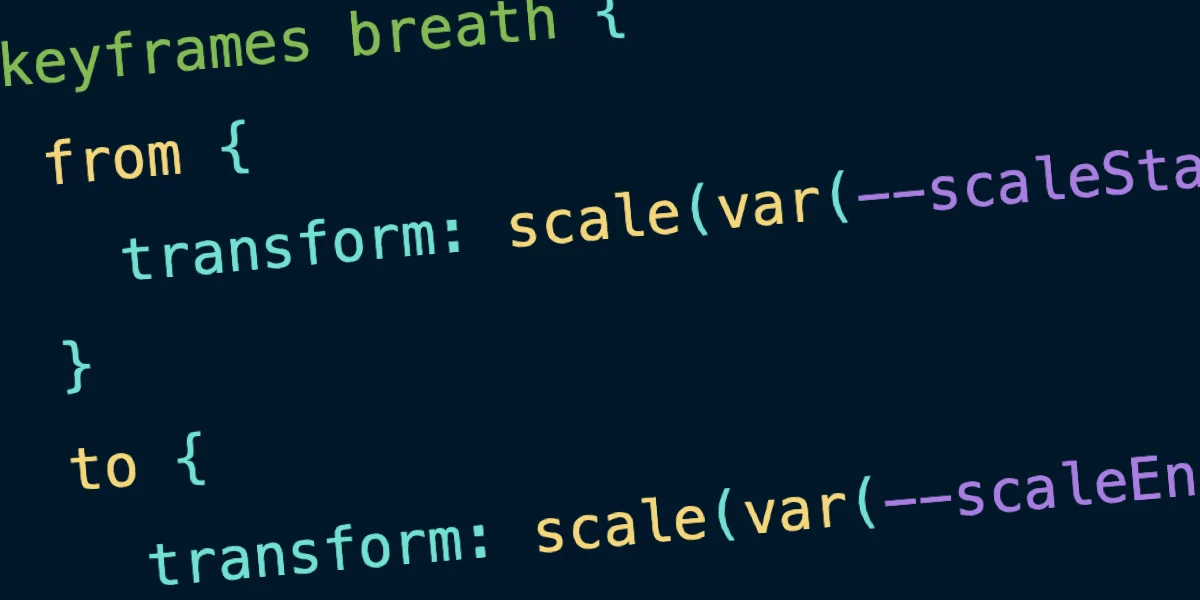
The landscape of web development has long wrestled with a fundamental friction point: displaying clean, readable code snippets on web pages without compromising site performance or burdening pages with heavy JavaScript libraries. For years, developers have relied on traditional client-side parsers, DOM-heavy plugins, and intricate HTML markup trees laden with nested spans and custom CSS classes to achieve syntax-highlighting effects. However, a significant technological shift is underway. The introduction of lightweight, CSS-native tooling—epitomized by a newly developed utility called MicroLighter, crafted by prominent developer Dave Rupert (affectionately known in the community as "Uncle Dave")—is fundamentally transforming how technical blogs, documentation sites, and developer platforms render source code.
By leveraging the power of modern browser standards, specifically the CSS Custom Highlight API, MicroLighter achieves robust, themeable, multi-language syntax highlighting while drastically reducing the reliance on bloated JavaScript dependencies. This architectural pivot marks a departure from traditional heavy frameworks, signaling a broader industry trend toward utilizing native browser capabilities over heavy third-party packages.
Background Context: The Evolution of Web Syntax Highlighting
To understand the significance of MicroLighter’s arrival, one must examine the history of code presentation on the web. In the early days of technical blogging, developers either manually applied HTML font tags and span elements to color-code keywords or simply relied on plain, unformatted text inside <pre> and <code> tags. As the web matured and developer-focused content surged in popularity, automated syntax highlighters emerged.
Tools like Prism.js, highlight.js, and Rouge became industry staples. These libraries operate by scanning the Document Object Model (DOM) or source strings, tokenizing the code using regular expressions, and wrapping individual tokens in numerous structural HTML elements—frequently generating thousands of nested <span> nodes for a single lengthy code block. While effective and robustly tested over years of production use, this approach introduces performance bottlenecks. Large code blocks can significantly inflate DOM size, contributing to cumulative layout shifts, increased memory usage during the parsing phase, and heavier JavaScript payload sizes that directly impact core web vitals, such as Total Blocking Time (TBT) and Largest Contentful Paint (LCP).
Furthermore, maintaining custom themes in legacy highlighters often required overriding deep-seated class structures, requiring developers to write extensive CSS rules targeting generated markup they did not directly author. The quest for a cleaner, faster, and more semantic solution has been a persistent goal within the front-end engineering community.
The Technological Breakthrough: The CSS Custom Highlight API
The technical foundation that makes tools like MicroLighter possible is the CSS Custom Highlight API, accessed via the ::highlight() pseudo-element. Historically, if a developer wanted to style a specific range of text within a document without altering the underlying DOM structure, options were severely limited. Developers typically had to resort to wrapping text nodes in <span> elements, which disrupted text selection, screen reader flows, and structural semantics.
The Custom Highlight API decouples styling from the DOM entirely. It allows JavaScript to programmatically define ranges of text within a document and associate them with a registered highlight name. CSS can then target these named highlights using the ::highlight() pseudo-element, applying styles such as background colors, text color, and underlines dynamically.
Crucially, this API achieved "Baseline" status, meaning it is now interoperable and widely supported across all modern, evergreen web browsers without requiring experimental flags or complex polyfills. This cross-browser standardization served as the green light for developers to rethink syntax highlighting from the ground up, eliminating the need to inject thousands of unnecessary markup elements into the page tree.
Architecture and Implementation of MicroLighter
MicroLighter capitalizes on the Custom Highlight API to streamline the rendering pipeline. Instead of mutating the DOM by injecting myriad structural elements, the library uses lightweight JavaScript primarily to tokenize the source code string and register the respective text ranges with the browser’s highlight registry. The browser then handles the rendering natively, leading to significant performance gains and cleaner, strictly semantic HTML markup.
A standard implementation requires minimal markup compared to legacy approaches:
<pre>
  <code class="language-javascript">const answer = 42;</code>
</pre>
Alternatively, developers seeking a more modular, component-driven approach can leverage MicroLighter’s web component architecture. By importing the lightweight web component, teams can configure features such as copy-to-clipboard controls and line numbers declaratively:
import "microlighter/micro-lighter-element.min.js";<micro-lighter language="javascript" controls="copy" line-numbers>
<pre>
<code>const answer = 42;</code>
</pre>
</micro-lighter>This modularity allows development teams to adopt an à la carte strategy. Rather than shipping an monolithic script containing hundreds of language definitions and theme rules, developers can import only the specific languages and themes required for their unique use case, reducing network payload to absolute minimums.
Deep Integration with Modern CSS Features
Beyond utilizing the Custom Highlight API, MicroLighter aligns closely with other modern CSS capabilities, most notably the native light-dark() color function and CSS custom properties (variables). This integration makes theme development and maintenance exceptionally straightforward.
Traditional syntax highlighters often required separate CSS stylesheets for light and dark modes, or intricate JavaScript listeners to toggle theme classes on the root document element. With native CSS variables and the light-dark() function, themes can adapt dynamically to user system preferences without extra JavaScript overhead.
A standard theme configuration utilizing MicroLighter’s custom properties demonstrates this native adaptability:
--syntax-background: light-dark(#ffffff, #0d1117);
--syntax-foreground: light-dark(#24292f, #c9d1d9);
--syntax-comment: light-dark(#6e7781, #8b949e);
--syntax-keyword: light-dark(#cf222e, #ff7b72);
--syntax-operator: light-dark(#24292f, #c9d1d9);
--syntax-string: light-dark(#0a3069, #a5d6ff);
--syntax-constant: light-dark(#0550ae, #79c0ff);
--syntax-function: light-dark(#8250df, #d2a8ff);
--syntax-type: light-dark(#8250df, #d2a8ff);
--syntax-variable: light-dark(#953800, #ffa657);
--syntax-property: light-dark(#0550ae, #79c0ff);
--syntax-tag: light-dark(#116329, #7ee787);
--syntax-selector: light-dark(#8250df, #d2a8ff);
--syntax-inserted: light-dark(#116329, #7ee787);
--syntax-deleted: light-dark(#cf222e, #ff7b72);
This approach eliminates the need for redundant CSS rules, keeping stylesheets remarkably compact and performant.
Comparative Performance Analysis and Real-World Adoption
The practical benefits of transitioning to a Custom Highlight-based approach are well-illustrated by real-world implementations. Long-standing developer resources like CSS-Tricks, which historically relied on customized implementations of Prism.js integrated into bespoke WordPress blocks, have begun evaluating and integrating MicroLighter into production environments.
In comparative benchmarks measuring asset size, the savings are substantial. Prism.js—while exceptionally lightweight compared to older generation highlighters—typically registers a raw size of approximately 35 KB, translating to roughly 9.3 KB when gzipped. In contrast, MicroLighter’s production footprint comes in significantly lower at approximately 13.9 KB raw, shrinking down to just 5.2 KB gzipped.
These metrics become even more impressive when accounting for platform-specific customizations, such as WordPress block integrations and wrapper logic, which are often necessary to maintain backward compatibility with existing article archives. While raw script size is only one vector of web performance, reducing JavaScript execution time, main-thread blocking, and DOM memory consumption yields measurable improvements in user experience, particularly on mobile devices and lower-specification hardware.
Industry Implications and Future Outlook
The rise of MicroLighter and the broader adoption of the CSS Custom Highlight API reflect a maturing web ecosystem where native browser APIs increasingly shoulder responsibilities once relegated to heavy JavaScript frameworks. For decades, the web development community solved feature gaps by layering JavaScript abstractions over the Document Object Model. Today, as browser vendors align on powerful, declarative CSS and DOM primitives, the pendulum is swinging back toward native standards.
While libraries like Prism.js and highlight.js will undoubtedly retain a strong user base due to their extensive legacy language support and battle-tested reliability, the emergence of lightweight alternatives signals a clear trajectory for the future. Developers can now deliver rich, accessible, theme-aware code highlighting with a fraction of the computational and network cost.
As more production sites adopt these native techniques, we can expect to see a broader rethinking of client-side text manipulation across the web. The integration of the Custom Highlight API is not merely an incremental update to code formatting; it is a proof of concept for a faster, lighter, and more maintainable web architecture.