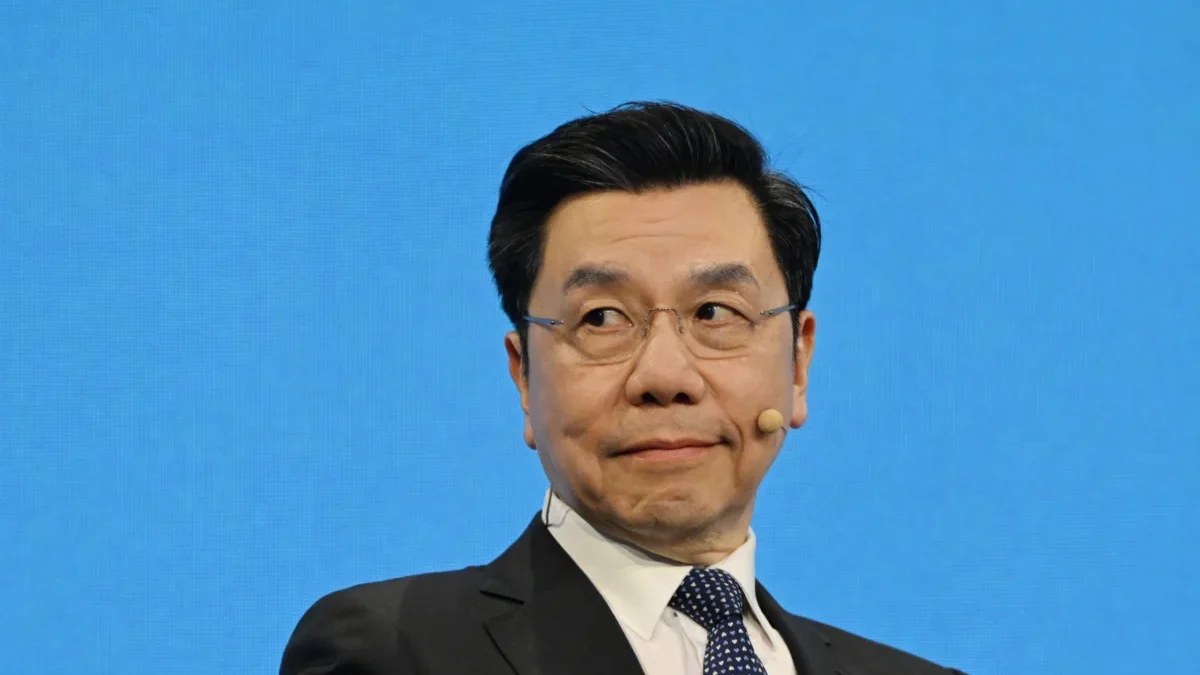
For years, the United States has operated under the strategic assumption that by restricting Beijing’s access to high-end semiconductors—specifically the advanced graphics processing units (GPUs) essential for training large-scale artificial intelligence models—it could effectively throttle China’s progress in the global AI race. However, according to Kai-Fu Lee, a preeminent AI entrepreneur and the former president of Google China, this policy of "technological containment" has inadvertently catalyzed a shift in Chinese industry strategy. Instead of stalling out, Chinese AI developers have been forced to innovate under constraints, fostering a new generation of models that are leaner, more cost-effective, and rapidly narrowing the gap with Western leaders like OpenAI and Anthropic.
In a wide-ranging interview with Fortune Daily, Lee argued that the American focus on hardware superiority has missed the mark regarding the fundamental drivers of Chinese tech development. Rather than being crippled by the lack of cutting-edge silicon, Chinese firms have pivoted toward architectural efficiency. Lee estimates that the current cohort of Chinese AI models now trails their American counterparts by a margin of only six to 12 months—a narrowing window that challenges the narrative of American dominance.
The Evolution of the AI Arms Race: A Chronology
The trajectory of the current AI divide began in earnest with the intensification of U.S. export controls in late 2022 and 2023, which sought to deny Chinese entities access to Nvidia’s flagship H100 and A100 chips. The goal was to prevent the training of models that could be used for advanced military or surveillance applications.
By 2024, the industry saw a divergence in approaches. While American tech giants, flush with capital and access to nearly infinite computing resources, leaned heavily into massive scaling laws—building ever-larger data centers and training models with trillions of parameters—Chinese firms were compelled to adopt a strategy of "frugal innovation."
The watershed moment arrived in early 2025 with the emergence of DeepSeek, a Chinese startup that introduced a high-performance model trained with a fraction of the compute resources typically required for models of similar capability. This event shattered the domestic perception in China that the U.S. lead was insurmountable. Since then, the Chinese AI ecosystem has moved toward open-weight models, which have gained significant traction not just domestically, but globally, as developers seek alternatives to the proprietary and costly APIs provided by Silicon Valley incumbents.
Debunking the Misconceptions of the Chinese AI Industry
Lee highlights three primary misconceptions that have clouded American understanding of China’s technological trajectory. The first is the belief that Chinese AI firms are primarily driven by state-mandated goals, such as achieving Artificial General Intelligence (AGI) to secure geopolitical supremacy.
"Chinese companies are born to make money," Lee noted, emphasizing that the primary motivator for startups like DeepSeek is financial viability rather than state-sponsored vanity projects. He draws a direct parallel to the rise of earlier Chinese tech giants like Pinduoduo, Meituan, and ByteDance. In their infancy, these companies were dismissed by Western observers as copycats or unsustainable entities. Over time, they revolutionized their respective sectors through operational efficiency and aggressive monetization strategies. Lee suggests that while the U.S. may hold a lead in fundamental AI research breakthroughs, the ability of Chinese firms to optimize for profitability should not be underestimated.
The second misconception centers on the role of the Chinese state. There is a persistent narrative in Washington that the push for open-source and open-weight models in China is a top-down, coordinated effort to undermine U.S. intellectual property. Lee argues that this view is fundamentally flawed. Instead, he posits that the shift toward open-weight models is a market-driven response to competitive pressures. Because Chinese startups cannot rely on the same capital-intensive infrastructure as their U.S. rivals, they must adopt open strategies to build ecosystems and attract users.
While it is undeniable that Beijing has taken a more active interest in the sector—with government-linked entities participating in over 140 AI deals in 2025 alone—this participation is often reactive rather than foundational. President Xi Jinping’s call for "independent, controllable" systems in 2025 reflects a desire for systemic resilience, but the actual technical execution remains firmly in the hands of competitive, venture-backed enterprises.
The Frugality Advantage: A Different Operational Playbook
The third, and perhaps most critical, misconception is that Chinese companies are only using less compute because they have no other choice. Lee argues that "prudence and survival instinct" are deeply ingrained in the Chinese tech culture, leading to a natural tendency toward parsimony.
While American firms are currently pouring billions of dollars into massive data center expansions—a move that has faced recent scrutiny from voters and environmental advocates concerned about energy consumption—Chinese developers have spent the last two years perfecting the art of doing more with less. They have optimized algorithms, refined training data, and employed architectural innovations that reduce the need for high-end GPUs. As a result, some Chinese models can be developed and operated at as little as one-tenth the cost of their U.S. equivalents.
This creates a distinct market advantage in developing nations and cost-sensitive enterprise sectors where companies are unwilling or unable to pay the premium prices demanded by U.S. providers. By focusing on cost-efficiency, Chinese AI developers are effectively building a secondary market that is increasingly difficult for U.S. companies to penetrate.
Market Realities and Future Outlook
Despite the progress made by Chinese developers, a chasm remains in the top-tier of the industry. According to the 2026 AI Index Report from Stanford University, American institutions still dominate in the production of high-impact patents and top-tier foundational models. The financial valuations of U.S. leaders continue to reach historic levels; OpenAI secured a $1.25 trillion valuation in late 2026, and Anthropic’s impending IPO, expected to value the company at up to $1.4 trillion, underscores the immense institutional belief in American-led AI dominance.
However, the psychological shift triggered by the success of models like DeepSeek cannot be ignored. For many Chinese engineers and investors, the realization that they could produce world-class technology despite restrictive sanctions has served as a powerful rallying point. It has transformed a sense of resignation into one of competitive fervor.
Strategic Implications for the United States
The implications for U.S. policy are significant. If export controls have indeed forced Chinese firms to become more efficient, the U.S. strategy may have inadvertently accelerated the maturity of the Chinese AI ecosystem. By removing the "crutch" of easy access to high-end hardware, the U.S. has effectively pressured Chinese firms to solve the most difficult problems in model architecture and training efficiency—problems that, once solved, could make Chinese AI products more competitive in the global market.
Furthermore, the focus on "frugal AI" aligns well with the needs of the global south, potentially allowing China to capture significant market share in regions where American-style, capital-intensive AI solutions are economically unviable. As the AI industry matures, the metric of success may shift from which company has the most computing power to which company can deliver the most utility per unit of energy and capital.
Ultimately, Lee’s analysis suggests that the "AI race" is not a sprint that can be won by simply cutting off a competitor’s supply chain. It is a complex, multi-dimensional contest where agility, resourcefulness, and a focus on commercial outcomes are just as critical as raw processing power. The U.S. government’s attempt to throttle China’s development has instead provided the friction necessary to sharpen the competitive edge of its rival, ensuring that the next chapter of the AI revolution will be defined by a global, rather than merely domestic, struggle for technological and economic leadership. Whether this leads to a balanced, multi-polar AI landscape or a new era of intensified economic rivalry remains the central question for the coming decade.