The economic partnership between the United States and Canada, long characterized as the world’s most extensive and integrated bilateral trading relationship, is currently facing its most severe instability in decades. A deepening trade dispute, marked by retaliatory tariffs, aggressive rhetoric, and a fundamental disagreement over the mechanics of North American commerce, has cast a shadow of uncertainty over the stability of the US-Mexico-Canada Agreement (USMCA). While the United States remains Canada’s largest export market and Canada holds the position of the second-largest export destination for American agricultural products, the current administration’s shift toward a protectionist stance has disrupted the delicate equilibrium that has defined the border for generations.
The current friction represents a significant departure from the post-2020 status quo. Following the ratification of the USMCA—the successor to the North American Free Trade Agreement (NAFTA)—most goods were expected to flow duty-free across the border. However, recent weeks have seen a dramatic reversal of this policy. President Donald Trump has characterized the previous 50 years of trade relations as a systemic exploitation of American interests, setting the stage for a confrontational policy approach that has moved beyond mere negotiation to explicit punitive measures.
A Chronology of Declining Relations
The descent into the current trade standoff can be traced through a series of key milestones throughout the latter half of 2025:
- August 21, 2025: High-level trade negotiations between U.S. and Canadian officials collapse, signaling the end of cooperative efforts to resolve lingering disputes regarding automotive parts, dairy access, and alcoholic beverages.
- Early September 2025: President Trump announces a unilateral 50% tariff on $20 billion worth of Canadian imports, citing long-standing grievances regarding alleged discriminatory trade practices.
- Mid-September 2025: The Canadian government, citing the need to protect domestic interests and maintain the integrity of its own trade policy, announces a package of retaliatory tariffs targeting specific U.S. goods.
- Late September 2025: In response to Canada’s counter-measures, the U.S. administration threatens a broader import ban on specific categories, including Canadian whey, various alcoholic beverages, and select motorcycle models, while concurrently exempting other consumer goods such as household textiles and fishing equipment to mitigate domestic price impacts.
Data-Driven Analysis of the Trade Deficit
The primary contention driving the U.S. administration’s stance is the bilateral trade deficit, which reached $27.3 billion in 2025. However, economists argue that this figure requires significant context. The deficit is largely a structural result of the American energy sector’s reliance on Canadian resources. In 2025, the United States imported more than $85 billion in crude oil from Canada.
Industry analysts emphasize that this is not a matter of preference but of infrastructure. Refineries in the U.S. Midwest are specifically engineered to process the heavy sour crude produced in Alberta’s oil sands. Replacing this supply with alternative sources—such as light crude from Texas or heavier grades from international markets—would require years of capital investment and multi-billion dollar retrofits to existing refinery facilities. Consequently, the trade deficit is less a reflection of unfair competition and more a reflection of a deeply integrated energy supply chain that provides the U.S. with essential, cost-competitive fuel.
Furthermore, trade intensity data underscores the disproportionate impact of this conflict on Canada. According to the World Bank, Canada’s total trade accounts for approximately 64% of its economic output, compared to just 25% for the United States. With roughly 70% of all Canadian exports destined for the American market, the current tariff war poses an existential risk to Canadian economic stability, while for the U.S., the conflict impacts specific domestic sectors rather than the broader national economy.
Sectoral Disputes: The Dairy Controversy
The dairy industry has emerged as the focal point of the current trade rhetoric. President Trump has repeatedly alleged that Canada prevents American farmers from competing in its domestic market. This assertion, however, overlooks the complex supply management system established in Canada, which has been a point of contention for decades.
Canada’s system utilizes high over-quota tariffs—sometimes exceeding 200%—to protect its dairy producers from the volatility of global prices and the sheer volume of American production. Wisconsin, for example, produces more milk annually than the entirety of Canada. Experts from the University of Wisconsin note that a total opening of the Canadian market would likely lead to a rapid saturation by lower-cost American products, effectively dismantling the Canadian dairy industry.
Despite the rhetoric, trade data indicates that the USMCA has successfully increased American dairy access. According to the U.S. Department of Agriculture (USDA), American dairy exports to Canada increased by 11% in the last year, building on an 8% increase in 2024. The U.S. currently maintains a substantial trade surplus in dairy products, exporting $1.3 billion to Canada while importing only $585 million.
Official Responses and Diplomatic Stance
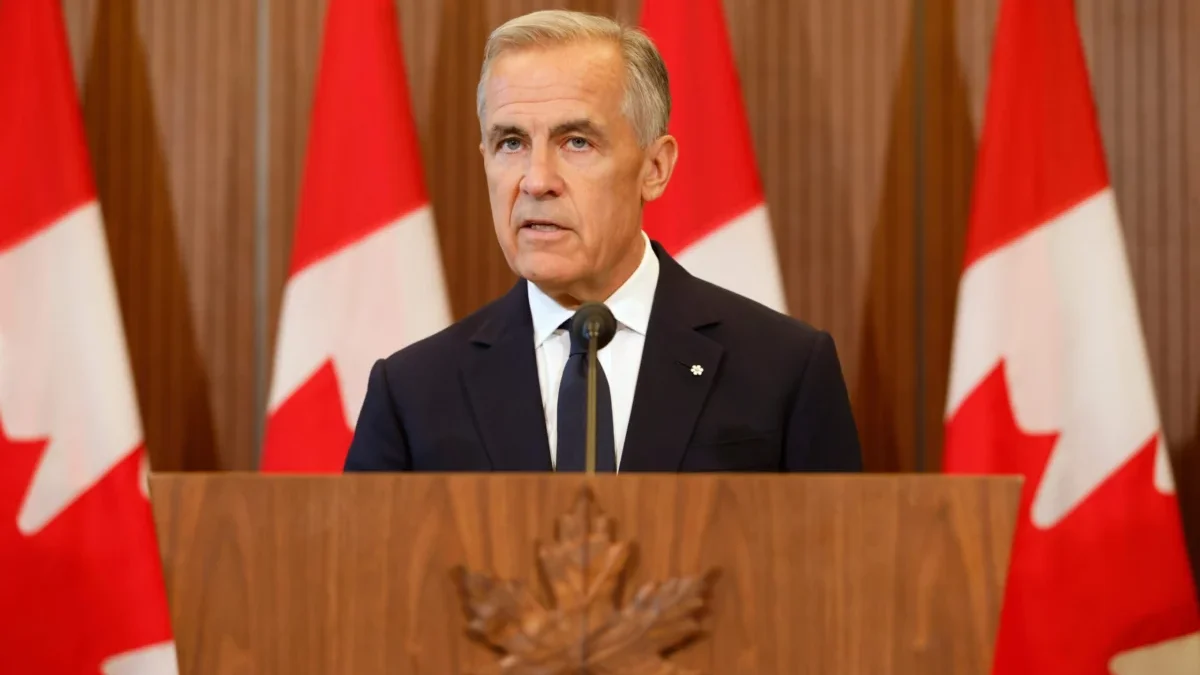
The Canadian government, led by Prime Minister Mark Carney, has maintained a stance of calculated restraint, asserting that the country remains prepared to negotiate a fair, mutually beneficial resolution. “Canada is always ready to strike a fair deal,” Carney stated recently, signaling that Ottawa views the conflict as a policy disagreement rather than a permanent rupture.
Conversely, the U.S. administration has used the dispute to pressure Ottawa on broader manufacturing concessions. U.S. trade representatives, including those serving under the previous administration, have long described Canada’s trade policies as "parochial" and "protectionist." This sentiment has now been translated into aggressive executive actions, including the controversial directive to rename Lake Ontario to "Lake America"—a move viewed by many international observers as a symbolic escalation intended to exert psychological pressure on Canadian leadership.
Broader Economic Implications and Risks
The risk of the current standoff is the potential degradation of the integrated North American automotive sector. Under the USMCA, the automotive supply chain has become so deeply intertwined that a single vehicle component may cross the U.S.-Canada border multiple times before final assembly. Disrupting this flow through tariffs creates inefficiencies, raises production costs for manufacturers, and ultimately increases the price for the North American consumer.
Legal experts, such as Barry Appleton of the New York Law School’s Center for International Law, warn that the current trajectory is unsustainable. "We had the best integrated North American economy going," Appleton noted. "This is like having a very bad standoff with your 14-year-old. Nobody’s happy in this game."
As the September 29 deadline for the implementation of the newest U.S. import bans approaches, both nations remain in a period of high-stakes maneuvering. Economists suggest that the three-week window before the bans take effect provides a critical, if narrow, opportunity for back-channel diplomacy. If an agreement is not reached, the result could be a prolonged period of economic contraction for both nations, a weakening of the North American competitive advantage in the global market, and a fundamental realignment of the most important trade partnership in the Western Hemisphere.
In the final analysis, the dispute reflects a clash between the current U.S. administration’s "America First" economic ideology and the established, interdependent reality of North American trade. Whether this conflict leads to a new, more balanced trade framework or a long-term period of protectionist friction will depend on the willingness of both Washington and Ottawa to pivot from rhetoric to the complex, unglamorous work of trade diplomacy.