The Space Development Agency (SDA), established in 2019 with the ambitious goal of accelerating the deployment of critical US military space capabilities by bypassing traditional Pentagon acquisition bottlenecks, is now launching its first operational satellite batches. However, this milestone coincides with plans for its own dissolution, with the agency slated to be folded back into the Space Force’s procurement pipeline. This impending reorganization, supported by bipartisan congressional backing as reflected in draft National Defense Authorization Acts, marks a significant shift in how the Department of Defense intends to manage its space-based weapon systems.
SDA’s core mission has centered on developing the Proliferated Warfighter Space Architecture (PWSA), a vast constellation of hundreds of satellites in low-Earth orbit. This architecture is designed to provide an unprecedented capability for detecting, tracking, and targeting ballistic and hypersonic missiles. This initiative represents a stark departure from the Pentagon’s current missile warning capabilities, which rely on a small fleet of legacy satellites in much higher, more vulnerable geosynchronous orbits. These older systems, while costly, are less sensitive to the dimmer signatures of smaller missiles and are more susceptible to attack due to their distance and limited numbers.
The SDA’s strategic approach involved a rapid procurement and development cycle, aiming to field new generations, or “tranches,” of tracking and data relay satellites every two years. This model was designed to foster innovation and competition across the US space industry, leveraging satellites and sensors from a diverse range of companies. The initial vision included a launch cadence of approximately one satellite per month, a pace intended to ensure rapid deployment and continuous capability enhancement.
Navigating Turbulent Waters: Challenges and Transitions
While SDA’s mission will largely continue under a new organizational structure within the US Space Force, its journey has been far from smooth. The agency’s work is intrinsically linked to the Pentagon’s broader missile defense aspirations, including the “Golden Dome” initiative, a top priority for the Space Force under the Trump administration. SDA’s satellite constellation is intended to provide a crucial layer of persistent surveillance and data relay, feeding information to potential interceptor systems. However, it is important to note that the capabilities envisioned by SDA predate the public announcement of Golden Dome and are less focused on offensive space-based weaponry compared to some of the more ambitious, and controversial, proposals that have emerged from the White House.
SDA’s history has been punctuated by a series of challenges, including significant schedule delays, production and supply chain bottlenecks, and technical issues encountered with its initial operational data relay satellites following their launch last year. The primary function of these data relay, or “transport,” satellites is to receive tracking data from the missile-warning satellites via inter-satellite laser communication links and relay this critical information to ground-based command and control centers for timely action.
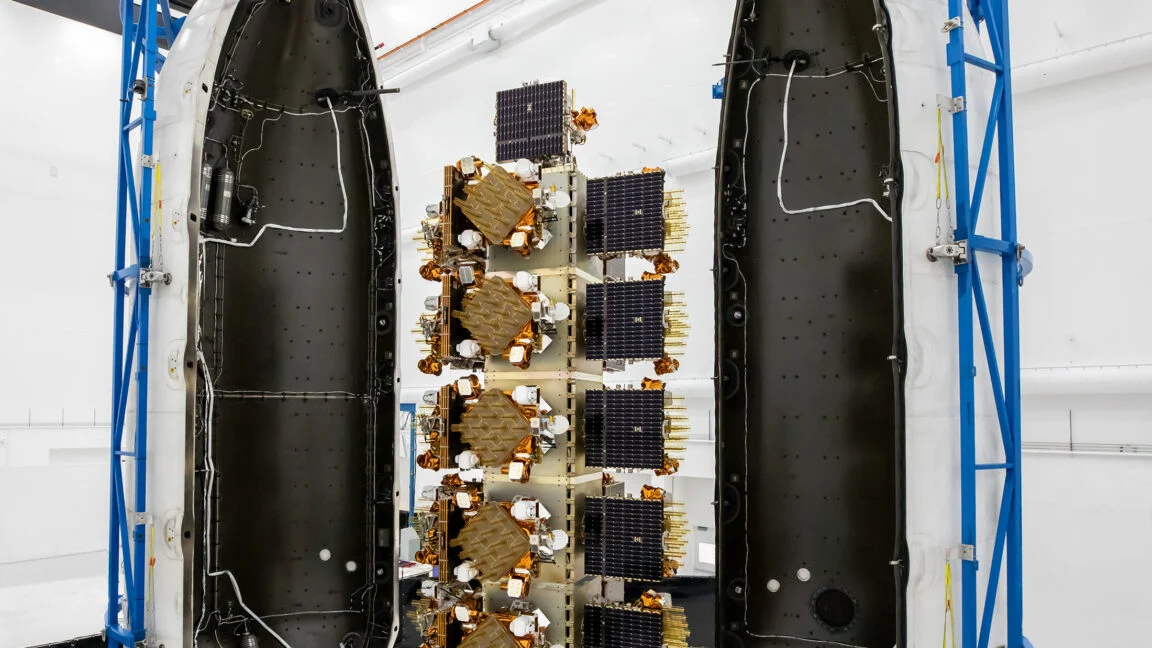
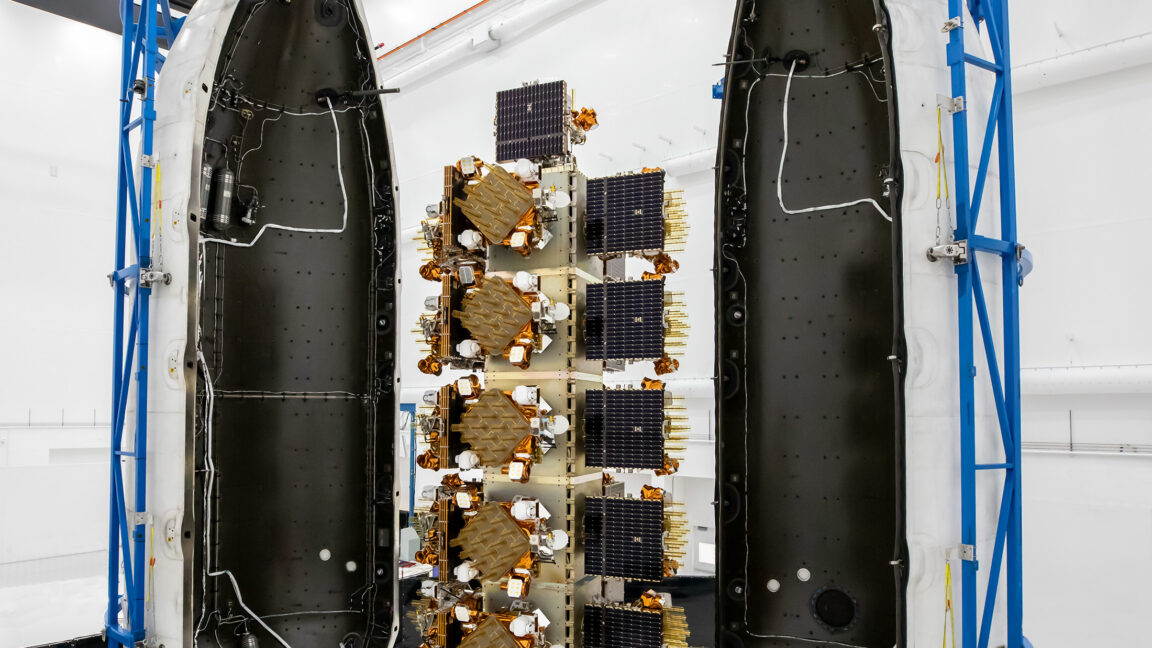
The agency began launching prototype tracking and data transport satellites in 2023. Its first two batches of operational transport satellites were launched last year. The third group of these vital data transport satellites, comprising 21 satellites built by York Space Systems, was launched on Thursday aboard a SpaceX Falcon 9 rocket from Vandenberg Space Force Base in California. This launch brought the total number of transport satellites deployed in Tranche 1 to 63, a significant step toward realizing the full architecture.
Gurpartap “GP” Sandhoo, director of the Space Development Agency and also the Space Force’s portfolio acquisition executive for missile warning and tracking, emphasized the strategic importance of this deployment. In a statement, Sandhoo noted, "This launch continues to expand warfighting capability to deliver persistent tactical satellite communication for the warning and tracking of advanced missile threats." He further highlighted the impact of the Tranche 1 deployment, stating, "The deployment of Tranche 1’s proliferated capability will soon deliver continuous overwatch—neutralizing any first-mover advantage by delivering data to warfighters around the world, nearly instantaneously.”
Thursday’s launch marked a crucial resumption of SDA’s satellite deployment schedule after a nine-month hiatus. This pause was necessitated by issues encountered with the performance of satellites from the first two Tranche 1 launches in September and October of the previous year. While those launches themselves were successful, ground teams faced significant challenges in activating and commissioning satellites produced by key contractors, including York Space Systems and Lockheed Martin.
Addressing Technical Hurdles and Optimizing Deployment
During a recent roundtable discussion with reporters prior to the latest launch, Sandhoo detailed several of the technical hurdles encountered. A primary concern was the insufficient ground station coverage available to communicate with the satellites immediately following their initial launches. Furthermore, some satellites experienced difficulties with their thermal control and propulsion systems as they ascended from their insertion orbits to their designated operational altitude of over 600 miles (approximately 1,000 kilometers). This altitude is significantly higher than that occupied by SpaceX’s Starlink internet constellation.
"We are in a pretty harsh radiation environment at 1,000 kilometers, so not all of our orbit raising has gone according to plan," Sandhoo explained. "It has been sporadic. We’re working through it." Despite these challenges, Sandhoo expressed optimism that ground teams would eventually bring the majority of these satellites online and declare them ready for operations, though he acknowledged that the process is taking longer than initially anticipated.
The Space Development Agency’s "Tranche 1" architecture is designed to comprise 154 operational satellites, with 126 dedicated to data relay and 28 focused on missile tracking. This layered approach aims to create a robust and responsive missile warning and tracking network.
The Path Forward: Refining Strategy and Ensuring Readiness
SDA and its industry partners “took a pause” following last year’s launches specifically to “make sure we fixed at least the known issues,” according to Sandhoo. He added, "We expect this launch to be a lot smoother than the last one."
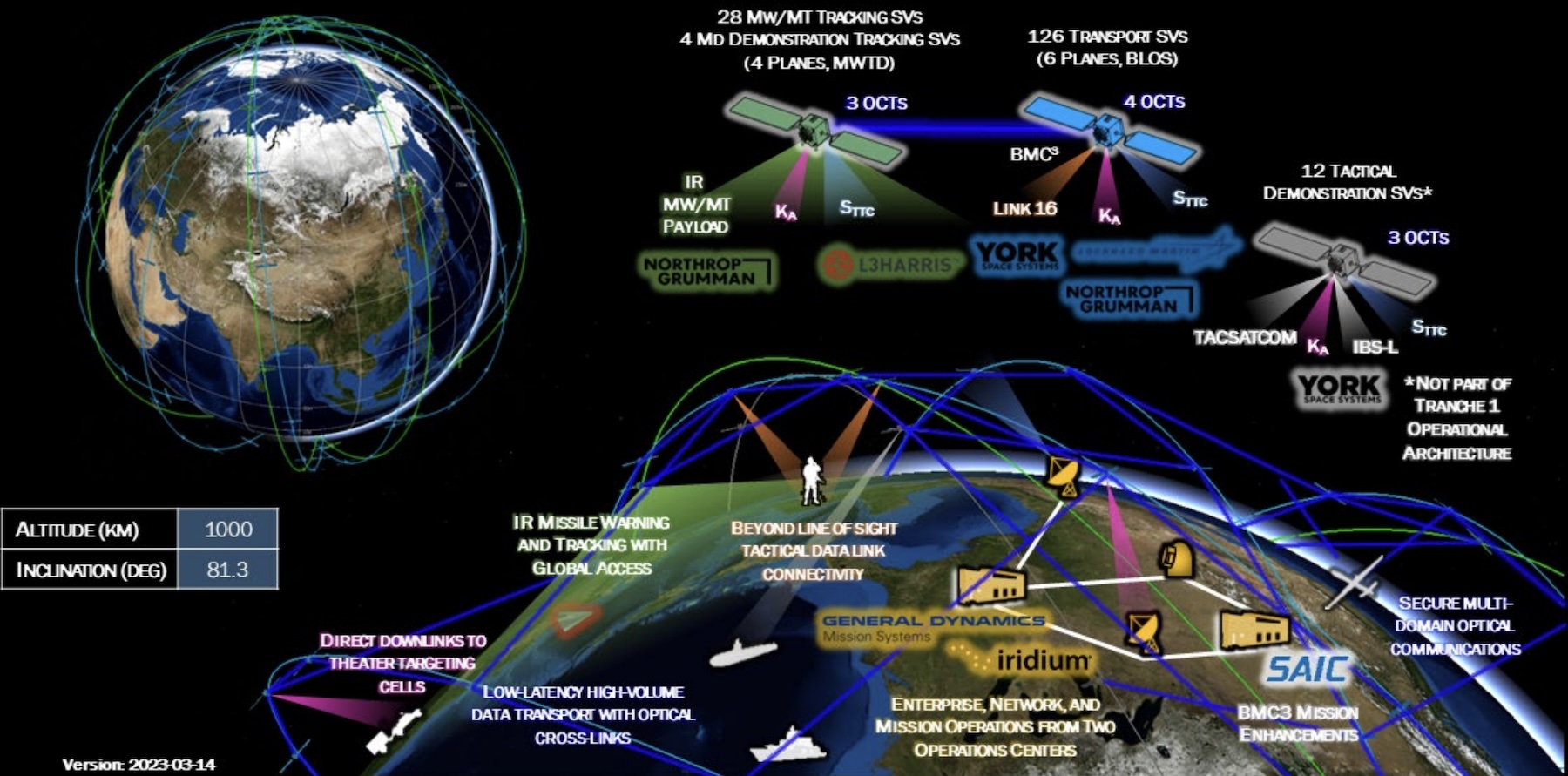
Thursday’s launch represented the second deployment of York Space Systems’ data transport satellites and the third overall for the Tranche 1 constellation. The remaining seven launches are scheduled to complete Tranche 1, bringing the total to 63 additional data transport satellites and 28 missile tracking satellites. These tracking satellites are being manufactured by major defense contractors including Lockheed Martin, Northrop Grumman, and L3Harris. Notably, none of the Tranche 1 tracking satellites have been launched to date.
Sandhoo indicated that the schedule for subsequent SDA satellite launches remains “constrained” by the availability of optical communication terminals. These laser transmitters and receivers are essential for establishing the inter-satellite links that will form an integrated mesh network connecting the transport and tracking satellites.
While SDA officials have not provided specific dates for the next few launches, the agency has confirmed that the Tranche 1 satellites are expected to “provide initial warfighting capability beginning in 2027.” Sandhoo also clarified that the agency is no longer prioritizing a fixed monthly launch cadence. The paramount concern, he stated, is to ensure that SDA’s satellites are launched only when they are fully ready and validated. "The goal is to get operational as quickly as possible once you get in orbit,” he reiterated.
Timeliness and the Current Geopolitical Landscape
Had all Tranche 1 satellites launched according to their original schedule, the constellation’s enhanced missile warning capabilities could potentially have been available to military commanders today. This could have been particularly significant in providing crucial support to US and allied forces in countering ballistic missile threats, especially in light of recent escalations in the Middle East.
"That’s what I think the nation needs right now, to face the threat that we are in," Sandhoo remarked. "If you see what’s going on, I wish we were on orbit and supporting this mission right now because, literally, missiles are being launched at the joint force every single day in [Operation] Epic Fury." He acknowledged the current reality, stating, "We are where we are. But we are doing everything we can to solve these technical challenges to get these systems on orbit, so we can deliver these capabilities."
Upon completion, SDA’s Tranche 1 constellation will consist of 154 operational satellites. Tranche 2, slated to commence launches next year, will introduce over 250 additional transport and tracking satellites from six different manufacturers. Furthermore, SDA has ordered 108 satellites for the Tranche 3 tracking layer, with launches anticipated to begin in 2028. The transport layer is set to conclude after Tranche 3, being superseded by the Space Force’s integrated Space Network. In May, the Space Force announced its selection of SpaceX to develop the backbone of this new network, leveraging technology originally developed for SpaceX’s Starlink broadband constellation. SDA’s transport satellites are expected to be integrated into this Space Data Network, working in concert with SpaceX’s satellites.
The establishment of the Space Development Agency represented a significant strategic shift for the Pentagon, born from a recognized need to modernize its space capabilities at a pace commensurate with evolving global threats. Its creation in 2019 was a direct response to the perceived inertia of traditional defense acquisition processes, which were often criticized for their lengthy timelines and susceptibility to budget fluctuations. The SDA was envisioned as a more agile entity, empowered to rapidly prototype, test, and field new space technologies.

The PWSA, the SDA’s flagship program, aims to create a resilient and globally accessible missile warning and tracking system. Unlike legacy systems, the PWSA leverages the benefits of low-Earth orbit, offering higher resolution tracking and a reduced latency for data transmission. The constellation’s distributed nature, with hundreds of satellites, is intended to enhance its survivability against potential adversaries. Each satellite in the constellation is designed to communicate with its neighbors via laser links, forming a high-bandwidth data network that can relay information almost instantaneously to warfighters.
The decision to integrate SDA’s functions back into the Space Force reflects a broader trend within the Department of Defense to consolidate and streamline its space acquisition efforts. While the SDA operated with a degree of autonomy, its eventual absorption signals a move towards a more centralized command and control structure for space-based assets. Proponents of this integration argue that it will lead to better synergy between different space programs, reduce duplication of effort, and provide a more cohesive approach to space defense. However, critics may express concerns that this could reintroduce some of the bureaucratic complexities that the SDA was created to avoid.
The technical challenges encountered, particularly with satellite commissioning and orbit raising, highlight the inherent difficulties in developing and deploying complex space systems. The harsh environment of space, including radiation and the vacuum, demands robust engineering and meticulous testing. Issues such as thermal control and propulsion system performance are critical for ensuring the longevity and operational effectiveness of satellites. The SDA’s decision to pause deployments to address these issues underscores a commitment to ensuring the reliability of its constellation, even if it means extending timelines.
The ongoing conflict in the Middle East, with reported ballistic missile launches, serves as a stark reminder of the urgent need for advanced missile defense capabilities. The SDA’s mission, while facing its own developmental hurdles, is directly relevant to enhancing the nation’s ability to detect and respond to such threats. The delay in fielding these capabilities, while understandable given the technical complexities, inevitably raises questions about the pace of innovation and the effectiveness of acquisition strategies in meeting immediate national security requirements.
Looking ahead, the SDA’s planned Tranche 2 and Tranche 3 constellations represent further evolution of the PWSA. Tranche 2 will build upon the foundation laid by Tranche 1, incorporating more advanced tracking and data relay capabilities. Tranche 3 will focus on augmenting the tracking layer, further enhancing the precision and responsiveness of the missile warning system. The eventual integration of SDA’s transport layer into the Space Force’s Space Network, leveraging SpaceX’s foundational technology, signifies a continued effort to build a cohesive and interoperable space architecture. This integration is expected to create a more robust and resilient communication and data-sharing infrastructure for the US military in space.
The story of the Space Development Agency is a microcosm of the broader challenges and triumphs in the rapidly evolving domain of military space. It illustrates the critical need for agility and innovation in defense acquisition, the complex interplay between technological development and bureaucratic structures, and the enduring importance of space-based capabilities for national security in an increasingly contested global landscape. As the agency transitions its assets and mission into the Space Force, its legacy will be measured by the operational effectiveness of the Proliferated Warfighter Space Architecture and its contribution to America’s strategic advantage in space.