The Hidden Cost of Financial Inactivity: A Comprehensive Analysis of 27 Invisible Expenses Draining Modern Household Wealth.


Financial instability is frequently attributed to catastrophic events—major medical emergencies, significant property damage, or sudden job loss—yet economists and financial planners increasingly point to a more insidious threat: passive financial erosion. While high-visibility bills command immediate attention and corrective action, a vast array of "quiet" expenses often run on autopilot, accumulating like snow on a roof until the structural integrity of a household budget is compromised. These expenses are dangerous precisely because they feel normal; they are small, automatic, and have integrated so deeply into daily life that they have become functionally invisible to the consumer.
Recent consumer data suggests that the average American household may be losing thousands of dollars annually to these "invisible leaks." From the "subscription economy" to the "loyalty tax," the modern marketplace is increasingly engineered to reward inertia. For most individuals, at least three of these silent drains are active on their current financial statements. By conducting a systematic audit of these 27 specific areas, consumers can transition from a state of passive spending to active wealth management.
The Infrastructure of Passive Spending
The transition from a transaction-based economy to a subscription-based economy has fundamentally altered how capital leaves a bank account. According to a 2022 study by West Monroe, the average consumer spends upwards of $219 per month on subscriptions, a figure that is often 2.5 times higher than what the consumers themselves estimate. This discrepancy highlights the "invisible" nature of modern recurring costs.

27. The Default Phone Plan Surcharge
Telecommunications carriers rely on customer inertia to maintain high profit margins. While the cost of data has plummeted over the last decade, long-term customers frequently remain on legacy plans that are more expensive and less capable than current offerings. Industry analysts refer to this as a "loyalty tax." Switching to a current plan with the same carrier or moving to a Mobile Virtual Network Operator (MVNO) that utilizes the same towers can often reduce monthly overhead by 30% to 50%.
26. High-Margin Event Scrambles
Greeting cards and gift wrap purchased on the day of an event represent one of the highest markups in retail. A standard card at a pharmacy can cost $7.00, while a pack of ten blank cards bought in advance costs roughly the same amount. The "day-of" scramble is a premium paid for a lack of inventory management.
25. The Convenience Liquid Premium
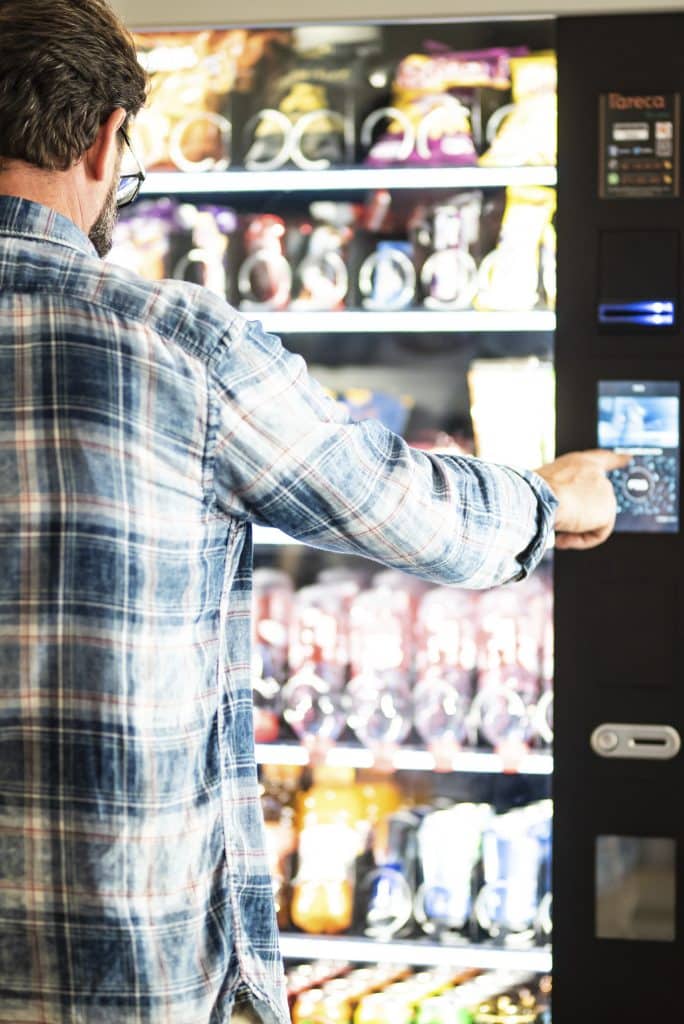
Purchasing bottled water or vending machine drinks at the moment of thirst is an exercise in paying for the most expensive possible distribution channel. Market data indicates that bottled water is often marked up by 2,000% to 3,000% compared to tap water. Utilizing a durable, refillable bottle removes this recurring friction point from the budget entirely.
24. Unutilized Premium Streaming Tiers
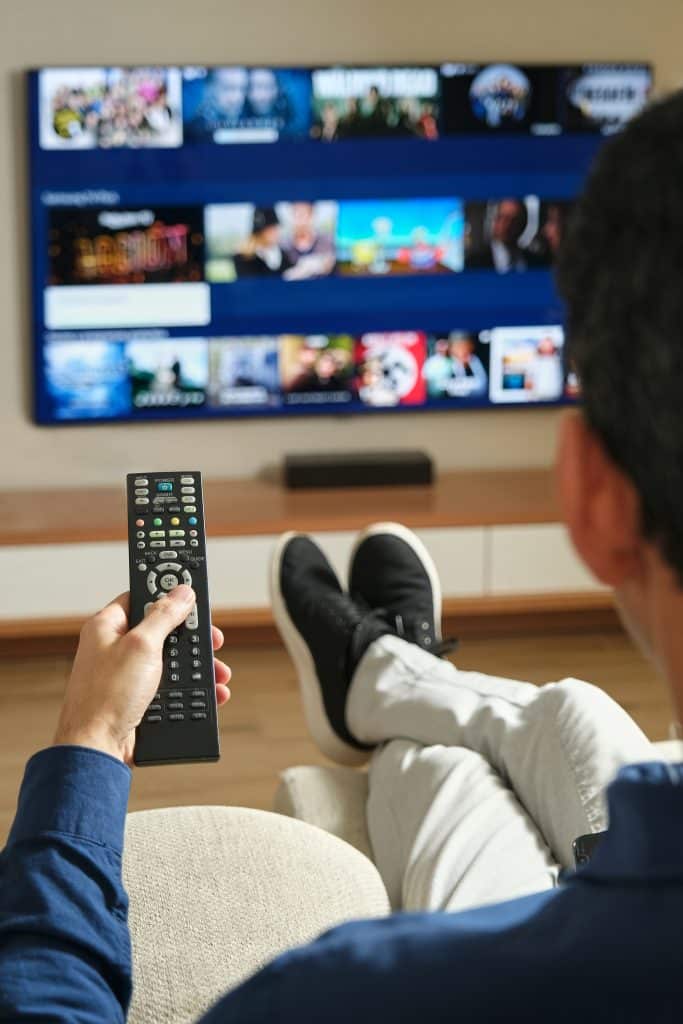
Streaming services frequently use "plan drift" to move users into higher-cost tiers. Households often pay for 4K resolution on devices that only support 1080p, or for four simultaneous screens in a two-person household. A five-minute audit of account settings can identify these technical mismatches.
23. The High-Frequency Grocery Gravity
The "quick trip" for three items is a retail trap designed to maximize impulse buys. Retailers use sophisticated heat-mapping to place high-margin items in the path of "essential" goods. Consolidation—moving to one primary trip per week with a strict list—limits the number of times a consumer enters a high-pressure sales environment.
22. Takeout Delivery and Service Markups
Food delivery apps have introduced a multi-layered fee structure that can inflate the cost of a meal by 40% to 91% over the in-restaurant price. Beyond the delivery fee and tip, many apps charge a service fee and a "small order" fee, while simultaneously marking up the menu prices themselves. Picking up the order directly deletes these layers of middleman costs.

21. Automated Banking Friction
Monthly maintenance fees and out-of-network ATM charges are relics of a pre-digital banking era, yet they continue to drain billions from consumer accounts. The Consumer Financial Protection Bureau (CFPB) has recently cracked down on "junk fees," but the responsibility remains on the consumer to move to no-fee institutions or request waivers for accidental charges.
20. The Legacy Gym Membership
The fitness industry business model is famously predicated on the "breakage" of memberships—people who pay but do not attend. An honest audit of "badge-in" data over the last 90 days is necessary. If the facility has not been utilized, the membership is no longer a health investment; it is a recurring donation to a corporation.

19. Brand-Name Pharmaceutical Parity
Over-the-counter medications are strictly regulated by the FDA, requiring generic versions to have the same active ingredients and efficacy as brand-name counterparts. Consumers often pay a 300% premium for the "familiarity" of a box, despite the chemical composition being identical.
18. Hidden In-App Subscriptions
The modern "dark pattern" in software involves burying subscriptions inside app store settings rather than listing them on a standard credit card statement. These are often labeled with cryptic names, making them difficult to identify during a cursory review of a bank statement.

17. The Extended Warranty Reflex
Retailers push protection plans because they are high-margin products with low claim rates. Many consumers are unaware that their primary credit card often provides automatic extended warranty protection on electronics, rendering the store-bought plan redundant.
16. Aspirational Produce and Food Waste
The National Resources Defense Council (NRDC) estimates that the average American family of four loses $1,500 annually to uneaten food. Much of this is "aspirational produce"—healthy items bought with good intentions but no specific plan for consumption. Implementing an "eat-first" bin in the refrigerator can significantly reduce this waste.

15. Passive Energy Leaks
"Phantom loads"—electronics that draw power even when turned off—can account for up to 10% of a residential electric bill. Simple adjustments, such as using smart power strips or lowering a water heater by five degrees, represent one-time actions that pay recurring dividends.
14. The "Order Tail" at the Register
The "latte factor" is often criticized, but the real drain is the "order tail"—the pastry, the size upgrade, or the bottled water added at the point of sale. These impulse add-ons often cost more than the primary purchase and were not part of the original intent.

13. Discount-Induced Impulse Buys
The psychology of a "flash sale" creates a false sense of urgency. Spending money on a discounted item that was not previously needed is not a saving; it is an expense. Implementing a 24-hour "cooling off" period for all non-essential purchases effectively neutralizes this tactic.
12. Administrative Disorganization Fees
Late fees and interest charges resulting from missed deadlines are pure financial waste. With the ubiquity of autopay and calendar alerts, these fees are entirely preventable. For a first-time offense, a polite request for a waiver is successful in a majority of cases.

11. The Curation Subscription Trap
Meal kits and "mystery box" subscriptions offer convenience and novelty but often at a significant premium over the cost of the individual components. The "audit question" for these services should be: "Would I sign up for this today at the current price?"
10. The Loyalty Surcharge in Insurance
Insurance companies use "price optimization" algorithms to identify customers who are unlikely to shop around, gradually increasing their premiums above market rates. Shopping a policy every 24 months is essential to ensure one is not paying a "loyalty tax" for the same level of coverage.

9. The Underutilized Second Vehicle
The total cost of car ownership—insurance, registration, depreciation, and maintenance—accrues daily regardless of mileage. For households where a second car is driven fewer than 10 times a month, transitioning to a combination of ridesharing and rentals is often mathematically superior.
8. Dormant Storage Units
The self-storage industry is a multibillion-dollar sector built on the postponement of decisions. Many units hold items that are worth less than the annual cost of the rent. A single weekend of liquidation can end this perpetual drain.

7. The Compounding Interest Leak
Credit card interest is a leak that feeds on itself. According to the Federal Reserve, the average credit card interest rate has climbed above 20%. Viewing the specific dollar amount of interest paid each month, rather than just the total balance, is often the psychological catalyst needed for aggressive repayment.
6. The Aggregate Subscription Economy
While a single $12 subscription is ignorable, the "army" of subscriptions—streaming, cloud storage, software, memberships—often totals more than a car payment. Households must view the "Total Subscription Cost" as a single line item to understand its true impact on their savings rate.
5. Chronic Convenience Spending
Convenience spending is a legitimate tool for high-stress periods, but it becomes a drain when "emergency" levels of spending become the baseline. Re-matching convenience levels to the current reality of one’s schedule can reclaim significant capital.
4. The Artificial Upgrade Cycle
The consumer electronics industry relies on psychological obsolescence—the feeling that a perfectly functional device is "old" because a new model exists. Extending the life of a phone, laptop, or car by just one additional year can save a household tens of thousands of dollars over a lifetime.

3. The Square Footage Surcharge
Housing is the largest expense in most budgets, and "housing creep"—paying for extra rooms or storage space for unused items—is the most significant form of drift. While moving is difficult, acknowledging the cost of unused space is the first step toward long-term rightsizing.
2. The Universal Loyalty Tax
This is the meta-pattern of modern spending. Companies price for two audiences: the "acquisition" audience (new customers) and the "inertia" audience (existing customers). To remain in the former category, one must be willing to periodically renegotiate or switch providers for internet, phone, insurance, and banking.

1. The Opportunity Cost of Idle Cash
The quietest drain of all is money that has "no job." Cash sitting in a standard checking account earning 0.01% is actively losing purchasing power to inflation. In a high-interest-rate environment, the difference between a standard savings account and a High-Yield Savings Account (HYSA) or a money market fund can represent hundreds or thousands of dollars in lost earnings annually.
Chronology of the Shift Toward "Dark" Expenses
To understand how these expenses became so prevalent, one must look at the evolution of retail and banking over the last two decades.
- 2000–2010: The rise of automated billing. Direct deposit and autopay were marketed as convenience tools, which they are, but they also reduced the "pain of paying," making small monthly increases harder to notice.
- 2010–2015: The "Uber-fication" of the economy. App-based services introduced convenience premiums that were initially subsidized by venture capital. As these companies moved toward profitability, fees increased, but consumer habits remained fixed.
- 2015–Present: The refinement of "Dark Patterns." User interface design in apps became focused on making it easy to sign up and difficult to cancel, creating a friction-filled exit path for consumers.
Official Industry Responses and Consumer Advocacy
Industry representatives often argue that recurring billing and convenience fees provide "predictability and seamless service" for the consumer. "The subscription model allows for lower entry costs for high-quality software and services," says one industry trade group. "Consumers value the time saved through delivery and automated services."
However, consumer advocacy groups like the Public Interest Research Group (PIRG) offer a different perspective. "We are seeing a trend where companies monetize consumer forgetfulness," a PIRG spokesperson stated. "When the process to cancel a service is significantly more difficult than the process to join, it is no longer about convenience—it is about exploitation."
Broader Economic Impact and Implications
The macro-economic implication of these 27 leaks is a widening gap in wealth accumulation. When $300 a month is lost to "quiet" expenses, the loss is not just the $3,600 per year; it is the compounded growth of that money. Invested at a 7% annual return, $300 a month grows to approximately $156,000 over 20 years.
For the modern consumer, financial freedom is rarely found in a single "big win." Instead, it is reclaimed through the aggregate effect of plugging dozens of small leaks. The "Loyalty Tax" and "Subscription Drift" are patient; they rely on the consumer being too busy or too tired to look. The only effective counter-measure is a radical commitment to fiscal transparency—a systematic audit that treats every dollar as a worker that must be justified. The leaks are survivors of neglect, and as historical data shows, none of them survive the scrutiny of a deliberate audit.