A call to action (CTA) stands as a pivotal element in the success of any digital marketing campaign, serving as the critical bridge between audience engagement and desired business outcomes. The precise formulation and strategic deployment of these prompts can significantly influence whether an audience progresses from passive observation to active participation—be it clicking an advertisement, downloading an informational asset, adding a product to a virtual shopping cart, or subscribing to a service. Conversely, an ill-conceived or unpersuasive CTA risks being overlooked in the constant deluge of digital content, resulting in missed opportunities and diminished campaign efficacy.

This article delves into the comprehensive aspects of social media calls to action and their broader application across the digital landscape. It explores their fundamental definition, dissects the attributes that contribute to their success, and provides a structured methodology for developing compelling CTAs for future campaigns. Furthermore, it incorporates an analysis of various real-world examples, extending beyond social media to include email campaigns and landing pages, underscoring the universal principles of effective CTA design regardless of placement.
Understanding the Core: What Constitutes a Call to Action?
At its essence, a call to action (CTA) is a strategically placed textual or graphical prompt within a marketing communication, meticulously designed to guide a target audience toward a specific, desired action. This action can range widely, from a simple engagement like clicking a link or leaving a social media comment, to more significant steps such as visiting an online store, initiating a free trial, or completing a purchase.
CTAs manifest in diverse forms. While concise phrases such as "Buy Now" or "Download Now" represent typical, direct examples, their potential extends to more elaborate constructions. For instance, a CTA might be phrased as, "Subscribe today so you’ll never miss an update," or "Discover how our solution can transform your business." The versatility of CTAs allows for endless creative possibilities, tailored to the specific context and objective.
Beyond their direct instructional role, effective CTAs play a crucial psychological function by mitigating "decision fatigue" in users. In an information-saturated environment, consumers are often overwhelmed by choices. A well-placed CTA provides clear direction, simplifying the user’s journey and giving purpose to the content they are consuming. Even a two-word phrase can empower users by indicating the logical next step, thereby enhancing user experience and driving engagement. Furthermore, CTAs imbued with a sense of urgency, such as "Limited Time Offer" or "Act Now," have been consistently shown to increase conversion rates by leveraging psychological principles that encourage immediate response. The primary objective remains consistent: to keep potential customers engaged and moving forward within the brand’s digital ecosystem.
While a single, prominently highlighted CTA is a common and often effective strategy, some marketers strategically employ both primary and secondary calls to action. This approach allows for a hierarchical guidance of user behavior, offering a main path while also providing alternative, less committal options for users who may not yet be ready for the primary action.

The Evolution of Digital Engagement and the CTA’s Rising Importance
The digital marketing landscape has undergone a profound transformation since the early days of the internet. Initially, CTAs were rudimentary, often simple "Click Here" buttons on static web pages or banner ads. However, with the advent of Web 2.0, the proliferation of social media platforms, and the increasing sophistication of data analytics, the role of the CTA has become exponentially more critical and nuanced.

In today’s highly competitive digital sphere, merely presenting content is insufficient. Users are constantly bombarded with advertisements and information, leading to phenomena like "banner blindness" and the widespread adoption of ad blockers. Recent statistics indicate that over 22% of internet users employ ad blockers, often citing "too many ads" as a primary reason. This heightened user discernment necessitates CTAs that are not only clear but also compelling, persuasive, and value-driven, cutting through the digital noise to capture attention and inspire action. The evolution reflects a shift from simply telling users what to do, to persuading them why they should do it, and what tangible benefit they will gain.
Crafting High-Converting CTAs: Principles and Best Practices

To combat the challenges of digital saturation and optimize conversions, marketers must employ strategic principles when designing CTAs.
1. Employ Strong Action Verbs and Concise Language:
The foundation of an effective CTA lies in its directness and use of powerful verbs. Due to character limits on many advertising platforms, brevity is not just a preference but a necessity. A strong CTA typically begins with an imperative verb, followed by an adverb or a specific object, or both. For instance, "Buy Now" or "Download this eBook."

Here’s a breakdown of common CTA verbs by their intended purpose, which can be paired with relevant business offerings:
| Most Common Purpose | CTAs |
|---|---|
| E-commerce | Buy, Shop, Order, Reserve, Save, Add to Cart, View |
| SaaS Conversion | Try, Get Started, Subscribe, Sign Up, Explore |
| Non-profit Conversion | Donate, Commit, Volunteer, Adopt, Give, Support |
| Newsletter/Community | Subscribe, Join, Sign Up, Refer, Connect |
| Freebie/Download | Download, Get, Grab, Claim, Access, Unlock |
| General Engagement | Learn More, See More, Discover, Start, Find Out, Check It Out, Click Here, Continue, Swipe Up |
2. Integrate the LIFT Model for Optimal Clarity and Value:
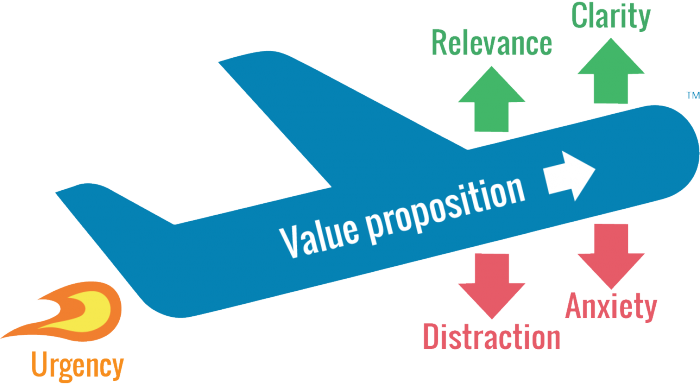
A powerful framework for evaluating CTA effectiveness is the LIFT Model (Landing Page Influence Function for Conversion), which considers six key factors influencing conversion rates: Value Proposition, Relevance, Clarity, Urgency, Anxiety, and Distraction.
- Value Proposition: What unique benefit does the user gain?
- Relevance: How well does the CTA align with the user’s needs or the ad content?
- Clarity: Is the action unambiguous and easy to understand?
- Urgency: Is there a reason to act immediately?
- Anxiety: Are there elements that might deter the user (e.g., security concerns, too much required information)?
- Distraction: Are there too many competing elements on the page?
Applying this to our earlier example, "Download this eBook now":
- Download: The core action, directly relevant.
- This eBook: The specific offer, providing clarity.
- Now: Creates urgency.
- The combined phrase "Download this eBook" inherently conveys a value proposition (access to information).
The surrounding text of the CTA is crucial for:

- Communicating the value proposition: Clearly state what the user will gain.
- Reducing anxiety: Address potential concerns (e.g., "No credit card required").
- Minimizing distractions: Keep the focus on the primary action.
3. Provoke Emotion or Enthusiasm:
For deeper engagement, especially in branding or content marketing, longer, more evocative CTAs can be highly effective. These often incorporate modifiers and sensory words to elicit an emotional response. Examples include:
- "Unleash Your Creative Potential Today!"
- "Join a Community of Innovators."
- "Experience the Difference for Yourself."
- "Transform Your Mornings with Our Guide."
- "Start Your Journey to a Healthier You."
4. Cultivate Uniqueness and Brand Voice:
While established phrases are useful, innovative CTAs can significantly enhance brand recall and engagement. Brands should reflect their mission and unique selling proposition in their CTAs. For example, the phrase "Period Better" by Thinx creatively uses "period" as a verb, aligning perfectly with their product’s purpose and brand identity. This creativity can differentiate a brand in a crowded market.

5. A/B Testing is Non-Negotiable:
No CTA is perfect on its first iteration. Marketers must consistently A/B test different CTA variations (wording, color, placement, size) to identify what resonates most effectively with their target audience. This iterative process of testing and optimization is fundamental to maximizing conversion rates and overall campaign ROI.
Multi-Platform Application: Exemplary CTAs in Practice

Effective CTAs are not confined to a single channel but are strategically adapted across the digital marketing ecosystem.
Social Media CTAs:
Social platforms demand CTAs that are concise and compelling, given the rapid consumption of content.

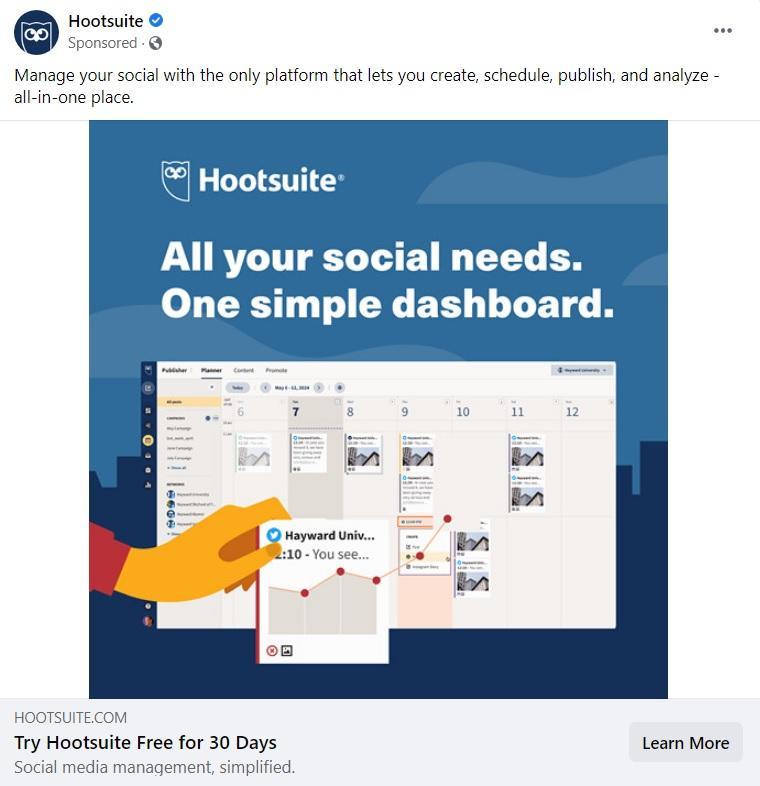
- Facebook Ads: ClickUp, for instance, often uses "Claim Your Lifetime Deal" in retargeting campaigns, combining urgency with a strong value proposition. Shaw Academy employs multiple CTAs like "Enroll Now!" and "Limited Spots!" alongside urgent visual cues to create a sense of scarcity. Babbel leverages social proof ("over 500,000 5-star reviews") before offering a clear CTA like "Get 50% Off." Hootsuite maintains a direct approach with "Learn More," suitable for informational or top-of-funnel content.
- Instagram Ads: Headspace’s "Snuggle up to Headspace" exemplifies a custom, emotional CTA that personalizes the brand experience. Elementor’s event ads use "Register Now" with clear event details, ensuring immediate action for interested users. Nøie Skincare uses "Shop Now" but supports it with compelling ad copy that focuses on the product experience rather than just the transaction. VAI Course’s "Discover Remote Opportunities" is clear and benefit-oriented.
Email Marketing CTAs:
Emails allow for more detailed context, often supporting multiple CTAs.
- Black Illustrations effectively uses multiple CTAs within a longer email, including hyperlinked text, allowing users to choose their path based on their level of interest. This strategy caters to varying engagement levels.
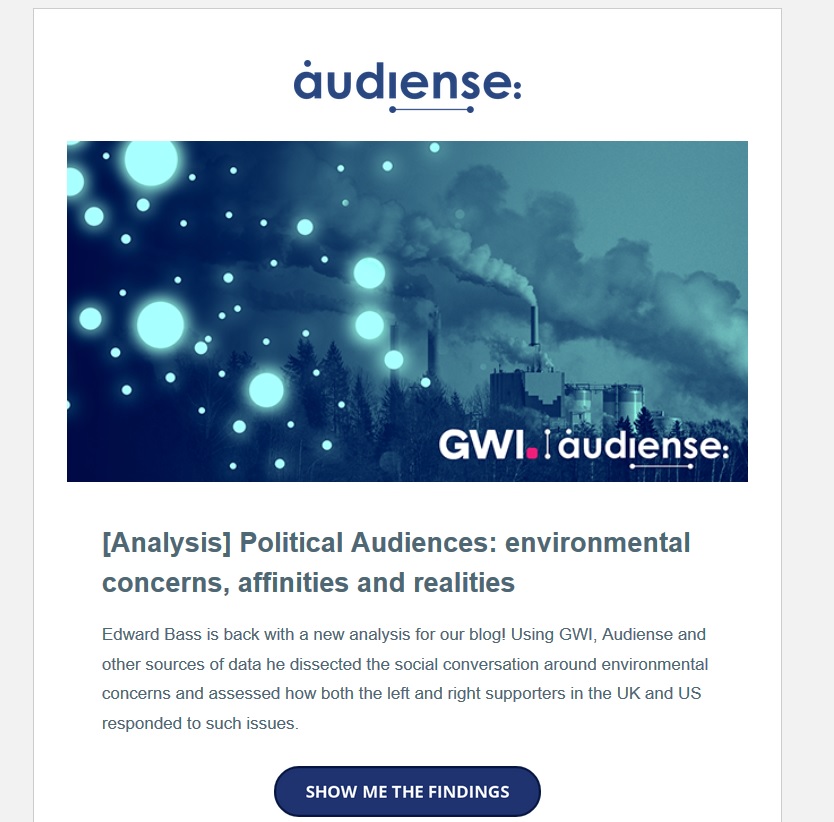
- Audiense employs longer, user-centric CTAs like "Show me the findings" or "Take me to…" which empower the user and clearly articulate the immediate benefit of clicking.
Landing Page CTAs:
Landing pages are conversion-focused and require CTAs that are unambiguous and visually prominent.

- Tim Ferriss’s minimalist email sign-up page uses a simple "Sign Up" button, relying on the overall value proposition of his content to drive action, free from distractions.
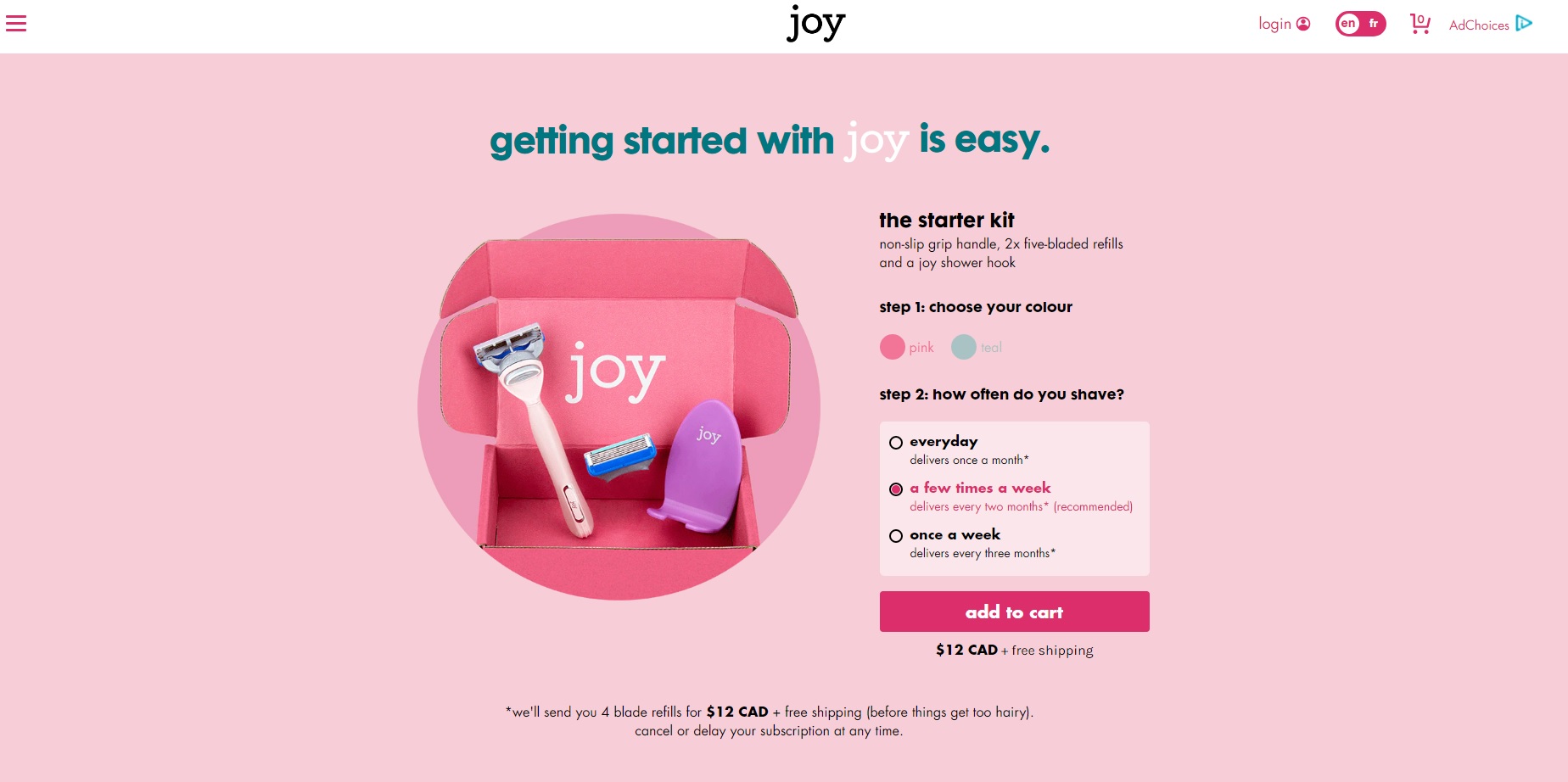
- Joy (a razor subscription service) uses a bold, contrasting "Get Started" button that stands out on the page, making the next step undeniable.
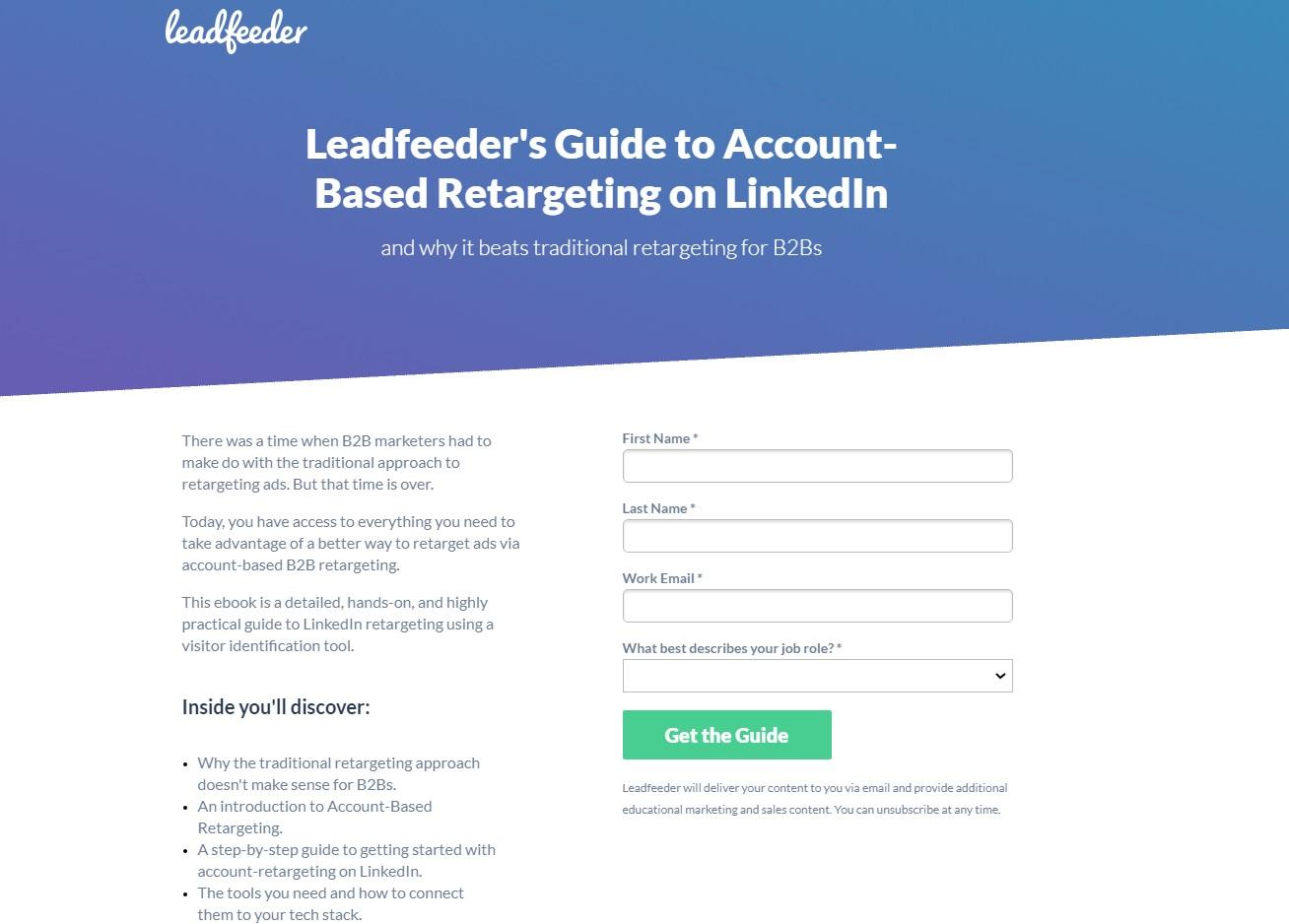
- Leadfeeder’s lead-generation landing page for an ebook features a clear "Get the Guide" CTA, positioned after a concise summary and a brief form, streamlining the conversion process.
Website CTAs:
Website CTAs guide visitors through the site, aligning with different stages of the customer journey.
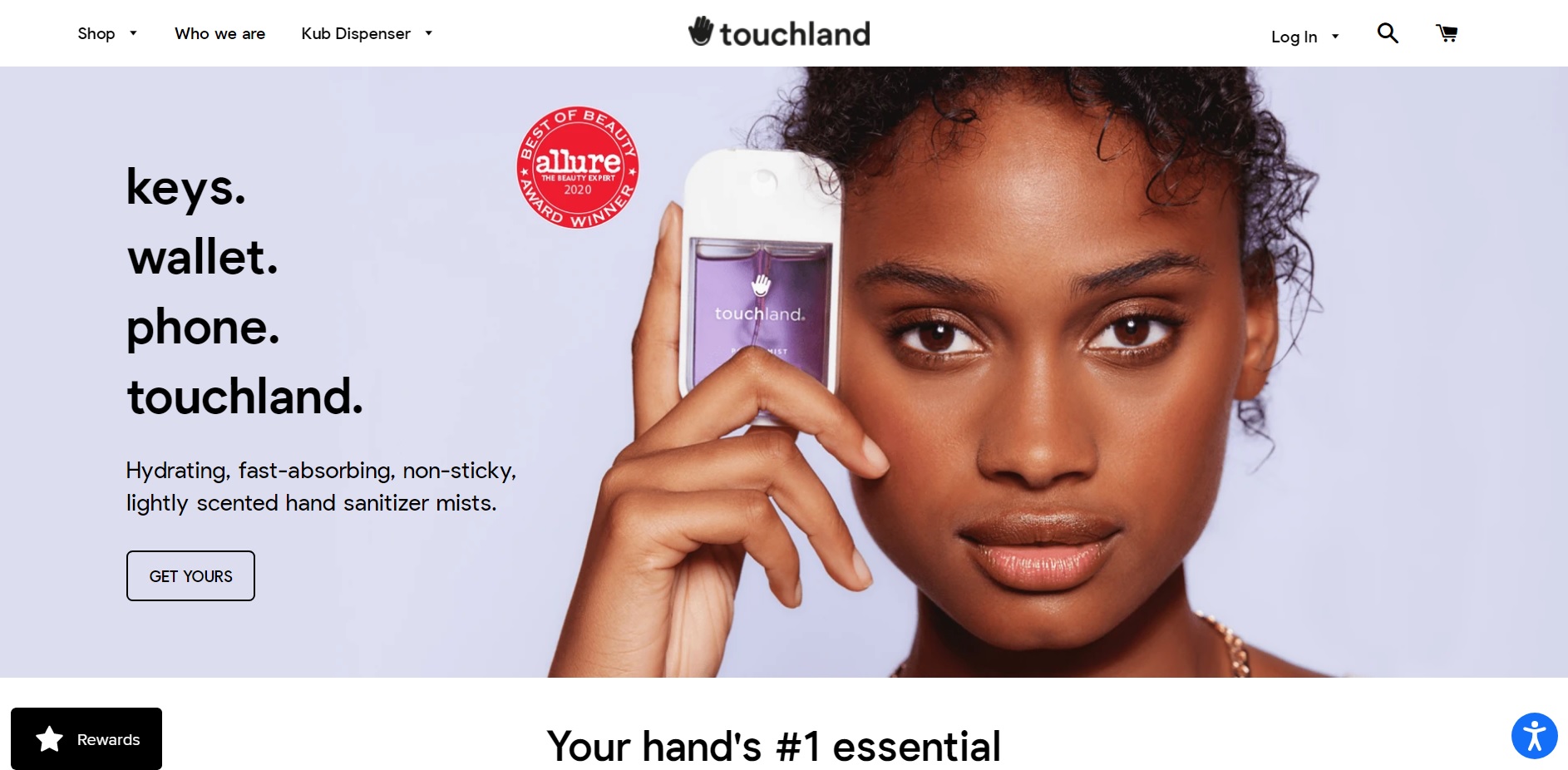
- Touchland uses "Shop Now" effectively within a narrative context ("keys, wallet, phone, Touchland"), integrating the product into a familiar user scenario.
- Airbnb leverages aspirational imagery and CTAs like "Explore outdoor stays" to inspire travel, adapting to market conditions (e.g., COVID-19 restrictions encouraging outdoor activities).
- Smartlook places a prominent "Start Your Free Trial" CTA in its hero section, aligning with website best practices to capture attention immediately.
- Ecom World features "Register Now" prominently for its event, providing all essential information (what, when, where) above the fold to facilitate quick decision-making.
The Indispensable Power of CTA Buttons
While plain-text CTAs have their place, clickable CTA buttons consistently demonstrate superior performance in driving conversions. Studies repeatedly affirm their efficacy. For instance, a Protocol80 study found that adding a CTA button to article templates increased conversions by 83% and boosted e-commerce conversions by 22%. Similarly, Copyblogger reported a 45% increase in conversion rates when their CTAs appeared as buttons rather than plain text.
Facebook, recognizing this trend, has integrated native CTA buttons into its ad interface, offering options like "Shop Now," "Learn More," "Download," or "Send Message." These buttons serve to reinforce the ad’s message and simplify the user’s path to action. Marketers should always incorporate these buttons, in addition to textual CTAs within ad copy, as users are instinctively drawn to clickable elements.

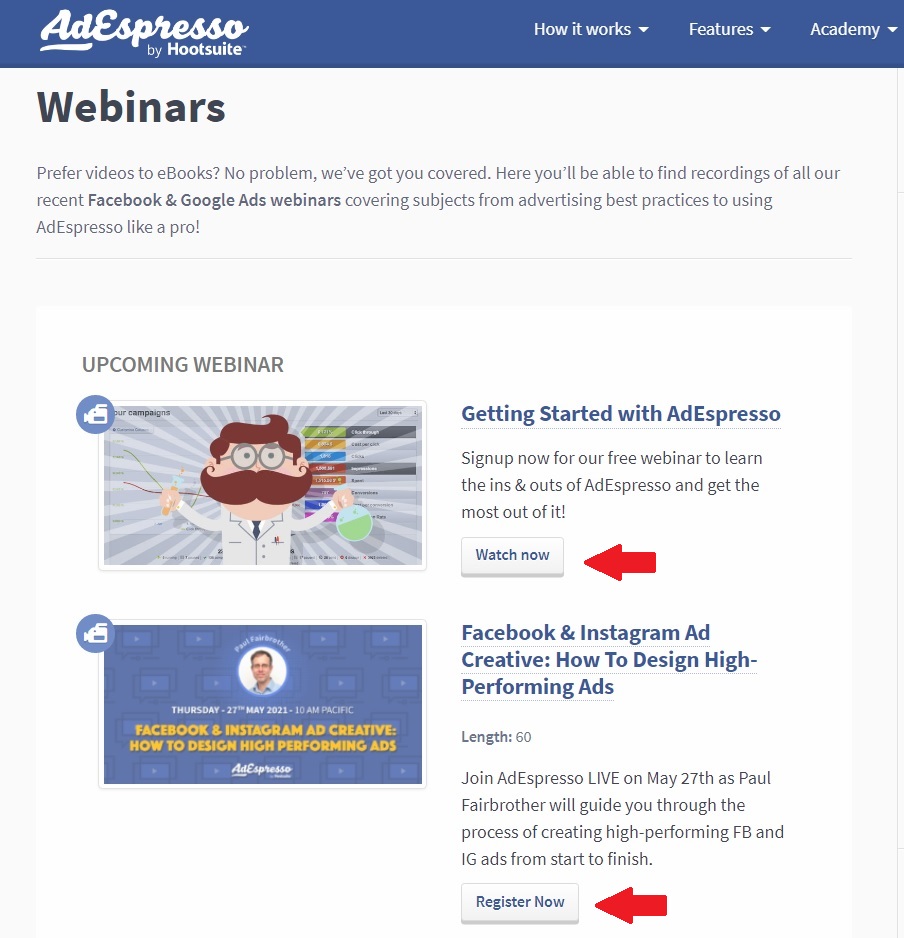
Crucially, the choice of CTA button profoundly impacts campaign cost-effectiveness. AdEspresso’s own $1000 experiment testing various Facebook Ad CTA buttons revealed significant differences: the top-performing "Download" button achieved 49 conversions at $5.10 each, while an ad with "no button at all" managed only 20 conversions at $12.50 each. This stark contrast highlights that the right CTA can more than halve the cost per conversion, making A/B testing an absolute necessity. Tools like AdEspresso’s split test engine and automatic optimization features can automate this process, significantly improving campaign efficiency.
For websites and landing pages, CTA buttons should meet specific criteria:
- Visual Prominence: They must stand out clearly from the surrounding content through color, size, and whitespace.
- Clear Messaging: The text on the button should unambiguously state the action and potential benefit.
- Strategic Placement: Ideally, they should be "above the fold" or at logical points within the content flow.
- Mobile Responsiveness: Buttons must be easily tappable on all device types.
Platforms like Unbounce enable extensive A/B testing on landing page CTAs, allowing marketers to experiment with different copy, placements, and button designs to identify optimal configurations.
Broader Implications and Future Trajectories
The sophisticated deployment of calls to action is more than a mere marketing tactic; it is a fundamental driver of business growth, customer acquisition, and sustained brand loyalty in the digital age. By meticulously crafting CTAs that are clear, valuable, urgent, and emotionally resonant, businesses can significantly enhance their conversion funnels and maximize their return on investment across all digital channels.
Looking ahead, the evolution of CTAs is likely to continue, integrating with emerging technologies. We can anticipate advancements such as AI-driven CTA recommendations that personalize prompts based on individual user behavior, the rise of voice search optimized CTAs for smart assistants, and increasingly interactive CTAs embedded within content (e.g., quizzes, polls, configurators) that offer a richer user experience.
Ultimately, the call to action remains an indispensable cornerstone of effective digital marketing, bridging the gap between passive consumption and active engagement, and guiding users toward the meaningful interactions that fuel business success. Mastering the art and science of the CTA is not just a competitive advantage; it is a prerequisite for thriving in the dynamic digital landscape.