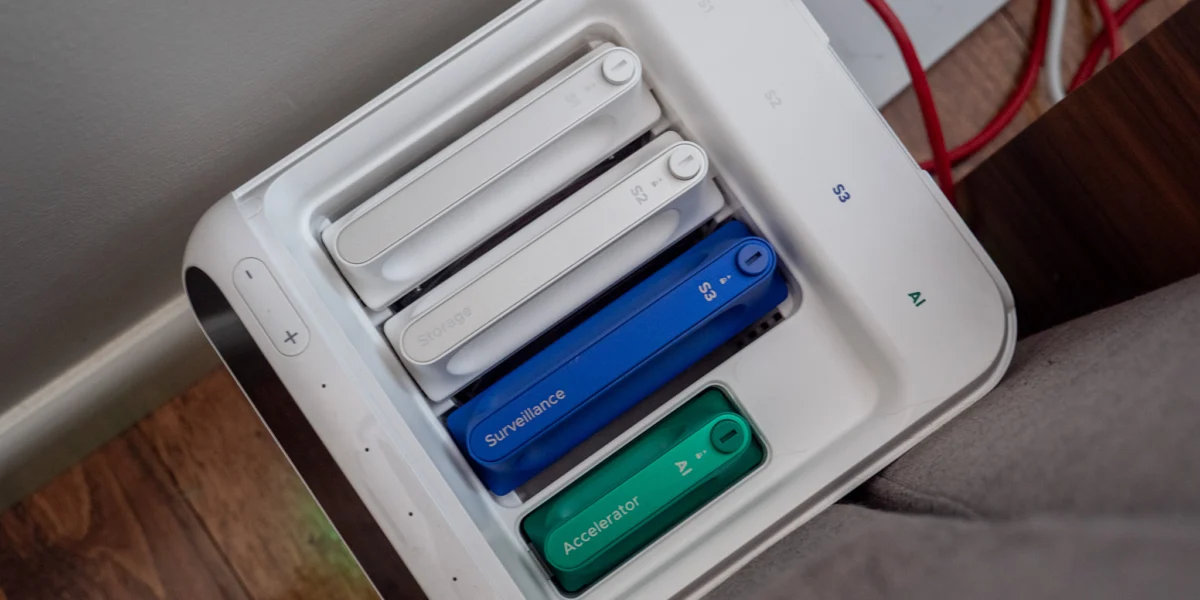
In an era where digital consumption is at an all-time high, the average consumer generates terabytes of data across multiple devices. Between high-resolution smartphone photography, 4K video editing, and the proliferation of subscription-based cloud services, the traditional method of managing files via scattered external hard drives has become increasingly inefficient and costly. Network Attached Storage (NAS) systems have emerged as the industry standard for private, localized data management. A current market trend sees UGREEN, a prominent player in the consumer electronics space, positioning its NAS lineup to bridge the gap between enterprise-grade complexity and home-user accessibility. With a series of strategic discounts now available on Amazon, these devices are becoming a focal point for those looking to migrate away from public cloud dependence.
The Evolution of Consumer Data Storage
The concept of Network Attached Storage is not new, but for decades, it remained the domain of IT professionals and enterprise environments. A NAS is essentially a dedicated file-level computer server that connects to a network, providing centralized data access to authorized users and heterogeneous client devices.
Historically, the barrier to entry for a functional NAS was twofold: price and technical configuration. Building a home server required a degree of Linux proficiency, hardware knowledge, and a significant financial investment. However, over the past five years, manufacturers have pivoted toward "appliance-style" NAS units. By utilizing proprietary operating systems with graphical user interfaces (GUIs), companies like UGREEN have streamlined the installation process. Users can now set up a robust RAID (Redundant Array of Independent Disks) configuration—which ensures data integrity in the event of a drive failure—in a matter of minutes rather than hours.
Analyzing the UGREEN NAS Product Portfolio
UGREEN currently segments its storage solutions into two distinct categories: the DH (Data Hub) series, designed for residential use, and the DXP (Data Xpert) series, engineered for professional and power-user applications.

The DH series is optimized for ease of use. These units act primarily as private cloud servers, allowing families or individuals to back up mobile devices, synchronize desktop folders, and host personal media libraries. By moving data from platforms like Google Photos or iCloud to a private NAS, users eliminate recurring monthly subscription fees—a significant long-term financial incentive given the rising costs of cloud tier upgrades.
Conversely, the DXP series introduces advanced computational capabilities. These units feature more powerful processors and expanded RAM, enabling them to handle containerized applications via platforms like Docker. This is a critical development for the "prosumer" market. A user with a DXP unit is not merely storing files; they are running a decentralized infrastructure. This includes hosting personal VPNs, running smart home controllers like Home Assistant, or deploying AdGuard/Pi-Hole to scrub network traffic of advertisements and trackers at the router level.
Market Chronology and Current Promotions
The surge in popularity for UGREEN’s NAS solutions coincides with a broader shift in consumer behavior regarding data privacy. Following several high-profile security breaches at major cloud providers and the increasing frequency of data throttling on free-tier services, interest in "on-premise" solutions has reached a five-year peak.
UGREEN’s current Amazon initiative includes price reductions ranging from 10% to 15% across several key models. The following table highlights the current promotional landscape:
| Model | Classification | Discount |
|---|---|---|
| UGREEN NAS DH2300 2-Bay | Entry-Level/Home | 11% |
| UGREEN NAS DH4300 Plus 4-Bay | Mid-Range/Home Office | 15% |
| UGREEN NAS DXP2800 2-Bay | Professional/Power User | 14% |
| UGREEN NAS DXP4800 Plus 4-Bay | Professional/Power User | 15% |
| UGREEN NAS DXP6800 Plus 6-Bay | High-Performance/Small Biz | 10% |
These discounts represent a strategic push to capture market share from established NAS incumbents such as Synology and QNAP. By providing hardware that competes on price-to-performance metrics, UGREEN is successfully lowering the barrier for users who previously viewed NAS technology as an unattainable luxury.

Technical Implications: Privacy and Ownership
The primary driver for the adoption of NAS technology is the concept of data sovereignty. When a user stores photos on a public cloud, the service provider acts as a custodian of that data. While this provides convenience, it comes at the cost of total control. A local NAS ensures that data remains within the physical confines of the user’s home or office.
From a technical standpoint, the UGREEN ecosystem leverages a customized operating system that prioritizes ease of discovery. When a unit is connected to a local area network (LAN), the accompanying software automatically detects the device, simplifying the handshake process that was once a major hurdle for non-technical users.
Furthermore, the integration of AI-powered features is becoming a hallmark of the modern NAS. In the DXP series, local processors can perform facial recognition and object detection on photo libraries without sending that metadata to a third-party server. This is a significant improvement in privacy, as the computational work is performed locally, ensuring that private images are never processed in an external data center.
Broader Industry Impact and Future Outlook
The industry is currently witnessing a transition where the home office is becoming a miniature data center. Analysts suggest that the "Internet of Things" (IoT) explosion has created a vacuum that NAS devices are uniquely suited to fill. With smart security cameras, doorbell feeds, and IoT sensors all generating data, the need for a central repository is no longer optional—it is a necessity.
The implications for the cloud industry are nuanced. While major cloud providers are unlikely to lose enterprise clients to private NAS units, they are seeing a decline in individual "consumer-grade" cloud storage demand. Users are increasingly choosing to pay for a one-time hardware purchase rather than a permanent subscription tax.

Industry reactions to this shift have been mixed. While proponents of digital autonomy praise the move toward self-hosted servers, critics point out that a NAS requires the user to take responsibility for their own hardware maintenance and data redundancy. Unlike a cloud provider that manages backups in multiple geographic regions, a standard two-bay NAS requires the user to properly configure RAID levels to protect against drive failure. If a user fails to maintain their hardware, the risk of total data loss remains a significant concern.
Concluding Analysis
The accessibility of UGREEN’s NAS lineup signifies a maturation of the storage market. By focusing on modularity and user-friendly interfaces, the company has managed to demystify complex network architecture. Whether the objective is simply to free up space on a smartphone or to manage a sophisticated private server environment, the current availability of these units at reduced price points offers a tangible entry point for the average consumer.
As data privacy continues to dominate the public discourse, the ability to control one’s own digital footprint will likely remain a key competitive advantage for hardware manufacturers. For those currently juggling external drives or contemplating a jump into the world of private cloud storage, the combination of professional-grade hardware and simplified management software suggests that the era of the "home data center" is finally within reach for the general public. As these systems continue to evolve, the distinction between a professional IT environment and a standard home setup will continue to blur, placing more power and responsibility into the hands of the end-user.