In an era dominated by generative artificial intelligence and a relentless torrent of machine-produced digital noise, social media managers and corporate communications teams face a mounting challenge: maintaining audience trust without burning out internal creative resources. Recent data from the Pew Research Center indicates that nearly 40 percent of U.S. adults regularly consume news and content via platforms like Facebook and YouTube. As digital feeds swell with automated copy, high-volume imagery, and repetitive posts, modern audiences are increasingly overwhelmed. This surge in volume has elevated content curation from a secondary social media tactic to an essential editorial strategy for cutting through the digital clutter.
Understanding Content Curation and Its Modern Relevance

Content curation is the deliberate practice of discovering, organizing, and sharing high-value material created by external sources, paired with an individual or brand’s distinct editorial perspective. Unlike content creation, which involves producing original assets from scratch, curation positions a brand as a trusted filter or museum curator of the internet. Rather than simply reposting arbitrary links, an effective curator provides crucial context, explaining to their followers why a specific article, industry report, or expert quote matters.
The necessity of this editorial filter has grown exponentially over recent years. As automated tools lower the barrier to publishing, feeds become saturated with generic content. Brands that successfully curate external insights establish themselves as reliable authorities, separating signal from noise. Industry experts note that audiences gravitate toward accounts that save them time by highlighting genuinely insightful developments rather than participating in the endless race for pure volume.
Contrasting Curation with Creation: Efficiency and Strategy

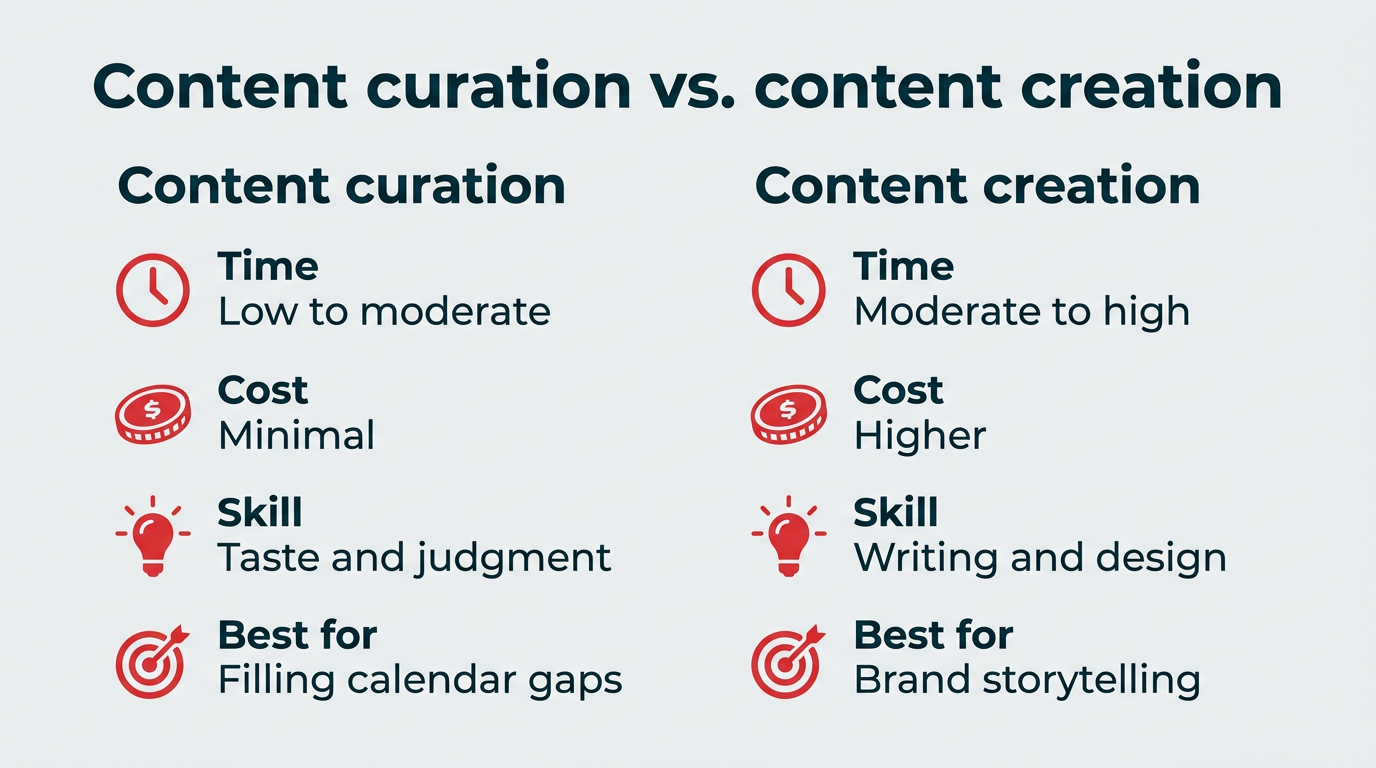
A balanced social media strategy relies on a symbiotic relationship between content curation and content creation. While original production remains vital for distinct storytelling, product marketing, and proprietary research, it demands significant investments in time, specialized skills, and financial resources—ranging from copywriting to graphic design and video production.
Conversely, content curation requires minimal financial investment and moderate time commitments, relying instead on taste, judgment, and contextual synthesis. Organizations utilize curation to fill gaps in their publishing calendars, maintain consistent audience engagement, and signal active participation in broader industry conversations. By integrating both approaches, marketing teams maximize their budgetary efficiency while preserving resources for high-impact original campaigns.
The Five Distinct Categories of Curation
Content curation encompasses several distinct approaches, each serving a specific strategic purpose depending on the format and the depth of commentary required.
Aggregation involves gathering the finest material on a single topic into a unified destination, such as a weekly roundup of industry links or a visual carousel highlighting essential updates.
Distillation simplifies complex, dense materials into easily digestible formats, such as condensing a 60-page research paper into a graphic featuring four critical statistics.
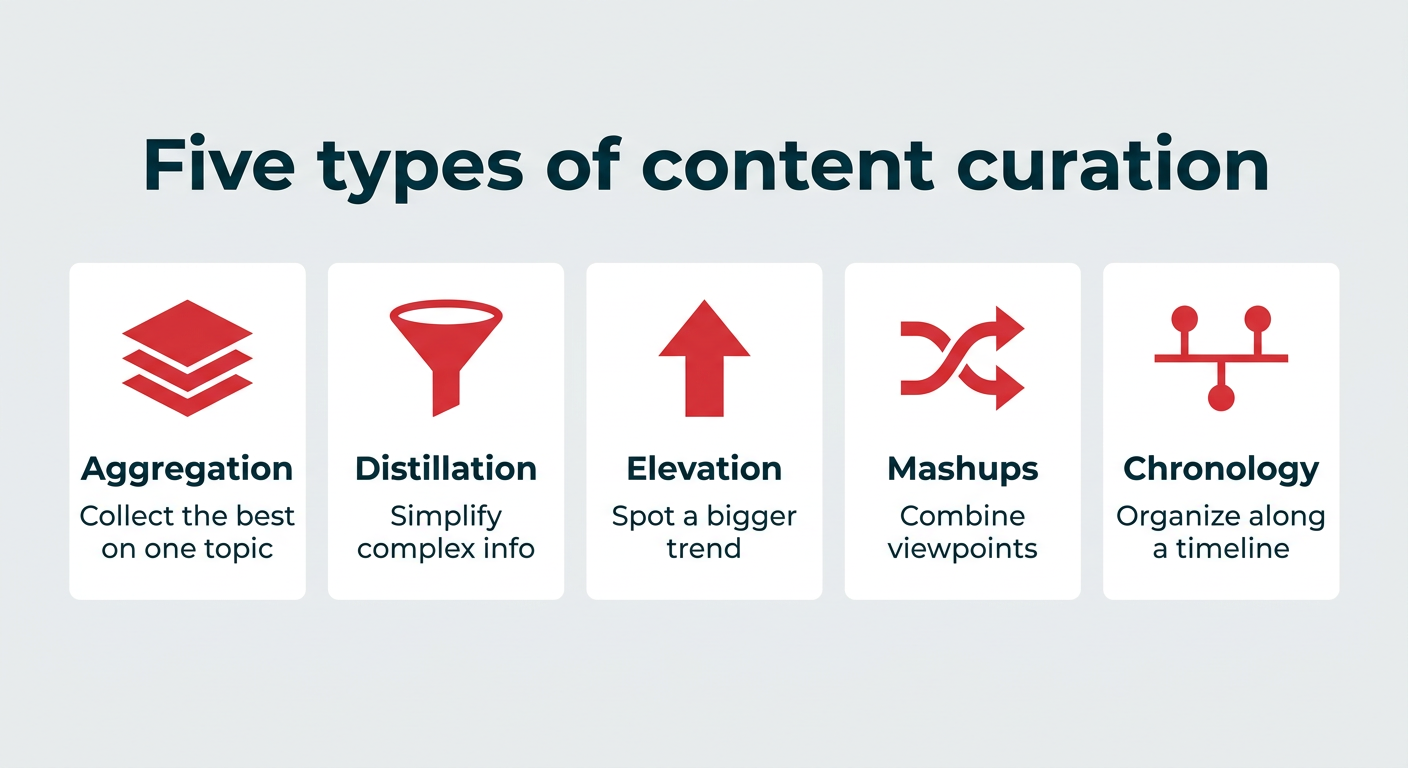
Elevation represents a more sophisticated editorial approach, where a brand identifies emerging patterns across multiple small discussions, names the broader trend, and shares supporting evidence.
Mashups combine contrasting or complementary viewpoints on a single subject, such as an expert panel addressing a singular industry challenge.
Finally, chronology organizes content along a timeline to illustrate the evolution of a platform, technology, or regulatory environment over a specific period.

Strategic Benefits for Modern Marketing Teams
The integration of curated material into a corporate social media strategy yields measurable advantages across community growth, operational efficiency, and brand positioning.
First, curation offers substantial time and budgetary savings. Producing original multimedia assets requires coordinated cycles of ideation, writing, and design. Sharing a verified, high-value industry resource takes minutes, allowing lean marketing teams to maintain an active daily presence without compromising quality.

Second, curation serves as a powerful networking tool. When organizations highlight external creators, tagging them and acknowledging their contributions, they foster professional relationships without transactional expectations. This approach builds community goodwill and opens pathways for collaborative conversations.
Third, relying solely on a brand’s own voice can inadvertently create an echo chamber. Curating diverse perspectives, respectful debates, and alternative industry insights diversifies the content calendar, keeping audiences intellectually engaged and open to broader dialogues.
Fourth, user-generated content (UGC) acts as a powerful catalyst for community engagement. Amplifying content created by loyal followers or customers validates those individuals, demonstrates corporate gratitude, and provides authentic social proof that resonates with prospective clients.

Finally, strategic curation reinforces thought leadership. By consistently surfacing the most relevant and forward-thinking research in a specific sector, a brand effectively demonstrates comprehensive industry knowledge through action rather than self-promotion.
A Seven-Step Workflow for Effective Curation
Executing a successful curation strategy requires a structured, repeatable framework rather than reactive, last-minute sharing.
Step one involves defining core content pillars and understanding the target audience. Brands must establish three to five overarching themes that govern their messaging, ensuring that any shared material strictly aligns with these parameters. Furthermore, curators must evaluate prospective shares against buyer personas to guarantee relevance and utility.
Step two establishes a concrete content mix ratio. While historical rules of thumb like the 70/20/10 model provide a baseline—allocating 70 percent to proven material, 20 percent to experimental ideas, and 10 percent to high-risk concepts—many modern brands target a balanced 40 to 60 percent split between curated and original posts. This ratio must be continuously evaluated against performance analytics.
Step three focuses on sourcing high-quality inputs. Comprehensive monitoring requires a curated list of industry publications, analyst reports, RSS feeds, and respected professional accounts across multiple platforms, including LinkedIn, YouTube, and specialized forums. Social listening and insights tools help teams identify trending conversations in real-time.

Step four requires adding an original editorial perspective. Captions should articulate why the audience should care, utilizing formulas that ask thought-provoking questions, highlight specific data points, or provide actionable takeaways.
Step five mandates proper attribution. Professional ethics and legal standards require that all curated posts clearly credit, tag, and link to the original creators, avoiding any implication that external work originated internally.
Step six emphasizes consistent scheduling. Utilizing centralized social management platforms allows communication teams to queue curated assets alongside original campaigns, preventing calendar gaps and ensuring a steady flow of communication.

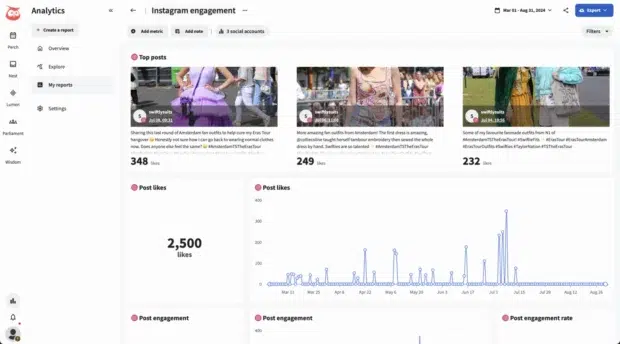
Step seven involves rigorous performance tracking and refinement. Marketers must monitor metrics such as referral traffic, click-through rates, and audience engagement specific to curated posts, adjusting their sources and publishing schedules based on empirical data rather than intuition.
Implications of Artificial Intelligence on Curation
As artificial intelligence tools become deeply embedded in digital marketing infrastructure, their primary impact lies in accelerating the mechanical aspects of curation—such as content discovery, sentiment clustering, and first-pass drafting. However, the critical judgment required to determine what deserves an audience’s attention remains an inherently human responsibility. Organizations must leverage AI to manage data volume while keeping taste, contextual framing, and ethical attribution firmly under human control.
Avoiding Common Curation Pitfalls
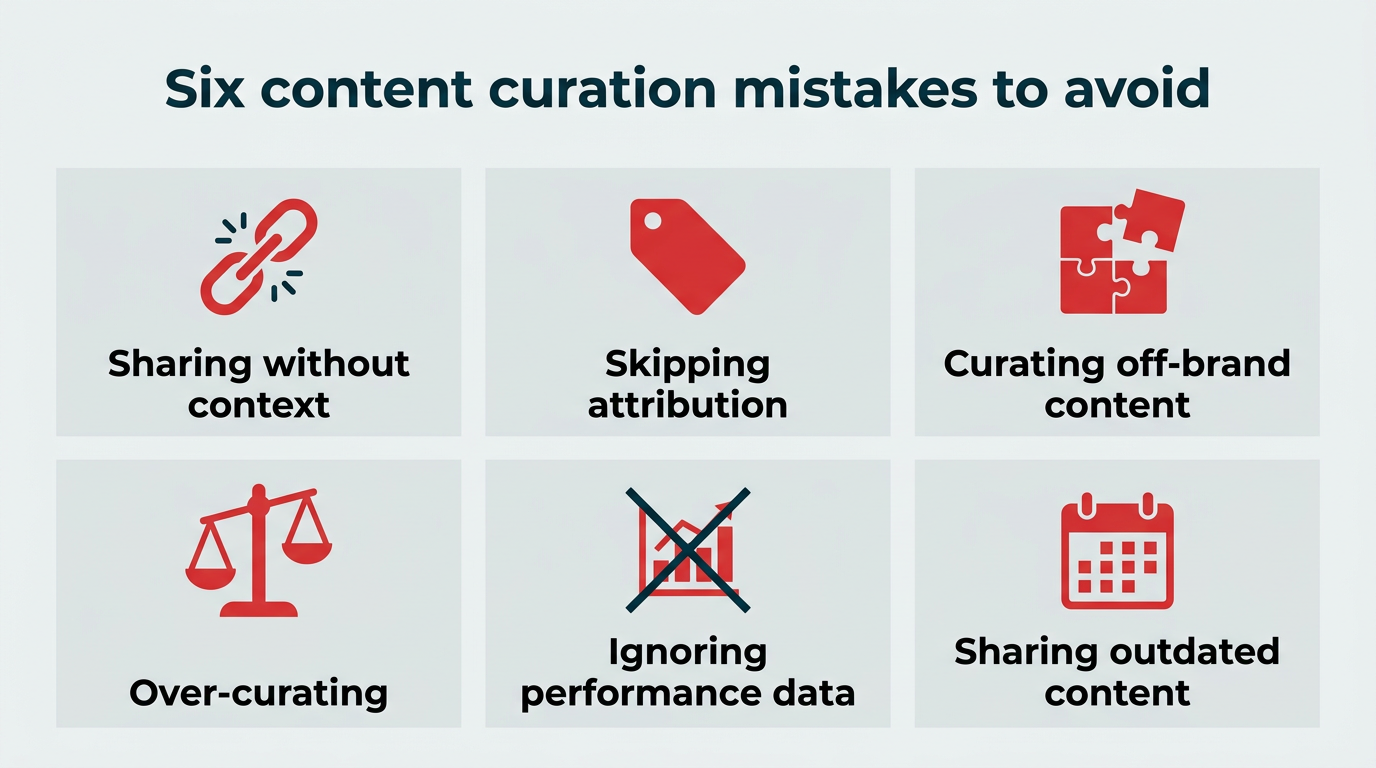
Despite its operational efficiency, content curation carries inherent risks when executed improperly. Common pitfalls include failing to add original commentary, neglecting proper attribution or crediting sources inaccurately, sharing content that misaligns with established brand pillars, over-reliance on automated feeds without human oversight, ignoring engagement metrics, and posting infrequently, which diminishes the compounding benefits of an active digital presence.
Conclusion and Strategic Outlook

Content curation has evolved into an indispensable discipline for brands navigating an increasingly crowded digital ecosystem. By establishing clear content pillars, maintaining rigorous ethical standards in attribution, combining AI-driven discovery with human editorial judgment, and integrating curation seamlessly into a centralized publishing calendar, organizations can build lasting authority, deepen audience engagement, and optimize their overall marketing efficiency.