In an era where the global social media audience has surpassed 5.75 billion users and individuals spend an average of two hours and 21 minutes daily across various platforms, maintaining a robust digital presence is no longer optional for brands—it is an operational necessity. To keep pace, most modern enterprises and creators maintain active profiles on five or more social networks. However, managing this expansive digital footprint introduces a profound logistical challenge: how to scale content production without overwhelming lean marketing teams or alienating audiences with repetitive, robotic updates.
Enter cross-posting, the practice of distributing similar content across multiple social channels to save time and resources. While the strategy offers an undeniable efficiency boost, improper execution can damage brand credibility, trigger algorithmic penalties, and alienate followers who consume content across multiple networks. Industry experts emphasize that successful cross-posting relies not on identical replication, but on thoughtful adaptation.

The Mechanics of Cross-Posting Versus Content Repurposing
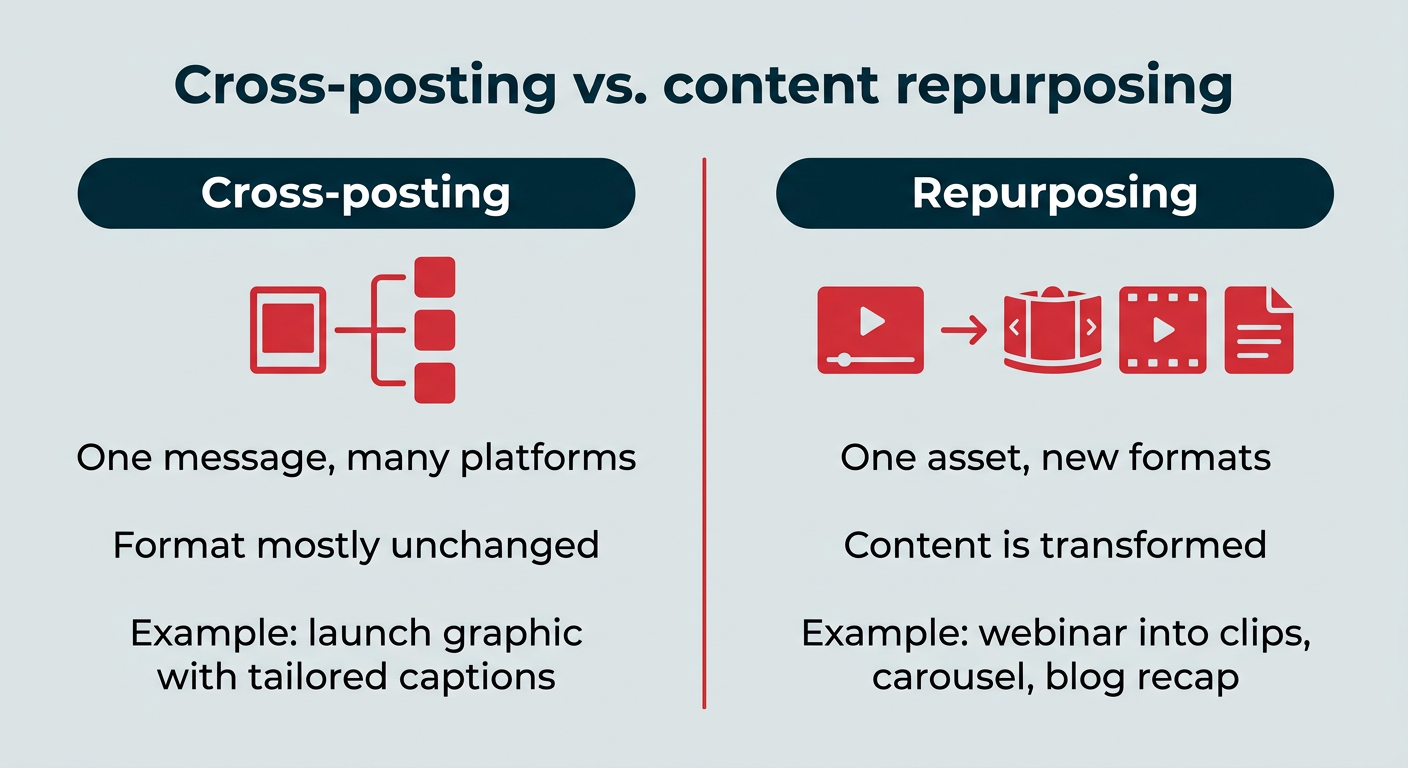
A common pitfall among digital marketers is using the terms "cross-posting" and "content repurposing" interchangeably. While both strategies aim to maximize the lifespan and reach of marketing assets, they serve fundamentally different operational functions.
Cross-posting involves taking a single core message and adapting it across multiple platforms while keeping the primary format largely intact. For example, publishing a product-launch graphic simultaneously on Instagram, Facebook, and LinkedIn—accompanied by captions specifically tailored to the unique tone and character limits of each platform—constitutes effective cross-posting.

In contrast, content repurposing transforms an asset into an entirely new format for a distinct strategic objective. Turning a single long-form webinar recording into six vertical short-form video clips, a detailed document carousel, and an exhaustive blog post recap represents true content repurposing. While strong, comprehensive content calendars utilize both techniques, cross-posting remains the premier method for maintaining a continuous, synchronized multi-platform presence without multiplying production workloads.
The Strategic Benefits and Operational Risks
The primary advantage of cross-posting is maximized output. By leveraging a single core asset across diverse networks, marketing teams can sustain brand visibility without exponentially increasing content creation overheads. This approach streamlines content calendars, ensures that all social channels remain consistently updated, and allows brands to meet audiences wherever they happen to spend their digital downtime. Furthermore, modern AI-assisted management tools have streamlined the process, enabling marketers to draft platform-specific variations of a single core post in seconds.
Despite these advantages, cross-posting carries significant risks when executed carelessly. The most frequent failure point is skipping the adaptation phase. Publishing identical text, media formats, and hashtags across networks with vastly different cultural norms often signals a lack of genuine engagement. For instance, instructing Facebook users to "retweet" a post or including broken, platform-specific handle tags exposes an automated, lazy workflow.
Beyond alienating human followers, careless cross-posting can violate platform policies. Major networks actively monitor for inorganic behavior. X’s platform manipulation and spam policy explicitly warns users against cross-posting duplicate content to the same trending topics or hashtags, noting that repeat violations can result in reduced distribution or outright account suspension.
Building a Repeatable Cross-Posting Strategy
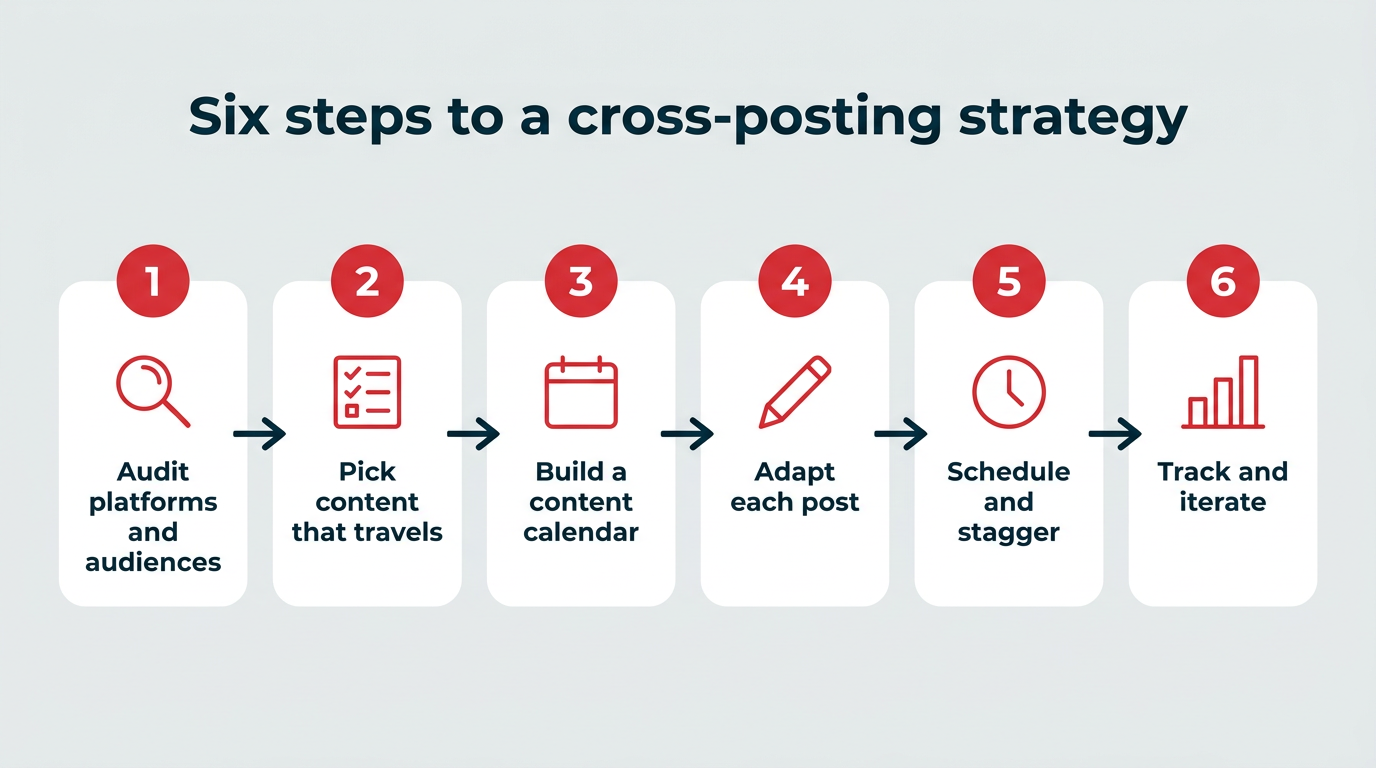
To capture the efficiency gains of cross-posting while mitigating its risks, organizations must implement a structured, six-step strategic framework:
- Conduct a Comprehensive Channel Audit: Document every active profile, analyze follower demographics, and measure audience overlap between channels. High audience overlap demands greater variation between cross-posted versions to prevent user fatigue.
- Identify Viable Content Types: Determine which assets translate well across networks. Evergreen educational content, brand announcements, standalone visual graphics, recruitment notices, and campaign messaging typically cross-post cleanly because their value is not tied to a single platform’s unique culture. Conversely, platform-native trends, audio-driven short-form video formats, and time-sensitive community replies should remain restricted to their original networks.
- Establish a Cross-Posting Calendar: Map each core asset to its intended destination channels, and assign staggered publication times. Utilizing a centralized content grid helps marketing teams spot duplication issues before material goes live.
- Tailor Copy and Captions: Rewrite text variations to respect platform boundaries. While X restricts basic accounts to 280 characters, Facebook accommodates up to 63,206 characters, and Instagram supports 2,200. Captions must reflect these constraints while adopting the distinct linguistic style of each community.
- Optimize Visual Assets and Technical Specs: Ensure images and videos conform to native layout requirements. For example, cropping a vertical 9:16 TikTok video into a square feed post often cuts off crucial visual framing. Additionally, marketers should export clean files directly from editing suites rather than uploading videos bearing third-party watermarks, which algorithmic systems routinely deprioritize.
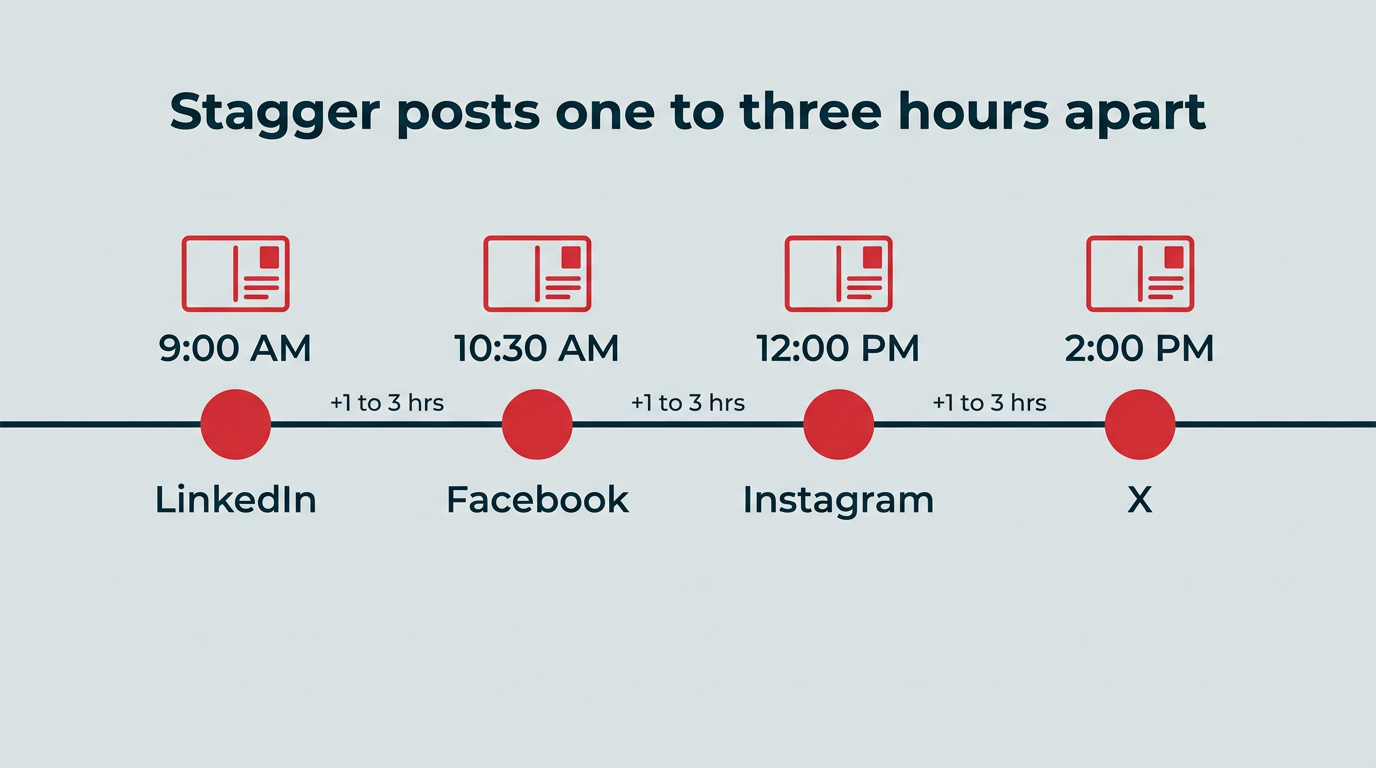
- Stagger Publication Times: Publishing identical messages across every channel down to the exact minute is a definitive indicator of unedited automation. Staggering posts by one to three hours ensures that multi-platform followers do not encounter duplicate messaging simultaneously, while also allowing content to hit each network during its distinct peak engagement window.
Platform-by-Platform Specifications
Navigating the nuances of cross-posting requires strict adherence to technical and cultural guidelines across major digital networks:
- Instagram: Supports captions up to 2,200 characters with an optimal image dimension of 1080 x 1350 pixels (4:5 aspect ratio). Hashtag usage should be focused and relevant (3 to 5 tags), and links within captions remain unclickable. The audience heavily skews younger and visual-first.
- Facebook: Accommodates extensive text up to 63,206 characters and displays rich link previews cleanly. Image sizing of 1200 x 630 pixels performs best. The platform features a broad demographic range and serves as a strong channel for local community engagement.
- LinkedIn: Features a 3,000-character limit suited for professional insights, career announcements, and thought leadership. Optimal image dimensions are 1200 x 627 pixels. The audience is distinctly career-focused, typically over the age of thirty.
- X: Restricts basic accounts to 280 characters with a preferred image ratio of 1600 x 900 pixels. The platform thrives on real-time news, commentary, and concise reactions, necessitating minimal hashtag usage (1 to 2 maximum).
- TikTok: Demands native vertical video (1080 x 1920 pixels) and penalizes cross-posted content bearing external platform watermarks. Captions are capped around 2,000 characters within management tools, relying on 3 to 5 niche or trending tags.
- Pinterest: Prioritizes search-driven user intent with a long content shelf life. Vertical imagery formatted to 1000 x 1500 pixels (2:3) paired with strong keyword optimization outperforms traditional hashtag stuffing.
- Threads: Limits posts to 500 characters with a conversational tone that heavily overlaps with Instagram’s visual community.
Measuring Success and the Future of Multi-Platform Management
The ultimate viability of a cross-posting framework depends on rigorous data analysis. Marketers should track performance metrics—such as engagement rate, click-through volume, and follower growth—on a platform-by-platform basis rather than aggregating data globally. This granular approach clarifies precisely which asset types resonate with specific digital communities.
Industry analysts note that as social media management ecosystems evolve, the integration of advanced scheduling software and sentiment-tracking applications will become indispensable. By leveraging modern centralized dashboards, marketing teams can draft platform-specific variations, automatically schedule content for optimal peak windows, and monitor audience sentiment in real time. Ultimately, cross-posting remains a powerful productivity multiplier, provided that thoughtful human adaptation remains at the heart of the digital strategy.