
The email service provider (ESP) market has undergone a dramatic transformation over the past several years, shifting from legacy tools like Mailchimp and AWeber to modern, creator-focused platforms. Among the leading solutions in the current digital publishing landscape are Beehiiv and ConvertKit. While industry reviews typically force creators into a binary choice between the two platforms, seasoned digital publisher Jon Dykstra has adopted an unconventional approach: utilizing both services simultaneously across his portfolio of niche blogs.

With years of experience managing online publishing businesses, Dykstra relies on Beehiiv for high-volume, lower-monetary-value subscriber lists, while reserving ConvertKit for highly targeted, high-value-per-subscriber niches that require advanced sales funnels and segmentation. This dual-platform strategy reflects a growing trend among digital entrepreneurs who find that no single email service provider caters perfectly to every monetization model.
Evolution of the Email Service Provider Landscape
Email marketing remains one of the most reliable and direct channels for digital publishers to connect with audiences, independent of algorithm changes on search engines or social media platforms. Historically, publishers relied on traditional ESPs such as Mailchimp, GetResponse, and AWeber. However, these legacy platforms were largely designed for traditional e-commerce and corporate marketing rather than independent media companies, newsletters, and niche blogs.

In response, a new generation of ESPs emerged. ConvertKit positioned itself as the premier tool for creators, authors, and coaches selling digital products, offering robust tagging, visual automation builders, and seamless third-party software integrations. Meanwhile, Beehiiv entered the market more recently, engineered specifically to support modern newsletter operators with a superior writing experience, built-in referral networks, and monetization features tailored for media growth.
Cost Analysis and Scaling Pressures
One of the most significant factors influencing a publisher’s choice of ESP is the pricing structure, particularly as subscriber lists scale into the tens of thousands. The financial disparity between Beehiiv and ConvertKit can be substantial.

For example, maintaining a list of approximately 47,000 subscribers alongside multiple publication options on Beehiiv costs around $99 per month. In contrast, managing a list of roughly 19,000 subscribers on ConvertKit can exceed $279 per month due to tiered pricing models based strictly on active subscriber counts.
For publishers operating hobby, lifestyle, or consumer-facing (B2C) blogs where individual subscriber value is relatively low, paying hundreds or thousands of dollars monthly for advanced automation features is often financially unviable. In these scenarios, cost-effective scaling makes platforms like Beehiiv an attractive option. Conversely, publishers running high-ticket B2B, finance, or coaching funnels find that the higher cost of ConvertKit is easily justified by the revenue generated through sophisticated segmentation.

Writing Editors and Content Curation Capabilities
The core day-to-day experience of an email publisher revolves around the writing editor. Industry feedback consistently highlights distinct operational differences between the two platforms.
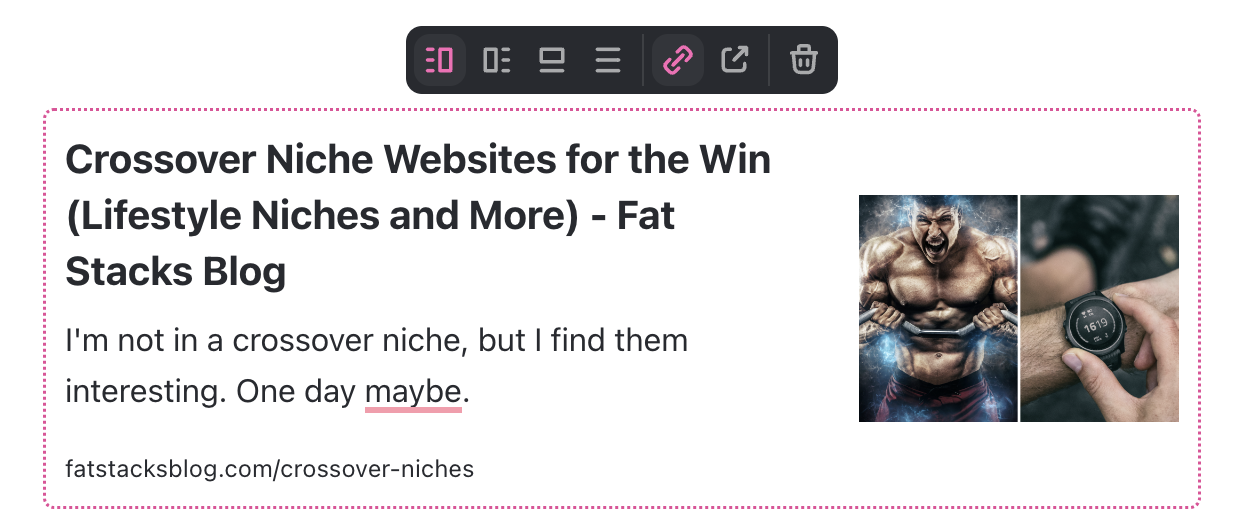
Beehiiv offers a modern, highly intuitive block-based editor equipped with advanced native features. One of its standout capabilities for curated newsletters is the URL embed field. By simply pasting a link, the editor automatically populates the article’s title, featured image, and hyperlink in a clean, professional layout. This functionality significantly accelerates production timelines for publishers who regularly round up external web content or link back to their primary blog archives.

ConvertKit utilizes a more minimalist writing interface. While functional, it has historically lacked certain basic user-experience features, such as a reliable "undo" command within the editor. For creators who frequently update or draft complex broadcasts, the absence of basic error recovery can introduce operational friction.
Automations, Tagging, and Third-Party Integrations
When evaluating technical infrastructure, ConvertKit holds a decisive advantage in marketing automation, subscriber tagging, and third-party software compatibility.
ConvertKit was built from the ground up to integrate natively with a vast ecosystem of creator economy tools, including Teachable, ConvertBox, and various cart software. Direct integrations eliminate the need for middleware tools like Zapier or Integrately, reducing both monthly overhead and the risk of broken automation workflows.
Furthermore, ConvertKit’s visual automation builder allows publishers to construct complex behavioural funnels. For instance, when a subscriber purchases a digital course on an external platform, ConvertKit can instantly apply specific tags, trigger targeted email sequences, and segment the buyer for future promotional campaigns. While Beehiiv offers basic sequencing, its automation capabilities are less robust, primarily due to a more limited array of native integrations.

Monetization and Growth Infrastructure
Both platforms have expanded beyond traditional email delivery by embedding monetization and audience acquisition tools directly into their dashboards.
Beehiiv provides native revenue opportunities through its partner program, offering sponsor placements that pay publishers on a cost-per-click (CPC) basis. It also features built-in growth tools such as referral programs, recommendation networks, and "magic links" that automatically subscribe readers to related publications within a network. Additionally, Beehiiv’s "Boosts" feature allows publishers to acquire new subscribers by paying other newsletter operators on a per-lead basis.

ConvertKit relies heavily on the Creator Network, a peer-to-peer recommendation system where publishers promote one another’s newsletters upon sign-up. For advanced growth and monetization features, ConvertKit users often integrate third-party solutions like Sparkloop. While Sparkloop offers powerful partner programs and reader acquisition mechanisms, utilizing it introduces an additional monthly subscription cost.
Reporting and Analytics
Performance tracking is critical for optimizing open rates, click-through rates, and audience engagement. Both platforms deliver comprehensive broadcast analytics. Beehiiv provides a visually dynamic dashboard highlighting top-performing links, click maps, and subscriber acquisition sources at a glance. ConvertKit offers a simpler, cleaner reporting interface that surfaces the same core metrics—such as delivery rates, opens, and clicks—without unnecessary visual clutter. For most publishers, the reporting capabilities of both platforms are more than adequate for daily operations.
Strategic Implications for Digital Publishers
The coexistence of Beehiiv and ConvertKit in professional digital publishing highlights an important reality: platform selection should be dictated by business model rather than feature checklists alone.
Publishers operating high-volume, ad-supported lifestyle sites benefit most from cost-effective platforms with streamlined content curation tools and built-in viral growth loops. Conversely, creators selling high-ticket digital products, services, or specialized B2B insights require the sophisticated segmentation, tagging, and automation architecture found in platforms like ConvertKit.

Ultimately, industry experts suggest that publishers should not overthink their initial software choice. Because audience lists can be exported and migrated between providers, the primary investment is time rather than permanent infrastructure. By matching the specific strengths of an ESP to the economic realities of a particular niche, creators can maximize both operational efficiency and revenue potential.