For more than a year, Nvidia CEO Jensen Huang has maintained a steadfast position regarding the global distribution of his company’s premium artificial intelligence processors: there is no evidence that these highly coveted chips are being illicitly diverted to China in violation of U.S. export controls. However, a convergence of two massive, Southeast Asia-based smuggling scandals, coupled with a stunning admission of personal misconduct by the CEO, has created a perfect storm that threatens the stability of the world’s most valuable chipmaker. The integrity of Nvidia’s supply chain, long considered the backbone of the global AI revolution, is now under intense scrutiny by regulators, lawmakers, and the intelligence community.
The crisis intensified on Sunday when Huang issued a message to Nvidia employees acknowledging an extramarital affair. The disclosure arrived in the shadow of reports suggesting that the individual involved, Alice Huang—a former executive at Singapore-based Megaspeed International—had been identified by intelligence officials as a target for recruitment by China’s Ministry of State Security. These revelations have transformed a standard regulatory challenge into a high-stakes national security investigation.
The Anatomy of the Two Scandals
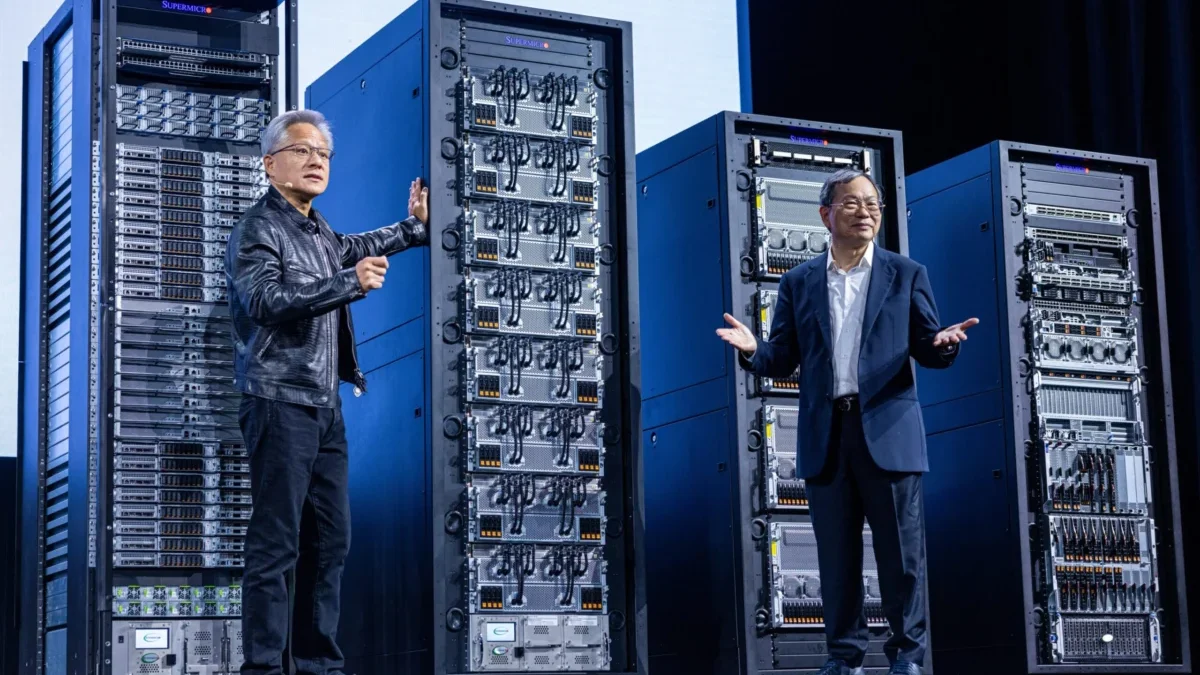
The current investigation centers on two distinct but potentially overlapping smuggling conduits that utilize Southeast Asia as a pivot point for illicit trade. The first involves Super Micro Computer (Supermicro), a critical partner and a company historically intertwined with Nvidia’s growth. In March, federal prosecutors unsealed an indictment charging Supermicro co-founder Yih-Shyan “Wally” Liaw and two associates with orchestrating a scheme to route $2.5 billion worth of servers—equipped with Nvidia’s high-end H200 and B200 GPUs—to Chinese end-users via a Bangkok-based front company known as OBON.
The methods described in the federal indictment were sophisticated, involving the systematic "laundering" of hardware. Prosecutors allege that the perpetrators used hair dryers to peel off and replace serial numbers on servers, effectively scrubbing their digital origins. Furthermore, the scheme allegedly utilized dummy warehouses to deceive compliance auditors. While Supermicro has not been formally charged as a corporate entity and has asserted that it was a victim of the scheme, the company is now under the microscope of the U.S. Attorney’s Office for the Southern District of New York, the SEC, and the Bureau of Industry and Security.
The second scandal involves Megaspeed International, which had emerged as one of Nvidia’s largest customers in Southeast Asia. Reports indicate that Megaspeed procured nearly $5 billion in Nvidia hardware over a two-year span. Investigators are currently probing allegations that significant portions of this inventory—valued at approximately $2 billion—were deployed in data centers in Malaysia and Indonesia, effectively providing Chinese firms with remote access to the computing power of the restricted chips. The connection to the CEO through Alice Huang has added a layer of espionage risk to what was previously viewed as a corporate compliance failure.
A Chronology of Escalating Tensions
The trajectory of this crisis reveals a pattern of delayed warnings and failed due diligence:
- 2006: Supermicro pleads guilty to illegally exporting computer equipment to Iran, establishing a precedent for the company’s regulatory vulnerabilities.
- 2023–2024: Nvidia aggressively expands its presence in Southeast Asia as U.S. export controls tighten around China. During the 2024 Computex event in Taipei, Jensen Huang is photographed with Alice Huang, a key figure in the Megaspeed network.
- May 2026: Short-seller Culper Research releases a report alleging that Supermicro and Megaspeed are part of a broader, interconnected web of chip smuggling designed to circumvent U.S. sanctions.
- June 2026: Senator Elizabeth Warren (D-Mass.) sends a formal inquiry to Nvidia’s leadership, demanding transparency regarding the company’s compliance programs and its continued reliance on Supermicro.
- October 2026: A co-defendant in the Supermicro case enters a guilty plea, escalating the pressure on the company’s leadership.
- November 2026: Nvidia’s board retains the legal firm Wachtell, Lipton, Rosen & Katz to conduct an independent investigation into whether foreign intelligence successfully targeted the CEO.
Regulatory and Political Fallout
The political consequences for Nvidia are rapidly materializing. In the wake of midterm election results that saw Democrats reclaim the Senate, Senator Elizabeth Warren is positioned to chair the powerful Senate Banking Committee. The June letter, initially a request for information, is widely expected to transition into a formal subpoena. Concurrently, a coalition of House committee chairs has summoned Huang for a closed-door briefing on November 18, one day after the company’s scheduled third-quarter earnings release.
The primary concern for lawmakers is the concept of "dual-use" technology. Nvidia’s GPUs are the essential fuel for training advanced generative AI models, which the U.S. government views as a potential threat if integrated into the military or surveillance infrastructure of a strategic adversary. The ease with which these chips have allegedly moved through Southeast Asian distributors suggests that Nvidia’s "know your customer" (KYC) protocols may have been systematically bypassed.
Institutional Responses and Internal Controls
In response to the mounting pressure, Nvidia’s board of directors has taken the unusual step of commissioning an independent probe. While the board has publicly stated it maintains "confidence" in Huang and has no evidence that proprietary secrets were compromised, the retention of former U.S. Attorney Joon H. Kim signals a high level of concern regarding potential legal exposure.
Industry experts suggest that the "honey trap" allegations may be more damaging than the regulatory breaches themselves. "When you have executives who are tasked with inspecting remote data centers in foreign jurisdictions, they become prime targets for these types of seduction and surveillance schemes," noted a veteran of export control compliance. The Supermicro indictment, which noted that a compliance auditor was distracted by entertainment provided by the subject of the audit, highlights a systemic weakness: the reliance on local partners who may be susceptible to bribery or compromise.
The Broader Economic Implications
Nvidia’s financial performance has been the engine of the current market cycle, but the current uncertainty creates a "geopolitical risk premium" that investors are beginning to price in. If the investigation reveals that Nvidia’s compliance division was willfully blind to the smuggling routes, the company could face massive fines, the revocation of export licenses, and a fundamental restructuring of its distribution network.
Moreover, the Megaspeed scandal raises a crucial question regarding cloud-based access. If hardware cannot be shipped directly to a country, the use of third-party, remote-access data centers in neighboring nations represents a significant "loophole" in current U.S. policy. If regulators conclude that companies like Megaspeed were merely conduits for Chinese AI development, the U.S. government may move to restrict access to cloud services that utilize advanced chips, potentially impacting the broader AI ecosystem beyond just Nvidia.
As November 17 approaches, the market remains in a state of high tension. Nvidia is not only defending its supply chain but is also navigating the personal and professional downfall of its most prominent executive. The outcome of the upcoming congressional grillings and the findings of the independent investigation will likely define the future of semiconductor regulation in the United States, marking a definitive end to the era of unchecked, globalized chip proliferation. For Nvidia, the task is no longer just about maintaining its lead in the AI race; it is about proving that its most critical assets are not being leveraged by the very rivals they were designed to outperform.