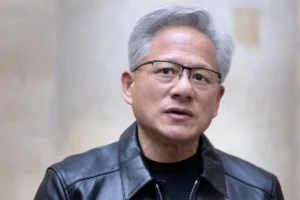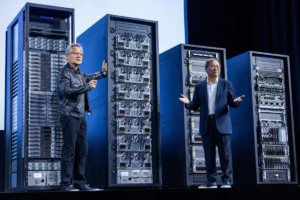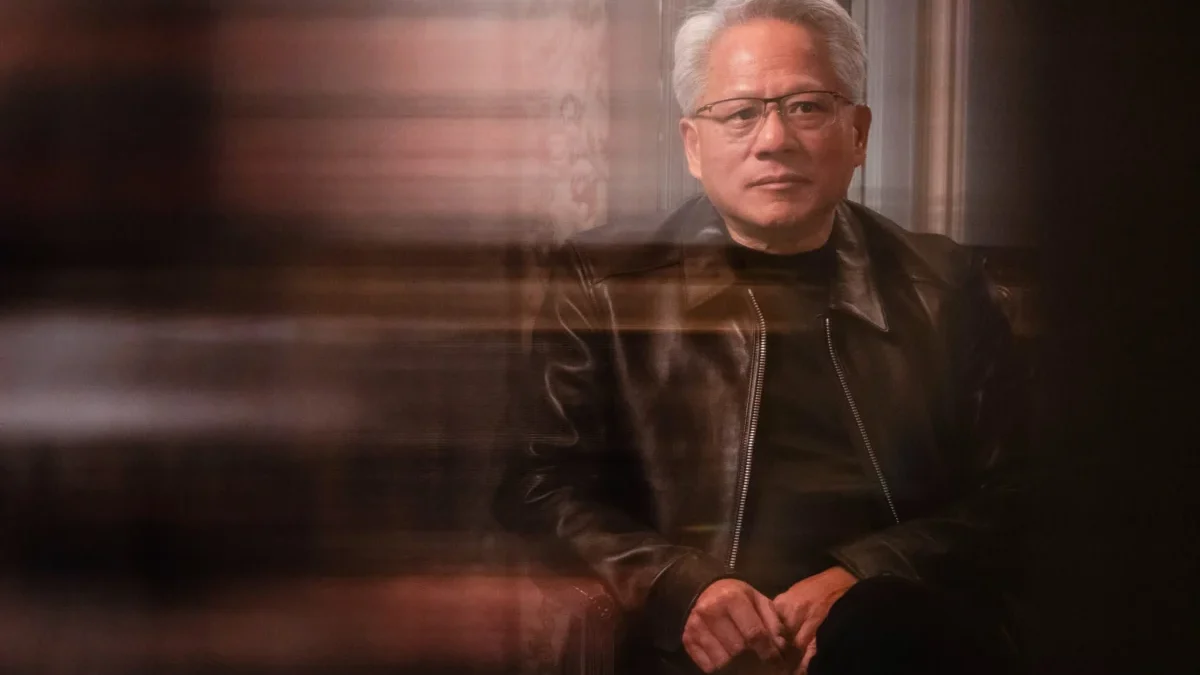
The Silicon Valley establishment is currently reeling from a profound corporate governance crisis at Nvidia, the world’s second-most valuable company. Jensen Huang, the visionary CEO who has steered the chipmaker for over three decades, is under internal investigation following his admission of an extramarital affair. The gravity of the situation is compounded by reports—confirmed by U.S. authorities—that the woman involved has been identified as a suspected intelligence asset for the Chinese government. This intersection of personal scandal and national security has placed Nvidia, the primary engine of the global artificial intelligence boom, in an unprecedented position of uncertainty.
The disclosure on Sunday has sent shockwaves through global markets, prompting a sharp decline in Nvidia’s stock price and raising existential questions about the company’s internal controls. While Nvidia’s board of directors has stated they have no current evidence that corporate secrets or national security were compromised, the investigation into Huang’s conduct marks a watershed moment for the semiconductor industry.
A Chronology of the Crisis
The recent turn of events represents a sudden collapse of stability for a company that has long been regarded as the gold standard of the AI revolution.
- Late 2022: Nvidia reaches a critical inflection point as the generative AI boom begins, with Huang’s leadership credited for the company’s dominance in the high-powered GPU market.
- September 2022: Regulatory scrutiny from the Securities and Exchange Commission (SEC) surfaces, with staff questioning the company’s board risk oversight and the absence of a designated chief compliance officer.
- November 2026 (Early Month): Media reports emerge detailing the relationship between Huang and a woman suspected of being a Chinese intelligence operative.
- November 8, 2026: Huang issues a formal acknowledgment of the affair.
- November 9, 2026: Nvidia’s board of directors officially announces a comprehensive investigation into the matter, promising to examine "all available information."
- November 9, 2026 (Trading Session): Nvidia shares drop by more than 4% as investors react to the potential for leadership instability.
The Cult of Personality and Governance Risks
At the heart of the crisis is a governance structure that is as singular as it is precarious. Jensen Huang has helmed Nvidia for 33 years, creating an organizational culture that is famously centralized. Unlike most Fortune 500 companies, which maintain a clear hierarchy of executive succession, Nvidia operates without a Chief Operating Officer. Huang currently manages 60 direct reports, a structure that critics and corporate governance experts argue has created an "indispensability trap."
Brian Burke, founder of Burke Law & Strategy, describes the current state of Nvidia as a "paradigm" that has been built entirely around one individual. "Huang is synonymous with Nvidia, and Nvidia is synonymous with him, and he and Nvidia are synonymous with AI," Burke noted. "It’s really almost like a cult."
This centralization has long been seen as a feature, not a bug, of Nvidia’s success. Huang’s deep involvement in both strategic and technical decisions—coupled with his status as a tech celebrity—has facilitated rapid decision-making in the fast-paced AI sector. However, this same concentration of power now leaves the company vulnerable. When the primary decision-maker is embroiled in a controversy involving foreign intelligence, the company’s lack of a designated successor creates a dangerous power vacuum.
Financial and Operational Implications
Nvidia’s market position is unparalleled. The company is estimated to control approximately 90% of the market for the high-powered GPUs that serve as the foundation for modern AI data centers. With a market capitalization hovering near $4.3 trillion, the firm is a cornerstone of the U.S. economy and a critical component of the national security apparatus.
The lack of a formal Chief Compliance Officer has further complicated the board’s response. In the past, the company argued that compliance was managed by a committee consisting of the CFO, the executive vice president of operations, and the senior vice president of human resources. However, experts suggest that this decentralized model may have failed to detect risks associated with high-level executive behavior.
"Corporate risk efforts tend to focus on leaks from rank and file staff members," says Hui Chen, a former federal prosecutor who served as the U.S. Department of Justice’s first compliance counsel expert. "Companies don’t pay as much attention to similar risks by high-level executives. The board finds itself at the day of reckoning, and it’s a sudden and perhaps forced one, rather than a relay situation."
The Succession Dilemma
With the investigation now underway, the board of directors is under immense pressure to consider the unthinkable: the potential ouster of the man who built the company. The board, led by independent directors such as Stephen Neal, faces a delicate balancing act. Ousting Huang could trigger a collapse in investor confidence, yet retaining him while he is under the cloud of a national security investigation could invite regulatory intervention and further market volatility.
Potential internal successors have been floated, though none appear to have the institutional authority of Huang. Chief Financial Officer Colette Kress is frequently mentioned as a candidate for an interim role, as is the Lead Independent Director, Stephen Neal. Furthermore, the presence of family members in key roles—including Huang’s children, Spencer and Madison, and his son-in-law, Nico Caprez—adds a layer of complexity to any potential leadership transition.
However, Huang has historically dismissed the need for traditional succession planning. He has maintained that his management philosophy involves the continuous transfer of knowledge to his subordinates, arguing that the ideal candidate for his replacement should be an internal hire who has absorbed his vision over many years. This strategy, while effective for team cohesion, has left the board without a telegraphed successor to reassure the market during this time of crisis.
Regulatory and National Security Context
The involvement of a suspected Chinese intelligence asset elevates this matter far beyond the standard corporate misconduct case. The U.S. government has been increasingly hawkish regarding the protection of AI intellectual property and the potential for foreign espionage to undermine American technological superiority.
In past instances of corporate scandal, such as the firing of McDonald’s CEO Steve Easterbrook for an undisclosed relationship, the issue was contained within the bounds of human resources and shareholder lawsuits. The Nvidia situation, however, involves the intersection of high-stakes geopolitics and industrial policy. Should the investigation reveal any breach of security protocols, it could lead to federal oversight, restrictions on export licenses, or even a forced restructuring of the company’s leadership and governance mandates.
Future Outlook and Expert Analysis
The path forward for Nvidia is fraught with difficulty. If the investigation clears Huang, the company must still navigate the reputational damage and the loss of trust among key institutional investors who prioritize ethical governance. If the board decides to move toward a transition, they must do so with extreme caution to prevent a "brain drain" of the specialized talent that keeps Nvidia ahead of competitors like AMD and Intel.
Jason Schloetzer of Georgetown University emphasizes that the board’s inability to communicate a clear succession plan has exacerbated the crisis. "They find themselves in a sudden and perhaps forced transition, rather than a relay situation where they have time to figure it out as they go," Schloetzer said.
For now, the world awaits the results of the board’s inquiry. The stability of the $4.3 trillion chip giant—and by extension, the trajectory of the AI industry—depends on whether the company can decouple its future from the man who has defined its past. As the market watches, the "day of reckoning" for Nvidia has arrived, testing whether the corporate entity is strong enough to survive the fall of its most powerful leader.