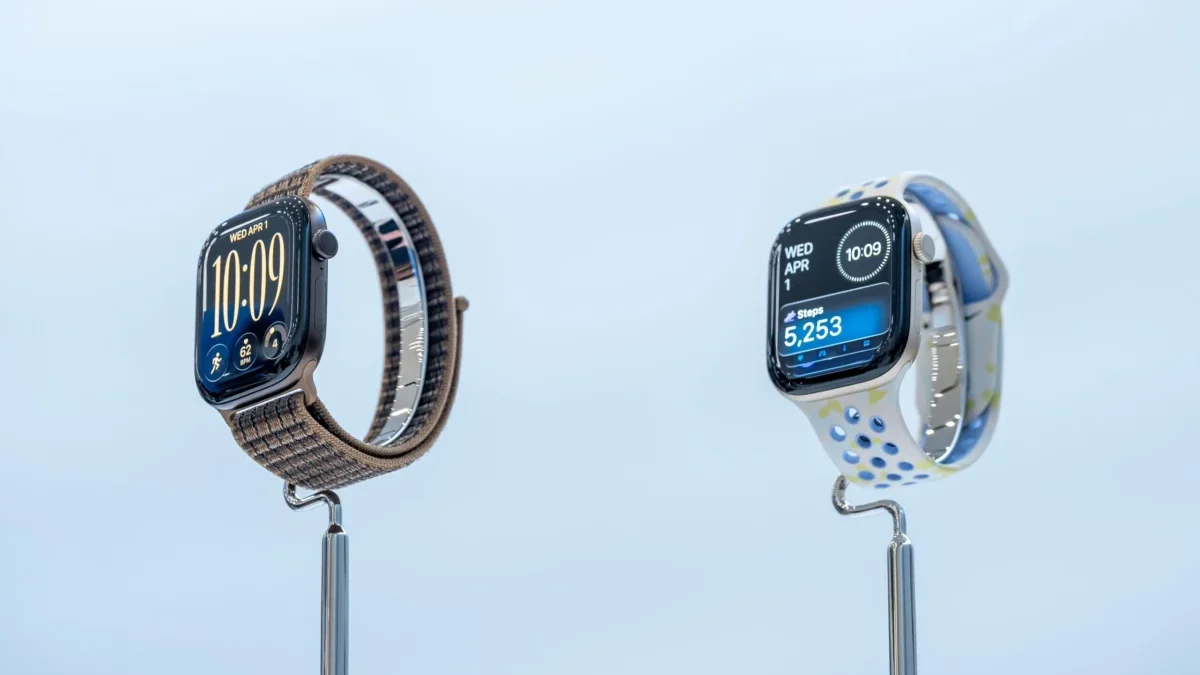
As the wearable technology market continues to evolve at a rapid pace, navigating the ecosystem of smartwatches requires a careful balance of personal utility, budget considerations, and hardware specifications. For consumers deeply embedded in the Apple ecosystem—utilizing iOS, macOS, and watchOS platforms—the Apple Watch remains the default standard for wrist-based computing. However, with multiple distinct models popuring from Apple’s manufacturing lines, the differences between generational hardware tiers can appear subtle even when price gaps are significant.
An exhaustive evaluation of the current hardware generation reveals distinct categories for consumers seeking the best overall device, maximum battery longevity, or a cost-effective entry point into the smartwatch ecosystem. This comprehensive assessment details the current Apple Watch lineup, analyzing performance metrics, sensor capabilities, and practical implications for everyday users.
Evolution of the Lineup: Main Facts and Core Hardware Architecture
The current market architecture spans three primary tiers: the flagship Series model, the rugged endurance-focused Ultra variant, and the value-oriented SE tier. Each device targets specific user demographics, ranging from casual fitness enthusiasts to extreme endurance athletes and budget-conscious tech buyers.
At the apex of the standard consumer market sits the Apple Watch Series 12, designated as the best overall smartwatch in the current lineup. The cornerstone of the Series 12 upgrade cycle is the introduction of a completely overhauled Health Sensing System. This hardware architecture dramatically improves the breadth, accuracy, and frequency of biometric data acquisition.
Compared to its predecessor, the Series 11, the latest flagship incorporates an electrocardiogram (ECG) sensor utilizing 32 distinct electrodes to maximize skin contact, a substantial upgrade from the two-electrode layout of the previous generation. Furthermore, refined optical sensors coupled with higher-efficiency LEDs provide superior heart-rate monitoring precision. Background tracking has also been accelerated: the Series 12 logs heart rate readings at five-second intervals throughout the day, while Heart Rate Variability (HRV) metrics are captured as frequently as every five minutes. By contrast, the Series 11 captured heart rate data every five minutes and restricted HRV tracking to roughly two-hour intervals.
Software Innovations: Readiness Scores and Audio Intelligence
Beyond hardware sensor enhancements, the Series 12 introduces a new "Readiness" algorithmic score. This metric synthesizes recent sleep architecture, baseline health stats, and activity logs to deliver a daily snapshot indicating how prepared a user’s body is for physical exertion.
Apple has also integrated a suite of AI-driven capabilities under the banner of Audio Intelligence. While consumer analysts note that two of the most heavily promoted features—Live Rewind and Siri Recap—are scheduled for rollout via a software update later in the year, the foundational processing power is anchored by the newly developed S-series silicon chips.
Despite the expanded processing demands, battery longevity for the flagship remains rated at up to 24 hours under standard usage conditions. However, charging speeds have been markedly accelerated. A 15-minute quick-charge session delivers up to 12 hours of normal operational use, while a five-minute charge yields up to 10 hours of dedicated sleep tracking capabilities.
Endurance and Longevity: The Apple Watch Ultra 4
For consumers requiring multi-day performance, extreme environmental durability, and specialized tracking metrics, the Apple Watch Ultra 4 stands as the premier option for battery life and rugged build quality.
Priced at the upper end of the consumer spectrum, the Ultra 4 builds directly upon the foundation of its predecessors while introducing key performance milestones. Battery endurance is rated for up to 50 hours of standard use—an increase from the 42-hour threshold of the Ultra 3—and can stretch up to 84 hours when operating in Low Power Mode. Fast-charging metrics mirror the efficiency of the flagship series, with a 15-minute charge providing up to 18 hours of typical operation.
The physical architecture of the Ultra 4 remains tailored for extreme outdoor environments, including multi-day hiking expeditions, open-water swimming, and scuba diving. The titanium chassis provides water resistance up to 100 meters, supplemented by a recreational dive computer depth gauge rated to 40 meters. Crucially, the Ultra series continues to feature integrated satellite messaging capabilities, allowing users to contact emergency services even when completely outside cellular and Wi-Fi coverage zones. Standard safety protocols, including automated fall and crash detection alongside an ear-piercing physical siren, reinforce its positioning as an indispensable tool for outdoor adventurers.
Despite its technical prowess, the Ultra line presents notable ergonomic challenges. The standard 49-millimeter titanium casing can prove cumbersome on individuals with slimmer wrists, leading industry analysts to continually speculate on the introduction of a more moderately sized alternative.
The Budget-Friendly Alternative: Apple Watch SE (3rd Generation)
For buyers seeking fundamental smartwatch functionality without premium pricing, the Apple Watch SE (3rd Generation) serves as the primary gateway into the ecosystem. Although Apple did not introduce a hardware refresh for the SE tier in the most recent product cycle, the third-generation model remains a highly competent device powered by the S10 processor.
The inclusion of the S10 chip allows the SE to support advanced health metrics previously absent from budget models, including sleep apnea notifications and skin temperature sensing. Fully compatible with current watchOS iterations, the device supports dynamic application grids, native Siri interactions, and fitness coaching software.
Nevertheless, cost concessions are evident in the hardware specifications. The SE utilizes a display capped at 1,000 nits of peak brightness, contrasting with the 2,000-nit wide-angle OLED panels found on higher-tier models. It also omits the ultra-wideband (UWB) locator chip, high-frequency background biometric tracking, Readiness score calculations, blood oxygen sensors, and ECG hardware. Despite these limitations, battery endurance remains sufficient for a full day of mixed-use tracking under normal operating parameters.
Comparative Market Analysis and Chronology
To assist consumers in evaluating generational value, a review of recent product iterations highlights the narrowing gap between successive hardware releases.
Chronologically, Apple has maintained an annual product refresh cycle across its core wearables division. However, recent generations have demonstrated a trend where year-over-year pricing remains static while internal computational and sensor arrays experience incremental improvements. For instance, the Apple Watch Series 11 and the Apple Watch Ultra 3 frequently occupy retail spaces at prices identical to their newer successors unless marked down by third-party retailers. Consequently, purchasing older-generation hardware is generally only justifiable when significant retail discounts are applied.
Industry experts generally advise against purchasing Apple Watch models older than the Series 9, as software support schedules and compatibility with modern watchOS updates diminish rapidly for legacy devices.
Methodological Framework for Testing
Evaluating consumer wearables requires rigorous, longitudinal testing protocols designed to separate marketing claims from practical utility. Standard testing regimens implemented by product reviewers typically follow a structured timeline:
- Initial Assessment Phase: Reviewers wear each smartwatch continuously—both day and night—for an initial period of approximately one week. During this phase, the device is evaluated across standard use cases, functioning simultaneously as a general notification hub, a dedicated fitness tracker, and a sleep monitor.
- Long-Term Validation: Testing is extended for a minimum of one additional month to assess the durability of physical components, battery degradation over time, and the long-term practical value generated by wellness and biometric insights.
- Ergonomic and Environmental Testing: Devices are worn during high-intensity athletic activities, including long-distance running, cycling, and resistance training, to assess long-term comfort and secure skin contact. Screen legibility is tested under direct sunlight as well as in low-light indoor environments.
- Metric Benchmarking: Biometric outputs—such as continuous heart rate, step counts, and sleep stage classification—are cross-referenced against specialized medical-grade equipment and competing consumer brands (such as Oura and Whoop) to measure accuracy and data consistency.
Broader Impact and Industry Implications
The continuous refinement of consumer health monitoring technologies carries significant implications for the broader healthcare and tech sectors. By embedding clinical-grade sensors—such as multi-electrode ECGs and high-frequency optical monitors—into consumer accessories, technology companies are shifting the paradigm of preventative medicine. Users are increasingly empowered to monitor chronic indicators independently, leading to earlier detection of potential cardiovascular and sleep-related anomalies.
However, these advancements also raise important regulatory and data privacy questions. As smartwatches collect denser arrays of biometric and acoustic data, the secure handling and ethical governance of personal health metrics remain paramount. Regulatory bodies worldwide continue to scrutinize how consumer technology firms store, process, and potentially share sensitive physiological information.
Ultimately, the current Apple Watch portfolio demonstrates that technological leadership does not strictly correlate with maximum financial expenditure. While elite endurance athletes and extreme outdoor enthusiasts will continue to gravitate toward the rugged capabilities of the Ultra line, the mainstream flagship models deliver a comprehensive suite of health sensing and computational tools that satisfy the vast majority of everyday consumer requirements.