The modern digital landscape is defined by an insatiable demand for rich, high-resolution media. From user-generated content and high-definition video uploads to complex multi-format document sharing, web applications process petabytes of data daily. Managing this immense influx of media has historically presented a formidable operational bottleneck for software engineering teams. Developers frequently find themselves bogged down writing bespoke code to handle erratic file sizes, inconsistent formats, and varying compression standards submitted from disparate external sources. When applications require specific dimensions, precise color grading, or automated cloud storage syncing, building these pipelines from scratch consumes valuable engineering hours that could otherwise be dedicated to core product development.
To alleviate these architectural friction points, organizations increasingly turn to specialized third-party infrastructure utilities designed to handle the complete lifecycle of digital assets. Among these solutions, platforms like Filestack have emerged as industry standards, offering robust application programming interfaces (APIs) and software development kits (SDKs) to upload, transform, and deliver media at scale. By outsourcing the complexities of file ingestion and content delivery network (CDN) management, engineering teams can significantly accelerate deployment timelines while ensuring optimal performance across all client devices.
The Evolution of Web Media Management and Infrastructure
Historically, handling user uploads required developers to configure cumbersome server environments, implement custom multi-part upload logic, manage direct storage buckets on services like Amazon S3 or Google Cloud Storage, and write custom image-processing scripts utilizing libraries such as ImageMagick. This decentralized approach often led to security vulnerabilities, bottlenecks during traffic spikes, and inconsistent user experiences. Furthermore, as mobile device fragmentation increased—introducing retina displays, variable aspect ratios, and next-generation image formats like WebP and AVIF—maintaining an in-house media pipeline became exponentially more expensive and complex.
The shift toward API-first architecture and managed cloud services revolutionized this paradigm. Modern developers now expect turnkey infrastructure components that integrate seamlessly into existing JavaScript frameworks, Python back ends, mobile operating systems, and content management systems. Platforms offering unified file pickers, real-time image and video transformations, and integrated CDN delivery have effectively democratized high-performance media handling. This architectural evolution allows startups and enterprise organizations alike to deploy production-ready file management systems in a matter of hours rather than months.
Getting Started: Onboarding and Developer Integration
The integration journey for modern media management utilities typically begins with a streamlined developer onboarding process. Developers can evaluate these services through trial periods, gaining immediate access to comprehensive code libraries, extensive software development kits, and detailed technical documentation. For engineering teams, thorough documentation replete with copy-pasteable code samples, SDK wrappers for popular languages, and interactive API explorers represents a critical factor in tool adoption.
Once authenticated via API keys, integration generally bifurcates into client-side and server-side workflows depending on application architecture. Client-side implementations focus heavily on user experience (UX), prioritizing intuitive file pickers, drag-and-drop zones, and direct integrations with third-party cloud storage and social media repositories. Conversely, server-side implementations prioritize automated ingestion, security validation, virus scanning, and batch processing pipelines executed background worker threads.
Client-Side File Ingestion and the Modern User Interface
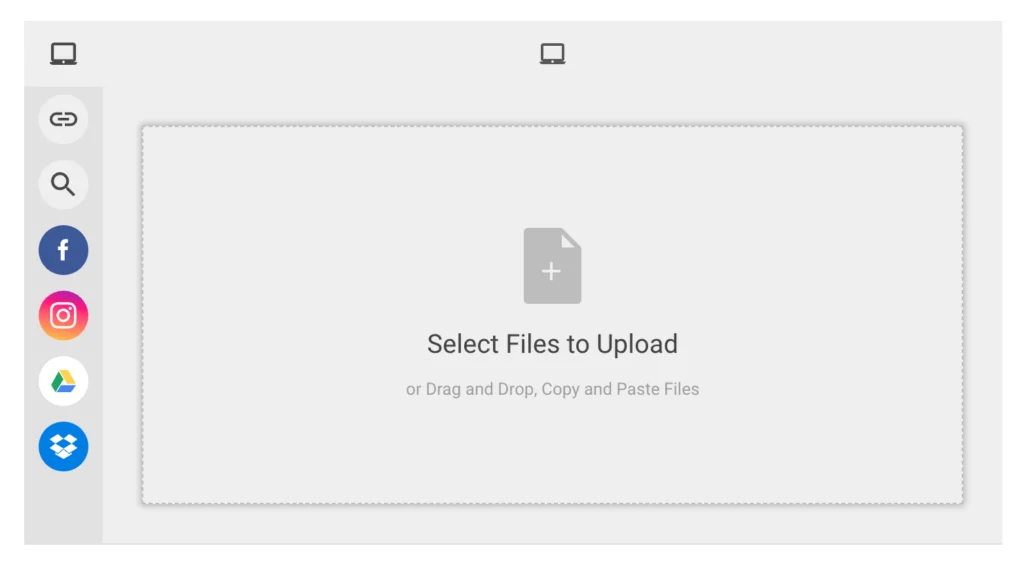
Enabling end users to upload files seamlessly is the foundational step in any media-driven application. Modern file pickers eliminate the archaic, unstyled HTML file input fields in favor of polished, modal-driven user interfaces equipped with advanced features.
Using standard JavaScript implementations, initializing a file picker requires minimal code:
const client = filestack.init("YOUR_API_KEY");
const picker = client.picker(
  onUploadDone: (res) => console.log(res),
);
picker.open();
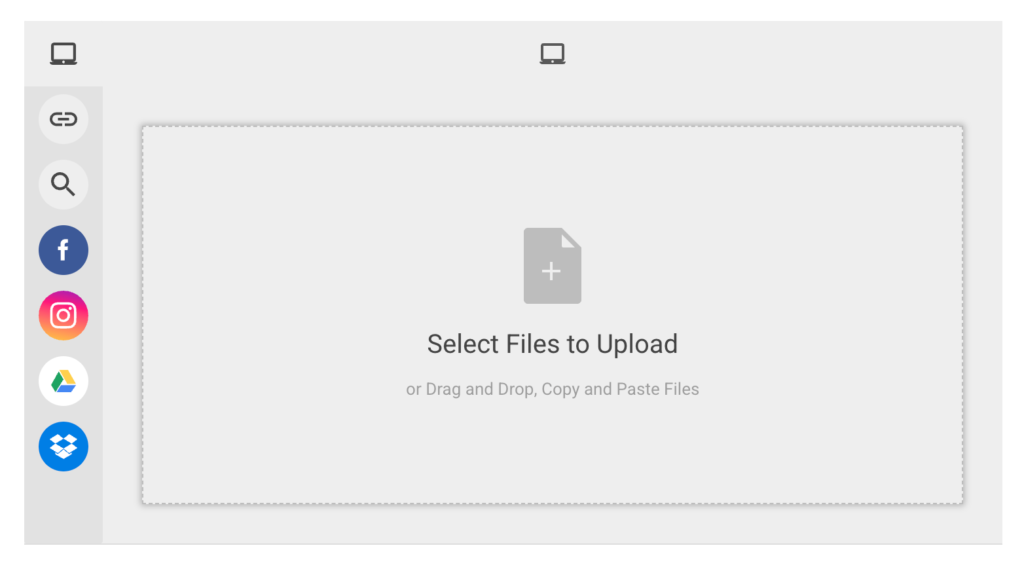
The resulting user interface components offer sophisticated functionality out of the box, including progress bars, multi-file selection, crop tools, and direct cloud integration. Rather than forcing users to upload files exclusively from their local hard drives, modern pickers connect natively with over twenty popular third-party services. Users can seamlessly pull documents, images, and media directly from Google Drive, Dropbox, GitHub, Facebook, Instagram, Evernote, and various web URLs without manual downloading and re-uploading.
Moreover, drag-and-drop functionality has become a baseline expectation for desktop web users. Advanced file pickers natively support drag-and-drop zones across modern browsers, dramatically reducing friction and lowering abandonment rates during user onboarding or content submission workflows.
Server-Side Processing and Backend Flexibility
While client-side components excel at user-facing ingestion, many enterprise workflows require robust backend processing. Automated background tasks, scheduled data migrations, and programmatic asset ingestion require reliable server-side SDKs.
For Python developers, server-side integration provides granular control over storage parameters, destination buckets, and metadata tagging:
from filestack import Client

client = Client("YOUR_API_KEY")

store_params =
    'location': 's3',
    'path': 'folder/subfolder/',
    'upload_tags':
        'project': 'q3_marketing',
        'verified': True


filelink = client.upload(
    filepath='/path/to/filename.jpg',
    store_params=store_params
)
print(filelink.url)
This backend versatility ensures that whether files originate from an automated cron job, an enterprise data lake, or a user-facing web form, they are reliably ingested, tagged, and routed to the appropriate cloud storage destination with minimal latency.
Real-Time Transformations: Manipulating Images, Videos, and Documents
End users rarely submit media in the exact dimensions, formats, or aesthetic styles required by a target application layout. Consequently, file transformation is a crucial pillar of modern media management architecture. Whether resizing hero banners for mobile viewports, applying sepia filters, extracting frames from video files, or converting multi-page PDFs into viewable image formats, transformation engines must operate with high concurrency and minimal latency.
Modern media platforms execute these transformations dynamically via URL-based parameters or synchronous API workflows. Rather than storing dozens of derivative static assets on a server—which wastes storage and complicates database indexing—applications can request transformed assets on the fly.
For instance, scaling an image to a precise width of 300 pixels is achieved simply by injecting transformation instructions directly into the asset’s Content Delivery Network URL:
https://cdn.filestackcontent.com/resize=width:300/pdn7PhZdT02GoYZCVYeFChaining multiple filters together requires appending additional transformation arguments sequentially. Developers can apply color adjustments, rotate orientations, add artistic borders, watermark sensitive intellectual property, or convert file formats in a single URL string:
https://cdn.filestackcontent.com/resize=width:300/sepia=tone:80/polaroid/pdn7PhZdT02GoYZCVYeFBeyond basic image manipulation, comprehensive transformation engines handle complex document conversion tasks. Text documents, spreadsheets, and presentation files can be converted into web-friendly formats, enabling users to preview complex files directly within the browser without downloading proprietary desktop software. Similarly, video transcoding pipelines can automatically adjust bitrates, change container formats, and generate thumbnail sprites for video streaming applications. For applications requiring user-controlled edits, interactive transformation user interfaces allow end users to crop, rotate, and filter their own uploads before final submission.
Content Delivery Networks (CDNs) and Global Performance Optimization
Successfully uploading and transforming digital assets represents only half of the equation; delivering those assets reliably and instantaneously to end users worldwide is critical for business success. Web performance metrics directly correlate with user retention, search engine optimization (SEO) rankings, and conversion rates. Even marginal delays in asset rendering can lead to significant user drop-off, particularly on mobile networks.
To mitigate latency, modern media management platforms leverage distributed Content Delivery Networks (CDNs) featuring thousands of edge nodes globally. When a transformed file is requested for the first time, the CDN caches the generated asset across its edge network. Subsequent requests for the same unique URL are served instantly from the nearest geographic node, drastically reducing Time to First Byte (TTFB) and server load on origin storage buckets.
Cache management policies are engineered to balance performance with content freshness. Standard caching protocols typically retain transformed assets at the edge for 30 days. If an asset is updated or re-uploaded, cache-busting mechanisms or versioned URLs ensure that consumers immediately receive the latest iteration. By offloading global delivery infrastructure to specialized CDN providers, organizations ensure enterprise-grade reliability, redundancy, and protection against traffic spikes or distributed denial-of-service (DDoS) vectors.
Industry Implications and Future Outlook
The adoption of comprehensive media management utilities reflects a broader shift toward specialized, microservices-oriented software architecture. As artificial intelligence and machine learning models increasingly integrate into web applications—requiring automated image tagging, facial recognition, content moderation, and optical character recognition (OCR)—the complexity of media pipelines will only escalate.
For software development teams, leveraging externalized media platforms eliminates the need to maintain auxiliary infrastructure, freeing resources to focus on core product features and business logic. By standardizing the ingestion, transformation, and delivery phases of the digital asset lifecycle, organizations can achieve greater operational efficiency, superior application performance, and a consistently polished user experience across all digital touchpoints.