The landscape of web development continues to experience rapid evolution, driven by collaborative specifications, browser vendor implementations, and developer community experiments. Over recent weeks, front-end engineers and standards contributors have introduced significant updates spanning CSS selectors, layout algorithms, progressive enhancement strategies, and native HTML capabilities. These developments address long-standing engineering pain points, such as complex tooltip architectures, syntax highlighting performance, layout distribution, and feature detection limitations. Analyzing these updates reveals a clear trajectory toward more declarative, performant, and accessible web interfaces.
Enhancing Interactive UI: Tooltips and the Shift Toward Native Interest Invokers
User interface micro-interactions, particularly tooltips, have historically required complex JavaScript event listeners to manage hover states, delays, and accidental triggers. Abhishek Jakhar recently outlined a refined architectural approach advocating for delayed-then-instant tooltip activation. Under this model, an initial delay prevents accidental triggers when a user’s cursor sweeps past a target element. Once activated, however, subsequent tooltips within a localized interface appear instantaneously to maintain UI responsiveness.
Addressing this same challenge from a standards perspective, developer Chris Coyier highlighted a modern browser implementation utilizing upcoming native interest invokers. Supported currently in experimental capacities within Google Chrome, this native approach relies on two dedicated CSS properties: interest-delay-start and interest-delay-end. By offloading state management from JavaScript runtime engines to the browser’s native rendering pipeline, developers can achieve smoother interactions while preserving progressive enhancement patterns for legacy user agents.
Bridging the Gap: The New Geolocation HTML Element
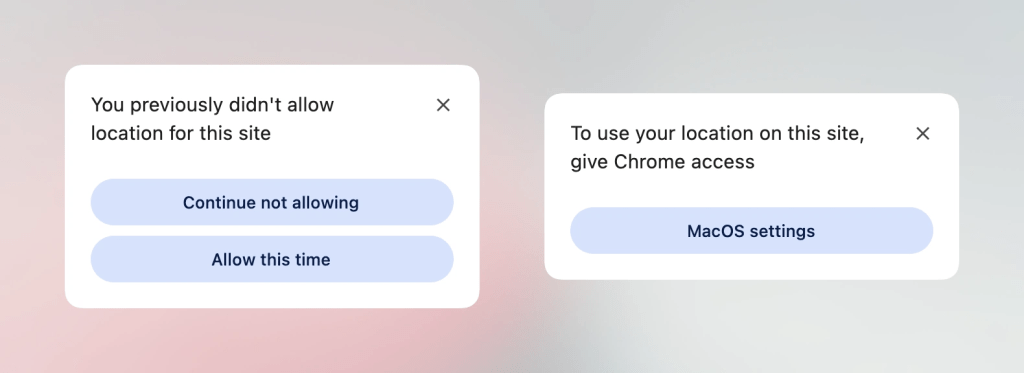
Managing location-based permissions and hardware interfaces has traditionally presented friction for web developers. The traditional JavaScript Geolocation API requires handling asynchronous responses from disparate hardware sources—including GPS satellites, Wi-Fi triangulation nodes, and cellular towers—while offering cumbersome pathways for users seeking to modify permission statuses post-prompt.
The introduction of the <geolocation> HTML element aims to streamline this workflow by standardizing location requests directly within the document markup. While this native element resolves numerous integration challenges, it introduces specific styling restrictions and currently remains exclusive to Chrome environments. Industry experts have subsequently published integration strategies enabling developers to deploy <geolocation> today by gracefully falling back to the established Geolocation API, ensuring cross-browser compatibility without sacrificing future-proof architecture.
Performance and Syntax Highlighting via the Custom Highlight API
Syntax highlighting has traditionally relied on heavy Document Object Model (DOM) manipulation, wherein parsers wrap individual tokens in span elements containing specific class names. This approach often degrades performance on large codebases due to excessive DOM node creation.
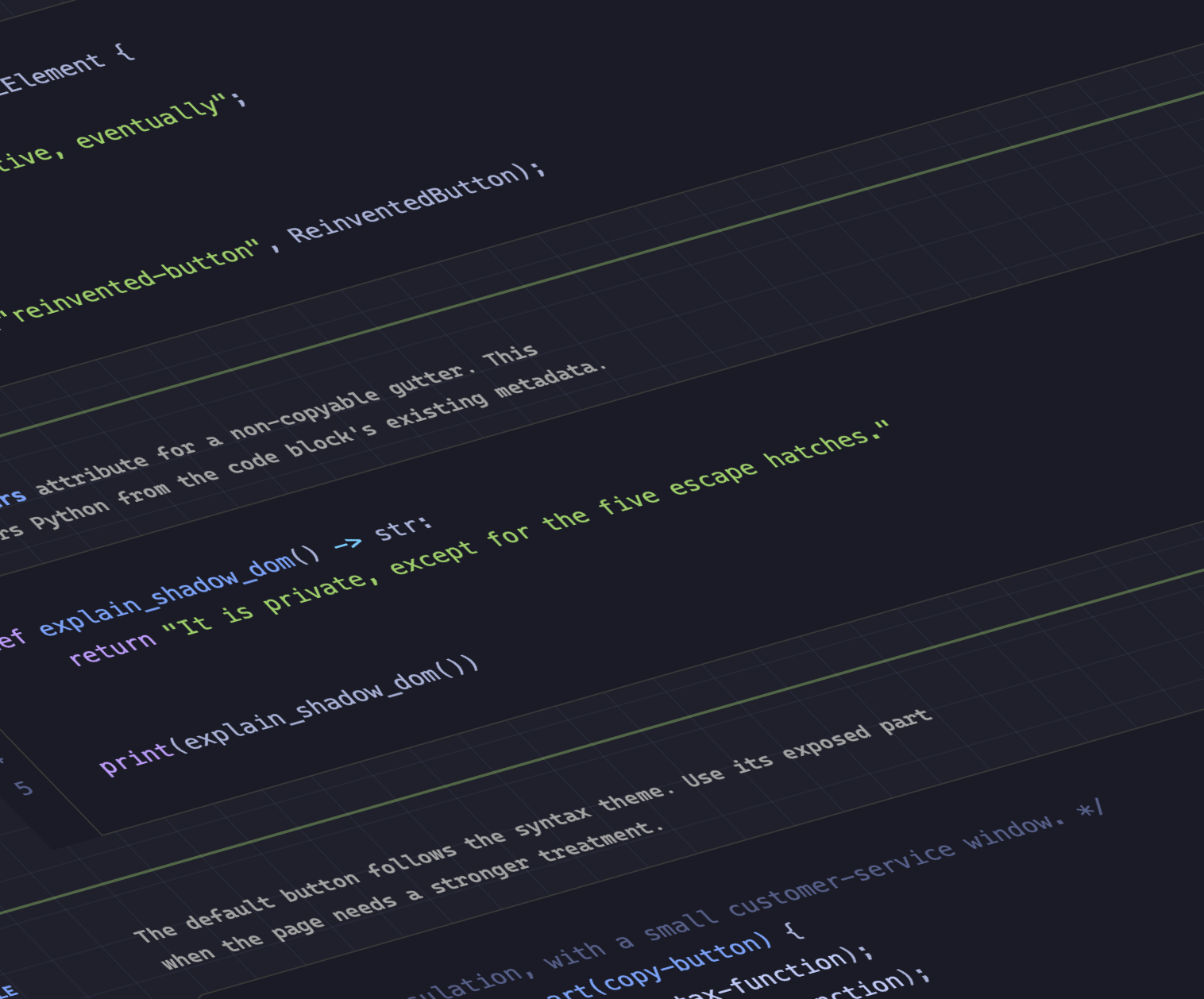
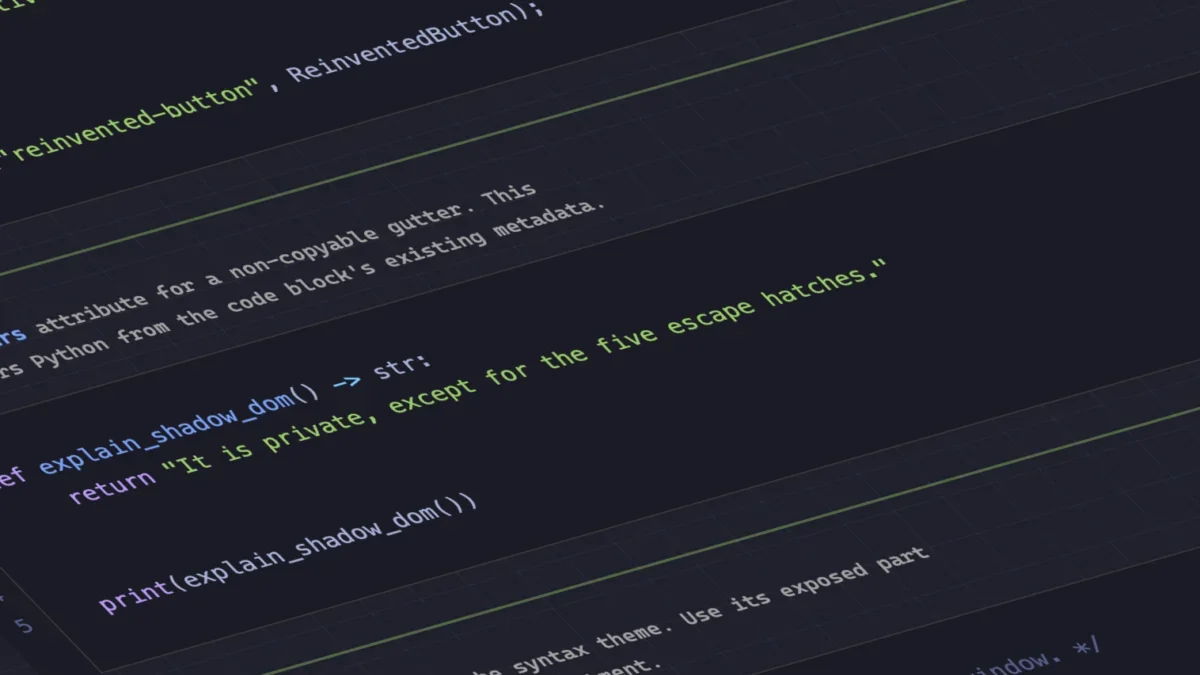
Leveraging the newly standardized Custom Highlight API, developer Dave Rupert introduced MicroLighter, a lightweight syntax highlighter designed to bypass traditional DOM overhead. By applying CSS styling rules directly to text ranges via the ::highlight() pseudo-element, MicroLighter achieves high-performance syntax coloring without mutating the underlying document structure. Industry analysts view this implementation as a primary showcase for the Custom Highlight API, demonstrating how native browser capabilities can replace third-party runtime scripting for text-heavy applications.
Grid Intelligence: Extracting Layout Metrics into Custom Properties
CSS Grid has revolutionized two-dimensional web layouts, yet developers have historically struggled to bridge the gap between layout geometry and dynamic styling rules. Temani Afif recently demonstrated a technique for exposing CSS grid metrics—specifically row and column counts, alongside individual cell coordinates—directly into CSS custom properties.
While this technique currently requires uniform column widths, it unlocks advanced interface patterns previously achievable only via JavaScript coordinate calculation. Among the most notable applications is hover proximity detection, where elements dynamically alter their visual states based on their spatial relationship to the cursor within the grid matrix. This advancement underscores the increasing capability of CSS to handle spatial logic natively.
The Dark Mode Toggle Debate: Two-State Versus Tri-State Architecture
As system-level dark mode preferences become ubiquitous, user experience designers continue to debate the optimal implementation of theme toggles. Industry researchers Lea Verou and Bramus recently weighed in on opposing sides of the architecture debate. Verou advocates for a streamlined two-state toggle, whereas Bramus champions a tri-state approach allowing explicit user overrides over system defaults.
Concurrently, interface designer Vale.Rocks proposed an "auto-until-overridden" two-state model. This methodology respects the operating system’s global preference by default, but transitions to a persistent user-selected state upon manual interaction. This ongoing discussion highlights the tension between automated personalization and explicit user control in modern interface design.
Selectors and Feature Detection: The Class Prefix Selector and Named Features
Styling efficiency received a notable boost with Bramus’s introduction of the proposed class prefix selector syntax. Historically, targeting multiple classes sharing a common prefix required complex attribute selectors such as [class^="something-"], which can incur performance penalties during the browser’s style calculation phase. The proposed syntax introduces a native prefix matching pattern:
.something-*
  /* Declarations */
This declarative syntax offers superior rendering performance and cleaner code readability compared to legacy attribute-based workarounds. Although browser support is pending, standards bodies are reviewing the proposal favorably due to its clear utility in design system architecture.
In tandem with selector improvements, the introduction of the @supports named-feature() function addresses a persistent limitation in CSS feature queries. Traditional @supports rules can evaluate property and value pairs, but struggle to query complex rendering behaviors, such as how a browser handles specific transforms within anchor positioning contexts. The named-feature() function expands conditional styling capabilities, allowing developers to target precise browser engine behaviors reliably.
Balancing Layouts with Flexbox Balance
Layout distribution has similarly advanced with the introduction of flex-wrap: balance in Chrome. Expanding upon the concept popularized by text-wrap: balance in typography, this new flexbox property automatically distributes wrapped flex items evenly across multiple rows or columns.
Ahmad Shadeed analyzed the practical implications of flex-wrap: balance, noting its efficacy in preventing awkward layout wrapping where a final row contains a single, isolated element. By instructing the rendering engine to balance item distribution mathematically, developers can achieve more aesthetically balanced component grids without resorting to hardcoded widths or complex media queries.
Broader Implications and Industry Outlook
The convergence of these CSS and HTML updates signals a mature phase in web standards development. Rather than introducing entirely new layout paradigms, current specifications focus on refinement, performance optimization, and the reduction of JavaScript dependency. Features like the Custom Highlight API, native interest invokers, and grid metric extraction demonstrate a concerted effort by standards organizations to empower CSS with logical and computational capabilities traditionally reserved for scripting languages.
As browser vendors work toward implementation parity for these emerging specifications, front-end engineering teams are encouraged to adopt progressive enhancement strategies. By building robust foundations that degrade gracefully in older environments while unlocking advanced native features in modern browsers, developers can ensure resilient, high-performance web applications for an increasingly diverse user base.