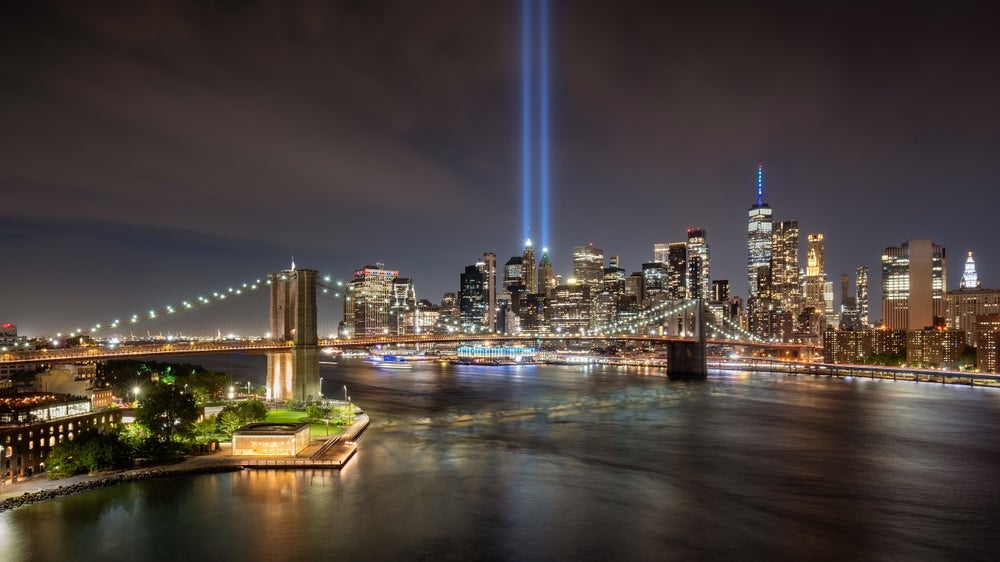
Twenty-five years after the morning of September 11, 2001, the world continues to feel the seismic aftershocks of a day that fundamentally altered global geopolitics, aviation security, and public consciousness. For the public relations and communications industry, that Tuesday morning carried a unique and profound professional burden. Communicators, by the nature of their vocation, are tasked with finding clarity when language fails, structuring narratives amidst chaos, and maintaining channels of truth when misinformation threatens to overwhelm the public.
As the 25th anniversary of the attacks is marked, PRNEWS reached out to the public relations community to document personal reflections from practitioners who lived through the disaster. The resulting oral history captures a cross-section of an industry caught off guard yet called upon to perform extraordinary feats. From professionals orchestrating media relations for the American Red Cross and commercial airlines to interns watching monitors in hotel lobbies and former law enforcement officers rushing toward the Pentagon, these accounts illustrate how a single historical rupture redefined a generation of communicators.
Chronology of a Shifting Landscape
The events of September 11 unfolded with terrifying speed, leaving media professionals and corporate communicators little time to process their own shock before responding to a historic crisis.
At 8:46 a.m. Eastern Daylight Time, American Airlines Flight 11 struck the North Tower of the World Trade Center in New York City. Initially viewed by many early observers and news outlets as a tragic aviation accident, the severity of the crisis became undeniable at 9:03 a.m., when United Airlines Flight 175 crashed into the South Tower, broadcasting an unmistakable act of war to a live global audience.
Concurrently, government and commercial facilities went on high alert. At 9:37 a.m., American Airlines Flight 77 impacted the western facade of the Pentagon in Arlington, Virginia. Minutes later, at 9:59 a.m., the South Tower of the World Trade Center collapsed, followed by the collapse of the North Tower at 10:28 a.m. Amidst the unfolding catastrophe, passengers and crew aboard United Airlines Flight 93 revolted against their hijackers, causing the aircraft to crash in a field in Shanksville, Pennsylvania, at 10:03 a.m., thwarting a presumed fourth target in Washington, D.C.
By mid-morning, the Federal Aviation Administration executed an unprecedented nationwide ground stop, ordering all commercial aircraft to land immediately. For public relations executives, internal communicators, and media liaisons, the operational baseline of their profession shifted permanently in less than two hours.
Crisis Communications in the Crucible
The immediate aftermath demanded endurance, composure, and a complete reimagining of emergency messaging. Neal Gorman, then working in media relations for the American Red Cross in Rochester, New York, found his pager and phone overwhelmed within minutes. Deploying to Washington, D.C., and later to various recovery and family resource centers in Manhattan, Gorman conducted continuous interviews without a script. "They trusted me, and I somehow knew how to speak without causing more panic," he recalled, noting that the experience anchored a twenty-year career in New York centered on empathy and resilience.
In corporate crisis centers, the pressure was equally intense. Susana Leyva, stationed in the United Airlines Crisis Center, watched the tragedy unfold through radar tracking, passenger manifests, and real-time feeds. "No one slept," she remembered. Every available resource was dedicated to supporting affected families and managing an unprecedented operational shutdown.
Similarly, corporate and agency professionals found themselves navigating immediate logistics and employee safety. Debra Silimeo, returning to a Washington, D.C., communications office just two blocks from the White House after cancer surgery, faced gridlocked streets and rumors of subsequent attacks on the capital. The experience later inspired public-focused campaigns, including a partnership with the U.S. Fire Administration to promote fire prevention and reduce firefighter fatalities.
Internal Communications and Employee Safety
For corporate communicators, safeguarding personnel and maintaining transparent, reliable channels of communication became the primary mandate. Joseph Caldwell, managing editor of an employee newsletter for a national insurer headquartered near Manhattan’s Flatiron District, watched the towers fall from a conference room projector screen. Recognizing the failure of traditional communication lines, his team leveraged newly established intranet protocols to coordinate emergency messaging into the evening before navigating an abandoned Park Avenue and an empty Grand Central Station.
In Washington, D.C., Nicole Hawkins, public relations director at the Capital One Arena situated between the Capitol and the White House, was locked down in her office on her first day back from family wedding celebrations. The experience permanently altered her framework for enterprise risk management: "It shaped how I approach two things: crisis comms—being prepared for the worst while hoping it never happens—and employee comms—communicating clearly with employees during times of uncertainty."
For students living near Ground Zero, such as Meghan Holston, who was completing her communications major at New York University, the lack of structured internal guidance from institutions during the displacement highlighted the necessity of audience-centric empathy. "I live by the motto: Put yourself in the audience’s shoes," she noted.
Career-Defining Turning Points and Strategic Shifts
The historical weight of September 11 catalyzed long-term career shifts across the communications sector. For many young professionals and students, witnessing the media’s role in real-time documentation inspired a lifelong commitment to journalism and public affairs.
Jordan Valdés, a college freshman at the time, transitioned from general studies to political science and Middle East conflict analysis, ultimately working as a foreign correspondent. In Washington, D.C., PR agency founder Sheri Singer witnessed the evacuation of her office near the White House and made the immediate decision to establish her own independent firm. "I stood by the elevator and thought, ‘I do not want to die with these people. I need to start my own firm now,’" she reflected.
Academics and cultural strategists also noted a profound shift in public discourse. Eman Quotah, then an administrator at Georgetown University’s Center for Contemporary Arab Studies and of Saudi heritage, observed the immediate onset of grief mixed with anxiety regarding the future of Muslim and Arab communities in America. That pivotal juncture reinforced her dedication to nuanced, cross-cultural storytelling.
On-Site Realities and Personal Losses
The psychological toll was sharpest for those stationed directly within the impact zones. Kristen Sharkey, then a senior account executive at Porter Novelli in Midtown Manhattan, walked uptown through empty avenues amidst ash and crying citizens, forging lifelong bonds with colleagues who supported one another through the trauma.
Laura L’Esperance, five days into a new role at Merrill Lynch in the World Financial Center, evacuated her office after witnessing the strikes on both towers. Trapped near the Hudson River by debris and relying on malfunctioning communication devices, she ultimately navigated north by boat lift. The experience redirected her career toward veteran-focused nonprofit communications for nearly a decade.
Tragedy also struck within corporate ranks. Kayla Siefker, a public relations analyst at a Detroit-area technology firm, experienced the loss of two colleagues—a PR manager and a product director—who were passengers on the hijacked flights. The event provided an agonizing masterclass in real-time crisis management and corporate empathy.
Other professionals faced personal connections to the fallen. Netta Conyers-Haynes realized late in the evening that her former mentor and PR agency boss, Mark Bingham, was among the passengers on United Flight 93 who fought back against their captors. "We lost one of the brightest PR minds on 9/11," she reflected. "And I’ve never stopped remembering the way his work and humanity shaped mine."
Broader Impact and Implications for Modern Communications
A quarter-century later, the collective memory of September 11 continues to inform the ethics, strategy, and execution of public relations. Practitioners who navigated the crisis emphasize several enduring lessons:
- Prioritizing Human Elements Over Metrics: Corporate earnings, product launches, and promotional schedules must yield to human empathy during national or global tragedies. As demonstrated by firms that instituted immediate news blackouts, institutional messaging must align with public emotional reality.
- Robust Disaster Preparedness: The structural failures of telecommunications networks and transportation grids on 9/11 demonstrated that every organization requires pre-vouched emergency positioning statements and resilient internal communication channels.
- The Responsibility of Storytelling: Whether operating as journalists, corporate spokespeople, or agency executives, communicators carry a fiduciary responsibility to provide factual clarity, counter panic, and foster social cohesion rather than division.
The communications landscape of the 21st century—marked by rapid digital information cycles, decentralized media, and persistent global uncertainty—makes the foundational lessons of September 11 more relevant than ever. For the professionals who carried the industry through that dark Tuesday and the decades that followed, the mandate remains unchanged: to listen with empathy, speak with clarity, and tell the truth when it matters most.