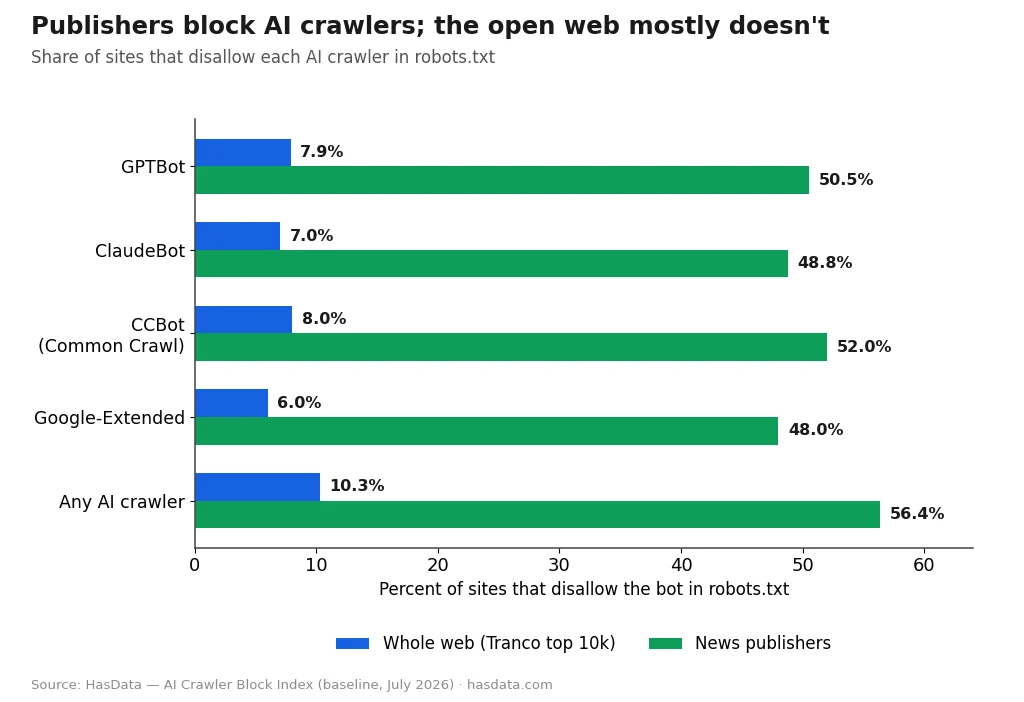
The conversation around artificial intelligence’s interaction with online content has undergone a profound transformation within the publishing industry. Publishers, who initially grappled with the prospect of AI answer engines like ChatGPT diminishing referral traffic from traditional search, have largely shifted their strategic focus. The prevailing sentiment now views AI answer engines less as a direct source of human referrals and more as a fundamental distribution layer, fundamentally altering the calculus of online presence and value. Success in this evolving landscape is increasingly defined by a publisher’s ability to govern how AI agents consume their proprietary content, establish a clear valuation for being surfaced in AI-generated answers, and devise innovative methods to monetize an ecosystem where mere mentions and citations often outweigh direct clicks.
This strategic pivot is underscored by a plethora of new reports and comprehensive analyses detailing the explosive growth of "agentic traffic" – automated web requests generated by AI bots. These insights highlight a critical juncture for publishers, as the web ecosystem is now demonstrably populated by more bots than humans, necessitating a complete re-evaluation of digital strategies.
The Exponential Rise of Agentic Traffic

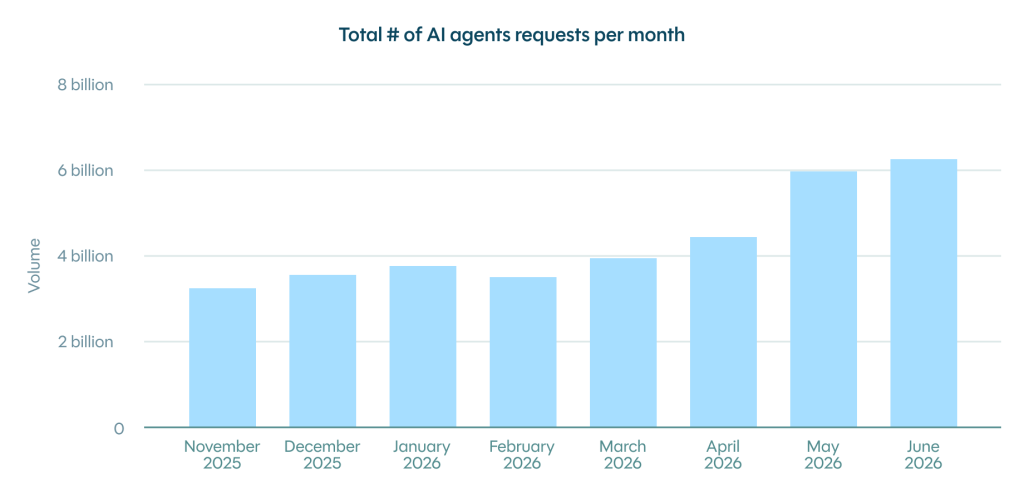
Recent data paints a vivid picture of the internet’s transformation, showing a dramatic surge in automated interactions. A report published last week by DataDome, a leading bot and online fraud protection company, revealed that AI agent traffic experienced a staggering 45% growth in the second quarter of 2026. DataDome’s extensive network, encompassing over 400 companies, recorded an unprecedented 17.7 billion AI agent requests between April and June 2026. This figure represents a substantial increase from the 12.2 billion requests observed in the first quarter of the same year, with June alone accounting for a colossal 6.6 billion AI agent requests. These numbers are a stark indicator of the burgeoning influence of AI in shaping web interactions.
Notably, Meta has emerged as the primary driver of AI agent traffic across DataDome’s network, fueled by both its AI model training crawlers and its Retrieval-Augmented Generation (RAG) crawlers. The company’s training crawler alone saw a robust 74% increase from Q1 to Q2, signifying its ongoing efforts to refine its AI models. Even more remarkably, Meta’s RAG crawler demonstrated an even faster growth trajectory, skyrocketing by 163% during the identical period. This indicates a significant investment in systems designed to fetch real-time information to enhance the accuracy and timeliness of AI-generated answers. This strategic move by Meta suggests a future where AI answers are not static but continuously updated, requiring publishers to ensure their content is always fresh and accessible.
Jérôme Segura, Vice President at DataDome, underscored the significance of this shift, stating, "We’re entering a new phase of the AI web. Meta is shifting from ‘scrape once for training’ to continuous indexing for real-time AI answers. As AI traffic becomes more persistent, publishers need to set guidelines for crawling and indexing like they have been doing for Google. It’s imperative to understand which agents access content, how often, and what they receive in return." This statement encapsulates the urgent need for publishers to adopt a more sophisticated and proactive stance towards AI agents, moving beyond simple blocking mechanisms to strategic engagement.
Further substantiating these trends, a July report from Decodo, leveraging data from Cloudflare, provided additional evidence of the accelerating dominance of automated systems. Their analysis found that AI-driven traffic surged by approximately 187% in 2025, a rate eight times faster than human traffic over the same timeframe. The report concluded that automated systems are now responsible for 57.4% of all web requests, surpassing the 42.6% generated by human users. In a more granular view, AI agent traffic experienced an astounding year-over-year growth of approximately 7,851%, signaling an unprecedented shift in the fundamental composition of internet traffic. This data suggests a future where the majority of web interactions will be machine-to-machine, profoundly impacting everything from content discovery to cybersecurity.
Evolving Publisher Strategies: From Referral Chasing to Visibility as Currency
The initial emergence of large language models (LLMs) and AI answer engines in late 2022 and early 2023 sent ripples of concern through the publishing industry. Companies like OpenAI and Google introduced powerful generative AI tools that could synthesize information and answer complex queries, leading to widespread anxiety among content creators. Many feared a significant decline in referral traffic, a cornerstone of their digital business models, as users might obtain answers directly from AI without visiting the source website. This period was characterized by publishers experimenting with blanket bans or adopting a wait-and-see approach, often using robots.txt directives to prevent AI crawlers from accessing their content. The underlying assumption was that AI was a competitor for clicks, a threat to existing traffic funnels and advertising revenue.
However, as AI technology matured and its integration into search and content discovery deepened, a more nuanced understanding began to emerge. Publishers recognized that completely disengaging from AI might mean missing out on a nascent, yet potentially enormous, distribution channel. The strategic focus began to shift from solely optimizing for human clicks to cultivating "AI visibility" – ensuring their content is discoverable, comprehensible, and attributable within AI-generated responses. This new paradigm treats being cited or mentioned by an AI agent as a form of "currency," a valuable impression that enhances brand authority and potentially leads to indirect benefits, even if direct referral traffic remains low. This is a fundamental departure from traditional SEO, where the click was king.
This shift necessitates publishers to re-evaluate their content strategies, moving towards highly structured, factual, and easily consumable formats that AI models can readily process. It also pushes them to develop sophisticated tracking mechanisms to understand how their content is being used by different AI agents and to explore potential monetization avenues, such as licensing agreements or premium data access for AI developers. The challenge lies in quantifying the value of an AI mention versus a human click, and in establishing fair compensation models in a rapidly developing technological landscape, especially concerning copyright and intellectual property rights.
Building for the Agentic Web: The Promise and Pitfalls of AI-Readable Formats
In anticipation of this agentic web, a growing number of companies are proactively creating AI-readable versions of their web content. The goal is to simplify content consumption for AI agents, making it easier for them to access, parse, and understand the core information. Formats such as Markdown and specifically designed LLMs.txt files are at the forefront of this effort. These formats essentially strip away complex HTML information and page design elements, presenting AI agents with streamlined content and metadata, optimized for machine comprehension rather than human aesthetic appeal. This initiative reflects a proactive stance by some publishers to gain more control over how their content is interpreted and utilized by AI.
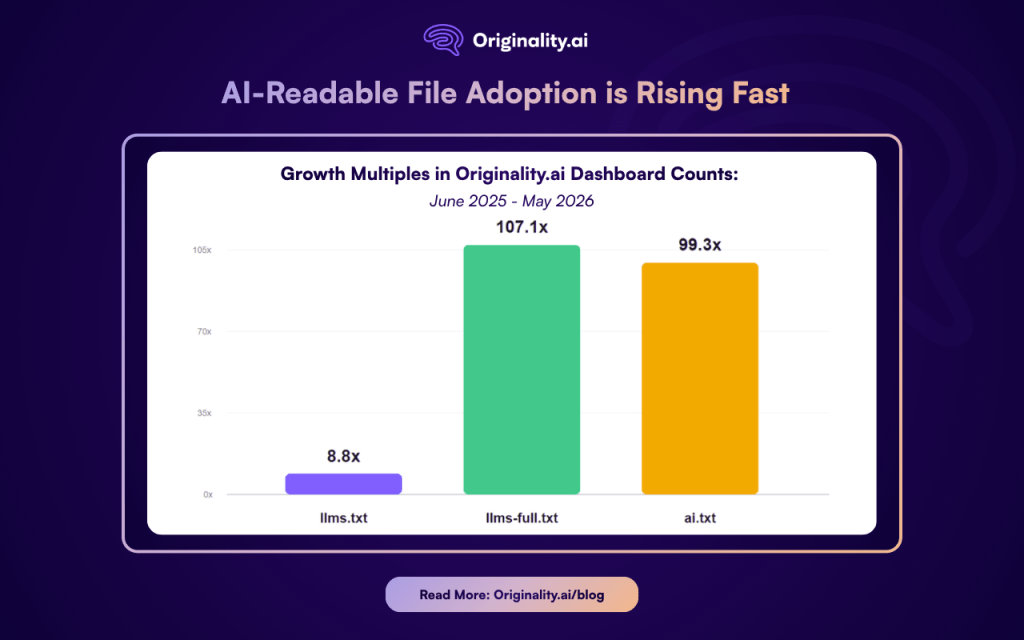
Originality.ai, an AI detection company, highlighted this trend in a recent report and accompanying dashboard, which meticulously tracks the adoption of AI web standards like LLMs.txt. Their findings indicate a significant surge in interest: LLMs.txt instances grew from 4,088 in June 2025 to a remarkable 36,120 by May 2026, representing an 8.8-fold increase across the 3 million websites analyzed. The report further identified 38,980 sites actively adopting these new web standards, including llms.txt, llms-full.txt, and ai.txt. This rapid adoption suggests a clear desire among webmasters and publishers to engage with the AI ecosystem on its own terms and potentially influence how their data is consumed.
However, the enthusiasm for these new formats is tempered by a significant reality check. DataDome’s report indicated that despite the growth in adoption, LLMs.txt had only reached 3.2% adoption among publishers by July, lagging behind the 7.9% observed across the broader open web. More critically, Ahrefs’ server-log research, cited in Originality.ai’s report, revealed that a staggering 97% of LLMs.txt files received zero requests in May 2026. This stark discrepancy between adoption and actual usage suggests that while publishers are building these pathways, AI agents are not yet widely utilizing them. This could be due to a lack of standardization, AI developers not prioritizing these files, or simply the nascent stage of the technology.
Jon Gillham, CEO of Originality.ai, commented on this disconnect: "The 8.8 [times] growth in LLMs.txt adoption shows that publishers are searching for some control over how AI interacts with their content. But adoption isn’t usage. If 97% of these files are never requested, this isn’t an AI visibility strategy yet. It’s a low-cost bet on an agent-driven future which might include llms.txt." This assessment points to the speculative nature of these standards and the ongoing uncertainty about their efficacy. Furthermore, Google’s official guidance has suggested that LLMs.txt is not strictly necessary for generative AI search optimization, further muddying the waters for publishers seeking clear directives. The challenge remains for the industry to coalesce around universally recognized and actively used standards for AI-readable content, or for AI companies to clearly signal their preferred content consumption methods.
Navigating the AI Visibility Landscape: Challenges and Best Practices
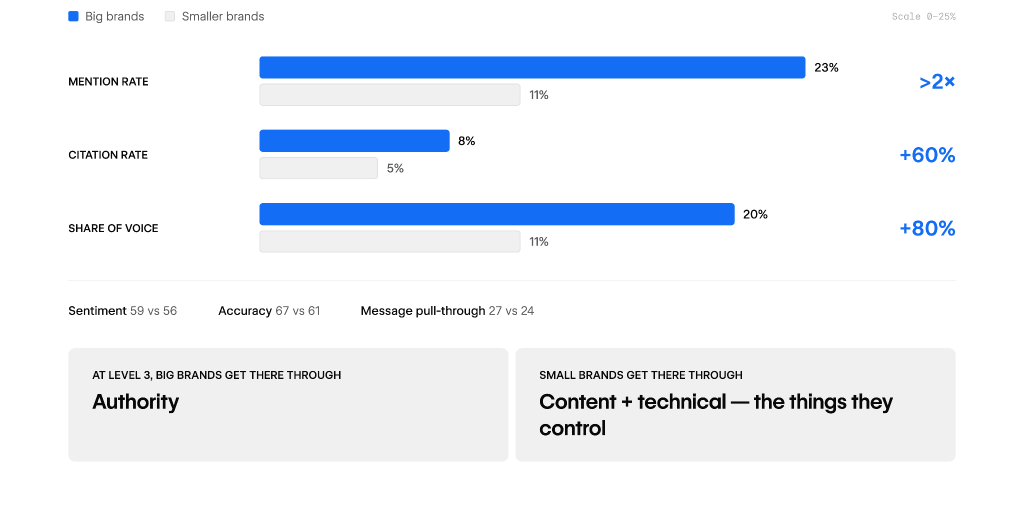
Achieving meaningful AI visibility, defined by mentions and citations in AI-generated answers, is proving to be a complex endeavor, even for publishers actively pursuing it. Webflow, a visual web development platform, developed an "AEO Maturity Index" to assess companies’ performance in both traditional SEO (Search Engine Optimization) and the emerging field of GEO (Generative Engine Optimization). Analyzing 2,000 websites across categories such as published content quality, technical GEO readiness, brand authority, and measurement capabilities, Webflow’s findings highlighted the inherent difficulties.
The study revealed that the median company appeared in only 16% of relevant AI answers, and critically, secured a citation with a direct link in only 6% of instances. Guy Yalif, Chief Evangelist at Webflow, pointed to foundational issues as primary culprits for underperforming GEO. Many websites suffered from basic SEO deficiencies, including broken links, missing metadata, and outdated content. These fundamental weaknesses, which hinder traditional search visibility, are equally detrimental to AI comprehension and attribution. The adage "garbage in, garbage out" applies not only to AI models but also to the content they consume.

Yalif emphasized the foundational nature of the current stage: "We are in early days in a new medium. [Publishers] can, at [their] core, answer questions, make it really easy for the LLMs to consume their content, show up in a bunch of places, and measure the right stuff." This advice underscores the importance of core content quality and technical hygiene as prerequisites for any successful AI visibility strategy. Publishers must ensure their content is accurate, authoritative, and well-structured, providing clear answers to potential user queries that AI models can readily extract and