In an era defined by rapid digital transformation and evolving economic landscapes, the traditional pillars of journalism are undergoing profound shifts, none more emblematic than the disappearance of the venerable newspaper morgue. Once the meticulously curated institutional memory of news organizations, these physical archives, filled with clip files and bound volumes, served as indispensable reservoirs of historical context for reporters. Today, while information is ostensibly more accessible through digital means, a critical examination reveals a subtle but significant loss: the serendipitous discovery of interconnected histories and the foundational depth that once characterized local reporting. This transition, driven by both technological advancement and severe economic pressures on newsrooms, raises pertinent questions about the long-term implications for journalistic quality, media literacy, and an informed citizenry.
The Golden Age of the Newsroom Morgue: A Repository of Collective Memory
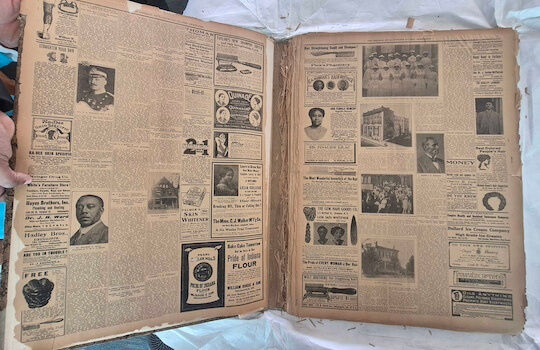
Decades ago, when newspaper operations were flush with resources and print was king, newsrooms maintained elaborate internal libraries, colloquially known as "morgues." These weren’t macabre spaces, but vibrant hubs of historical intelligence. Staffed by dedicated librarians and archivists, these facilities housed vast collections of news clippings, photographs, and documents, meticulously organized by subject, person, event, or location. Before embarking on any story, it was common practice for reporters to "check the morgue," a ritual that ensured historical accuracy and provided a rich tapestry of context.
For a reporter covering Indianapolis, for example, the local morgue would contain clip files on every historic building, every neighborhood, prominent figures, recurring issues, and significant events dating back decades. These files were dynamic, refreshed daily by librarians who would meticulously cut relevant articles from dozens of copies of the morning paper, fold them, and integrate them into their respective categories. This labor-intensive process ensured that reporters had immediate, tangible access to the full trajectory of a story, understanding not just the current event but its roots, its key players, and its previous iterations. This immersive experience fostered a deep institutional knowledge among journalists, enabling them to connect current events to historical precedents and provide a more nuanced narrative to their readers.
The Digital Revolution and Economic Pressures: A Paradigm Shift
The advent of the internet and the subsequent digitization of information brought about a profound shift in how news organizations managed their archives. The promise was alluring: instant access to vast amounts of data from anywhere, anytime. However, this technological leap coincided with a period of severe economic downturn for the newspaper industry. Advertising revenues plummeted, subscriptions dwindled, and newsrooms faced unprecedented pressure to cut costs. One of the first casualties in this financial restructuring was often the internal library staff and the physical morgues they maintained.
According to a 2018 report by the Pew Research Center, newsroom employment in the U.S. fell by 47% between 2008 and 2018. While specific data on newsroom librarians is scarce, anecdotal evidence suggests that most, if not all, such positions were eliminated. The physical space once occupied by towering shelves of clip files became valuable real estate, often repurposed or sold. The once-sacred act of "checking the morgue" became an archaic notion, replaced by keyword searches in digital databases.
While digital archives offer undeniable efficiencies, providing broad access to historical articles without the need for physical presence, this transition has not been without its drawbacks. As April Hines, the journalism and mass communications librarian for the University of Florida Libraries, observes, the move from physical archives to digital has created efficiencies but also unforeseen consequences.
The Unintended Consequences: The Loss of Serendipitous Discovery
One of the most significant losses in the transition from physical clip files to digital databases is the "element of discovery." Hines explains, "When you had those clip files, or a newspaper index, and you had content organized by subject, you had the element of discovery. So you might open a clip file labeled ‘lawsuits’ and then you might find a lawsuit that you never even knew happened. So with keyword searching, you have to have a keyword to search for; you have to know what you’re searching for."
This serendipitous discovery was a hallmark of historical research in the physical morgue. A reporter might be researching a specific politician but, while sifting through related files, stumble upon a forgotten scandal, a crucial past policy debate, or a long-standing community issue that adds layers of understanding to their current story. Digital keyword searches, while precise, inherently limit the scope of inquiry to what is already known or suspected, often missing these crucial, unexpected connections. This can lead to a shallower understanding of complex issues, where only the most obvious historical links are made, if at all.
Randy Krehbiel, a veteran reporter for the Tulsa World, vividly illustrates this point. In his extensive reporting on the 100th anniversary of the 1921 Tulsa Race Massacre, and for two books on the subject, he immersed himself in his newspaper’s physical clip files and archives. This deep dive involved reading every issue of the Tulsa World from June 1, 1920, to the end of 1922, and every issue of the competing Tulsa Tribune for the calendar year 1921. Krehbiel reflects, "By doing that, and I didn’t really plan it this way, but by kind of immersing myself in these newspapers, it helped me understand better what it was like to live in 1921 and how that was similar and different to living at that time to 80 years later."
Krehbiel is one of the few reporters in his newsroom who still knows how to access and frequently utilizes the paper’s physical morgue, which is no longer maintained by dedicated staff. He views this as a significant loss for daily news coverage, particularly for younger reporters. He laments, "I think it’s really hard for a young reporter to go to a city council meeting and they walk in there and they don’t know any of the history of any of the people in that room and they’re trying to follow what’s going on. The history helps you understand, again, why they think what they think and say what they say…it’s just amazing how there are these thought strands that continue for generations." This lack of immediate historical grounding can hinder a reporter’s ability to ask incisive questions, identify long-standing patterns, and provide truly comprehensive coverage.
Case Studies in Historical Reporting: Where Context Still Shines
Despite the challenges, some news outlets and individual journalists continue to prioritize historical context in their reporting, demonstrating its enduring value. In Indianapolis, both the IndyStar and the Indianapolis Recorder recognize the importance of delving into the past.
The Indianapolis Recorder, established in 1899 and recognized as one of the oldest Black newspapers in the country, actively encourages its journalists to consult its extensive archives. Editor-in-chief Camike Jones states it’s a "standing recommendation" for her reporters because "context matters and… having that historical understanding matters." The Recorder regularly draws upon its rich history, as exemplified by its reprint of Whitney M. Young Jr.’s 1968 opinion piece on Martin Luther King Jr.’s assassination, and recent stories detailing a bootleg cab kingpin and the 125th anniversary of St. Philips Episcopal Church, all enriched by historical archives.
Similarly, the IndyStar leverages its digital archive, accessible to paid subscribers back to December 1845 via Newspapers.com. Executive Editor Ryan Martin confirms that staff "extensively reference the archives for reporting projects and initiatives." This commitment is visible in their regular "Retro Indy" features in Sunday editions, which revisit historical events and figures. Arts and Creativity reporter Domenica Bongiovanni, for instance, used the paper’s archives to uncover the true story behind the film "Dead Man’s Wire" and to detail the little-known history of the Children’s Museum carousel. Martin commends his team, stating, "Our journalists are some of the strongest researchers I’ve worked with. Their attention to history is clearly referenced in their accountability reporting."
These examples underscore that historical research is not an obsolete practice but a vital component of quality journalism. When effectively integrated, historical context elevates reporting from a mere recitation of facts to a meaningful narrative that illuminates the present.
A Missed Opportunity: The Case of Governor Braun’s Policy Shift
However, the consistent application of historical context in daily news coverage remains a challenge. A recent announcement by Governor Mike Braun regarding the termination of Indiana’s Minority and Women’s Business Enterprises (MWBE) Program and the Diversity Business Enterprises Program serves as a stark illustration. These programs, established by the state legislature in 1983, aimed to enhance opportunities for minority and women business owners to secure state contracts.
Every news outlet covering Braun’s announcement dutifully reported his rationale and gathered reactions from legislators and community groups. Yet, a crucial element was largely absent: the historical context behind the 1983 legislation. Why were these laws passed then? What socio-economic conditions, historical injustices, or public policy debates led to their creation? What has fundamentally changed in the intervening decades to warrant their termination? Without this historical grounding, the public is presented with a policy shift in a vacuum, making it difficult to fully grasp the potential implications or the historical lineage of such initiatives. This instance highlights a broader trend where the "what" and "who" often overshadow the "why" and "how we got here" in fast-paced news cycles.
The Dual Challenge of Digital Accessibility and Preservation
While digitization offers the promise of universal access, it also presents its own set of challenges. As April Hines points out, "newspapers are the first record of history… But, if it hasn’t been digitized, if it hasn’t been made publicly available—or it’s stuck behind a paywall—then it’s much less accessible to those who could benefit the most."
The process of digitizing vast historical archives is incredibly expensive and time-consuming, a prohibitive cost for many financially strained newsrooms. This means that significant portions of historical news records remain in physical formats, often uncatalogued, deteriorating, or even discarded. Hines has heard alarming reports of some newspapers simply throwing away their physical archives, including irreplaceable photo morgues, due to a lack of space or resources to preserve them. This represents an irreversible loss of primary source material, not just for journalists but for historians, researchers, and the public.
Furthermore, while some digital archives are freely available through public libraries or state initiatives, many commercial newspaper archives are behind paywalls, limiting access to those who can afford subscriptions. This creates an information inequality, where historical context becomes a commodity rather than a public good.
Empowering the Public: Resources for Deeper Understanding
In this evolving media landscape, the onus increasingly falls on news consumers to actively seek out historical context to become more informed and critical readers. As Maria McCauley, America Library Association president, notes, "It is a win for everyone to be able to see newspapers online… It is also wonderful to be able to view any archival material online, as accessibility is key. But very little can replace the experience of looking and researching something in person."
Fortunately, a wealth of public resources exists to bridge this gap, allowing individuals to delve deeper into historical records and enrich their understanding of current events. For residents of Indiana, several institutions provide invaluable access to historical news records:
- The Indianapolis Recorder’s Photo Morgue: Available through the Indiana Historical Society’s digital collections, offering a visual journey through Black history in Indianapolis.
- The Indiana Jewish Post & Opinion and the Illiana News: Collections documenting the state’s Jewish community, housed at the Indiana Historical Society.
- El Amigo del Hogar and the Latin Times: Newspapers from Northwest Indiana’s Latino community, also accessible via the Indiana Historical Society.
- The Michael Bohr Collection of the Indy Pride Chris Gonzalez Library and Archives: Periodicals documenting Indiana’s LGBTQ+ community.
- WTLC’s Like It Is: Records from Indianapolis’s first predominantly Black-owned and operated radio station.
- Hoosier State Chronicles: Indiana’s statewide digital archive of historic newspapers, operated by the Indiana State Library, offering free access to a vast collection of digitized historical newspapers.
- Indianapolis Recorder Website: Provides access to stories from the early 2000s onwards.
- Newspapers.com (for IndyStar subscribers): Offers digital access to the IndyStar archive dating back to 1845.
By utilizing these resources, individuals can actively participate in the historical discovery process, supplementing the context provided by contemporary news reports and developing a more comprehensive understanding of the issues shaping their communities.
Broader Implications for Journalism and Society
The decline of the traditional newsroom morgue and the uneven transition to digital archives represent more than just a logistical shift; they signify a fundamental change in the ecosystem of information and historical knowledge. For journalism, the challenge lies in ensuring that the pursuit of speed and efficiency does not inadvertently erode the depth and context that are essential for meaningful reporting. News organizations must find innovative ways to integrate historical research into daily workflows, perhaps by collaborating more closely with public libraries and historical societies, or by investing in dedicated archival staff where possible.
For society, the implication is clear: an informed citizenry requires not just access to current facts, but a robust understanding of the historical forces that shaped those facts. Without this context, public discourse risks becoming superficial, policies are debated without understanding their antecedents, and the collective memory of a community can gradually fade. The role of institutions like the Poynter Institute’s Indianapolis Public Editor project is crucial in fostering media literacy and advocating for journalistic practices that uphold historical depth.
The digital age offers unprecedented opportunities for access, but it also demands renewed vigilance in preserving and integrating history into our understanding of the present. The echoes of the past, once housed in bustling newspaper morgues, must continue to resonate through contemporary journalism if we are to truly comprehend "how we got here" and intelligently navigate the path forward.
This column is part of the Indianapolis Public Editor project, a pilot program designed to test whether the presence of a public editor who analyzes local coverage can elevate audience trust in journalism and promote media literacy.
Please join me at my next News & Nibbles: Let’s Talk Media event at the Glendale branch of the Indianapolis Public Library this Thursday, July 23 from 10:30 a.m. to 11:30 a.m. (3660 E. 62nd St., Indianapolis, IN 46220)
I want to hear from you! Please write to me at [email protected].
Tracey Compton
Indianapolis Public Editor
Poynter Institute
I’d love to hear from you. Please send your questions about Indy’s media ecosystem to [email protected], or reach out to let me know if you’d like me to come speak to your community group. Your input helps strengthen Indianapolis’ local journalism.
Sign up for the newsletter here.
The Indy Public Editor is a grant-funded pilot project run by the Poynter Institute. This column is edited by Kelly McBride and copy edited by Lauren Klinger. The project is managed by Nicole Slaughter Graham with support from Amaris Castillo.