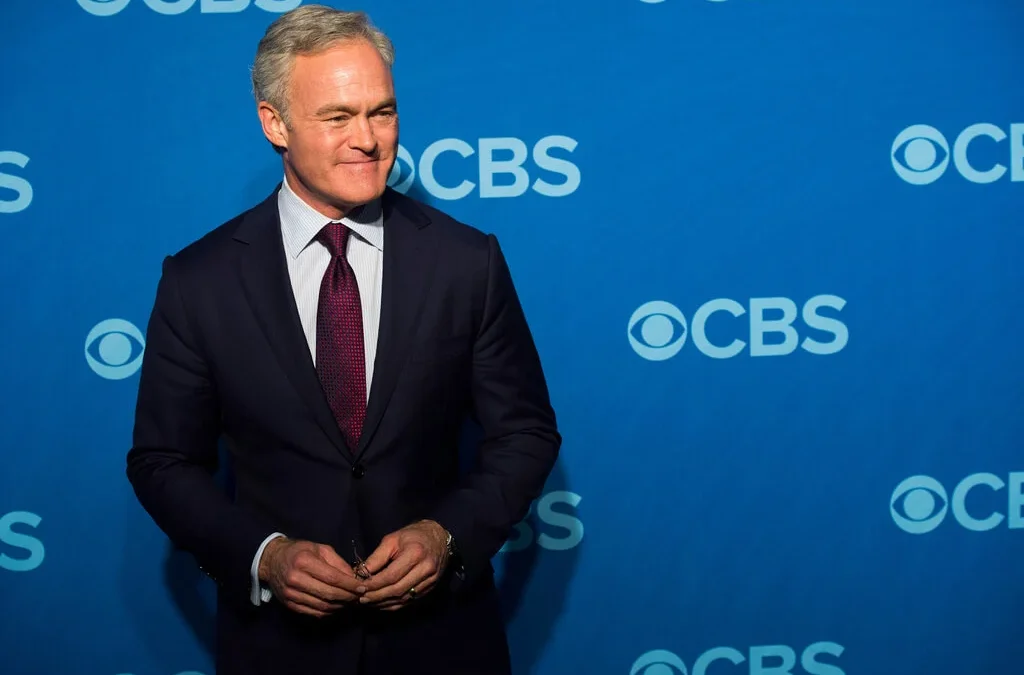
The landscape of American broadcast journalism is undergoing a profound and potentially irreversible transformation as long-standing pillars of the "Big Three" networks confront a dual crisis of corporate consolidation and intense political polarization. As the recent "blue tsunami" of Democratic midterm victories reshapes the legislative branch, industry observers are asking whether institutional news outlets will recalibrate their editorial stances. Yet, for veteran journalists like Scott Pelley, the question of political bias misses the more foundational issue: the erosion of editorial independence in the face of executive interference and foreign investment.
Pelley, a titan of the industry with a 37-year tenure at CBS News, finds himself at the center of a national debate regarding the sanctity of the newsroom. His recent departure from the storied halls of 60 Minutes serves as a focal point for a broader narrative involving the acquisition of Paramount by Skydance, the installation of new leadership, and a fundamental shift in how legacy media interacts with both the Trump administration and global capital interests.
A Chronology of Institutional Change
The erosion of the traditional CBS newsroom culture can be traced through a series of specific, high-profile events over the past 24 months. Following the acquisition of Paramount by David Ellison’s Skydance, the corporate hierarchy underwent a radical restructuring. The appointment of Bari Weiss as editor-in-chief and the subsequent hiring of Nick Bilton as executive producer of 60 Minutes marked a departure from the network’s traditional hiring practices, which historically favored candidates with deep, established roots in broadcast journalism.
The tension reached a breaking point on June 1, during a volatile staff meeting at the 60 Minutes headquarters. According to accounts provided by insiders, Scott Pelley confronted executive producer Nick Bilton, questioning the latter’s lack of television production experience and characterizing the editorial direction under Weiss as a detriment to the program’s long-standing credibility. Pelley’s public dissent—asserting that the editorial integrity of the legendary program was being dismantled—led to his immediate termination the following day.
This event was not an isolated incident but rather the culmination of years of friction. Reports had previously circulated regarding settlements paid by Paramount to the Trump administration following contentious interviews, as well as internal memo leaks suggesting that editorial content was being vetted for political palatability. Critics argue that these actions represent a "chilling effect" on investigative journalism, wherein the pursuit of access or corporate stability outweighs the obligation to hold power to account.
The Financial Nexus: Corporate Ownership and Foreign Influence
The complexity of the situation at CBS is compounded by the recent merger between Skydance and Warner Bros. Discovery. This consolidation has brought new, significant financial players into the fold, most notably the Saudi sovereign wealth fund, the Public Investment Fund (PIF).
The involvement of the PIF, chaired by Crown Prince Mohammed bin Salman, presents a profound ethical dilemma for the network. In the eyes of many veteran journalists, the partial ownership of major news organizations like CBS and CNN by a government entity linked to the 2018 assassination of Washington Post columnist Jamal Khashoggi creates an irreconcilable conflict of interest.
Pelley, in his reflections ahead of receiving the Poynter Medal for Lifetime Achievement, underscored the severity of this development. "I cannot reconcile partial ownership of CBS News and CNN with the murder of a journalist," Pelley stated. This perspective highlights a growing concern within the industry regarding the intersection of global finance and the Fourth Estate. When news organizations are tethered to the financial interests of regimes with records of human rights abuses, the ability of those organizations to report objectively on foreign policy and international relations becomes fundamentally compromised.
Data and Industry Trends in Media Trust
The public’s trust in legacy media has been in steady decline for over a decade. According to recent Gallup polling, trust in mass media to report the news "fully, accurately, and fairly" has hit near-record lows. This skepticism is not merely a result of partisan divide but is also driven by the perception that corporate media has become a tool of elite interests.
The financial data supports the volatility currently experienced by these networks. The settlement of millions of dollars by Paramount to resolve disputes with the Trump administration sets a dangerous precedent. When legal disputes are settled with financial payouts rather than editorial clarifications, the public is left to wonder if the truth is something that can be purchased. Furthermore, the turnover rate of senior editorial staff at major networks has surged by approximately 22% since 2024, signaling a "brain drain" that threatens the institutional memory and rigor of these newsrooms.
The Path Forward: Independent Journalism
In the wake of his departure, Scott Pelley has transitioned into the role of an independent journalist, a shift that he describes as both liberating and necessary. This move reflects a broader trend within the media industry where prominent voices are bypassing traditional gatekeepers to reach audiences directly through podcasts, documentaries, and independent media companies.
For those remaining within the structures of legacy media, particularly at CNN and CBS, Pelley offers a stern warning. He advises staff to remain hyper-vigilant regarding:
- Editorial Autonomy: Watching for instances where ownership reneges on promises of independence.
- Story Suppression: Identifying efforts to kill investigative pieces that may be unfavorable to ownership’s corporate or political allies.
- Internal Censorship: Recognizing the injection of overt bias into news reporting under the guise of "balanced" coverage.
- Protection of Peers: Supporting colleagues who are targeted for defending journalistic standards.
Analysis: The Future of the Newsroom
The implications of these shifts are significant for the American electorate. Journalism serves as a critical feedback loop in a democracy; when that loop is distorted by corporate agendas or political pressure, the entire democratic process suffers. The current situation at CBS is a case study in what happens when the commercial mandate of a media conglomerate clashes with the professional mandate of the journalist.
While the investigative reporting currently produced by major networks regarding government corruption remains robust, it is increasingly fragile. The focus on political spectacle—the "tsunami" of election results—often distracts from the more subtle, structural changes occurring behind the scenes. As the industry moves forward, it faces a clear choice: either restore the wall between editorial decision-making and corporate/political influence, or risk losing the last vestiges of public trust.
Pelley’s critique of the current state of journalism also points to areas of missed opportunity. He argues that while investigations into domestic corruption are vital, the industry is failing to sufficiently cover critical international flashpoints, such as the ongoing tensions in the Middle East. Furthermore, as the industry grapples with the integration of Artificial Intelligence, there is a clear, unmet need for explanatory journalism that demystifies how these technologies will fundamentally alter the structure of modern civilization.
Conclusion
The recognition of Scott Pelley by the Poynter Institute serves as a symbolic endorsement of the values he has defended throughout his five-decade career. As he accepts the Medal for Lifetime Achievement, his message is clear: the credibility of a news organization is its most valuable asset, and it is the first thing lost when the principles of independent journalism are sacrificed at the altar of political or corporate expediency.
Whether CBS News and its peers can reverse the current trend remains to be seen. However, the precedent set by the departures of seasoned veterans and the influx of new, controversial ownership models suggests that the battle for the integrity of the American press is far from over. The industry is currently at a crossroads, and the decisions made by media executives in the coming months will likely determine the role and relevance of broadcast journalism for the next generation. As Pelley himself noted, the opportunities for independent, values-driven journalism are endless, even as the traditional institutions struggle to maintain their footing in an increasingly complex and hostile landscape.