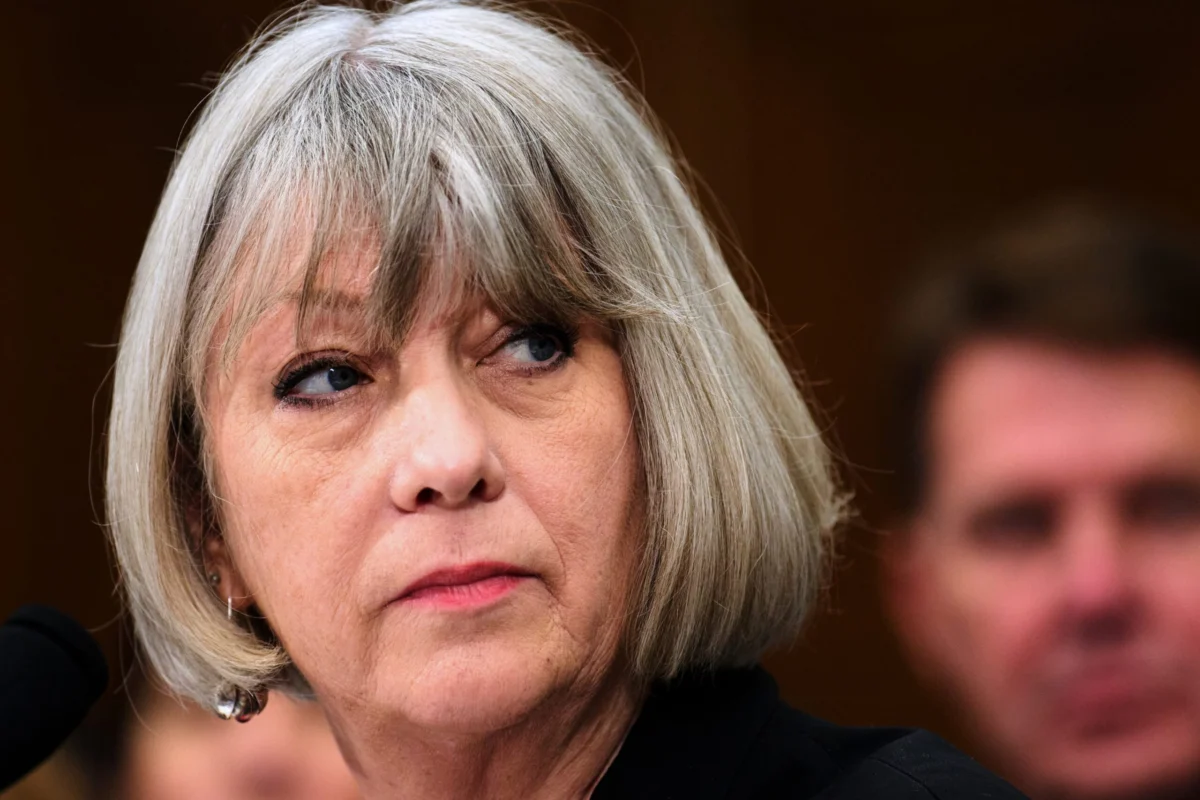
Anthea M. Hartig, the Director of the Smithsonian’s National Museum of American History (NMAH), appeared before a House Oversight subcommittee on Tuesday to forcefully refute a White House report that characterized the institution’s leadership as "radical activists." The hearing underscored a deepening ideological divide over how the United States archives, interprets, and presents its national narrative to the public. As the nation approaches its 250th anniversary, the friction between the executive branch and the country’s premier historical institution has raised significant questions regarding the independence of cultural entities and the role of diversity, equity, and inclusion (DEI) in public education.
The testimony served as a direct response to a July 4th report issued by the White House Domestic Policy Council. The document, timed to coincide with Independence Day celebrations, alleged that the museum has moved away from its core mission of celebrating American achievements and has instead adopted a "woke" agenda. The report further asserted that the NMAH leadership could no longer be trusted to steward the nation’s heritage, claiming the museum presents history as a series of power struggles rather than an inspiring journey of a "great republic."
The Core of the Contention: A Conflict of Narratives
During her testimony, Hartig, who is the first woman to lead the National Museum of American History since its inception, maintained a firm stance against the allegations of radicalism. She characterized the museum’s recent shifts in curation not as an attempt to erase traditional American history, but as a necessary evolution to include voices that have historically been marginalized or omitted from the national record.
"As we continue to fact-check the report, we unwaveringly attest that it does not fairly or accurately characterize the full body of work at the museum," Hartig told the subcommittee. She emphasized that the museum’s goal is to offer a "fuller" version of the American story. "When historians talk about reframing a traditional narrative, we don’t mean erasing it. We mean adding the evidence, the voices, the objects, that earlier tellings left out, so that more Americans can see themselves reflected in the national story."
The White House report, however, painted a different picture. It argued that the museum "has refused to celebrate the Nation and its history" and has failed to create exhibits dedicated to a "general narrative" of the Founding Fathers, the Declaration of Independence, or the Revolutionary War. This critique aligns with a broader effort by President Donald Trump’s administration to promote "patriotic education," a movement that seeks to prioritize traditional narratives of American exceptionalism while criticizing modern academic approaches to history that focus on systemic inequality.
Congressional Scrutiny and the "Woke" Label
Republicans on the House Oversight subcommittee echoed the sentiments of the White House report, using the hearing to question the museum’s ideological direction. Representative Tim Burchett (R-Tenn.) was particularly vocal, stating that under current leadership, history is presented merely as an "ongoing power struggle between oppressors and the oppressed." Burchett and his colleagues argued that the museum’s focus on social justice themes alienates a large portion of the American public and detracts from the unifying power of national symbols.
Specific scrutiny was directed toward the "Girlhood (It’s Complicated)" exhibit, which ran at the museum from 2020 through 2023. The exhibit explored the diverse experiences of girls in America over several centuries. Republican lawmakers pointed to a specific item—a diary from a 13-year-old discussing gender identity—as evidence of what they termed "radical" indoctrination. Hartig defended the exhibit, noting that it was designed to reflect the actual lived experiences of young people in different eras and that it included clear signage indicating it was intended for older audiences, not young children.
Another point of contention involved the accessibility of foundational documents and artifacts. Representative Michael Cloud (R-Texas) shared his experience of a recent visit to the museum, claiming that while artifacts like the Declaration of Independence exist within the building, they are difficult for the average visitor to find. "I’m not saying it’s not there, but it’s hard to find," Cloud remarked, suggesting that the museum’s layout de-emphasizes the traditional milestones of the American founding in favor of more contemporary social issues.
Rebutting the Claims of Absence
In response to the White House’s claim that the museum lacks a dedicated narrative on the American Revolution, Hartig pointed to the "In Pursuit of Life, Liberty and Happiness" exhibit. Opened in May, the exhibit was specifically designed to celebrate the upcoming 250th anniversary of the United States. It features 250 seminal objects distributed throughout the museum, including:
- Thomas Jefferson’s Desk: The portable mahogany desk on which he drafted the Declaration of Independence.
- The Star-Spangled Banner: The actual flag that flew over Fort McHenry in 1814, inspiring the national anthem.
- Revolutionary War Gunboat: The Philadelphia, a continental gondola captured and sunk during the Battle of Valcour Island.
- George Washington’s Uniform: The military attire worn by the first president during the Revolutionary War.
Hartig argued that these objects are not hidden but are the centerpieces of the museum’s collection. She stated that the museum’s strategy is to integrate these foundational stories with a broader array of artifacts—such as those related to the labor movement, women’s suffrage, and the civil rights struggle—to show how the ideals of the Declaration of Independence have been interpreted and fought for by successive generations.
Institutional Independence and Political Pressure
The hearing took place against a backdrop of significant leadership turnover within the Smithsonian Institution. The Smithsonian, while receiving approximately 60% of its funding from the federal government, has traditionally operated with a high degree of autonomy to ensure that historical and scientific inquiry remains free from partisan political influence. However, recent events have tested this independence.
President Trump has previously expressed a desire to exert more control over the leadership of cultural institutions. Last year, the director of the National Portrait Gallery, Kim Sajet, stepped down following sustained pressure from the White House. While the Smithsonian Secretary—not the President—technically holds the power to hire and fire museum directors, the political pressure on the Board of Regents and the central administration can be immense.
When Representative Burchett asked Hartig directly why she should be allowed to keep her job in light of the White House’s criticisms, Hartig replied that serving the museum was "the honor of my career." Her defenders argue that removing her for political reasons would set a dangerous precedent, effectively turning the Smithsonian into an arm of the executive branch’s communications office.
Timeline of the Escalating Conflict
The tension between the NMAH and the White House has built steadily over the last four years, reflecting a wider national "culture war" over education and heritage:
- 2020: The "Girlhood (It’s Complicated)" exhibit opens, drawing both critical acclaim from historians and criticism from conservative activists.
- 2021-2022: The Smithsonian begins implementing expanded DEI initiatives across its 21 museums, aimed at diversifying staff and ensuring exhibits represent the "full American experience."
- Late 2023: President Trump announces his intention to overhaul federal cultural institutions, specifically targeting those he deems "anti-American."
- May 2024: The NMAH launches "In Pursuit of Life, Liberty and Happiness" as a precursor to the 250th-anniversary celebrations.
- July 4, 2024: The White House Domestic Policy Council releases its report branding Smithsonian leadership as "radical activists."
- July 2024: Anthea Hartig testifies before the House Oversight subcommittee, defending the museum’s integrity.
Broader Implications for the American Story
The outcome of this dispute has implications that reach far beyond the walls of the National Museum of American History. At its core, the debate is about who has the authority to define the American identity.
Historians and museum professionals have expressed alarm at the White House report, viewing it as an attempt at revisionism that ignores the complexities of the past. Professional organizations, such as the American Historical Association (AHA), have long advocated for a "warts and all" approach to history, arguing that a nation is strengthened by confronting its failures as well as celebrating its triumphs. They argue that excluding the stories of "the oppressed" provides an incomplete and therefore inaccurate version of history.
Conversely, the proponents of the White House report argue that the primary purpose of a national museum should be to foster social cohesion and national pride. They contend that by highlighting historical injustices, the museum contributes to national fragmentation and a lack of faith in American institutions.
As the United States prepares for the "America 250" celebrations in 2026, the Smithsonian finds itself at a crossroads. The institution must balance its commitment to scholarly accuracy and inclusivity with the political realities of being a federally funded entity in a deeply polarized environment. For now, Director Hartig remains at the helm, asserting that the museum’s mission is not to take sides in political debates, but to provide the evidence and the objects that allow all Americans to find their place in the ongoing story of the republic.
The standoff continues to serve as a high-stakes case study in the intersection of politics, history, and the public’s right to an independent accounting of its national heritage. Whether the Smithsonian can maintain its course of "inclusive history" or will be forced to pivot toward a more traditionalist narrative may depend on the political landscape following the next election cycle.