The methodology of online information retrieval has undergone a fundamental transformation, shifting the paradigm of digital discovery away from traditional search engine results pages and toward synthesized, direct-answer platforms. For over two decades, the standard consumer journey on the internet began with a keyword query into a search engine, followed by an investigative process of navigating through a list of blue text links to compare various web sources. Today, that deliberative phase is increasingly bypassed as users turn to conversational artificial intelligence applications such as ChatGPT, Perplexity, and Google’s AI-integrated search functionalities to deliver a singular, comprehensive answer instantly.

This technological evolution has profound implications for digital marketers, content creators, and corporate strategy teams worldwide. The guiding question for online visibility has shifted from a preoccupation with traditional search engine optimization metrics—such as keyword rankings and organic click-through rates—to a more complex inquiry: whether generative AI tools acknowledge, cite, or recommend a brand within their synthesized responses. Industry analysts note that this shift marks the decline of the traditional traffic funnel, necessitating a strategic pivot toward Answer Engine Optimization (AEO) and proactive brand monitoring within AI ecosystems.
The Changing Anatomy of the Buyer Journey

To understand the urgency of this marketing transition, one must examine the shifting habits of modern consumers and business-to-business (B2B) buyers. Research conducted by prominent advisory and market intelligence firms highlights a dramatic decline in traditional web traffic coupled with an exponential surge in zero-click searches—queries that conclude on the search page or within an AI interface without the user visiting an external website.
According to a comprehensive study by Forrester, approximately 94 percent of B2B decision-makers incorporated artificial intelligence tools into their recent procurement and purchasing workflows. Within that cohort, 55 percent utilized AI platforms specifically to compare competing vendors, 54 percent conducted preliminary product research, and 47 percent relied on AI-generated insights to build internal business cases for software and service investments. Crucially, these activities occurred entirely before potential buyers engaged in direct communication with a vendor’s sales representative. Consequently, AI answer engines have ascended to become the primary source for vendor discovery, eclipsing traditional vendor websites, direct sales outreach, and industry analyst reports.
Parallel shifts are evident in consumer markets. Data from McKinsey & Company indicates that roughly 50 percent of consumers across all demographic groups, including older generations, routinely leverage AI-powered search for daily purchasing decisions. Furthermore, Adobe Digital Insights reported that 56 percent of United States consumers utilized generative AI technologies during the recent holiday shopping season, representing a 45 percent increase compared to the previous year. Bain & Company data similarly reveals that approximately 60 percent of modern web searches now terminate without a single outbound click, signaling the arrival of a new era in digital consumer behavior where synthesized summaries supersede directory navigation.
Categorizing the New Tech Stack: Answer Engines, Site Search, and AEO

As the software ecosystem adapts to these shifting behaviors, the market has introduced distinct categories of artificial intelligence search technologies designed to serve different operational needs. Industry experts categorize these applications into three primary pillars: Answer Engines, AI Site Search Tools, and Answer Engine Optimization (AEO) Platforms.
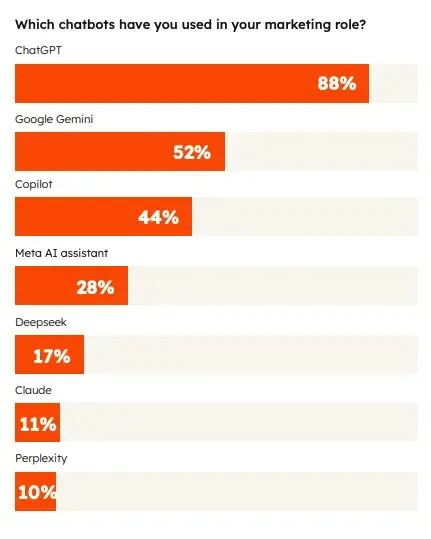
Answer engines, dominated by applications like OpenAI’s ChatGPT, Google Gemini, and Anthropic’s Claude, process natural language queries and synthesize responses drawn from vast repositories of training data and real-time web retrieval. These systems are utilized by consumers for open-ended discovery and by marketing professionals for deep research, data analysis, and content generation. Concurrently, Perplexity has gained traction among enterprise users by prioritizing real-time, inline citations, mitigating the hallucination and sourcing errors historically associated with large language models.

The second category encompasses AI site search tools, integrated directly into corporate websites, e-commerce storefronts, and internal enterprise knowledge bases. Platforms such as Algolia, Coveo, and Elasticsearch utilize advanced neural search and natural language processing to help visitors navigate massive inventories and complex documentation without abandoning the host domain. For e-commerce brands and software-as-a-service enterprises, robust internal AI search is critical for reducing friction, lowering customer acquisition costs, and retaining user engagement.
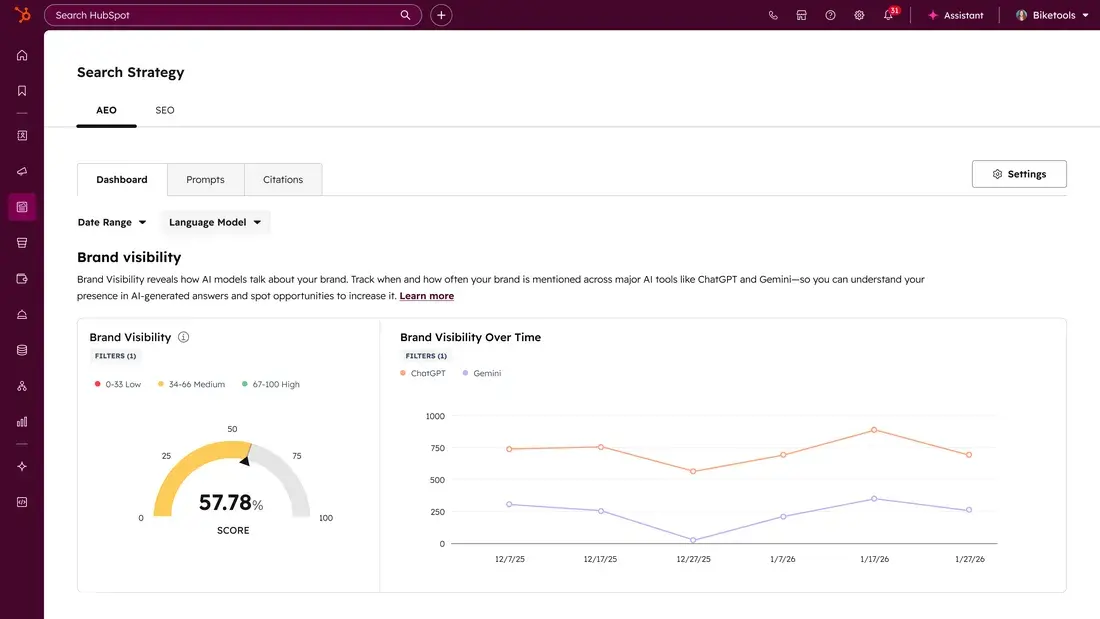
The third and fastest-growing category comprises Answer Engine Optimization (AEO) tools. These marketer-facing analytics platforms monitor how frequently a specific brand is cited or recommended within AI-generated summaries, benchmark visibility against competitors, and provide actionable recommendations to close gaps in digital authority. Tools developed by enterprise software providers—such as HubSpot’s dedicated AEO suite and AI Search Grader—allow organizations to track their brand presence across multiple large language models and align optimization strategies with actual customer relationship management (CRM) data.
Implications for the Future of Digital Marketing
The broad adoption of generative AI search mechanics requires a fundamental restructuring of digital marketing budgets and key performance indicators. Traditional optimization strategies focused on keyword stuffing, backlink acquisition, and meta-tag manipulation are no longer sufficient to secure top-tier visibility when algorithms generate single, authoritative answers rather than ranked lists of options.

Instead, modern visibility depends on establishing genuine brand authority, securing mentions in trusted third-party publications that AI models frequently cite, and ensuring that corporate data is structured clearly for web crawlers. Brands that fail to optimize for generative engines risk total obscurity during the critical research phase of the buyer’s journey, as modern consumers increasingly make purchasing decisions based entirely on the recommendations of automated assistants.
Industry leaders suggest that organizations adopt a phased approach to integrating AI search tools into their operations. Companies are advised to begin with diagnostic assessments—such as analyzing current AI referral traffic and utilizing search auditing tools—before investing in comprehensive AEO tracking suites or enterprise-grade site search infrastructure. As generative search continues to mature, the organizations that successfully adapt to this zero-click, AI-driven landscape will secure a formidable competitive advantage in the digital marketplace.