In the digital landscape, where the average human attention span has dwindled to approximately eight seconds according to data from the National Center for Biotechnology Information, the opening of a written work has become the primary determinant of content consumption. While digital strategists frequently emphasize the necessity of search engine optimization and compelling headlines, the critical importance of the first few sentences—the "hook"—is often overlooked. If the headline acts as the gatekeeper to a piece of content, the opening line serves as the bridge that transports the reader from passive observation to active engagement.
The mechanism of a reader’s decision-making process is largely subconscious. Within milliseconds of clicking a link, a reader evaluates the tone, the immediate value proposition, and the perceived effort required to process the information. Failure to bridge this gap results in high bounce rates, a metric that search engines increasingly use to penalize content visibility.
The Anatomy of Reader Retention
Data analytics from major publishing platforms suggest that nearly 55% of visitors spend fewer than 15 seconds on a web page. This "bounce" phenomenon is rarely a reflection of the quality of the content buried deep within the article; rather, it is a failure of the initial transition. Professional content creators utilize specific psychological triggers to mitigate this attrition. By implementing structured opening strategies, authors can synchronize their narrative with the reader’s cognitive needs, thereby increasing session duration and total page views.
11 Proven Strategies for Audience Retention
The following strategies represent established practices in professional copywriting and digital journalism, designed to secure reader investment from the initial paragraph.
1. Pinpointing Immediate Needs
The most effective way to retain a reader is to address a specific, urgent pain point. When an author identifies a problem within the first two sentences, they validate the reader’s intent for visiting the site. This approach transforms the article from a collection of words into a functional tool. By explicitly stating that a solution will be provided, the writer establishes a contract of value with the audience.
2. The Utilization of Affirmative Inquiry
Copywriters have long utilized the "yes-set" technique, which involves asking a question that prompts an immediate mental or verbal agreement. By framing an opening with a query that mirrors the reader’s internal monologue, the author creates a sense of psychological alignment. When a reader answers "yes" to an opening question, they are cognitively primed to accept the following arguments or solutions as relevant to their own experiences.
3. Leveraging Intellectual Curiosity
Not all hooks rely on pain points; some rely on the "information gap" theory. By posing a question that promises a revelation or a counter-intuitive insight, authors can leverage the human brain’s natural desire to resolve uncertainty. This technique is particularly effective in investigative journalism and long-form analytical pieces where the payoff is intellectual rather than utilitarian.
4. The Power of Personal Narrative and Anecdote
Humanizing content through anecdotes provides a cognitive "pattern interrupt." When readers are accustomed to formal or dry prose, a personal story serves as a disruptor that forces them to refocus. Research into neuro-narratology suggests that stories stimulate the brain’s mirror neurons, making the reader feel as though they are experiencing the events firsthand. This emotional proximity is a potent driver of engagement.
5. Utilizing Analogies for Complex Concepts
When explaining abstract or technical information, an analogy acts as a cognitive anchor. By comparing a new, difficult concept to a familiar, everyday scenario, the writer reduces the cognitive load required to understand the premise. This clarity encourages the reader to continue, as they feel a sense of competence and comprehension early in the article.
6. Establishing Authority through Bold Claims
A bold claim acts as a declaration of intent. By setting a high bar for what the article will achieve—whether it is a critique of a current industry trend or a promise to solve a complex problem—the writer forces the reader to stay to verify the claim. However, this strategy requires rigorous supporting evidence; the "payoff" must meet or exceed the "promise" of the headline.
7. Inducing Controlled Controversy
Controversy, when handled with journalistic integrity, is an effective tool for engagement. Challenging a status quo or a widely held industry belief signals to the reader that the content will offer a fresh perspective. This is not about generating outrage, but about providing a dissenting viewpoint that encourages critical thinking and active participation in the form of comments or social sharing.
8. Visualizing Scenarios for Emotional Impact
"Painting a picture" involves using sensory language to place the reader in a specific environment. By asking the reader to imagine a situation—either an ideal future or a cautionary tale—the writer shifts the engagement from intellectual to visceral. This emotional activation is a key driver for readers who are looking for a transformation in their own lives or professional practices.
9. The Authority of Statistical Evidence
Data-driven openers establish immediate credibility. By leading with a startling or significant statistic, the writer provides an objective basis for the necessity of the article. Numbers are processed differently than prose; they are perceived as facts, which builds trust with the audience. A well-cited statistic acts as a "hard" hook that is difficult to ignore.
10. Incorporating Authoritative Quotations
Starting with a quote from a recognized expert or a historical figure provides instant social proof. It aligns the article with existing intellectual frameworks and provides a sense of gravitas. When a reader encounters a familiar name or an insightful observation at the start of a post, they are more likely to grant the author the benefit of the doubt regarding the remainder of the piece.
11. Visual Integration as a Hook
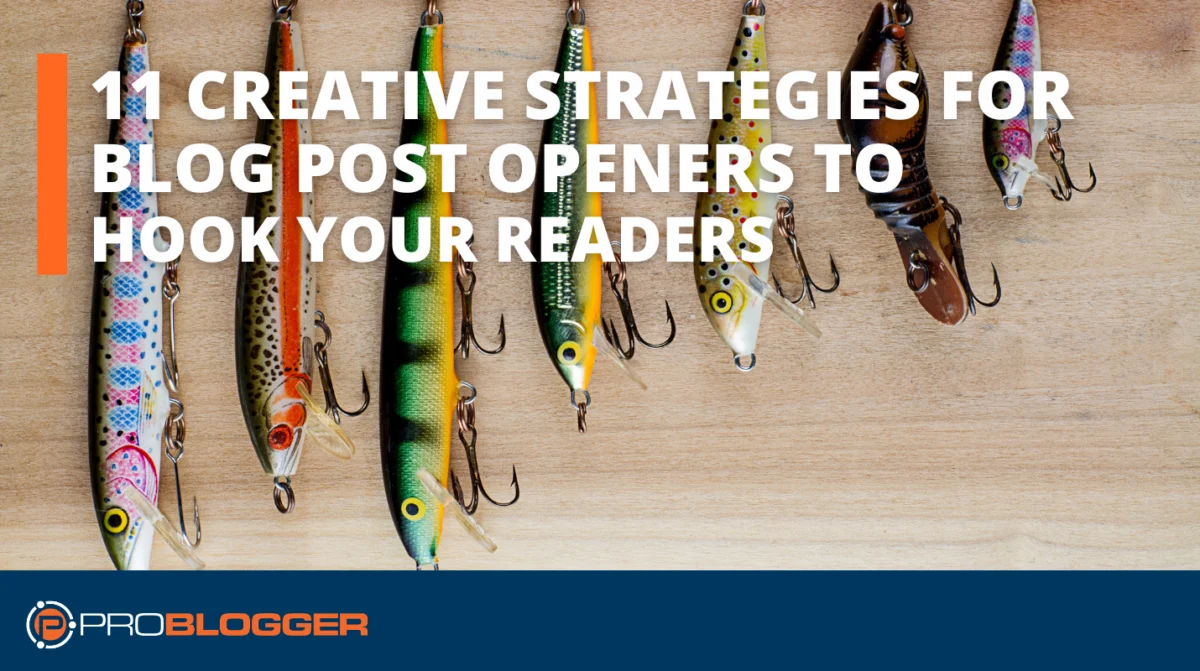
In an increasingly visual media environment, the opening image is as important as the opening sentence. Studies on visual processing indicate that the human brain processes images 60,000 times faster than text. An image that complements the headline acts as a visual shorthand, providing immediate context and emotional resonance before the reader has even processed the first sentence.
Implications for Modern Content Strategy
The technical execution of these strategies has profound implications for digital publishers. As search algorithms shift toward prioritizing "User Experience" (UX) signals—such as dwell time and interaction rates—the ability to craft effective openings is no longer just a stylistic choice; it is a fundamental requirement for discoverability.
Professional editors and content strategists now categorize "opening hooks" as a high-priority optimization task. A/B testing reveals that minor adjustments to the first 50 words of an article can result in a 20% to 40% increase in reader retention. As the digital ecosystem becomes increasingly saturated with content, the ability to command attention in the first three seconds will continue to distinguish successful publications from those that fail to convert traffic into long-term audience loyalty.
By mastering these 11 strategies, writers can ensure that their work not only reaches the intended audience but captures their attention in a way that encourages deeper exploration, sustained engagement, and, ultimately, meaningful interaction.