The digital landscape is currently saturated with content, with over 7 million blog posts published daily according to industry analytics. In this high-volume environment, the competition for user attention has become a critical challenge for content creators and digital publishers. Data from the Nielsen Norman Group suggests that users typically decide whether to stay on a webpage within the first 10 to 20 seconds of arrival. Consequently, the opening line of a post—the text immediately following the headline—has emerged as the most pivotal element in maintaining reader engagement and reducing bounce rates.
The Anatomy of Reader Retention
While the headline serves as the primary acquisition tool, the opening sentence acts as the retention mechanism. Research into eye-tracking studies indicates that readers scan content in an "F-pattern," heavily prioritizing the first two paragraphs of any given article. When an opening line fails to provide immediate value or stimulation, the probability of a reader navigating away from the page increases by approximately 60 percent.
This phenomenon underscores a fundamental shift in digital consumption patterns. Readers are no longer passive recipients; they are active evaluators of relevance. To address this, professional writers and digital strategists have identified eleven distinct methodologies that leverage psychological triggers to maintain reader focus from the first sentence to the final paragraph.
1. The Direct Problem-Solution Pivot
The most effective way to establish immediate authority is to mirror the reader’s current pain point. By explicitly stating a common challenge, the author validates the reader’s intent for clicking the link. This technique, often referred to as "need-based anchoring," functions by promising a resolution early in the narrative. If a writer identifies a specific friction point—such as technical SEO hurdles or time-management difficulties—and promises a concrete solution, the reader is statistically more likely to scroll through the content to reach the resolution.
2. The Binary Response Question
Copywriting experts have long advocated for the use of the "Yes-Question." By posing a question that is virtually guaranteed to elicit a positive, internal confirmation from the reader, the writer establishes a psychological rhythm. When a reader mentally says "yes" to a question, they create an unconscious commitment to the author’s perspective. This technique is frequently utilized in high-conversion marketing funnels to align the reader’s mindset with the subsequent information provided.
3. The Provocative Inquiry
Unlike the "Yes-Question," the provocative inquiry focuses on curiosity gaps. This strategy hinges on the "information gap theory," which posits that curiosity arises when a person feels a discrepancy between what they know and what they want to know. By posing a question that defies conventional wisdom or suggests an hidden truth, the writer compels the reader to continue reading to fill that intellectual void.
4. The Narrative Disruption
Surprise is a powerful heuristic for disrupting the "zombie-scrolling" state of modern internet users. Anecdotes that appear slightly tangential or highly personal can break the monotony of standard information delivery. For instance, sharing an unexpected personal failure or a humorous anecdote can humanize the content. This approach works because it signals to the reader that the content is original and unique, rather than a generic rehash of existing information.
5. Storytelling as a Cognitive Anchor
The human brain is biologically wired for stories. Research in neurobiology shows that neural coupling occurs when listeners or readers engage with a narrative, causing their brains to fire in patterns similar to the storyteller. By opening with a short, vivid anecdote, authors can bypass the critical-thinking filters that typically reject sales or informational copy. Whether the story is a personal reflection or a historical vignette, it serves as a bridge that connects abstract concepts to tangible reality.
6. The Assertive Manifesto
For audiences seeking authority, a bold, declarative opening is often the most effective tool. By making a definitive claim about the state of an industry or the efficacy of a specific method, the author positions themselves as a thought leader. This strategy carries a high degree of risk; if the subsequent content does not support the claim with evidence, the reader’s trust is immediately eroded. However, when substantiated by data, a bold claim can establish the article as a seminal piece of content within its niche.
7. The Utilization of Controlled Controversy
Controversy, when used judiciously, serves as a high-engagement catalyst. By directly challenging a status quo or a popular industry opinion, the author invites the reader to take a side. This creates an immediate emotional investment. From an engagement standpoint, this often leads to higher comment volume and increased social media sharing, as readers feel compelled to express agreement or dissent.
8. Visualization and Sensory Engagement
Encouraging the reader to perform a mental exercise—such as imagining a specific scenario—engages the visual cortex. This technique moves the reader from a passive recipient of information to an active participant in the narrative. By describing a scene in detail, the author creates a sense of presence that makes the subsequent advice or analysis feel more applicable to the reader’s life.
9. The Statistical Hook
Quantitative data provides a sense of objectivity and urgency. Starting a post with a startling statistic—such as a failure rate, a growth percentage, or an overlooked industry benchmark—can immediately validate the importance of the topic. This is a common practice in white papers and analytical journalism, where the objective is to establish the scale of an issue before providing the methodology for addressing it.
10. The Appeal to Authority
Incorporating a quote from a recognized expert or a historical figure can instantly grant the article a sense of gravitas. This serves to align the reader’s existing respect for that figure with the author’s message. When used correctly, a quote acts as a framing device, setting the intellectual tone for the entire piece.
11. The Visual Integration
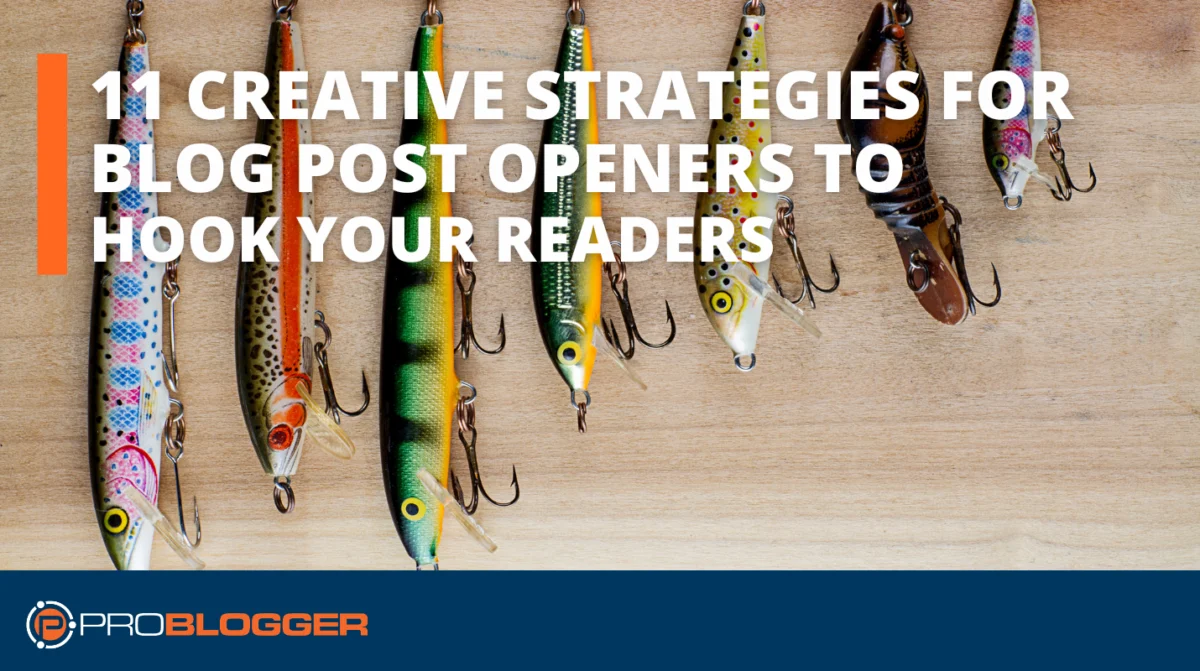
In an era of multi-modal consumption, the opening image is as important as the opening sentence. Studies from content marketing platforms suggest that articles with strong, relevant visuals at the outset see an average of 94 percent more views. When a compelling image is paired with a strong, concise headline, it creates a powerful sensory hook that encourages the reader to investigate the text below.
Strategic Implications and Industry Outlook
The mastery of these eleven strategies is not merely a creative exercise but a functional necessity for modern digital communication. The evolution of search engine algorithms—which now prioritize "User Experience" (UX) signals like time-on-page and engagement depth—means that writing quality is now a ranking factor.
For editors and content managers, the implication is clear: the "opening hook" must be treated with the same level of scrutiny as the article’s body. The goal is to move the reader from the periphery of the content to the core of the value proposition as efficiently as possible. As the digital space continues to grow, the ability to command attention in the first three seconds will remain the defining characteristic of successful content production. Publishers who fail to prioritize these introductory elements risk losing their audience to the vast array of competing information sources available at a single click.