Samsung Electronics has announced a significant evolution in its health monitoring technology, securing regulatory approval from South Korea’s Ministry of Food and Drug Safety (MFDS) for an upgraded sleep apnea detection feature. This development marks a transition from simple binary detection to a more nuanced, AI-powered diagnostic classification system. The enhancement, which received authorization from the United States Food and Drug Administration (FDA) earlier this year, signifies a major milestone in the integration of medical-grade diagnostic capabilities into consumer wearable devices.
A Chronological Expansion of Health Monitoring
The journey toward this regulatory milestone began in late 2023, when Samsung first received clearance in its home market of South Korea to deploy sleep apnea detection on its Galaxy Watch series. This initial authorization provided a proof-of-concept for the industry, demonstrating that consumer-grade hardware—specifically the Galaxy Watch 5 and 6 series—could reliably monitor blood oxygen levels and identify the physiological markers associated with obstructive sleep apnea (OSA).
By early 2024, the scope of this technology widened significantly as the U.S. FDA granted De Novo authorization, a critical regulatory step for novel medical devices. This validation served as a global benchmark, paving the way for Samsung to expand the feature’s availability across 84 countries. The rapid international rollout reflects a broader strategic shift within the consumer electronics sector, where wearable manufacturers are increasingly positioning their devices as essential health-tracking tools rather than mere fitness accessories.
The New Diagnostic Framework: From Detection to Classification
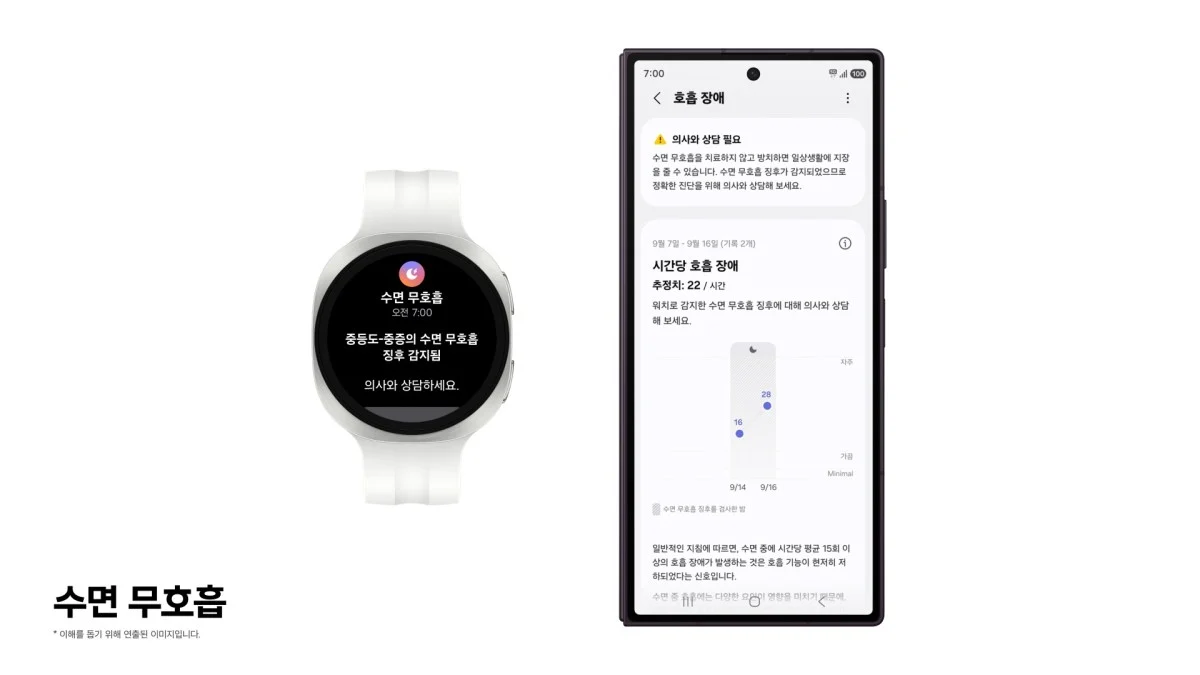
While the original iteration of the software provided a simple "detected" or "not detected" status, the upgraded version introduces a sophisticated AI algorithm capable of quantifying the severity of breathing disruptions. By analyzing data collected during sleep, the algorithm calculates the frequency of breathing interruptions per hour, categorizing results into three distinct tiers: mild, occasional, or frequent.
To ensure the integrity and clinical relevance of these readings, the feature requires a consistent data set. Users must record at least five hours of sleep on two separate occasions within a ten-day window. This requirement is designed to minimize false positives caused by isolated environmental factors or anomalous sleep disturbances, ensuring that the information provided to the user is robust enough to serve as a legitimate point of reference during consultations with healthcare professionals.
Device Compatibility and Hardware Integration
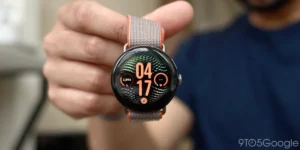
The deployment of this upgraded software will commence in South Korea this November, targeting Samsung’s latest hardware lineup. The rollout will prioritize the flagship Galaxy Watch Ultra2, the Galaxy Watch9, and the Galaxy Ring. Following this initial launch, the feature will be pushed to the Galaxy Watch7 and Galaxy Watch8 models via software updates for devices running Wear OS 7.0 or later.
The inclusion of the Galaxy Ring in this update is particularly noteworthy. Its lightweight, unobtrusive form factor addresses one of the primary barriers to sleep tracking: user compliance. Many users find traditional smartwatches too bulky or uncomfortable to wear throughout the night. The Galaxy Ring, designed specifically for continuous, low-profile monitoring, provides a more seamless data collection method, which Samsung identifies as a key factor in improving the accuracy and consistency of long-term health tracking.
For users with older hardware, such as the Galaxy Watch4 and newer iterations operating on Wear OS 5.0 or later, the original detection feature remains active. This backward compatibility underscores Samsung’s strategy to maintain a long lifecycle for its wearable ecosystem, ensuring that users are not forced into frequent hardware upgrades to access essential health safety tools.
The Scale of the Challenge: Sleep Apnea as a Public Health Concern
The significance of this technology cannot be overstated when viewed against the backdrop of global health statistics. According to data cited by Samsung from the U.S. National Sleep Foundation, approximately 25% of men and 10% of women in the United States suffer from sleep apnea. Despite these high prevalence rates, the majority of cases remain undiagnosed.
Sleep apnea is characterized by repetitive pauses in breathing during sleep, which can lead to significant long-term health complications, including cardiovascular disease, hypertension, type 2 diabetes, and stroke. The primary challenge in managing the condition is the "silent" nature of the symptoms; because the disruptions occur during sleep, patients are often unaware of the severity of their condition until a partner notices or physical symptoms manifest. By bringing clinical-grade detection to the wrist and finger, Samsung is essentially bridging the gap between asymptomatic patients and primary care physicians.
Clinical Implications and Regulatory Oversight
The transition from basic monitoring to severity classification represents a nuanced shift in how wearable data is interpreted. While Samsung is careful to note that these features serve as a "useful reference" rather than a definitive medical diagnosis, the approval from the MFDS and FDA validates the underlying science.
Industry analysts suggest that this regulatory approval signifies a new era of "preventative consumerism." As healthcare systems face increasing pressure from aging populations and chronic disease management, the integration of AI-driven diagnostic tools into consumer electronics allows for earlier intervention. If a user receives a "frequent" alert via the Samsung Health Monitor app, it provides a data-driven justification for visiting a sleep specialist, potentially shortening the path to a formal clinical diagnosis (typically performed via polysomnography).
However, this convenience brings inherent responsibilities. Samsung’s implementation emphasizes that the data is intended to supplement, not replace, traditional medical evaluation. The AI algorithms used are trained to recognize patterns, but the interpretation of these patterns remains a medical decision. The ongoing cooperation between tech giants and national health regulators is expected to evolve, with future iterations likely requiring even higher standards of data security and diagnostic accuracy.
Future Trajectory: The Convergence of Health and Technology
Looking ahead, the successful deployment of these features in 84 countries suggests that Samsung is preparing for a broader integration of medical-grade services into its ecosystem. The focus on AI algorithms implies that as more data is processed, the detection sensitivity and specificity will likely improve.
The broader implications for the wearable market are substantial. As companies like Samsung, Apple, and Google continue to push the boundaries of what sensors can achieve, the distinction between a smartwatch and a medical monitoring device will continue to blur. This creates a competitive environment where the differentiator is no longer just battery life or screen brightness, but the reliability and clinical utility of the health metrics provided.
Furthermore, the emphasis on the Galaxy Ring suggests that Samsung is diversifying its sensor placement strategy. By moving beyond the wrist, the company is experimenting with different form factors that might provide more accurate biometric data, such as heart rate variability and blood oxygen levels, which are less susceptible to motion artifacts on the finger than on the wrist.
Conclusion: A Measured Step Toward Proactive Health
The approval of the upgraded sleep apnea detection feature is a testament to the maturation of wearable health technology. By moving beyond simple alerts to structured, AI-driven classification, Samsung is providing users with actionable insights that could prove life-saving. As the update rolls out to the Galaxy Watch Ultra2, Watch9, and the Galaxy Ring, the focus will now shift to how the general public utilizes this data.
For the healthcare sector, the challenge will be to integrate these incoming streams of patient-collected data into existing clinical workflows. For the consumer, the availability of such tools represents a shift toward personal agency in health management. While these devices do not replace the need for professional medical care, they represent a powerful, accessible, and increasingly accurate tool in the fight against one of the most common and under-diagnosed sleep disorders in the world. As the technology continues to expand, it is likely that we will see further refinements, higher precision, and perhaps even deeper integration with telemedicine services, fundamentally changing the relationship between individuals and their personal health records.