The legal landscape surrounding artificial intelligence and intellectual property rights has shifted dramatically following a high-stakes lawsuit filed on November 2, 2026, by The New York Times against Brave Software, the developer of the privacy-focused Brave browser and Brave Search. The litigation centers on allegations that Brave has systematically scraped over 30 billion webpages without providing publishers a mechanism to opt out, subsequently packaging this proprietary data for sale to major artificial intelligence firms.
This legal confrontation marks a pivotal moment in the ongoing tension between web publishers and the developers of large language models (LLMs). As AI companies pivot toward real-time data to improve the accuracy of their outputs, the infrastructure used to aggregate this information—specifically search indexes—has become a primary battleground for copyright and data sovereignty.
The Core Allegations: Beyond Standard Search
The complaint filed by The New York Times contends that Brave’s business model extends beyond traditional web indexing. While search engines have historically crawled the web to provide links that drive traffic back to source publishers, the Times alleges that Brave is effectively commodifying publisher content for the benefit of AI developers. By offering the "Brave Search API," the company provides AI firms like Cohere, Mistral, Perplexity, and You.com with "LLM Context"—chunks of text and metadata pre-formatted for AI ingestion.
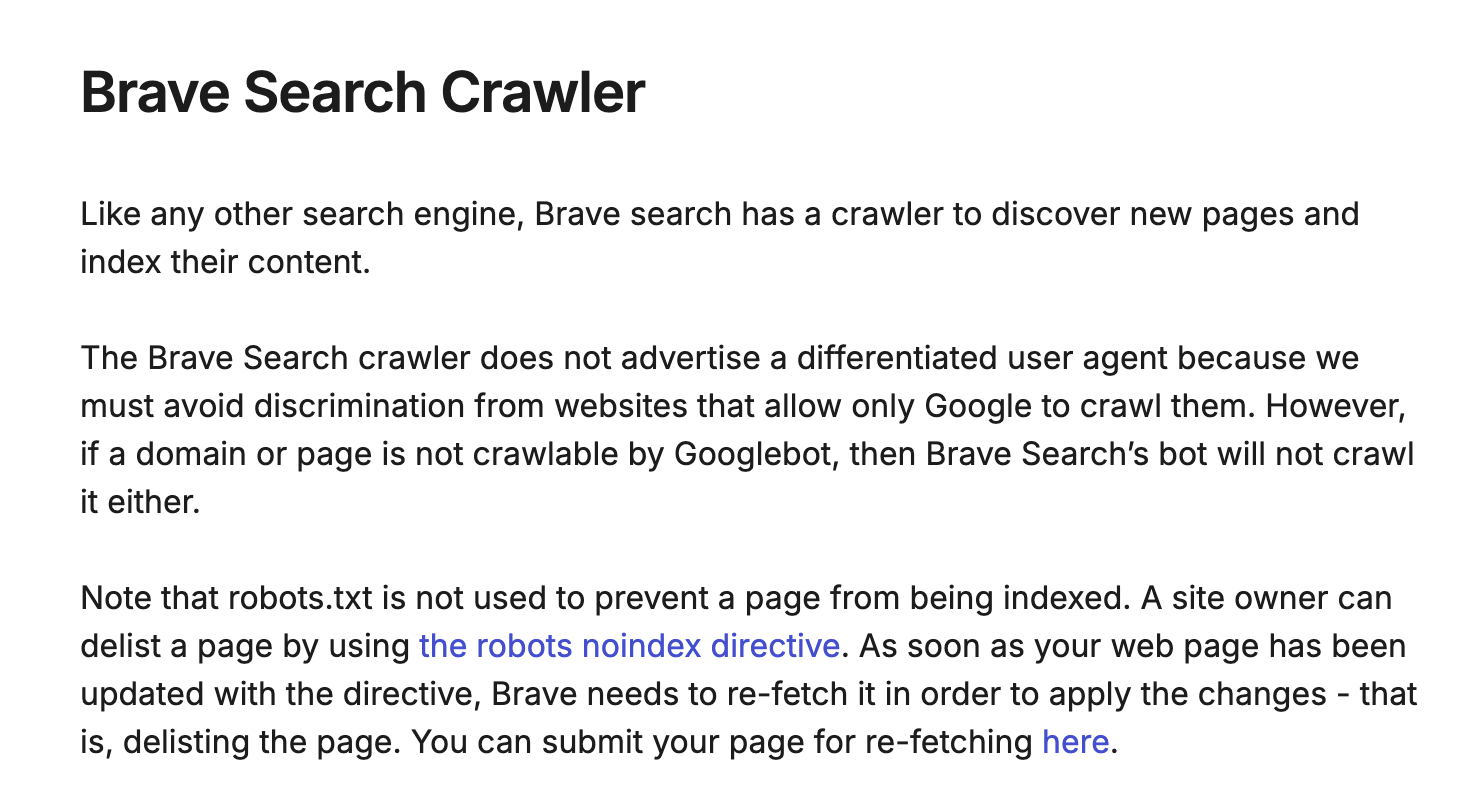
The Times asserts that this process occurs without transparency. Specifically, the lawsuit highlights the lack of a distinct, identifiable user agent for Brave’s crawler. In the digital ecosystem, robots.txt files serve as the primary gatekeepers for websites, allowing administrators to block specific bots by name. Because Brave’s crawler does not announce itself as a unique entity, publishers are unable to restrict it without also blocking Googlebot, a move that would be catastrophic for the visibility of most commercial websites.
Chronology of the Dispute
The conflict has been simmering for years, characterized by a series of legal and technical escalations:
- 2023: Brave publishes documentation confirming its collaboration with Anthropic, as the AI company utilized Brave’s search infrastructure to power web-connected features in the Claude chatbot.
- March 2025: TechCrunch reports that Anthropic formally lists Brave Search as a subprocessor, sparking industry debate regarding the ethics of using private search indexes for LLM training and RAG (Retrieval-Augmented Generation) tasks.
- July 2026: News Corp initiates a legal challenge against Brave, alleging that the company’s obfuscated crawling methods constitute a violation of copyright and publisher rights.
- November 2, 2026: The New York Times files its lawsuit, followed shortly by a joint filing from the Daily News, the Chicago Tribune, and the Orlando Sentinel.
Technical Obfuscation and the "Robots.txt" Dilemma
Central to the debate is the technical implementation of Brave’s crawler. According to Brave’s own help documentation, the crawler intentionally does not advertise a differentiated user agent. The company argues that this strategy is a response to industry practices where many websites allow Google to crawl their content while aggressively blocking other search engines. By masking its identity behind the behavior of major crawlers, Brave ensures its index remains comprehensive.
For web administrators, this creates an untenable "all-or-nothing" scenario. If a site operator wishes to exclude their content from Brave’s API-driven AI offerings, they must implement a "noindex" tag, which instructs search engines—including Google—to drop the page from their results entirely. This effectively forces publishers to choose between visibility in the world’s most dominant search engine and the protection of their intellectual property from Brave’s AI-focused data aggregation.
The Economics of the Search API
Brave’s business model relies on the value of its search index, which the company claims includes over 30 billion pages and grows by millions of pages daily. The Brave Search API is marketed as a high-performance alternative to building a proprietary crawler from scratch. By licensing this index to AI developers, Brave provides these firms with a shortcut to the "live" web.
However, the nature of this exchange differs fundamentally from traditional search. When a search engine provides a link, the objective is to direct the user to the source. When an AI company uses the Brave API to generate an answer, the AI may synthesize information into a coherent response without necessarily prompting the user to visit the source website. This creates a "value-capture" problem: the content creator bears the cost of production, while the AI company reaps the benefit of the engagement.
Industry Implications and Official Responses
While Brave has not yet filed a formal court response to the latest wave of lawsuits, the company has historically defended its activities under the doctrine of fair use and the necessity of indexing for the functioning of the modern internet. In previous instances, such as the conflict with News Corp, Brave maintained that its actions are consistent with those of all major search engine operators, which must crawl the web to maintain a searchable directory of human knowledge.
The legal community is closely monitoring the case, as it could set a binding precedent for how AI companies interact with web data. If the court finds that selling access to a search index for AI training/retrieval purposes requires explicit, separate consent from publishers, it could force a radical restructuring of the AI industry’s data procurement processes.
Analytical Perspective: The Future of Web Crawling
The case highlights a broader existential crisis for the web. For decades, the implicit agreement was that crawlers would "borrow" content to provide a navigation service, with the quid-pro-quo being increased traffic. AI has effectively broken this social contract.
- The Loss of Attribution: When an AI retrieves data from a search index to form an answer, the link back to the original publisher is often marginalized or omitted, stripping the publisher of traffic and advertising revenue.
- The Transparency Deficit: The inability to distinguish between a "search" bot and an "AI training" bot limits the agency of website owners. Without granular control, publishers are forced to rely on legal remedies rather than technical safeguards.
- Market Consolidation: If only the largest media conglomerates have the legal resources to challenge these practices, smaller websites and independent creators remain vulnerable, potentially leading to a homogenized web where only content that cannot be easily scraped survives.
Conclusion
As the litigation against Brave proceeds, the outcome will likely hinge on whether the courts view the "Brave Search API" as a traditional search tool or as a conduit for copyright infringement. For website owners, the immediate impact is a call to audit their presence in search indexes. By using the site: operator at search.brave.com, publishers can confirm whether their content is currently being fed into the infrastructure used by some of the world’s most prominent AI models.
Until a legal resolution is reached, the conflict remains a flashpoint in the struggle to define the boundaries of digital ownership. As AI continues to evolve, the distinction between "indexing" and "exploiting" will remain the defining question for both search engine developers and the publishers who fill the internet with content. The court’s decision will not only affect Brave’s operations but will fundamentally shape the rules of engagement for the next generation of artificial intelligence development.