The digital marketing and search engine optimization (SEO) industries are currently navigating a period of profound structural change, defined by the rapid deployment of new AI models, the introduction of proprietary business-tracking tools, and a shifting economic reality for large-scale web publishers. As Google rolls out its third core update of 2026 and transitions its AI Mode to the Gemini 4 Hydrogen model, industry leaders are simultaneously contending with a sustained decline in organic search referrals. These developments, punctuated by recent corporate earnings reports from major media and infrastructure players, suggest that the foundational relationship between search engines and website traffic is undergoing a permanent, platform-driven transformation.
The November 2026 Google Core Update: A Mid-Holiday Rollout
On November 10, 2026, Google officially commenced the rollout of its third core search update of the calendar year. According to the Google Search Status Dashboard, this update is global in nature, affecting all languages and regions. Google has estimated a two-week window for the deployment to reach full stability.
This update follows a year of significant volatility in search rankings, as Google continues to integrate generative AI features directly into the search results page (SERP). For SEO professionals, the timing of this update presents a specific analytical challenge. Because the rollout spans approximately 14 days, the period immediately following its completion will overlap with the high-traffic holiday shopping window, including Thanksgiving, Black Friday, and Cyber Monday in the United States.
Google’s standard recommendation for post-update analysis is to wait at least one full week after the completion of the rollout before comparing performance metrics against pre-update baselines. However, because this specific update concludes during a period of anomalous shopping behavior, data analysts must exercise caution. Comparing holiday-inflated traffic against average baseline traffic will likely result in skewed year-over-year growth metrics, making it difficult to isolate the true impact of the core update on organic ranking performance.
ChatGPT Business Hub and the Rise of Direct Attribution
In a move to provide greater transparency to publishers, OpenAI launched its "Business Hub" in beta on November 10. This platform allows eligible organizations to claim their presence within the ChatGPT ecosystem. Once verified, businesses gain access to an insights dashboard that tracks the frequency with which ChatGPT references their brand and, more importantly, the number of clicks generated from those references to their respective websites.
The methodology behind these metrics is specific to OpenAI’s proprietary definition of a "mention." According to OpenAI’s documentation, a mention is counted only when the model explicitly references a business’s website URL. Simply mentioning a brand name in a text response does not qualify as a tracked mention in the Business Hub.
Early internal testing by industry observers—such as the data reported by Search Engine Journal’s technology department—highlights the potential scale of this traffic. Between October 14 and November 10, one major publication recorded over 350,000 mentions and more than 2,600 website clicks. While these numbers provide a new layer of visibility, they also introduce a new set of variables. These clicks represent a "potential" bridge between AI interaction and site traffic; however, they do not necessarily correlate one-to-one with traditional referral traffic as seen in standard analytics suites. The existence of these metrics underscores a broader industry move toward "platform-defined" analytics, where the platform (OpenAI) dictates the definitions of engagement, often diverging from the standards established by traditional web analytics tools.
Gemini 4 Hydrogen: A New Default for AI Search
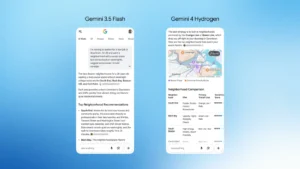
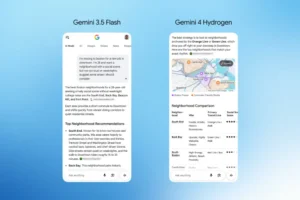
Just two days after the core update began, Google implemented a significant technical shift in its search infrastructure by making Gemini 4 Hydrogen the default model for "AI Mode." The announcement, communicated by Robby Stein, Google’s Vice President of Product for Search, emphasized that this model is now tasked with handling the most complex queries within AI Overviews.
The integration of Gemini 4 Hydrogen is designed to improve "query fan-out," a process by which the AI provides a more diverse and comprehensive array of source links to the user. From a publisher’s perspective, this is a critical development. If Google’s assertion holds true, the transition could lead to an increase in referral traffic from AI Overviews, which have historically been criticized for potentially cannibalizing organic clicks.
However, the lack of granular data regarding what constitutes a "hard" question, combined with the absence of specific link-count metrics, leaves the industry in a state of speculative observation. Analysts are advised to log the November 12 transition date in their performance tracking spreadsheets. By segregating data into pre-Hydrogen and post-Hydrogen buckets, site owners may eventually be able to discern whether the update results in a statistically significant change in citation frequency or referral traffic.
Economic Realities: The Search Traffic Deficit
The most stark indicators of the changing search landscape come from recent quarterly earnings calls among major public companies. Ziff Davis and Tripadvisor, two entities heavily reliant on organic search traffic, have both signaled a pivot in their business models to account for a permanent shift in how users find information.
During its third-quarter 2026 earnings call, Ziff Davis CEO Vivek Shah was explicit regarding the company’s outlook, stating that the firm is "not planning on a search recovery." Data provided by the company showed a 37% year-over-year decline in organic Google referrals. Perhaps more telling was the comparison between AI-generated impressions and traditional search clicks; Ziff Davis reported that for its properties, AI-driven impressions were nearly ten times higher than the actual clicks generated from the same search features.
Similarly, Tripadvisor’s CFO, Mike Noonan, categorized SEO as a persistent "headwind" for growth heading into 2027. The company recorded a $369.5 million non-cash goodwill impairment, which was attributed largely to the changing dynamics of the search landscape. To mitigate the loss of free organic traffic, Tripadvisor has significantly increased its marketing spend, with marketing costs rising to nearly 49% of revenue from continuing operations. This shift from organic to paid acquisition is a bellwether for the wider publishing industry, suggesting that the "free" traffic model that defined the last two decades of the web is facing significant erosion.
Cloudflare and the Future of Crawl Hints
The technological infrastructure supporting these shifts is also evolving. Cloudflare, in its third-quarter earnings report, confirmed that it is now facilitating "crawl hints" for AI entities, including OpenAI. These hints serve as a notification system, alerting crawlers precisely when a website’s content has been updated, thereby increasing the efficiency of the indexing process.
Cloudflare CEO Matthew Prince described this service as a "new version of SEO." While the financial terms of the arrangement between Cloudflare and OpenAI were not disclosed, the move establishes a precedent for paid, optimized access to web content. For site owners, this creates a new binary choice: allow crawlers to access content for free through traditional methods, or participate in optimized, potentially paid, crawling structures.
Implications and Strategic Recommendations
The confluence of these events—a core update, an AI model shift, and a macroeconomic pivot away from organic search—requires a new strategic framework for digital stakeholders. The "Theme of the Week" in the search industry is clearly the dominance of platform-defined metrics. Because each major player (Google, OpenAI, Cloudflare) defines "visibility," "mentions," and "traffic" differently, site owners can no longer rely on a single source of truth.
To effectively manage this environment, organizations should adopt the following practices:
- Platform-Specific Logging: Maintain a chronological log of all platform changes, including update start dates, model switches (like the Hydrogen deployment), and the implementation of new tracking tools. This allows for post-hoc attribution analysis that is not possible when looking at aggregate data alone.
- Redefining Value: As organic referral traffic declines, the value of direct traffic and brand-led search queries becomes paramount. If search engines continue to prioritize AI-generated summaries, the objective of content strategy must shift from "ranking for keywords" to "becoming an authoritative source" that is cited within AI models.
- Fiscal Prudence: The examples set by Ziff Davis and Tripadvisor suggest that organizations should stress-test their business models against the assumption that organic search traffic will not return to previous levels. This involves diversifying traffic sources and reducing reliance on a single search engine’s algorithm.
As 2026 draws to a close, it is evident that the search engine is no longer merely a gateway to other websites; it is becoming a destination in itself. The challenge for publishers and businesses is to remain relevant in a world where the search engine is increasingly the one providing the answer, rather than the one pointing the way to the source.