Copyright law, specifically the U.S. Digital Millennium Copyright Act (DMCA), has increasingly become a tool to suppress critical reporting and manipulate online search results worldwide, with major tech platforms like Google often facilitating this unchecked misuse. The core mechanism, intended to protect intellectual property in the digital age, is being exploited by rogue organizations, corporations, and even repressive regimes to silence dissent and remove unfavorable content from public view, frequently without notification to the affected publishers or adequate verification of claims.
Press Gazette Targeted in Series of Spurious Claims
The alarming trend was starkly illustrated by recent incidents involving the Press Gazette itself. In the past month, an entity identified as DRF Corporation, or an anonymous actor operating under its guise, filed a DMCA request against a Press Gazette story that contained criticism of the casino SEO company Clickout Media. This article swiftly vanished from Google’s search results after DRF Corporation falsely asserted it was copied from an unrelated Reddit post. This was not an isolated event; it marked the second instance a DMCA notice had been deployed to remove a critical report about Clickout Media from Google’s search archive. Both articles were eventually reinstated after several days, but the initial removal caused a significant disruption. Crucially, in both cases, Press Gazette received no notification from Google regarding the takedown, learning of the actions only through alerts from SEO professionals monitoring the story.
The DRF Corporation is not a minor player in this landscape; it has filed over 10,000 such requests, each representing a web page potentially scrubbed from Google Search. This systematic approach highlights a disturbing pattern where the DMCA’s "notice and takedown" provisions are weaponized, turning a legal framework meant to protect creators into an instrument of censorship.
The Digital Millennium Copyright Act: A Flawed Shield
Enacted in 1998, the Digital Millennium Copyright Act was designed to update U.S. copyright law for the internet era, primarily by establishing "safe harbor" provisions for online service providers. These provisions protect platforms like Google from liability for copyright infringement committed by their users, provided they promptly remove or disable access to allegedly infringing content upon notification. The fundamental flaw, however, lies in the implementation of this system: anyone can file a takedown request without proving their identity, without demonstrating a valid claim to copyright, and often without any immediate consequence for submitting false information. Google and other platforms frequently comply instantly, removing the complained-about material from search results, pushing the burden of proof and the lengthy appeals process onto the targeted party.
When a DMCA takedown is challenged, the platform is legally bound to wait 10 to 14 business days, allowing the original claimant time to file a federal lawsuit in the U.S. This waiting period means that even legitimate content can be suppressed for weeks, significantly impacting its visibility and reach during critical periods. The absence of robust identity verification and claim validation mechanisms at the initial stage makes the system ripe for abuse, allowing malicious actors to exploit legal loopholes for strategic advantage.
The Escalation of Misuse: Data and Expert Insights
The scale of this problem is immense. Courtney Radsch, Director of the Center for Media and Digital Governance at the Open Markets Institute, notes that Google’s approximately 100 reviewers process over a million DMCA requests daily. This sheer volume makes thorough, individual vetting of each claim practically impossible, leading to an automated compliance system that favors removal.
Pedro Dias, a former Google Search quality specialist with six years of experience at the company, underscores that the same vulnerabilities he observed two decades ago persist. He points to the rise of automation and artificial intelligence as exacerbating the issue, allowing bad actors to file thousands of complaints simultaneously. "Google doesn’t do much to verify the people making the requests are who they say they are," Dias explains. "They might just ask you to confirm that what you are submitting is legal and truthful, and people will say yes, it is. With mainstream adoption of AI and automation, businesses can set up a lot of automated claims. They will throw like 1,000 claims at Google; if 10 stick, you know that’s going to be a win for them." He adds that attackers often target the same URL with multiple DMCA requests, exploiting a "broken" system where publishers may not even receive notifications for all affected URLs.
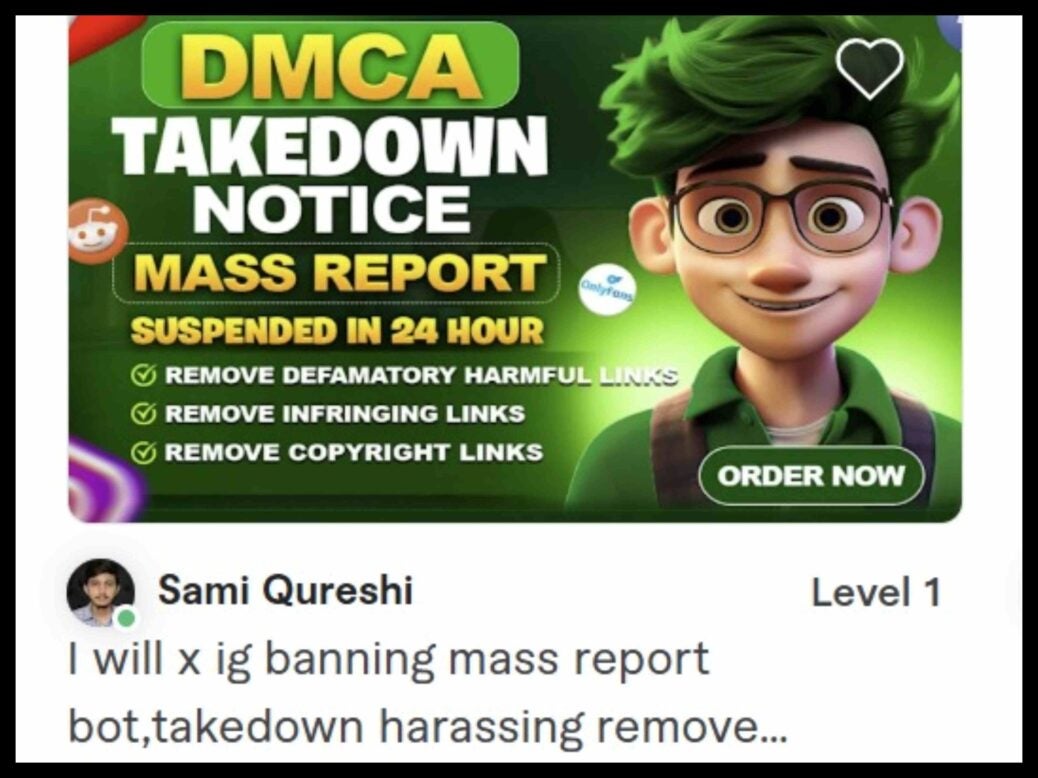
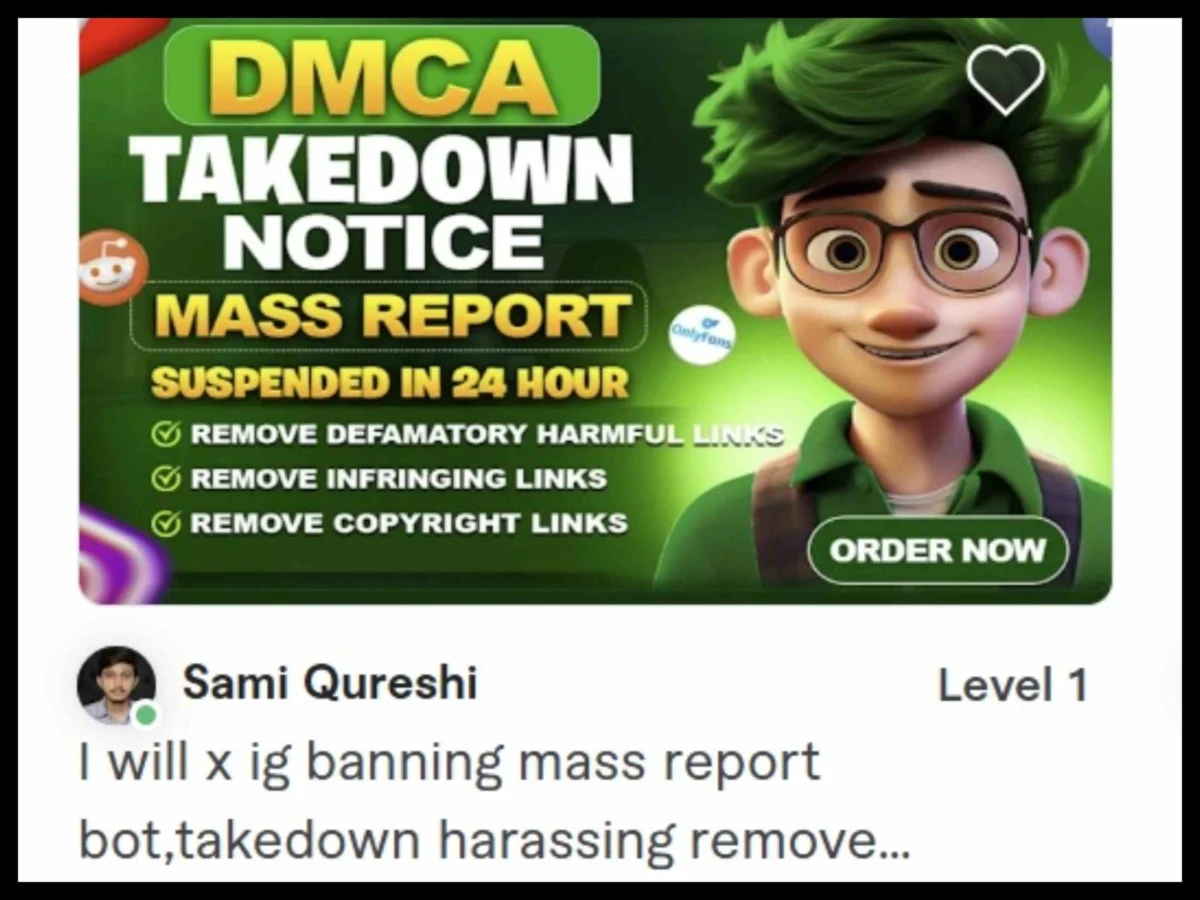
The proliferation of "DMCA takedown services" on freelance work portals like Fiverr further illustrates the commercialization of this exploitation. Dozens of profiles, often based in countries such as India and Bangladesh, openly advertise services to "mass report" or "remove defamatory harmful links" for as little as 20 Euros per request. These services frequently promise a "100% safe process" and 24-hour support, indicating a systematic and sophisticated network dedicated to weaponizing copyright law for clients seeking to scrub negative or critical content.
Case Studies: From Investigative Journalism to State Censorship
The impact of weaponized DMCA claims extends across various sectors:
- Investigative Journalism: In 2023, the UK investigative journalism website Byline Times experienced multiple bogus DMCA takedown requests related to its reporting on Russia. In these instances, multiple authors copied Byline Times articles, published them online with backdated timestamps, and then falsely claimed copyright infringement against the original reporting. This sophisticated tactic demonstrates the lengths to which some will go to silence legitimate investigative journalism.
- Repressive Regimes: Campaigning group Access Now has documented how repressive regimes in Nicaragua, Ecuador, and Tanzania are using false DMCA takedowns to silence activists and journalists. In Nicaragua, for example, media outlets received copyright takedown requests for publishing speeches by President Daniel Ortega, based on the false premise that they did not own the copyright, in an overt bid to suppress criticism. While these videos were eventually restored, the initial takedown served its purpose of disruption and intimidation. Courtney Radsch’s research, cited in a report for the Centre for International Governance Innovation, suggests that a third of journalists in the Global South or working from exile have been targeted with bogus DMCA requests, highlighting the disproportionate impact on vulnerable media.
- Police Misconduct: Radsch also points to instances in America where police officers have reportedly played popular copyrighted music during arrests. The intention is to deter bystanders from filming, as the presence of copyrighted audio can trigger content filters on social media platforms or be used as grounds for a DMCA request to remove the footage, effectively suppressing evidence of potential misconduct.
- "Black Ops" PR Firms: Radsch further notes reports of "black ops" PR firms employing information operations, often relying on DMCA requests, to remove negative coverage of their clients or to target rivals. This tactic allows corporations to control their online narrative by removing unfavorable articles, even if those articles are factual and legitimately published.
- iGaming Industry Tactics: The anonymous SEO executive who spoke to Press Gazette, fearing further targeting, provided firsthand accounts of similar tactics in the iGaming industry. After reposting Press Gazette’s report on Clickout Media to LinkedIn, the post was removed by the platform. The executive, an expert in DMCA strikes, confirmed that this tactic is commonly used to silence critics and rival iGaming sites. "Most people do not know how to recover such an attack efficiently and stack it in the system for weeks or months," the executive stated. "The burden of proof is on the attacked party. In iGaming, we are seeing thousands of these a day, and people are desperate. It is a negative SEO tactic, and the problem is, it is free." They lamented that "fake DMCAs cost you only a bit of time, automation and a part of your soul. DMCAs are more efficient than any other negative SEO attacks, and Google is doing nothing about fixing this system." This executive also reported that their LinkedIn account was successfully targeted by hackers from Bangladesh in the wake of their criticism of Clickout Media, receiving a chilling message warning they would "never get back" into their account.
Implications for Free Speech and Journalistic Integrity
The weaponization of DMCA requests poses a grave threat to free speech, press freedom, and the integrity of online information. It creates a chilling effect, deterring journalists and activists from publishing critical content for fear of their work being arbitrarily removed. For smaller journalistic outlets or independent reporters, fighting false claims can be a financially and logistically prohibitive battle, diverting scarce resources and time. The manipulation of search results also undermines the public’s access to diverse and critical information, allowing powerful entities to curate their online presence by suppressing unfavorable narratives. When search engines, which serve as primary gateways to information, become complicit in this censorship—even if inadvertently—the implications for an informed citizenry are profound.
The Platforms’ Role and the Need for Reform
Google, while declining specific comment on the recent incidents, has previously stated its goal with DMCA removals is "to strike a balance: we want to make it easy and efficient for rightsholders to report infringing content, while simultaneously protecting open access to information and fighting fraud." The company also notes that "the vast majority of our DMCA removals come from reporters who already have a proven track record of submitting valid takedowns." Google recommends site owners sign up for Search Console to speed up appeals. However, critics argue that this "balance" is skewed, placing an undue burden on legitimate publishers and failing to adequately deter fraudulent claims.
Dominic Young, CEO of Axate and co-founder of the SPUR coalition on AI licensing standards, argues that the lack of consequences for false DMCA requests enables "bad acting by anyone who wants to perform censorship by making it consequence-free." He states, "It essentially means that the whole internet is censored at a whim." Young points out that the DMCA’s "safe harbor" provision, which absolves platforms of responsibility until they are notified, incentivizes them to remove everything without scrutiny. This shifts the burden onto legitimate content owners to "proactively police the entire internet" for stolen copies, often without any real recourse for compensation, only removal.
Path Forward: Enforcing Laws and Strengthening Safeguards
To address this escalating crisis, experts and advocates propose several critical reforms:
- Enforce Existing Laws: Courtney Radsch highlights that it is a felony to file an erroneous or false DMCA claim, yet this provision has "never been used against in any of these cases of targeting journalists." Enforcing this existing legal deterrent would significantly discourage malicious actors.
- Require Verification and Evidence: Radsch advocates for platforms to require evidence of copyright ownership and real identities from claimants, especially when targeting journalistic outlets. This would prevent anonymous, baseless claims from being processed automatically.
- Limit Claim Volume: Implementing limits on the number of claims an entity can file at one time could prevent "massive DMCA takedown efforts" that overwhelm platforms and target multiple legitimate articles simultaneously.
- Improve Platform Processes: Google and other platforms must develop more robust verification processes for DMCA requests, faster counter-notification systems, and more transparent communication with affected publishers. The fact that publishers are often unaware their content has been removed until external parties alert them is a critical failure.
- Index All Requests: Radsch points out that while Google indexes all DMCA requests through Lumen Database, other major platforms like Meta do not. Universal indexing would provide greater transparency and accountability for all takedown activities.
- Legislative Review: Ultimately, a comprehensive review and reform of the DMCA itself may be necessary to adapt the law to the current digital landscape, ensuring it protects legitimate copyright holders without enabling widespread censorship and manipulation.
The current interpretation and enforcement of the DMCA create a digital wild west where critical voices can be silenced with minimal effort and no accountability. As the internet increasingly serves as the primary repository of human knowledge and public discourse, safeguarding its integrity from such abuses is paramount to protecting journalism, free expression, and the fundamental right to access information. The ongoing weaponization of copyright law demands urgent attention from tech platforms, policymakers, and the international community to ensure that the digital age fosters, rather than stifles, open communication and critical inquiry.